
Civil Society
“Their Minds Only Work Backward in Time”
How the Russian State Is Trying to Turn Science Backward in the Era of Total War
By Sasha Starost May 13, 2026



How the Russian State Is Trying to Turn Science Backward in the Era of Total War
By Sasha Starost May 13, 2026
Since the start of the full‑scale invasion, the Russian government’s escalating repression has affected every segment of society. Between 2024 and 2025, the number of extremism‑related cases rose by 36% (from 360 to 489). The increase in terrorism‑related prosecutions was even more dramatic: by the end of 2024, courts had received 47 such cases, compared with 266 in 2025. Charges of treason are also becoming increasingly common. According to the human rights organization Pervy Otdel, Russian courts now send two people to prison every day on charges of treason or espionage. Russia is currently issuing more convictions under these statutes in a single month than it did during the entirety of 2022.
Most of these cases remain classified, making public scrutiny extremely difficult. Still, several particularly high‑profile prosecutions have received public attention. One example is the case of physicist Dmitry Kolker, who was convicted of treason and died from pancreatic cancer on the second day of his detention. His illness was terminal, and Russian law prohibits placing seriously or terminally ill defendants in pretrial detention centers regardless of the severity of the charges. The case sparked broad public outrage and drew the attention of human rights groups and the media.
The T‑invariant project maintains its own chronicle of the persecution of Russian scientists, and the list already contains 94 names.
The forms of persecution range from being designated a “foreign agent” or fined to facing criminal charges carrying enormous prison sentences. Graduate student Azat Miftakhov, from the Faculty of Mechanics and Mathematics at Moscow State University, is serving time in a penal colony on fabricated charges. Ukrainian oceanographer Leonid Pshenichnov, who was illegally detained by Russian police in Kerch, is also serving a sentence for treason despite not being a Russian citizen. Nuclear physicist Ruslan Shadiev received an 18‑year prison sentence on treason charges.
The basis for treason accusations has included everything from money transfers to Ukraine or to organizations designated as extremist or terrorist in Russia to the “disclosure of classified information” during professional contacts at conferences or through collaboration with foreign colleagues. The country involved does not matter: Dmitry Kolker was convicted for allegedly revealing state secrets to China, which official Russian rhetoric describes as a “friendly” nation. Many scientists who publicly opposed the war in Ukraine were forced to leave the country due to criminal charges and police pressure.
So the question remains: what is really happening today inside Russia’s academic institutions, and what do scientists who continue working in the country think about it? To better understand this, FRFThinkTank spoke with five researchers from different disciplines.
Since the start of the full‑scale invasion, the Russian government’s escalating repression has affected every segment of society. Between 2024 and 2025, the number of extremism‑related cases rose by 36% (from 360 to 489). The increase in terrorism‑related prosecutions was even more dramatic: by the end of 2024, courts had received 47 such cases, compared with 266 in 2025. Charges of treason are also becoming increasingly common. According to the human rights organization Pervy Otdel, Russian courts now send two people to prison every day on charges of treason or espionage. Russia is currently issuing more convictions under these statutes in a single month than it did during the entirety of 2022.
Most of these cases remain classified, making public scrutiny extremely difficult. Still, several particularly high‑profile prosecutions have received public attention. One example is the case of physicist Dmitry Kolker, who was convicted of treason and died from pancreatic cancer on the second day of his detention. His illness was terminal, and Russian law prohibits placing seriously or terminally ill defendants in pretrial detention centers regardless of the severity of the charges. The case sparked broad public outrage and drew the attention of human rights groups and the media.
The T‑invariant project maintains its own chronicle of the persecution of Russian scientists, and the list already contains 94 names.
The forms of persecution range from being designated a “foreign agent” or fined to facing criminal charges carrying enormous prison sentences. Graduate student Azat Miftakhov, from the Faculty of Mechanics and Mathematics at Moscow State University, is serving time in a penal colony on fabricated charges. Ukrainian oceanographer Leonid Pshenichnov, who was illegally detained by Russian police in Kerch, is also serving a sentence for treason despite not being a Russian citizen. Nuclear physicist Ruslan Shadiev received an 18‑year prison sentence on treason charges.
The basis for treason accusations has included everything from money transfers to Ukraine or to organizations designated as extremist or terrorist in Russia to the “disclosure of classified information” during professional contacts at conferences or through collaboration with foreign colleagues. The country involved does not matter: Dmitry Kolker was convicted for allegedly revealing state secrets to China, which official Russian rhetoric describes as a “friendly” nation. Many scientists who publicly opposed the war in Ukraine were forced to leave the country due to criminal charges and police pressure.
So the question remains: what is really happening today inside Russia’s academic institutions, and what do scientists who continue working in the country think about it? To better understand this, FRFThinkTank spoke with five researchers from different disciplines.
Several of the researchers interviewed, including those employed at state research institutes, insist that there is no mass, targeted persecution of scientists as a professional group. For those engaged in civilian research without access to classified information, working conditions have not fundamentally changed in recent years. Research involving dual‑use technologies or projects directly tied to the military‑industrial complex, however, has always occupied a special position.
Andrei (name changed), a professor in the Department of Higher Mathematics and a Doctor of Physical and Mathematical Sciences, believes that treason cases involving employees of academic institutions are usually connected not to science itself, but to other issues, primarily economic ones. These may involve conflicts over defense contracts, dual‑use technologies, or projects the state has deemed failures.
He cites the case of physicist Oleg Kabov as an example of what he describes as “score‑settling”. According to investigators, Kabov — a corresponding member of the Russian Academy of Sciences and head of the Heat Transfer Intensification Laboratory at the Kutateladze Institute of Thermophysics — received a 26.8 million ruble grant from the Ministry of Science in 2014 to create a prototype experimental cooling system. Investigators claimed he failed to produce the prototype, falsified reports, and used 7 million rubles from the grant to pay bonuses to subordinates, who then allegedly returned the money to him. However, independent investigators found no trace of these sums, and in court, none of Kabov’s employees confirmed receiving such bonuses.
It later emerged that, in October 2018, Kabov’s former graduate student, Karapet Eloyan, informed an officer from the Novosibirsk branch of the Federal Security Service that the prototype required under the grant had never been built. On its own, the absence of a prototype in an academic project should not have attracted the attention of security services.
However, the Novosibirsk FSB office employed Alexei Kreta, a former member of Kabov’s laboratory and co‑author on scientific publications. Kreta left the lab after a conflict with Kabov in 2017 and reportedly promised a colleague he would “return to the institute in a different capacity.” Both Kreta and Kabov later confirmed these circumstances in court. Many institute employees recall Kreta repeatedly threatening Kabov and view the case as a deliberate attempt to eliminate a competitor. According to Andrei, the overwhelming majority of treason‑related prosecutions targeting researchers involved in military or dual‑use technologies resemble precisely this: disputes between competing economic actors.
Sociologist and historian Dmitry Dubrovsky, however, argues that researchers do not need ties to the defense industry to attract the attention of the security services. He points to the case of the Novosibirsk acoustics researchers accused of treason. The core problem, he says, is not access to classified information itself, but the total lack of clarity surrounding what constitutes a state secret:
Several of the researchers interviewed, including those employed at state research institutes, insist that there is no mass, targeted persecution of scientists as a professional group. For those engaged in civilian research without access to classified information, working conditions have not fundamentally changed in recent years. Research involving dual‑use technologies or projects directly tied to the military‑industrial complex, however, has always occupied a special position.
Andrei (name changed), a professor in the Department of Higher Mathematics and a Doctor of Physical and Mathematical Sciences, believes that treason cases involving employees of academic institutions are usually connected not to science itself, but to other issues, primarily economic ones. These may involve conflicts over defense contracts, dual‑use technologies, or projects the state has deemed failures.
He cites the case of physicist Oleg Kabov as an example of what he describes as “score‑settling”. According to investigators, Kabov — a corresponding member of the Russian Academy of Sciences and head of the Heat Transfer Intensification Laboratory at the Kutateladze Institute of Thermophysics — received a 26.8 million ruble grant from the Ministry of Science in 2014 to create a prototype experimental cooling system. Investigators claimed he failed to produce the prototype, falsified reports, and used 7 million rubles from the grant to pay bonuses to subordinates, who then allegedly returned the money to him. However, independent investigators found no trace of these sums, and in court, none of Kabov’s employees confirmed receiving such bonuses.
It later emerged that, in October 2018, Kabov’s former graduate student, Karapet Eloyan, informed an officer from the Novosibirsk branch of the Federal Security Service that the prototype required under the grant had never been built. On its own, the absence of a prototype in an academic project should not have attracted the attention of security services.
However, the Novosibirsk FSB office employed Alexei Kreta, a former member of Kabov’s laboratory and co‑author on scientific publications. Kreta left the lab after a conflict with Kabov in 2017 and reportedly promised a colleague he would “return to the institute in a different capacity.” Both Kreta and Kabov later confirmed these circumstances in court. Many institute employees recall Kreta repeatedly threatening Kabov and view the case as a deliberate attempt to eliminate a competitor. According to Andrei, the overwhelming majority of treason‑related prosecutions targeting researchers involved in military or dual‑use technologies resemble precisely this: disputes between competing economic actors.
Sociologist and historian Dmitry Dubrovsky, however, argues that researchers do not need ties to the defense industry to attract the attention of the security services. He points to the case of the Novosibirsk acoustics researchers accused of treason. The core problem, he says, is not access to classified information itself, but the total lack of clarity surrounding what constitutes a state secret:
“Whether information is classified can only be determined by an expert, and that expert receives clearance from the FSB. The FSB and the prosecution bring in their own expert and say: this person disclosed classified information. But whether the information is actually secret cannot be independently verified, because the only expert with clearance is the prosecution’s own expert, who confirms the prosecution’s version of events. The investigation can therefore do whatever it wishes to do. We’ve seen rulings based on claims that investigators found dust on a flash drive that could only be found in China, and on that basis solely concluded the data had been transferred to the Chinese side. A person ended up with a 15‑years prison sentence.”
“Whether information is classified can only be determined by an expert, and that expert receives clearance from the FSB. The FSB and the prosecution bring in their own expert and say: this person disclosed classified information. But whether the information is actually secret cannot be independently verified, because the only expert with clearance is the prosecution’s own expert, who confirms the prosecution’s version of events. The investigation can therefore do whatever it wishes to do. We’ve seen rulings based on claims that investigators found dust on a flash drive that could only be found in China, and on that basis solely concluded the data had been transferred to the Chinese side. A person ended up with a 15‑years prison sentence.”
T‑invariant confirms this assessment:
T‑invariant confirms this assessment:
“Most treason cases are so heavily classified that we don’t even know the names of the defendants, let alone the details of the accusations.”
“Most treason cases are so heavily classified that we don’t even know the names of the defendants, let alone the details of the accusations.”
In an article about the Novosibirsk scientists, BBC News quoted a defense lawyer who said that experts sometimes classify “almost textbook‑level information” as state secrets:
In an article about the Novosibirsk scientists, BBC News quoted a defense lawyer who said that experts sometimes classify “almost textbook‑level information” as state secrets:
“Roughly speaking, the multiplication table was used in creating both a presentation and the Burevestnik missile. Therefore, the same technologies were involved.”
“Roughly speaking, the multiplication table was used in creating both a presentation and the Burevestnik missile. Therefore, the same technologies were involved.”
It is also important to note that one of the grounds for prosecuting the Novosibirsk scientists was their collaboration with foreign colleagues. In the same BBC article, the researchers noted:
It is also important to note that one of the grounds for prosecuting the Novosibirsk scientists was their collaboration with foreign colleagues. In the same BBC article, the researchers noted:
“For years, the Ministry of Science and Higher Education required us to publish articles in foreign journals and collaborate with foreign scientists, and officially this requirement still hasn’t been revoked. But the FSB treats any contact with foreigners and any publication in foreign journals as treason.”
“For years, the Ministry of Science and Higher Education required us to publish articles in foreign journals and collaborate with foreign scientists, and officially this requirement still hasn’t been revoked. But the FSB treats any contact with foreigners and any publication in foreign journals as treason.”
Dubrovsky adds that in most cases the transfers of information, trips abroad, and professional contacts had been approved in advance by the same “First Department” that later initiated the prosecutions. At the same time, Andrei says he knows of no cases in which a person with no access to classified information was imprisoned for treason simply for interacting with foreigners.
Dubrovsky adds that in most cases the transfers of information, trips abroad, and professional contacts had been approved in advance by the same “First Department” that later initiated the prosecutions. At the same time, Andrei says he knows of no cases in which a person with no access to classified information was imprisoned for treason simply for interacting with foreigners.
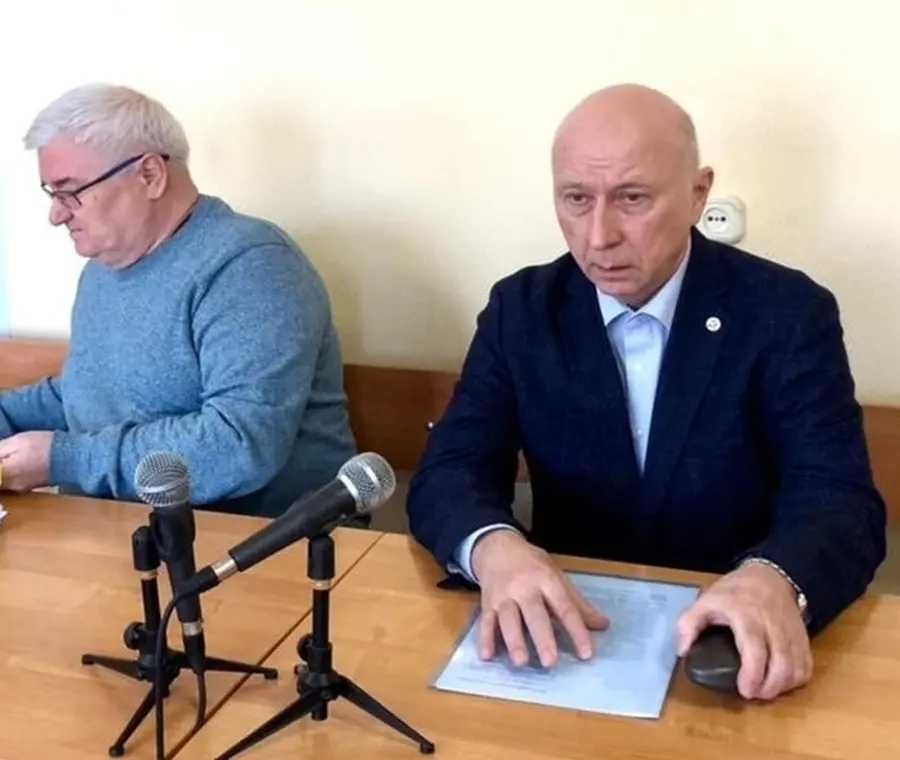
Dubrovsky believes that the general — and perhaps intentionally created — chaos surrounding state contracts is also responsible for cases involving grants, such as Kabov’s:
Dubrovsky believes that the general — and perhaps intentionally created — chaos surrounding state contracts is also responsible for cases involving grants, such as Kabov’s:
“For example, a grant competition is announced at the end of March for the current year. You submit your paperwork, the decision arrives in July, while the money arrives at the end of November. But the work still has to be done, and people still need to be paid in the meantime. Where are you supposed to get the money? The state doesn’t care. Then in December you’re required to submit both a scientific report and a financial report. Everyone dealing with large sums has to ‘dance between the raindrops’: borrow here, shift money there. Of course it violates financial regulations. But there’s simply no other way to function in this system.”
“For example, a grant competition is announced at the end of March for the current year. You submit your paperwork, the decision arrives in July, while the money arrives at the end of November. But the work still has to be done, and people still need to be paid in the meantime. Where are you supposed to get the money? The state doesn’t care. Then in December you’re required to submit both a scientific report and a financial report. Everyone dealing with large sums has to ‘dance between the raindrops’: borrow here, shift money there. Of course it violates financial regulations. But there’s simply no other way to function in this system.”
Such situations can easily become grounds for criminal prosecution, which is why many scientists no longer want to accept government funding.
Treason cases do not affect only the scientific community. Since the start of the full‑scale invasion, ordinary citizens have also faced such charges — for example, for sharing publicly available information about Russian troop movements in border regions with relatives or neighbors. Andrei believes that many cases involving scientists and charges of treason, terrorism, or extremism are connected to science insofar as the defendants happen to be scientists.
The actual trigger, he says, is usually either a person’s public anti‑war activity or political views — as in the case of Azat Miftakhov, who was accused of attacking an office of United Russia, or Leonid Kats, who was charged over a donation to a charity helping Ukrainian children.
Such situations can easily become grounds for criminal prosecution, which is why many scientists no longer want to accept government funding.
Treason cases do not affect only the scientific community. Since the start of the full‑scale invasion, ordinary citizens have also faced such charges — for example, for sharing publicly available information about Russian troop movements in border regions with relatives or neighbors. Andrei believes that many cases involving scientists and charges of treason, terrorism, or extremism are connected to science insofar as the defendants happen to be scientists.
The actual trigger, he says, is usually either a person’s public anti‑war activity or political views — as in the case of Azat Miftakhov, who was accused of attacking an office of United Russia, or Leonid Kats, who was charged over a donation to a charity helping Ukrainian children.
“There’s also the interesting case of Artem Khoroshilov from the Prokhorov Institute of General Physics,” Andrei adds, “where reports stated that the fact he was a scientist was treated as an aggravating circumstance.”
“There’s also the interesting case of Artem Khoroshilov from the Prokhorov Institute of General Physics,” Andrei adds, “where reports stated that the fact he was a scientist was treated as an aggravating circumstance.”
Russian science was tightly controlled even before the full‑scale invasion of Ukraine. According to many of our interviewees, the presence of officers from the FSB and the so‑called Center for Combating Extremism inside research institutes has been somewhat of an “open secret” for years.
Russian science was tightly controlled even before the full‑scale invasion of Ukraine. According to many of our interviewees, the presence of officers from the FSB and the so‑called Center for Combating Extremism inside research institutes has been somewhat of an “open secret” for years.
“They obviously don’t work openly as representatives of the security services — for example, they may officially be employed in fire safety or similar departments. With their participation and under their supervision, pressure can be exerted — and has been in fact exerted on numerous occasions,” says gender researcher Ella Rossman.
“They obviously don’t work openly as representatives of the security services — for example, they may officially be employed in fire safety or similar departments. With their participation and under their supervision, pressure can be exerted — and has been in fact exerted on numerous occasions,” says gender researcher Ella Rossman.
One of her colleagues agrees:
One of her colleagues agrees:
“There was a case where I was pressured over the use of feminitives and collaborating with an organization that at the time had not yet been designated a foreign agent. The event took place, and literally two weeks later the organization was declared one.”(цитата)
According to the researchers, academia has been under close state scrutiny throughout Vladimir Putin’s rule, as it has been viewed as “too free and insufficiently controllable.”
Andrei notes:
According to the researchers, academia has been under close state scrutiny throughout Vladimir Putin’s rule, as it has been viewed as “too free and insufficiently controllable.”
Andrei notes:
(цитата)“Everything bad in science and education already happened about seven years ago. Let’s not pretend that there were no politically motivated cases or arrests over protests and reposts prior to 2022 — of course there were. In essence, it’s all the same. The trends have simply intensified over the last three and a half years.”
“There was a case where I was pressured over the use of feminitives and collaborating with an organization that at the time had not yet been designated a foreign agent. The event took place, and literally two weeks later the organization was declared one.”(цитата)
According to the researchers, academia has been under close state scrutiny throughout Vladimir Putin’s rule, as it has been viewed as “too free and insufficiently controllable.”
Andrei notes:
According to the researchers, academia has been under close state scrutiny throughout Vladimir Putin’s rule, as it has been viewed as “too free and insufficiently controllable.”
Andrei notes:
(цитата)“Everything bad in science and education already happened about seven years ago. Let’s not pretend that there were no politically motivated cases or arrests over protests and reposts prior to 2022 — of course there were. In essence, it’s all the same. The trends have simply intensified over the last three and a half years.”
Dubrovsky agrees that “things were heading south long ago,” but argues that, as in many other spheres affected by growing state control, the situation has escalated:
Dubrovsky agrees that “things were heading south long ago,” but argues that, as in many other spheres affected by growing state control, the situation has escalated:
“More cases are being opened. Often they have little direct connection to military secrets and instead concern things like financing the Ukrainian Armed Forces. Sending money to Ukraine is treated as treason. And if the person has security clearance, that alone becomes grounds for harsher charges.”
“More cases are being opened. Often they have little direct connection to military secrets and instead concern things like financing the Ukrainian Armed Forces. Sending money to Ukraine is treated as treason. And if the person has security clearance, that alone becomes grounds for harsher charges.”
At the same time, Andrei insists that there is still no formal ban on participating in international conferences, noting that he himself recently returned from one. In his view, the main problem is not FSB pressure but the drastic reduction of funding for all science except research directly serving the military machine. Other interviewees agree.
So, does that mean there is no real persecution of scientists and that science in Russia continues to develop, albeit in a more autonomous form?
Not exactly.
First, there is a fundamental difference between STEM research and the humanities. On the one hand, STEM fields still receive the largest grants and retain access to funding. On the other hand, nearly all treason cases connected to the actual content of scientific work involve STEM researchers. This is understandable, as discoveries in physics and other exact sciences may have dual‑use applications and can therefore easily be interpreted as sensitive or classified information.
Still, Andrei clarifies:
At the same time, Andrei insists that there is still no formal ban on participating in international conferences, noting that he himself recently returned from one. In his view, the main problem is not FSB pressure but the drastic reduction of funding for all science except research directly serving the military machine. Other interviewees agree.
So, does that mean there is no real persecution of scientists and that science in Russia continues to develop, albeit in a more autonomous form?
Not exactly.
First, there is a fundamental difference between STEM research and the humanities. On the one hand, STEM fields still receive the largest grants and retain access to funding. On the other hand, nearly all treason cases connected to the actual content of scientific work involve STEM researchers. This is understandable, as discoveries in physics and other exact sciences may have dual‑use applications and can therefore easily be interpreted as sensitive or classified information.
Still, Andrei clarifies:
“Even within Russian STEM research, only a tiny number of people actually have access to classified information. At the supposedly ultra‑secret MEPhI institute , only a handful of individuals have real clearance.”
“Even within Russian STEM research, only a tiny number of people actually have access to classified information. At the supposedly ultra‑secret MEPhI institute , only a handful of individuals have real clearance.”
In the humanities, there has not yet been a single criminal case directly tied to the content of a dissertation or academic publication. However, there are many examples of politically active researchers involved in public education projects or who have openly opposed the war being pushed out of the institutions where they worked or labeled as foreign agents — including Dmitry Dubrovsky himself and social anthropologist Alexandra Arkhipova.
All of the researchers we interviewed, regardless of discipline, identified the absence of a clear and verifiable regulatory framework as one of the central problems of the contemporary academic environment. This uncertainty has become not a side effect, but an independent instrument of pressure.
In the humanities, there has not yet been a single criminal case directly tied to the content of a dissertation or academic publication. However, there are many examples of politically active researchers involved in public education projects or who have openly opposed the war being pushed out of the institutions where they worked or labeled as foreign agents — including Dmitry Dubrovsky himself and social anthropologist Alexandra Arkhipova.
All of the researchers we interviewed, regardless of discipline, identified the absence of a clear and verifiable regulatory framework as one of the central problems of the contemporary academic environment. This uncertainty has become not a side effect, but an independent instrument of pressure.
If ambiguity in STEM disciplines is usually connected to issues of secrecy, clearance, and the possible dual‑use nature of research, then in the humanities, the danger zone shifts toward language, interpretation, and public visibility.
If ambiguity in STEM disciplines is usually connected to issues of secrecy, clearance, and the possible dual‑use nature of research, then in the humanities, the danger zone shifts toward language, interpretation, and public visibility.
“You never know what you’re allowed to write and what you aren’t. Which wording is acceptable and which isn’t. Alongside my academic work, I run an educational project connected to feminism and gender studies. We constantly argue over terminology. For example, whether it’s still permissible to use the phrase ‘gender stereotypes,’” says one of our interviewees, a gender historian.
“You never know what you’re allowed to write and what you aren’t. Which wording is acceptable and which isn’t. Alongside my academic work, I run an educational project connected to feminism and gender studies. We constantly argue over terminology. For example, whether it’s still permissible to use the phrase ‘gender stereotypes,’” says one of our interviewees, a gender historian.
Formal bans may not exist, but the boundaries of what is acceptable are constantly shifting and vary from institution to institution. A phrase considered academically neutral today may become politically sensitive tomorrow, without any legal changes. This uncertainty manifests at every level, from course titles and research topics to conferences, publications, and public education projects.
Formal bans may not exist, but the boundaries of what is acceptable are constantly shifting and vary from institution to institution. A phrase considered academically neutral today may become politically sensitive tomorrow, without any legal changes. This uncertainty manifests at every level, from course titles and research topics to conferences, publications, and public education projects.
“Today they tell you everything is approved, and tomorrow it can suddenly become a problem,” one researcher explains.
“Today they tell you everything is approved, and tomorrow it can suddenly become a problem,” one researcher explains.
As a result, scholars often abandon potentially controversial topics, formulations, or projects in advance — not because they are explicitly prohibited, but because the consequences are impossible to predict.
As a result, scholars often abandon potentially controversial topics, formulations, or projects in advance — not because they are explicitly prohibited, but because the consequences are impossible to predict.
Gender studies and history — particularly the history of Russia and the Soviet Union — are amongst the fields most affected by this self‑censorship.
Gender studies encompass a broad range of disciplines that examine gender as a social construct: the expectations, norms, roles, and patterns associated with people perceived as male or female. These studies belong to cultural studies, sociology, and history rather than biology. Certain areas also include queer and LGBTQ history and culture. After LGBTQ people as a whole were suddenly declared an “extremist organization,” the official publication of such work became effectively impossible.
Yet, as often happens with self‑censorship, attempts to anticipate the desires of state authorities and eliminate “incorrect” vocabulary from public discourse began long before that. This is how Ella Rossman describes the situation:
Gender studies and history — particularly the history of Russia and the Soviet Union — are amongst the fields most affected by this self‑censorship.
Gender studies encompass a broad range of disciplines that examine gender as a social construct: the expectations, norms, roles, and patterns associated with people perceived as male or female. These studies belong to cultural studies, sociology, and history rather than biology. Certain areas also include queer and LGBTQ history and culture. After LGBTQ people as a whole were suddenly declared an “extremist organization,” the official publication of such work became effectively impossible.
Yet, as often happens with self‑censorship, attempts to anticipate the desires of state authorities and eliminate “incorrect” vocabulary from public discourse began long before that. This is how Ella Rossman describes the situation:
“The people who left the country were those working on the most dangerous topics, or combining research with activism, or openly articulating political positions in public. Many left the country — some earlier, some later. Of course this significantly changed both the content of the humanities in Russia and the people working in the field. Most people stayed, but many of those who left were key figures and leaders in their disciplines. Formally, there are no bans on kinds of research beyond the laws that apply to all Russian citizens — for example, laws against displaying Nazi symbols or the ban on so‑called LGBTQ propaganda. But gender studies are definitely censored, albeit in very complicated and ambiguous ways. There are targeted acts of censorship, where programs or projects are shut down or people are fired after a phone call. Sometimes it’s denunciations and their consequences. But self‑censorship plays a huge role, when people begin policing themselves and their subordinates. This process existed before 2022, but it intensified dramatically afterward.”
“The people who left the country were those working on the most dangerous topics, or combining research with activism, or openly articulating political positions in public. Many left the country — some earlier, some later. Of course this significantly changed both the content of the humanities in Russia and the people working in the field. Most people stayed, but many of those who left were key figures and leaders in their disciplines. Formally, there are no bans on kinds of research beyond the laws that apply to all Russian citizens — for example, laws against displaying Nazi symbols or the ban on so‑called LGBTQ propaganda. But gender studies are definitely censored, albeit in very complicated and ambiguous ways. There are targeted acts of censorship, where programs or projects are shut down or people are fired after a phone call. Sometimes it’s denunciations and their consequences. But self‑censorship plays a huge role, when people begin policing themselves and their subordinates. This process existed before 2022, but it intensified dramatically afterward.”
The word “gender” itself is increasingly being removed from public discourse and replaced with euphemisms.
The word “gender” itself is increasingly being removed from public discourse and replaced with euphemisms.
“My main research interests are gender and queer studies,” another interviewee says. “And there are definite problems. This year all thesis and term‑paper topics containing the word ‘gender’ were blocked and had to be rewritten. There were situations where professors allowed us to discuss anything we wanted in class, but they themselves avoided talking about it for safety reasons.”
“My main research interests are gender and queer studies,” another interviewee says. “And there are definite problems. This year all thesis and term‑paper topics containing the word ‘gender’ were blocked and had to be rewritten. There were situations where professors allowed us to discuss anything we wanted in class, but they themselves avoided talking about it for safety reasons.”
Her colleague confirms this:
Her colleague confirms this:
“A couple of years ago there was practically a direct order stating that the word ‘gender’ was banned. Some university courses had to be renamed, and instead acquired completely ridiculous titles. Fortunately, the content itself hasn’t changed as much as it could have.”
“A couple of years ago there was practically a direct order stating that the word ‘gender’ was banned. Some university courses had to be renamed, and instead acquired completely ridiculous titles. Fortunately, the content itself hasn’t changed as much as it could have.”
One interviewee has repeatedly failed to defend a thesis on contemporary Russian drag culture:
One interviewee has repeatedly failed to defend a thesis on contemporary Russian drag culture:
“Even if I’m willing to risk my own safety, nobody will let me do this within the framework of an academic institution.”
“Even if I’m willing to risk my own safety, nobody will let me do this within the framework of an academic institution.”
There are also paradoxical situations in which posthumanism becomes associated with “queerness,” preventing people from defending dissertations on the subject.
At the same time, while anything connected to LGBTQ culture or gender performativity faces severe censorship, feminism itself — especially in a historical context — and research into femininity do not yet provoke the same level of hostility. Still, they too suffer from censorship.
There are also paradoxical situations in which posthumanism becomes associated with “queerness,” preventing people from defending dissertations on the subject.
At the same time, while anything connected to LGBTQ culture or gender performativity faces severe censorship, feminism itself — especially in a historical context — and research into femininity do not yet provoke the same level of hostility. Still, they too suffer from censorship.
“Women’s history is impossible without a gender perspective,” one interviewee explains. “Gender is a social construct — it changes, and femininity is socially constructed too. Without this understanding, women’s history becomes much poorer, reduced to just biographies, stripped of an important critical framework. Even when we talk about suffragists, it’s fascinating to analyze how they criticized gender norms and reshaped understandings of gender.”
“Women’s history is impossible without a gender perspective,” one interviewee explains. “Gender is a social construct — it changes, and femininity is socially constructed too. Without this understanding, women’s history becomes much poorer, reduced to just biographies, stripped of an important critical framework. Even when we talk about suffragists, it’s fascinating to analyze how they criticized gender norms and reshaped understandings of gender.”
Another potentially explosive subject is the history of Russia and the Soviet Union, especially topics involving mass repression, deportations, forced resettlement, and the Second World War. Historical scholarship has long served as a propaganda tool — and not only in the USSR. But in recent years, the situation has become increasingly tense, and since the beginning of the full‑scale invasion, it has edged close to criminal liability. Russian authorities react nervously to any ideas associated with “separatism.”
As part of efforts to impose a unified ideological narrative, the state introduced a special course titled “Fundamentals of Russian Statehood.” The course is mandatory for students in all disciplines, both technical and humanities‑based.
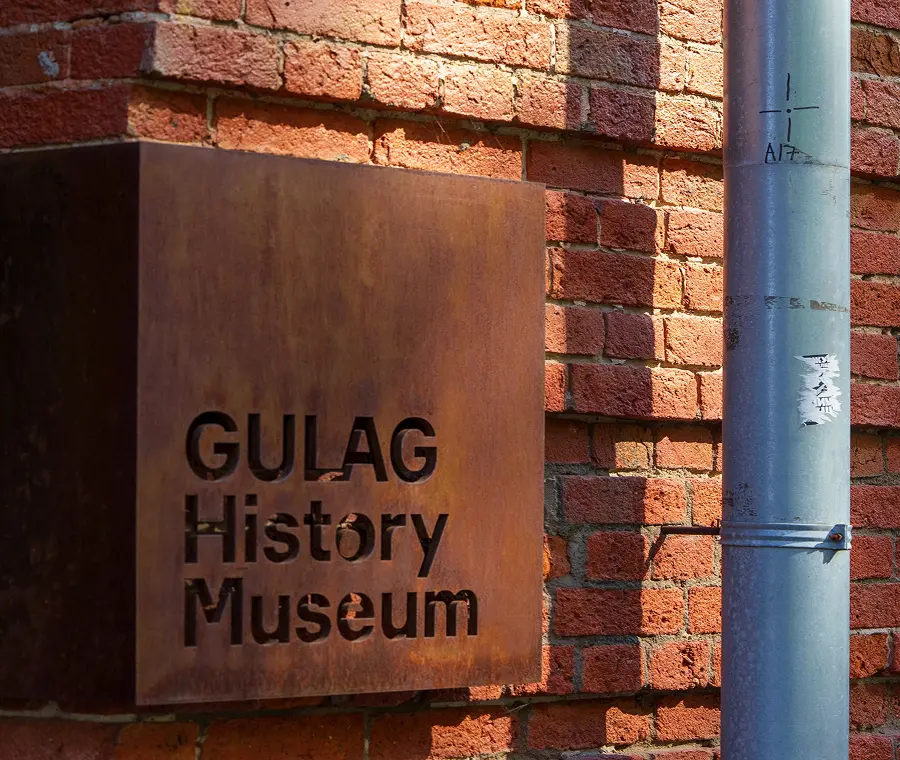
In 2022, the human rights organization Memorial was shut down by court order in Russia, and in 2024 the Gulag History Museum closed. These are clear signals from the state about how Soviet repression and the Great Terror are expected to be interpreted. Nevertheless, scholars have not entirely abandoned work on these subjects, although it has become far more difficult: access to FSB archives is now impossible.
Another potentially explosive subject is the history of Russia and the Soviet Union, especially topics involving mass repression, deportations, forced resettlement, and the Second World War. Historical scholarship has long served as a propaganda tool — and not only in the USSR. But in recent years, the situation has become increasingly tense, and since the beginning of the full‑scale invasion, it has edged close to criminal liability. Russian authorities react nervously to any ideas associated with “separatism.”
As part of efforts to impose a unified ideological narrative, the state introduced a special course titled “Fundamentals of Russian Statehood.” The course is mandatory for students in all disciplines, both technical and humanities‑based.
In 2022, the human rights organization Memorial was shut down by court order in Russia, and in 2024 the Gulag History Museum closed. These are clear signals from the state about how Soviet repression and the Great Terror are expected to be interpreted. Nevertheless, scholars have not entirely abandoned work on these subjects, although it has become far more difficult: access to FSB archives is now impossible.

For many people still working in academia, the question of whether to leave or stay remains unresolved. People live in this suspended state for years: with open résumés, half‑packed suitcases, temporary contracts, and the feeling that no decision is ever final.
For many people still working in academia, the question of whether to leave or stay remains unresolved. People live in this suspended state for years: with open résumés, half‑packed suitcases, temporary contracts, and the feeling that no decision is ever final.
“The question of emigration throws me into depression. Of course everything sounds incredibly bleak, but I still think there’s some hope. You can't really predict how the official discourse might change at any given moment. Maybe our fields will become even more invisible. And besides, it’s easy to say, ‘Everyone should leave.’ But then who will remain to work on Russian science?” says one interviewee.
“The question of emigration throws me into depression. Of course everything sounds incredibly bleak, but I still think there’s some hope. You can't really predict how the official discourse might change at any given moment. Maybe our fields will become even more invisible. And besides, it’s easy to say, ‘Everyone should leave.’ But then who will remain to work on Russian science?” says one interviewee.
She believes the goal of current state policy is “to get rid of all of us so we stop being an eyesore with our inconvenient research.”
For some, leaving is a way to preserve their profession. For others, it is an attempt to save the remnants of the work they managed to complete before censorship intensified. In both cases, the decision is driven less by ideology than by practical necessity.
She believes the goal of current state policy is “to get rid of all of us so we stop being an eyesore with our inconvenient research.”
For some, leaving is a way to preserve their profession. For others, it is an attempt to save the remnants of the work they managed to complete before censorship intensified. In both cases, the decision is driven less by ideology than by practical necessity.
“All gender researchers are leaving Russia, all of them are applying for PhD programs abroad — in America, in Europe — because soon it simply won’t be possible to do this kind of research in Russia,” admits another interviewee, an undergraduate cultural studies student. “All of my friends who finished undergraduate or graduate programs are now leaving or planning to leave, to continue their education and build academic careers outside Russia. Because it’s becoming less and less possible to work on our subjects here.”
“All gender researchers are leaving Russia, all of them are applying for PhD programs abroad — in America, in Europe — because soon it simply won’t be possible to do this kind of research in Russia,” admits another interviewee, an undergraduate cultural studies student. “All of my friends who finished undergraduate or graduate programs are now leaving or planning to leave, to continue their education and build academic careers outside Russia. Because it’s becoming less and less possible to work on our subjects here.”
Andrei, however, views the situation more optimistically and has no plans to emigrate:
Andrei, however, views the situation more optimistically and has no plans to emigrate:
“All the negative trends have gotten worse. But people themselves haven’t changed. These are still the same people going to work, doing good things and bad things. Even the officials haven’t really become better or worse. There are lots of these horror stories circulating in the broader society about veterans returning from the war and taking control over institutions, becoming a new ruling class. Personally, I think that’s unlikely. And as for science and repression — there is no systematic escalation of repression in science specifically because of science itself.”
“All the negative trends have gotten worse. But people themselves haven’t changed. These are still the same people going to work, doing good things and bad things. Even the officials haven’t really become better or worse. There are lots of these horror stories circulating in the broader society about veterans returning from the war and taking control over institutions, becoming a new ruling class. Personally, I think that’s unlikely. And as for science and repression — there is no systematic escalation of repression in science specifically because of science itself.”
Russian STEM researchers face particular difficulties finding work abroad, Dubrovsky notes, even though their expertise is in demand:
Russian STEM researchers face particular difficulties finding work abroad, Dubrovsky notes, even though their expertise is in demand:
“STEM researchers have one major problem: secrecy. When they arrive abroad, local intelligence services start scrutinizing them too. And that often damages their prospects badly, because in reality they’re extremely competitive — unlike us humanities scholars.”
“STEM researchers have one major problem: secrecy. When they arrive abroad, local intelligence services start scrutinizing them too. And that often damages their prospects badly, because in reality they’re extremely competitive — unlike us humanities scholars.”
He views the future of Russian science inside the country with little optimism:
He views the future of Russian science inside the country with little optimism:
“This is the involution of Russian science. Technical fields are suffering enormously: the level of secrecy is growing exponentially, and so is espionage paranoia. I think the authorities will eventually begin restricting these scientists not just symbolically but practically as well. It could turn into a system of sharashkas and closed research facilities like in the Soviet Union — keep them all in one place under surveillance. The officials have historical experience, but their minds only work backward in time. The problem is that frightened people have very little motivation or scientific creativity. That’s precisely why Soviet science, overall, was monstrously inefficient. Science moves forward — and it is done by free people.”
“This is the involution of Russian science. Technical fields are suffering enormously: the level of secrecy is growing exponentially, and so is espionage paranoia. I think the authorities will eventually begin restricting these scientists not just symbolically but practically as well. It could turn into a system of sharashkas and closed research facilities like in the Soviet Union — keep them all in one place under surveillance. The officials have historical experience, but their minds only work backward in time. The problem is that frightened people have very little motivation or scientific creativity. That’s precisely why Soviet science, overall, was monstrously inefficient. Science moves forward — and it is done by free people.”
Sergei Davidis and Ivan Pavlov on the lessons of last year’s exchange, the future of political prisoners, and practical tools for fighting for freedom
By Free Russia Foundation
August 05, 2025
 Article
 A few examples from recent Russian history
By Alexander Zaritsky
January 21, 2025
 Report
 Prospects for Political Decentralization in Russia
By Irina Busygina
By Mikhail Filippov
May 29, 2024

Sergei Davidis and Ivan Pavlov on the lessons of last year’s exchange, the future of political prisoners, and practical tools for fighting for freedom
By Free Russia Foundation
August 05, 2025
Article A few examples from recent Russian history
By Alexander Zaritsky
January 21, 2025
Report Prospects for Political Decentralization in Russia
By Irina Busygina
By Mikhail Filippov
May 29, 2024