
Politics

Exile by Design

Russia's Systematic Transfer of Crimean Prisoners in Violation of International Law

I. EXECUTIVE SUMMARY

Since Russia’s illegal annexation of Crimea in 2014, Russian authorities have prosecuted hundreds of Crimean residents, predominantly Crimean Tatars, on fabricated charges under anti‑terrorism and anti‑extremism legislation.

This paper provides an overview of the systematic practice of transferring convicted Crimean political prisoners to penal colonies thousands of kilometers from their homes. It also examines the legal and institutional structure of these transfers, presents illustrative case studies, analyzes the practice against applicable international and domestic law, and concludes with recommendations for the Russian Federation, the international community, and civil society.

Beginning with the first prosecutions in early 2015, and intensifying sharply after the full‑scale invasion of Ukraine in February 2022, Russian authorities have used criminal prosecution as a tool of forced removal, systematically displacing individuals from Crimea through arrest, imprisonment, and incarceration far from home. Human rights advocates have termed this practice “hybrid deportation,” comparing it to the 1944 mass deportation of the entire Crimean Tatar people by the Stalin regime.

The transfer system operates through a centrally administered bureaucratic process controlled by the Federal Penitentiary Service (FSIN) in Moscow. It is deliberately opaque, impervious to challenge in Russian courts, and structured so that neither prisoners nor their lawyers can influence placement decisions. A single partial legal victory, in the case of Arsen Abkhairov, has been an aberration, as every subsequent challenge has been ignored.

The practice violates a number of international human and humanitarian laws, including Article 49 of the Fourth Geneva Convention, which prohibits the transfer of civilians from occupied territory; the International Covenant on Civil and Political Rights (ICCPR); the Convention Against Torture (CAT). The scale and systematic character of the transfers may also meet the threshold for crimes against humanity under the Rome Statute. Additionally, several non‑binding but authoritative international instruments are also implicated. These include the UN Declaration on the Rights of Indigenous Peoples, which affirms the rights of indigenous peoples against forced removal from their lands and displacement from their communities, and the UN Basic Principles for the Treatment of Prisoners, which address the right of prisoners to maintain contact with their families. Finally, these practices are in violation of Russia’s own domestic penitentiary legislation.

The paper concludes by setting out demands to the Russian Federation and policy recommendations for governments, international organizations, and civil society to document cases more effectively, support affected communities, and build meaningful accountability mechanisms.

Since Russia’s illegal annexation of Crimea in 2014, Russian authorities have prosecuted hundreds of Crimean residents, predominantly Crimean Tatars, on fabricated charges under anti‑terrorism and anti‑extremism legislation.

This paper provides an overview of the systematic practice of transferring convicted Crimean political prisoners to penal colonies thousands of kilometers from their homes. It also examines the legal and institutional structure of these transfers, presents illustrative case studies, analyzes the practice against applicable international and domestic law, and concludes with recommendations for the Russian Federation, the international community, and civil society.

Beginning with the first prosecutions in early 2015, and intensifying sharply after the full‑scale invasion of Ukraine in February 2022, Russian authorities have used criminal prosecution as a tool of forced removal, systematically displacing individuals from Crimea through arrest, imprisonment, and incarceration far from home. Human rights advocates have termed this practice “hybrid deportation,” comparing it to the 1944 mass deportation of the entire Crimean Tatar people by the Stalin regime.

The transfer system operates through a centrally administered bureaucratic process controlled by the Federal Penitentiary Service (FSIN) in Moscow. It is deliberately opaque, impervious to challenge in Russian courts, and structured so that neither prisoners nor their lawyers can influence placement decisions. A single partial legal victory, in the case of Arsen Abkhairov, has been an aberration, as every subsequent challenge has been ignored.

The practice violates a number of international human and humanitarian laws, including Article 49 of the Fourth Geneva Convention, which prohibits the transfer of civilians from occupied territory; the International Covenant on Civil and Political Rights (ICCPR); the Convention Against Torture (CAT). The scale and systematic character of the transfers may also meet the threshold for crimes against humanity under the Rome Statute. Additionally, several non‑binding but authoritative international instruments are also implicated. These include the UN Declaration on the Rights of Indigenous Peoples, which affirms the rights of indigenous peoples against forced removal from their lands and displacement from their communities, and the UN Basic Principles for the Treatment of Prisoners, which address the right of prisoners to maintain contact with their families. Finally, these practices are in violation of Russia’s own domestic penitentiary legislation.

The paper concludes by setting out demands to the Russian Federation and policy recommendations for governments, international organizations, and civil society to document cases more effectively, support affected communities, and build meaningful accountability mechanisms.

II. INTRODUCTION

Russia has long used criminal law as a tool of political repression. Since at least 2007, anti‑terrorism and anti‑extremism statutes have been systematically deployed within Russia’s own borders to suppress dissent, criminalize religious minorities, and silence political opposition. Tested on Russia’s own population, these mechanisms were then exported to Crimea in 2014, as well as to additional Ukrainian territories after the full‑scale invasion in February 2022.

A specific dimension of repression that has received comparatively little attention is the practice of transferring convicted Crimean political prisoners to penal colonies at extreme distances from their homes. This practice has been reported since the first wave of convictions in 2016 and affects hundreds of individuals (disproportionately Crimean Tatars), separating them from their families, legal representatives, and communities. Furthermore, it has intensified since February 2022 and shows no sign of abating.

This is part of a deliberate strategy to sever prisoners from their support networks, weaken legal defense, chill civil society, and gradually erase their presence from Crimea. It violates multiple binding provisions of international humanitarian law and international human rights law, as well as Russia’s own domestic legislation. And it carries a historical charge that is impossible to ignore: the Crimean Tatar community has direct, living memory of the 1944 mass deportation. For that community, the current transfers are not merely a violation of individual rights, but are a continuation, in modified form, of an existential threat to their presence on their ancestral homeland.

This paper first delves into the evolution of political repression in Crimea from 2014 to the present, before turning to case studies illustrating how the transfer system operates in practice. A legal analysis of the practice follows under international humanitarian law, international human rights law, and Russian domestic law. Finally, it closes with recommendations and conclusions.
Russia has long used criminal law as a tool of political repression. Since at least 2007, anti‑terrorism and anti‑extremism statutes have been systematically deployed within Russia’s own borders to suppress dissent, criminalize religious minorities, and silence political opposition. Tested on Russia’s own population, these mechanisms were then exported to Crimea in 2014, as well as to additional Ukrainian territories after the full‑scale invasion in February 2022.

A specific dimension of repression that has received comparatively little attention is the practice of transferring convicted Crimean political prisoners to penal colonies at extreme distances from their homes. This practice has been reported since the first wave of convictions in 2016 and affects hundreds of individuals (disproportionately Crimean Tatars), separating them from their families, legal representatives, and communities. Furthermore, it has intensified since February 2022 and shows no sign of abating.

This is part of a deliberate strategy to sever prisoners from their support networks, weaken legal defense, chill civil society, and gradually erase their presence from Crimea. It violates multiple binding provisions of international humanitarian law and international human rights law, as well as Russia’s own domestic legislation. And it carries a historical charge that is impossible to ignore: the Crimean Tatar community has direct, living memory of the 1944 mass deportation. For that community, the current transfers are not merely a violation of individual rights, but are a continuation, in modified form, of an existential threat to their presence on their ancestral homeland.

This paper first delves into the evolution of political repression in Crimea from 2014 to the present, before turning to case studies illustrating how the transfer system operates in practice. A legal analysis of the practice follows under international humanitarian law, international human rights law, and Russian domestic law. Finally, it closes with recommendations and conclusions.

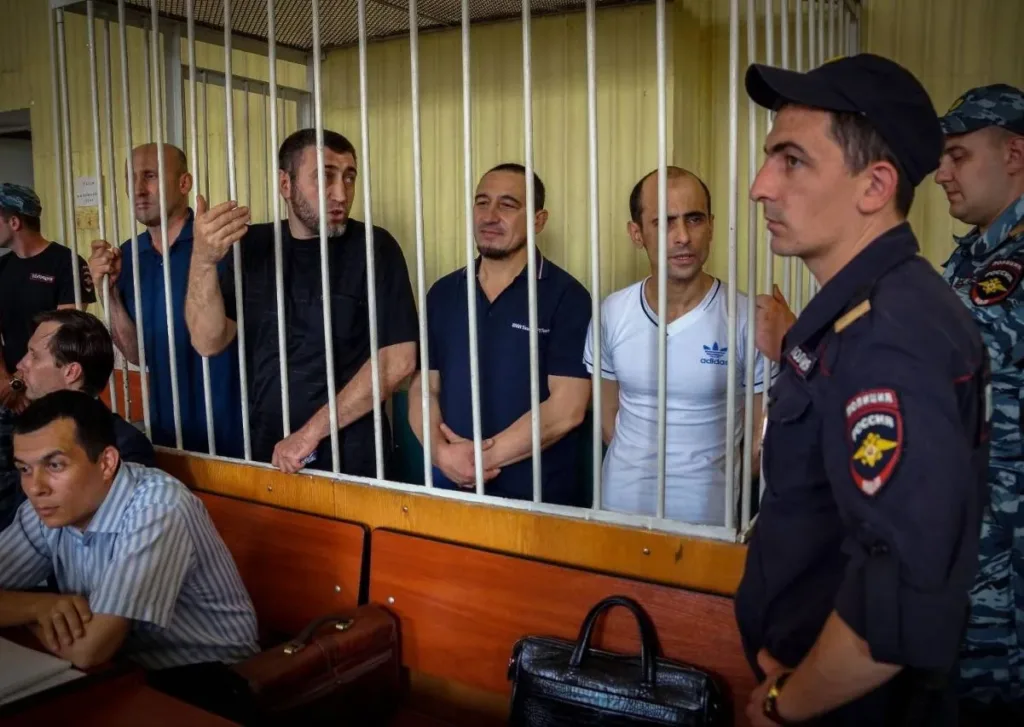
Crimean Tatars accused of involvement with the Islamic party Hizb ut‑Tahrir at the
Kyivskyi District Court in Simferopol, 2017. Photo: Anton Naumlyuk
Crimean Tatars accused of involvement with the Islamic party Hizb ut‑Tahrir at the
Kyivskyi District Court in Simferopol, 2017. Photo: Anton Naumlyuk
III. BACKGROUND

The repressive mechanisms discussed here emerged in the immediate aftermath of Russia’s annexation of Crimea in March 2014. This targeted persecution has only escalated following the February 2022 invasion of Ukraine.

The repressive mechanisms discussed here emerged in the immediate aftermath of Russia’s annexation of Crimea in March 2014. This targeted persecution has only escalated following the February 2022 invasion of Ukraine.

A. The First Wave of Prosecutions, 2015–2021

Mass political prosecutions of Crimean civilians began in January 2015, targeting Crimean Tatars. The first charges related to alleged mass disorder at the February 26, 2014, rally outside the Crimean parliament in Simferopol. Activists had gathered to block the session at which pro‑Russian deputies planned to vote for separation from Ukraine, and eight Crimean Tatars were charged, including Deputy Mejlis Chairman Akhtem Chiygoz.

In parallel, beginning in early 2015, Russian security services initiated prosecutions of Crimean Muslims under Russian counter‑terrorism law for alleged membership in Hizb ut‑Tahrir, a non‑violent Islamist political party banned in Russia since 2003 but legal in Ukraine and most European countries. The retroactive application of Russia’s terrorism ban to Crimea transformed ordinary religious activity into a criminal offense carrying sentences of up to 15 years. According to Support for Political Prisoners Memorial, more than 220 people had been persecuted in connection with Hizb ut‑Tahrir activity in Crimea. Many of whom have been tried before the Southern Military District Court in Rostov‑on-Don, requiring prisoners to be transferred from the peninsula.

Russian authorities also moved against the institutional framework of Crimean Tatar self‑governance. In 2016, the Crimean Supreme Court declared the Mejlis, the representative body of the Crimean Tatar people, an ‘extremist organization’ with the Russian Supreme Court upholding the ban later that year. Leadership roles within the Mejlis, previously a mark of civic distinction, became criminal liabilities overnight. The United Nations General Assembly, the European Parliament, and multiple states and international human rights bodies have condemned the ban as a violation of “the rights of minorities and indigenous peoples.”

A further body of prosecutions targeted individuals with real or alleged connections to the volunteer battalion named after Noman Çelebicihan, established by Crimean Tatar entrepreneur Lenur Islyamov on Ukrainian‑controlled territory. More than 30 people were prosecuted, including journalists who had covered the battalion’s participation in a 2015 energy blockade of Crimea.

By early 2022, there were at least 230 political prisoners in Crimea. The Russian judicial system deliberately conceals information about detainees, making precise quantification impossible; the true figure is certainly higher.

Mass political prosecutions of Crimean civilians began in January 2015, targeting Crimean Tatars. The first charges related to alleged mass disorder at the February 26, 2014, rally outside the Crimean parliament in Simferopol. Activists had gathered to block the session at which pro‑Russian deputies planned to vote for separation from Ukraine, and eight Crimean Tatars were charged, including Deputy Mejlis Chairman Akhtem Chiygoz.

In parallel, beginning in early 2015, Russian security services initiated prosecutions of Crimean Muslims under Russian counter‑terrorism law for alleged membership in Hizb ut‑Tahrir, a non‑violent Islamist political party banned in Russia since 2003 but legal in Ukraine and most European countries. The retroactive application of Russia’s terrorism ban to Crimea transformed ordinary religious activity into a criminal offense carrying sentences of up to 15 years. According to Support for Political Prisoners Memorial, more than 220 people had been persecuted in connection with Hizb ut‑Tahrir activity in Crimea. Many of whom have been tried before the Southern Military District Court in Rostov‑on-Don, requiring prisoners to be transferred from the peninsula.

Russian authorities also moved against the institutional framework of Crimean Tatar self‑governance. In 2016, the Crimean Supreme Court declared the Mejlis, the representative body of the Crimean Tatar people, an ‘extremist organization’ with the Russian Supreme Court upholding the ban later that year. Leadership roles within the Mejlis, previously a mark of civic distinction, became criminal liabilities overnight. The United Nations General Assembly, the European Parliament, and multiple states and international human rights bodies have condemned the ban as a violation of “the rights of minorities and indigenous peoples.”

A further body of prosecutions targeted individuals with real or alleged connections to the volunteer battalion named after Noman Çelebicihan, established by Crimean Tatar entrepreneur Lenur Islyamov on Ukrainian‑controlled territory. More than 30 people were prosecuted, including journalists who had covered the battalion’s participation in a 2015 energy blockade of Crimea.

By early 2022, there were at least 230 political prisoners in Crimea. The Russian judicial system deliberately conceals information about detainees, making precise quantification impossible; the true figure is certainly higher.

B. Escalation After February 2022

Russia’s full‑scale invasion of Ukraine in February 2022 transformed the repressive landscape in Crimea along three dimensions:

Russia’s full‑scale invasion of Ukraine in February 2022 transformed the repressive landscape in Crimea along three dimensions:

  • the breadth of target groups expanded dramatically;
  • new legislative instruments were introduced;
  • and the mechanisms of oversight and accountability were systematically dismantled.
  • the breadth of target groups expanded dramatically;
  • new legislative instruments were introduced;
  • and the mechanisms of oversight and accountability were systematically dismantled.

Before 2022, political prosecutions targeted primarily Crimean Tatars and, to a lesser extent, Ukrainian activists. After February 2022, the repression extended to include any expression of opposition to the war or to Russian rule, regardless of ethnicity. New ‘war‑related’ criminal and administrative statutes, most notably provisions criminalizing the ‘discrediting’ of the armed forces and the dissemination of ‘false information’ about them, were introduced and immediately applied across Crimea with sweeping breadth. In 2023 alone, at least 370 people in Crimea faced administrative prosecution for discrediting the army.

Russia’s exclusion from the Council of Europe and its withdrawal from the European Convention on Human Rights in 2022 removed the last meaningful supranational oversight mechanism for detainees in Russian custody. Domestic accountability mechanisms were further weakened: courts became almost entirely closed to independent scrutiny; penal system abuses became practically unpunishable; and a number of Crimean defense lawyers who had specialized in representing political prisoners were stripped of their bar membership between 2022 and 2024. These disbarments have left many current—and will leave many future—detainees without competent representation at the most dangerous stage of their captivity.

Before 2022, political prosecutions targeted primarily Crimean Tatars and, to a lesser extent, Ukrainian activists. After February 2022, the repression extended to include any expression of opposition to the war or to Russian rule, regardless of ethnicity. New ‘war‑related’ criminal and administrative statutes, most notably provisions criminalizing the ‘discrediting’ of the armed forces and the dissemination of ‘false information’ about them, were introduced and immediately applied across Crimea with sweeping breadth. In 2023 alone, at least 370 people in Crimea faced administrative prosecution for discrediting the army.

Russia’s exclusion from the Council of Europe and its withdrawal from the European Convention on Human Rights in 2022 removed the last meaningful supranational oversight mechanism for detainees in Russian custody. Domestic accountability mechanisms were further weakened: courts became almost entirely closed to independent scrutiny; penal system abuses became practically unpunishable; and a number of Crimean defense lawyers who had specialized in representing political prisoners were stripped of their bar membership between 2022 and 2024. These disbarments have left many current—and will leave many future—detainees without competent representation at the most dangerous stage of their captivity.

C. The Detention and Transfer System

Crimea’s detention facilities include: SIZO No. 1 in Simferopol, a pre‑revolutionary facility with a nominal capacity of 747 that is routinely operated at two to three times that figure; SIZO No. 2, constructed hastily in 2022 for the surge of post‑invasion detentions; and SIZO No. 8, carved from a wing of SIZO No. 2 and controlled by the Federal Security Service (FSB) rather than FSIN (Federal Penitentiary Service), used to hold prisoners in complete incommunicado isolation. Crimea also has two penal colonies: a strict‑regime facility in Simferopol (capacity 515) and a general‑regime facility in Kerch (capacity 710), with a combined capacity far below the number of convicted political prisoners requiring placement.

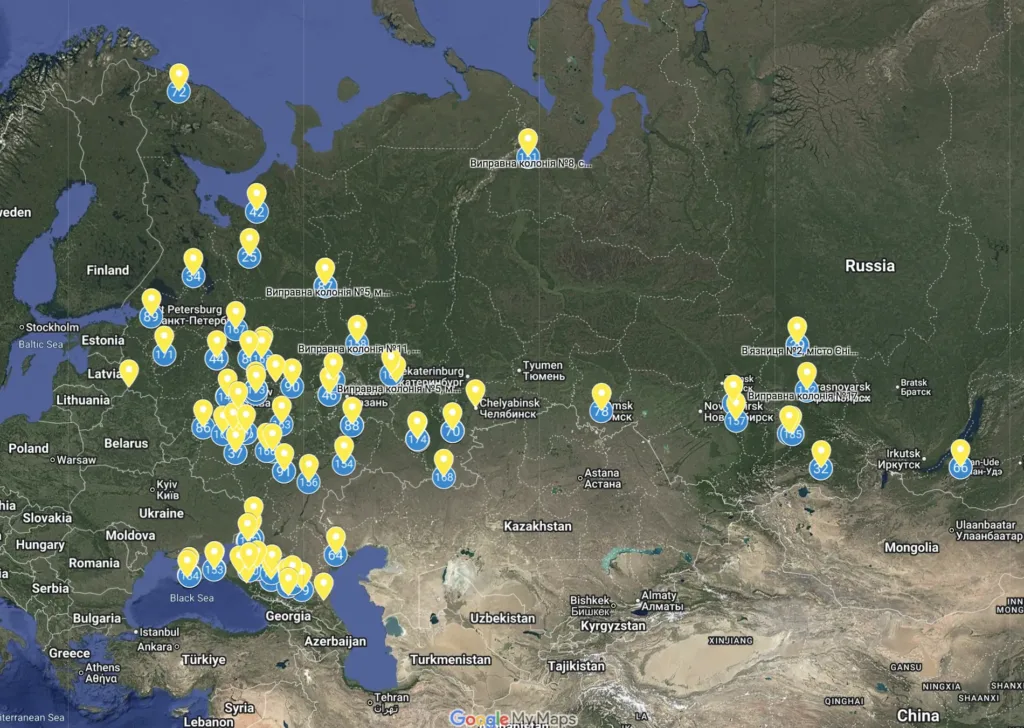
Once convicted, prisoners whose cases were heard before the Southern Military District Court in Rostov‑on-Don (the jurisdiction for all terrorism cases from occupied Ukrainian territories) are processed for colony placement by the Central Apparatus of FSIN in Moscow. Article 73 of the Penal Execution Code of the Russian Federation requires that convicted persons be placed as close as possible to their place of residence. In practice, Crimean political prisoners are routinely assigned to colonies in the Urals, Siberia, and the Russian Far East, facilities located between 2,000 and 6,000 kilometers (between 1,200 and 3,800 miles) from Crimea. Transfer proceeds by rail, in archaic Stolypin wagons, through a network of transit facilities spread across Russia’s geography. During this transit phase, the FSIN are not required to notify family members or lawyers of the prisoner’s whereabouts. The prisoner effectively disappears.

Crimea’s detention facilities include: SIZO No. 1 in Simferopol, a pre‑revolutionary facility with a nominal capacity of 747 that is routinely operated at two to three times that figure; SIZO No. 2, constructed hastily in 2022 for the surge of post‑invasion detentions; and SIZO No. 8, carved from a wing of SIZO No. 2 and controlled by the Federal Security Service (FSB) rather than FSIN (Federal Penitentiary Service), used to hold prisoners in complete incommunicado isolation. Crimea also has two penal colonies: a strict‑regime facility in Simferopol (capacity 515) and a general‑regime facility in Kerch (capacity 710), with a combined capacity far below the number of convicted political prisoners requiring placement.

Once convicted, prisoners whose cases were heard before the Southern Military District Court in Rostov‑on-Don (the jurisdiction for all terrorism cases from occupied Ukrainian territories) are processed for colony placement by the Central Apparatus of FSIN in Moscow. Article 73 of the Penal Execution Code of the Russian Federation requires that convicted persons be placed as close as possible to their place of residence. In practice, Crimean political prisoners are routinely assigned to colonies in the Urals, Siberia, and the Russian Far East, facilities located between 2,000 and 6,000 kilometers (between 1,200 and 3,800 miles) from Crimea. Transfer proceeds by rail, in archaic Stolypin wagons, through a network of transit facilities spread across Russia’s geography. During this transit phase, the FSIN are not required to notify family members or lawyers of the prisoner’s whereabouts. The prisoner effectively disappears.

IV. CASE STUDIES

Publicly documented cases below show that the use of forced transfers is not a collection of isolated administrative decisions but a consistent, deliberate, and systematic practice. The following cases illustrate different dimensions of how the transfer system operates. Where ongoing security concerns exist, identifying details have been redacted or altered to protect individuals and their families.

Publicly documented cases below show that the use of forced transfers is not a collection of isolated administrative decisions but a consistent, deliberate, and systematic practice. The following cases illustrate different dimensions of how the transfer system operates. Where ongoing security concerns exist, identifying details have been redacted or altered to protect individuals and their families.

Case 1. The Group of 24: Mass Transfer at the Investigation Stage

In spring 2019, Russian security services arrested a group of Crimean Muslims on Hizb ut‑Tahrir membership charges in what became known as the ‘Group of 24’ case. The number of those arrested exceeded the available capacity at Crimea’s SIZO No. 1. Rather than await the opening of SIZO No. 2, which would not have been completed until 2022, Russian authorities transferred all of them immediately to pre‑trial detention facilities in Rostov Oblast (Shakhty and Taganrog) and Krasnodar Krai (Armavir and Krasnodar itself). This was the first major case in which the transfer system was deployed at the pre‑trial stage. Families were separated from their detained relatives during the entire investigation and trial. For the first time, the case made the geography of the transfer pipeline visible to human rights monitors.
In spring 2019, Russian security services arrested a group of Crimean Muslims on Hizb ut‑Tahrir membership charges in what became known as the ‘Group of 24’ case. The number of those arrested exceeded the available capacity at Crimea’s SIZO No. 1. Rather than await the opening of SIZO No. 2, which would not have been completed until 2022, Russian authorities transferred all of them immediately to pre‑trial detention facilities in Rostov Oblast (Shakhty and Taganrog) and Krasnodar Krai (Armavir and Krasnodar itself). This was the first major case in which the transfer system was deployed at the pre‑trial stage. Families were separated from their detained relatives during the entire investigation and trial. For the first time, the case made the geography of the transfer pipeline visible to human rights monitors.

Map showing where and how many Crimean Tatars are imprisoned in Russia. Source: Political Prisoners in Ukraine database
Case 2. The 24 Ukrainian Sailors: Immediate Removal to Moscow

In November 2018, Russian forces seized three Ukrainian naval vessels in the Kerch Strait and detained 24 sailors. The sailors were transferred immediately to Lefortovo pre‑trial detention facility in Moscow (roughly 1,700 kilometers from Crimea) where they were held for eight months until their release as part of a prisoner exchange in September 2019. Their case illustrated the use of immediate geographic removal as a tool of pressure and isolation, independent of any legitimate penitentiary capacity argument (Lefortovo is a high‑security FSB facility, not a location selected on grounds of proximity).

In November 2018, Russian forces seized three Ukrainian naval vessels in the Kerch Strait and detained 24 sailors. The sailors were transferred immediately to Lefortovo pre‑trial detention facility in Moscow (roughly 1,700 kilometers from Crimea) where they were held for eight months until their release as part of a prisoner exchange in September 2019. Their case illustrated the use of immediate geographic removal as a tool of pressure and isolation, independent of any legitimate penitentiary capacity argument (Lefortovo is a high‑security FSB facility, not a location selected on grounds of proximity).

Case 3. Arsen Abkhairov: A Partial Victory Rendered Meaningless

Arsen Abkhairov, a Crimean Tatar convicted on Hizb ut‑Tahrir membership charges, was transferred following his conviction to a penal colony in the Republic of Buryatia (more than 6,000 kilometers from Crimea). His defense team challenged the placement, not in local courts in Crimea or Buryatia, but in the Zamoskvoretsky District Court in Moscow. Surprisingly, the court found in his favor. FSIN was ordered to reconsider the placement. Rather than transferring him to Crimea (where penal colony places were available), FSIN moved him to the Republic of Chuvashia, still thousands of kilometers from home. The ruling was treated as an inconvenience rather than a binding obligation. No subsequent challenge to the transfer of a Crimean political prisoner has been adjudicated on its merits by any Russian court.

Arsen Abkhairov, a Crimean Tatar convicted on Hizb ut‑Tahrir membership charges, was transferred following his conviction to a penal colony in the Republic of Buryatia (more than 6,000 kilometers from Crimea). His defense team challenged the placement, not in local courts in Crimea or Buryatia, but in the Zamoskvoretsky District Court in Moscow. Surprisingly, the court found in his favor. FSIN was ordered to reconsider the placement. Rather than transferring him to Crimea (where penal colony places were available), FSIN moved him to the Republic of Chuvashia, still thousands of kilometers from home. The ruling was treated as an inconvenience rather than a binding obligation. No subsequent challenge to the transfer of a Crimean political prisoner has been adjudicated on its merits by any Russian court.

Case 4. Riza Izetov: Available Places, Ignored

Riza Izetov is a Crimean Tatar convicted on Hizb ut‑Tahrir charges and transferred to a distant colony. Litigation conducted by his defense team established that available places existed not only in Crimea’s own penal colonies but also in adjacent Russian regions (e.g., Krasnodar Krai, the North Caucasus) that would have placed him significantly closer to his family. FSIN nonetheless transferred him to a facility far from home. Izetov’s case provides direct evidence that FSIN’s violation of Article 73 of the Penal Execution Code is not driven by capacity constraints. Authorities made a deliberate choice to violate Izetov’s rights.

Riza Izetov is a Crimean Tatar convicted on Hizb ut‑Tahrir charges and transferred to a distant colony. Litigation conducted by his defense team established that available places existed not only in Crimea’s own penal colonies but also in adjacent Russian regions (e.g., Krasnodar Krai, the North Caucasus) that would have placed him significantly closer to his family. FSIN nonetheless transferred him to a facility far from home. Izetov’s case provides direct evidence that FSIN’s violation of Article 73 of the Penal Execution Code is not driven by capacity constraints. Authorities made a deliberate choice to violate Izetov’s rights.

Case 5. The Stolypin Transit: Punishment Without Conviction

Multiple Crimean political prisoners have documented the conditions of their rail transfer to distant colonies. The transit process conducted in Stolypin wagons can last months. Prisoners move from one transit facility to the next, each stop determined by the availability of the next convoy in the direction of their assigned colony. Credible reports from former detainees describe systematic beatings by escorts, denial of medical care, severe illness from exposure to extreme temperatures, and the complete absence of any accommodation for prisoners with disabilities or medical conditions. For example, one prisoner was transferred while effectively blind and in need of assistance. During transit, prisoners have no access to any accountability mechanisms – they cannot file a complaint, request a medical inspection, or contact counsel. The transit itself becomes an additional punishment, one that exists entirely outside of the law’s reach.

Multiple Crimean political prisoners have documented the conditions of their rail transfer to distant colonies. The transit process conducted in Stolypin wagons can last months. Prisoners move from one transit facility to the next, each stop determined by the availability of the next convoy in the direction of their assigned colony. Credible reports from former detainees describe systematic beatings by escorts, denial of medical care, severe illness from exposure to extreme temperatures, and the complete absence of any accommodation for prisoners with disabilities or medical conditions. For example, one prisoner was transferred while effectively blind and in need of assistance. During transit, prisoners have no access to any accountability mechanisms – they cannot file a complaint, request a medical inspection, or contact counsel. The transit itself becomes an additional punishment, one that exists entirely outside of the law’s reach.

V. LEGAL ANALYSIS

The International Court of Justice has established that international human rights law and international humanitarian law apply concurrently during armed conflict and occupation. The forcible transfer of Crimean political prisoners must be evaluated against this integrated framework, which reveals violations at several levels: international humanitarian law, international human rights law, and Russia’s own domestic legislation.

The International Court of Justice has established that international human rights law and international humanitarian law apply concurrently during armed conflict and occupation. The forcible transfer of Crimean political prisoners must be evaluated against this integrated framework, which reveals violations at several levels: international humanitarian law, international human rights law, and Russia’s own domestic legislation.

A. International Humanitarian Law

The Fourth Geneva Convention of 1949, to which Russia has been a party since 1954, directly addresses the transfer of Crimean political prisoners thousands of miles from their homes. Article 49 provides that “[i]ndividual or mass forcible transfers, as well as deportations of protected persons from occupied territory to the territory of the Occupying Power or to that of any other country, occupied or not, are prohibited, regardless of their motive.”

Russia does not acknowledge the occupation of Crimea, asserting instead that the peninsula was lawfully incorporated into the Russian Federation following a referendum in March 2014. This position is rejected by the overwhelming majority of the international community. UN General Assembly Resolution 68/262 reaffirmed Ukraine’s territorial integrity and declared the referendum invalid. Furthermore, the International Court of Justice previously held that the Fourth Geneva Convention applies to all occupied territories as a matter of treaty and customary law, regardless of whether the occupying power acknowledges the occupation.

The prohibition in Article 49 is absolute. Beyond evacuation of an area for a military necessity, it admits of no exception, whether based on the stated purpose of the transfer, the severity of the alleged offense, or any security justification advanced by the occupying power. Russia’s designation of Crimean political prisoners as ‘terrorists’ or ‘extremists’ does not change their status as protected persons under the GC IV. The Convention's protections attach to the fact of occupation, not to the occupying power's classification of those it detains. Furthermore, that their conduct was lawful under the law in force at the time (Ukrainian law) only reinforces the conclusion that their prosecution and subsequent transfer constitute prohibited deportation, not a lawful exercise of penal jurisdiction.

Article 76 of the Fourth Geneva Convention further requires that “protected persons accused of offenses . . . be detained in the occupied territory,” tried by properly constituted courts within that territory, and, if convicted, serve any sentence within the occupied country. The trial of Crimean political prisoners before the Southern Military District Court in Rostov‑on-Don violates this provision directly, as does their subsequent imprisonment in distant colonies.

Customary International Humanitarian Law, as codified by the International Committee of the Red Cross in its Customary IHL Study, Rule 129, reaffirms this prohibition as binding on all parties to any armed conflict, regardless of whether they have ratified relevant treaties.

The Fourth Geneva Convention of 1949, to which Russia has been a party since 1954, directly addresses the transfer of Crimean political prisoners thousands of miles from their homes. Article 49 provides that “[i]ndividual or mass forcible transfers, as well as deportations of protected persons from occupied territory to the territory of the Occupying Power or to that of any other country, occupied or not, are prohibited, regardless of their motive.”

Russia does not acknowledge the occupation of Crimea, asserting instead that the peninsula was lawfully incorporated into the Russian Federation following a referendum in March 2014. This position is rejected by the overwhelming majority of the international community. UN General Assembly Resolution 68/262 reaffirmed Ukraine’s territorial integrity and declared the referendum invalid. Furthermore, the International Court of Justice previously held that the Fourth Geneva Convention applies to all occupied territories as a matter of treaty and customary law, regardless of whether the occupying power acknowledges the occupation.

The prohibition in Article 49 is absolute. Beyond evacuation of an area for a military necessity, it admits of no exception, whether based on the stated purpose of the transfer, the severity of the alleged offense, or any security justification advanced by the occupying power. Russia’s designation of Crimean political prisoners as ‘terrorists’ or ‘extremists’ does not change their status as protected persons under the GC IV. The Convention's protections attach to the fact of occupation, not to the occupying power's classification of those it detains. Furthermore, that their conduct was lawful under the law in force at the time (Ukrainian law) only reinforces the conclusion that their prosecution and subsequent transfer constitute prohibited deportation, not a lawful exercise of penal jurisdiction.

Article 76 of the Fourth Geneva Convention further requires that “protected persons accused of offenses . . . be detained in the occupied territory,” tried by properly constituted courts within that territory, and, if convicted, serve any sentence within the occupied country. The trial of Crimean political prisoners before the Southern Military District Court in Rostov‑on-Don violates this provision directly, as does their subsequent imprisonment in distant colonies.

Customary International Humanitarian Law, as codified by the International Committee of the Red Cross in its Customary IHL Study, Rule 129, reaffirms this prohibition as binding on all parties to any armed conflict, regardless of whether they have ratified relevant treaties.

B. International Human Rights Law

Russia is a party to the International Covenant on Civil and Political Rights (ICCPR) and the Convention Against Torture, both of which are directly implicated by the transfer practice.

The transfer of prisoners to locations thousands of kilometers from their families, with incommunicado periods during which their location is unknown, constitutes arbitrary interference with family life in violation of ICCPR Article 17. Additionally, the conditions documented during the Stolypin transit phase, including beatings, denial of medical care, exposure to extreme temperatures, the absence of any accommodation for prisoners with disabilities that constitute cruel, inhuman, or degrading treatment in violation of ICCPR Article 7 and the absolute prohibitions of the Convention Against Torture. These prohibitions admit of no derogation under any circumstances, including armed conflict or public emergency. The disbarment of the five Crimean lawyers who represented political prisoners has rendered hundreds of detainees unable to obtain competent representation and further violates the fair trial guarantees of ICCPR Articles 9 and 14.
Russia is a party to the International Covenant on Civil and Political Rights (ICCPR) and the Convention Against Torture, both of which are directly implicated by the transfer practice.

The transfer of prisoners to locations thousands of kilometers from their families, with incommunicado periods during which their location is unknown, constitutes arbitrary interference with family life in violation of ICCPR Article 17. Additionally, the conditions documented during the Stolypin transit phase, including beatings, denial of medical care, exposure to extreme temperatures, the absence of any accommodation for prisoners with disabilities that constitute cruel, inhuman, or degrading treatment in violation of ICCPR Article 7 and the absolute prohibitions of the Convention Against Torture. These prohibitions admit of no derogation under any circumstances, including armed conflict or public emergency. The disbarment of the five Crimean lawyers who represented political prisoners has rendered hundreds of detainees unable to obtain competent representation and further violates the fair trial guarantees of ICCPR Articles 9 and 14.

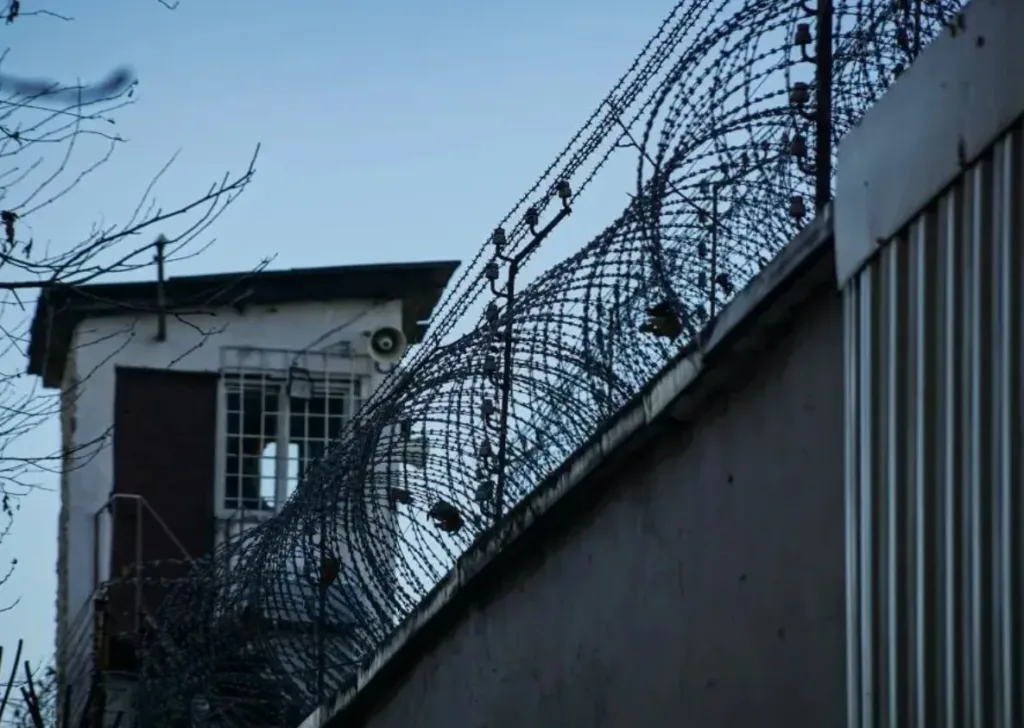
Pretrial detention center in Simferopol. Photo: Anton Naumlyuk

The disproportionate targeting of Crimean Tatars through the transfer system also implicates the UN Declaration on the Rights of Indigenous Peoples. Crimean Tatars are formally recognized as an indigenous people of Ukraine under the Verkhovna Rada’s Law on Indigenous Peoples of July 2021. Articles 7, 8, and 10 are engaged: Article 10 prohibits the forcible removal of indigenous peoples from their lands and territories; Article 8 prohibits actions aimed at depriving indigenous peoples of their integrity as distinct peoples; and Article 7 guarantees their collective right to live in freedom and security as a distinct people. The systematic removal of Crimean Tatar prisoners to distant colonies, and effectively severing their connection to their ancestral homeland during their period of imprisonment constitutes a violation of these provisions, particularly in the context of an ongoing occupation and the systematic elimination of the Crimean Tatar presence on the peninsula.

The disproportionate targeting of Crimean Tatars through the transfer system also implicates the UN Declaration on the Rights of Indigenous Peoples. Crimean Tatars are formally recognized as an indigenous people of Ukraine under the Verkhovna Rada’s Law on Indigenous Peoples of July 2021. Articles 7, 8, and 10 are engaged: Article 10 prohibits the forcible removal of indigenous peoples from their lands and territories; Article 8 prohibits actions aimed at depriving indigenous peoples of their integrity as distinct peoples; and Article 7 guarantees their collective right to live in freedom and security as a distinct people. The systematic removal of Crimean Tatar prisoners to distant colonies, and effectively severing their connection to their ancestral homeland during their period of imprisonment constitutes a violation of these provisions, particularly in the context of an ongoing occupation and the systematic elimination of the Crimean Tatar presence on the peninsula.

C. Russian Domestic Law

Russia’s own penitentiary legislation formally prohibits the practice documented in this paper. Article 73 of the Penal Execution Code requires that convicted persons be placed in penal colonies within the region of the Russian Federation in which they permanently resided or were convicted. Where this is not possible due to capacity constraints or other circumstances, they are to be sent to the nearest available colony.

Defense lawyers have clearly established that available places existed in Crimean penal colonies, and that the Crimean FSIN directorate is aware of this availability when making its placement recommendations. The violation of Article 73 is therefore not a product of operational necessity, but rather a deliberate decision by the FSIN in Moscow, which has final authority over all placement decisions, and which operates without any oversight or accountability mechanism.

The placement decision‑making process is structured to be unchallengeable. The FSIN acts on the basis of a recommendation from the Crimean FSIN directorate, which is in turn based on a character assessment prepared by the administration of the detention facility where the prisoner was held. Neither the prisoner nor their lawyer has access to the character assessment, the recommendation, or the placement decision before it is made final. Russian courts have routinely declined to adjudicate challenges on legal grounds and applications are rarely considered.

Russia’s own penitentiary legislation formally prohibits the practice documented in this paper. Article 73 of the Penal Execution Code requires that convicted persons be placed in penal colonies within the region of the Russian Federation in which they permanently resided or were convicted. Where this is not possible due to capacity constraints or other circumstances, they are to be sent to the nearest available colony.

Defense lawyers have clearly established that available places existed in Crimean penal colonies, and that the Crimean FSIN directorate is aware of this availability when making its placement recommendations. The violation of Article 73 is therefore not a product of operational necessity, but rather a deliberate decision by the FSIN in Moscow, which has final authority over all placement decisions, and which operates without any oversight or accountability mechanism.

The placement decision‑making process is structured to be unchallengeable. The FSIN acts on the basis of a recommendation from the Crimean FSIN directorate, which is in turn based on a character assessment prepared by the administration of the detention facility where the prisoner was held. Neither the prisoner nor their lawyer has access to the character assessment, the recommendation, or the placement decision before it is made final. Russian courts have routinely declined to adjudicate challenges on legal grounds and applications are rarely considered.

D. The Threshold for Crimes Against Humanity

The Rome Statute of the International Criminal Court defines deportation or forcible transfer of population as a crime against humanity when committed as part of a widespread or systematic attack directed against any civilian population. The body of conduct documented in this paper appears to satisfy each element of this offense: a widespread or systematic attack, directed against a civilian population, encompassing acts of forcible transfer.

The transfer system is not a collection of isolated administrative decisions. It is a centrally administered and consistently applied policy that has operated continuously since 2016 and has affected hundreds of individuals. It is directed against the civilian population of occupied Crimea, and disproportionately against the Crimean Tatar indigenous community. Prisoners have no meaningful mechanism to avoid transfer, cannot influence placement decisions, and face a legal system that refuses to hear their challenges. The transfers are therefore forcible in character, not merely administrative.

The factual record very likely establishes the threshold required for crimes against humanity under the Rome Statute: the conduct is systematic, centrally directed, coercive, and targeted against a civilian population.

The Rome Statute of the International Criminal Court defines deportation or forcible transfer of population as a crime against humanity when committed as part of a widespread or systematic attack directed against any civilian population. The body of conduct documented in this paper appears to satisfy each element of this offense: a widespread or systematic attack, directed against a civilian population, encompassing acts of forcible transfer.

The transfer system is not a collection of isolated administrative decisions. It is a centrally administered and consistently applied policy that has operated continuously since 2016 and has affected hundreds of individuals. It is directed against the civilian population of occupied Crimea, and disproportionately against the Crimean Tatar indigenous community. Prisoners have no meaningful mechanism to avoid transfer, cannot influence placement decisions, and face a legal system that refuses to hear their challenges. The transfers are therefore forcible in character, not merely administrative.

The factual record very likely establishes the threshold required for crimes against humanity under the Rome Statute: the conduct is systematic, centrally directed, coercive, and targeted against a civilian population.

VI. RECOMMENDATIONS

To address the serious and systematic violations of international and domestic law documented in this paper, the Free Russia Foundation offers the following recommendations.

To the Russian Federation, FRF demands:

To address the serious and systematic violations of international and domestic law documented in this paper, the Free Russia Foundation offers the following recommendations.

To the Russian Federation, FRF demands:

  • Immediately cease the transfer of convicted Crimean political prisoners to penal colonies in Russia and return all such prisoners currently held in distant colonies to facilities within Crimea or the immediately adjacent regions of Russia, in compliance with Article 73 of the Penal Execution Code and Article 49 of the Fourth Geneva Convention.
  • Release all Crimean political prisoners prosecuted on fabricated terrorism, extremism, or war‑related charges for conduct protected under international law, including peaceful religious practice, political expression, and support for Ukrainian sovereignty.
  • Revoke the designation of the Mejlis as an extremist organization and restore the right of the Crimean Tatar people to their representative and executive institutions.
  • Restore the bar association membership of the Crimean defense lawyers disbarred for representing political prisoners and guarantee the right of all detainees in Crimea to access independent legal representation.
  • Provide full transparency regarding the whereabouts of all detainees during transit, and ensure that family members and legal representatives are notified of transfers in advance and that every reasonable effort is made to keep them informed of the prisoner’s location.
  • End the use of torture, cruel, inhuman, or degrading treatment during transit and detention, investigate all credible allegations of abuse, and hold perpetrators accountable.
  • Immediately cease the transfer of convicted Crimean political prisoners to penal colonies in Russia and return all such prisoners currently held in distant colonies to facilities within Crimea or the immediately adjacent regions of Russia, in compliance with Article 73 of the Penal Execution Code and Article 49 of the Fourth Geneva Convention.
  • Release all Crimean political prisoners prosecuted on fabricated terrorism, extremism, or war‑related charges for conduct protected under international law, including peaceful religious practice, political expression, and support for Ukrainian sovereignty.
  • Revoke the designation of the Mejlis as an extremist organization and restore the right of the Crimean Tatar people to their representative and executive institutions.
  • Restore the bar association membership of the Crimean defense lawyers disbarred for representing political prisoners and guarantee the right of all detainees in Crimea to access independent legal representation.
  • Provide full transparency regarding the whereabouts of all detainees during transit, and ensure that family members and legal representatives are notified of transfers in advance and that every reasonable effort is made to keep them informed of the prisoner’s location.
  • End the use of torture, cruel, inhuman, or degrading treatment during transit and detention, investigate all credible allegations of abuse, and hold perpetrators accountable.

To the international community, FRF urges to:

To the international community, FRF urges to:

  • Formally and explicitly recognize the transfer of Crimean political prisoners to distant Russian penal colonies as a violation of Article 49 of the Fourth Geneva Convention, and denounce this practice in all UN Human Rights Council resolutions, European Parliament resolutions, and national human rights reports addressing the situation in occupied Crimea.
  • Include deportation within the mandate of any accountability mechanisms established to address crimes committed during Russia’s occupation of Ukrainian territory, including the proposed Special Tribunal for the crime of aggression.
  • Impose targeted sanctions such as visa bans and asset freezes on senior officials of the Central Apparatus of FSIN responsible for colony placement decisions, on the heads of Crimean SIZO and colony administrations where systematic abuse during transfer has been documented, and on FSB officials responsible for the operation of SIZO No. 8.
  • Support universal jurisdiction investigations in states with applicable domestic legislation, targeted at the officials responsible for the transfer policy and for the documented abuse of detainees during transit.
  • Fund and support the documentation efforts of Ukrainian civil society organizations tracking the locations of transferred prisoners, including satellite‑based monitoring and the maintenance of secure case registries.
  • Ensure that any prisoner exchange negotiations encompass civilian political prisoners, including those held on terrorism‑related charges, and that releases are not conditioned on forced renunciation of rights or coerced confessions.
  • Formally and explicitly recognize the transfer of Crimean political prisoners to distant Russian penal colonies as a violation of Article 49 of the Fourth Geneva Convention, and denounce this practice in all UN Human Rights Council resolutions, European Parliament resolutions, and national human rights reports addressing the situation in occupied Crimea.
  • Include deportation within the mandate of any accountability mechanisms established to address crimes committed during Russia’s occupation of Ukrainian territory, including the proposed Special Tribunal for the crime of aggression.
  • Impose targeted sanctions such as visa bans and asset freezes on senior officials of the Central Apparatus of FSIN responsible for colony placement decisions, on the heads of Crimean SIZO and colony administrations where systematic abuse during transfer has been documented, and on FSB officials responsible for the operation of SIZO No. 8.
  • Support universal jurisdiction investigations in states with applicable domestic legislation, targeted at the officials responsible for the transfer policy and for the documented abuse of detainees during transit.
  • Fund and support the documentation efforts of Ukrainian civil society organizations tracking the locations of transferred prisoners, including satellite‑based monitoring and the maintenance of secure case registries.
  • Ensure that any prisoner exchange negotiations encompass civilian political prisoners, including those held on terrorism‑related charges, and that releases are not conditioned on forced renunciation of rights or coerced confessions.

To Civil Society Organizations, FRF urges to:

To Civil Society Organizations, FRF urges to:

  • Establish and maintain secure, encrypted documentation networks for recording transfer cases, including the legal grounds for transfers, the distances involved, documented conditions during transit, and the ongoing situations of transferred prisoners in their assigned colonies.
  • Prepare and submit cases to available international accountability mechanisms including UN treaty bodies and special rapporteurs, while leveraging universal jurisdiction investigations in third states, ensuring that evidentiary standards are met and that cases are filed on behalf of, and with the informed consent of, the affected individuals and their families.
  • Support the disbarred Crimean lawyers and advocate for the development of international mechanisms to extend bar association recognition and professional protection to defense lawyers operating under occupation.
  • Develop and disseminate public documentation establishing the historical continuity between the 1944 deportation and the current transfer practice, to provide context for international audiences and to support the legal argument that prison transfers of this nature constitute a systematic attack on the Crimean Tatar indigenous people.
  • Provide legal aid, psychological support, and practical assistance to the families of transferred prisoners who bear the compound burden of imprisonment and geographic separation and to those prisoners who are eventually released.
  • Establish and maintain secure, encrypted documentation networks for recording transfer cases, including the legal grounds for transfers, the distances involved, documented conditions during transit, and the ongoing situations of transferred prisoners in their assigned colonies.
  • Prepare and submit cases to available international accountability mechanisms including UN treaty bodies and special rapporteurs, while leveraging universal jurisdiction investigations in third states, ensuring that evidentiary standards are met and that cases are filed on behalf of, and with the informed consent of, the affected individuals and their families.
  • Support the disbarred Crimean lawyers and advocate for the development of international mechanisms to extend bar association recognition and professional protection to defense lawyers operating under occupation.
  • Develop and disseminate public documentation establishing the historical continuity between the 1944 deportation and the current transfer practice, to provide context for international audiences and to support the legal argument that prison transfers of this nature constitute a systematic attack on the Crimean Tatar indigenous people.
  • Provide legal aid, psychological support, and practical assistance to the families of transferred prisoners who bear the compound burden of imprisonment and geographic separation and to those prisoners who are eventually released.
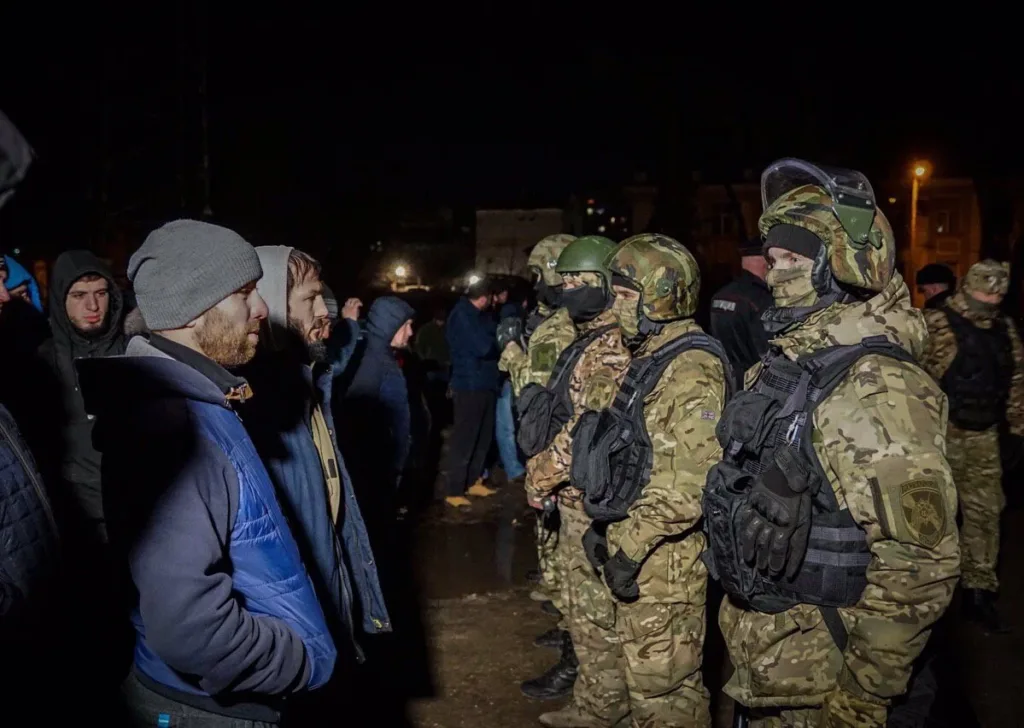
Crimean Muslims outside the courthouse, facing Russian security forces. Photo: Anton Naumlyuk
VII. CONCLUSION

The transfer of Crimean political prisoners to penal colonies thousands of kilometers from their homes is not an administrative inconvenience. It is a deliberate, centrally administered policy of removal that has been in continuous operation since the first wave of convictions in 2016, and it has intensified with each successive year. It is the product of a repressive government system, of courts that will not hear challenges, of bureaucratic processes designed to be opaque, of legal instruments deliberately broad enough to criminalize any expression of Crimean Tatar or Ukrainian identity, and of a penitentiary apparatus directed from Moscow that lacks any external oversight.

The term ‘hybrid deportation’ was not chosen casually. The Crimean Tatar community has lived memory of what mass removal means from 1944 when the Soviet state removed an entire people from their homeland in seventy‑two hours. What Russia is doing now is slower, more bureaucratically mediated, and more deniable. But its logic remains the same: the loss of an indigenous people’s presence on their land through the instruments of state power.

The offenses documented in this paper demonstrate violations of fundamental norms of international humanitarian law, as well as core provisions of international human rights law and Russia’s own domestic legislation. The evidence base for accountability already exists.

The lawyers and human rights defenders who built that evidence base, including the Crimean lawyers stripped of their bar membership for their work, deserve to know that their documentation will not simply accumulate in archives. This paper is a contribution to the record that accountability requires. The Free Russia Foundation calls on governments, international organizations, and civil society to make the use of it.
The transfer of Crimean political prisoners to penal colonies thousands of kilometers from their homes is not an administrative inconvenience. It is a deliberate, centrally administered policy of removal that has been in continuous operation since the first wave of convictions in 2016, and it has intensified with each successive year. It is the product of a repressive government system, of courts that will not hear challenges, of bureaucratic processes designed to be opaque, of legal instruments deliberately broad enough to criminalize any expression of Crimean Tatar or Ukrainian identity, and of a penitentiary apparatus directed from Moscow that lacks any external oversight.

The term ‘hybrid deportation’ was not chosen casually. The Crimean Tatar community has lived memory of what mass removal means from 1944 when the Soviet state removed an entire people from their homeland in seventy‑two hours. What Russia is doing now is slower, more bureaucratically mediated, and more deniable. But its logic remains the same: the loss of an indigenous people’s presence on their land through the instruments of state power.

The offenses documented in this paper demonstrate violations of fundamental norms of international humanitarian law, as well as core provisions of international human rights law and Russia’s own domestic legislation. The evidence base for accountability already exists.

The lawyers and human rights defenders who built that evidence base, including the Crimean lawyers stripped of their bar membership for their work, deserve to know that their documentation will not simply accumulate in archives. This paper is a contribution to the record that accountability requires. The Free Russia Foundation calls on governments, international organizations, and civil society to make the use of it.
SUBSCRIBE TO THINK TANK newsletter FOR EXPERT CONTENT