

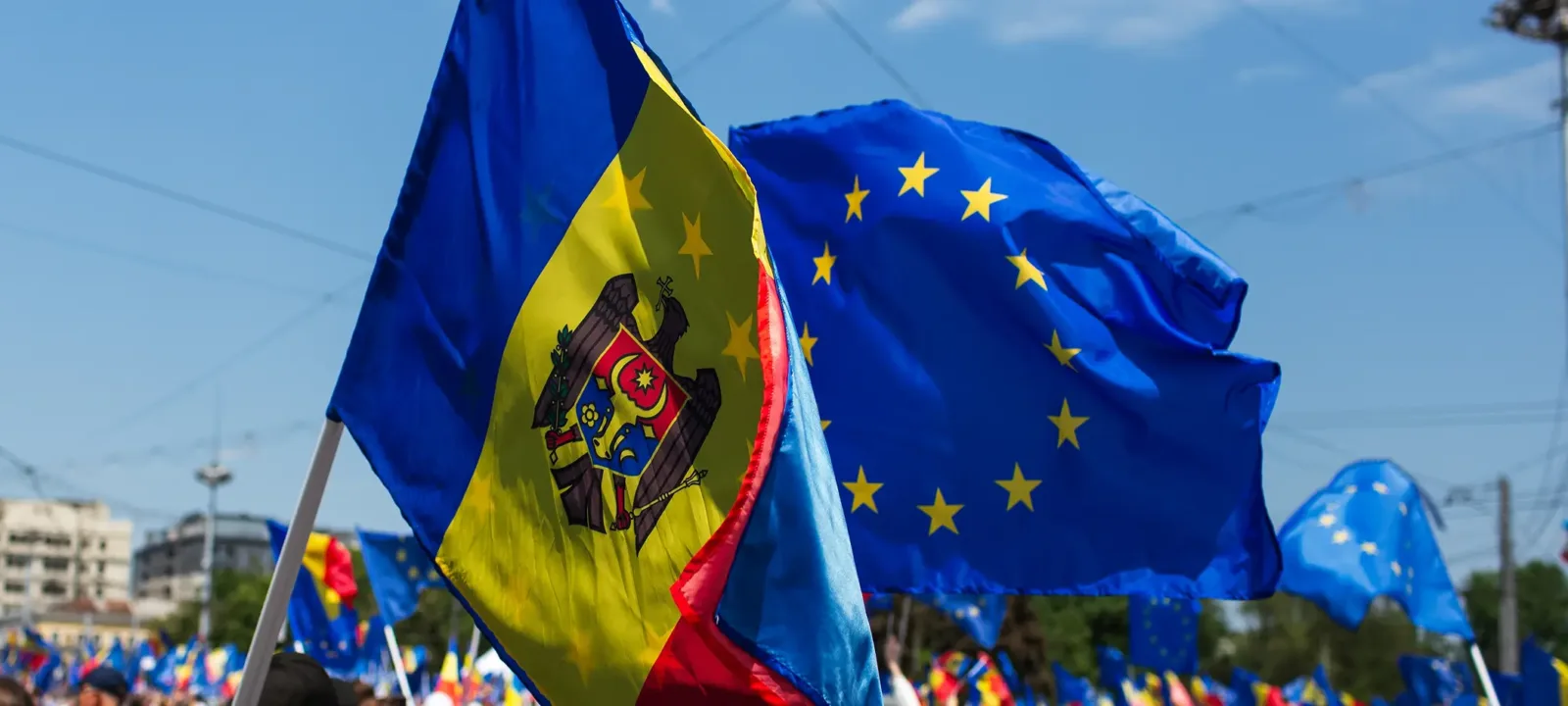
Foreign Interference and the Limits of Democratic Response
Moldova's Experience in the Electoral Campaigns of 2023–2025
By Georgy Chizhov May 29, 2026
Moldova's Experience in the Electoral Campaigns of 2023–2025
By Georgy Chizhov May 29, 2026
As Russia's aggression against Ukraine continues and the Russian Federation's international isolation deepens, the erosion of democratic systems in Central and Southern Europe and across the post‑Soviet space has become an existential strategic priority for the Kremlin. Success in this endeavor could fracture European unity and cultivate a network of compliant national governments — in effect, client states — willing to abandon democratic principles in exchange for the preferential arrangements Moscow is prepared to offer.
Viewed through this lens, the recent political and electoral processes of the Republic of Moldova represent more than a case study in political competition under external pressure. They constitute a manifestation of a new, more sophisticated, and more adaptive model of foreign interference in democratic processes: a model constructed and field‑tested by the Kremlin in the Moldovan context, and one that is highly likely to be replicated across other vulnerable democracies in the region, particularly in Eastern Partnership countries and in EU member states characterized by high levels of political polarization and digital vulnerability.
The fundamental challenge posed by this model can be stated precisely: sovereign states are required simultaneously to defend their institutions against external interference and to uphold democratic standards. In a number of instances, these imperatives come into direct tension, producing a structural dilemma that is poised to become one of the defining questions for European security policy and democratic governance in the years ahead.
As Russia's aggression against Ukraine continues and the Russian Federation's international isolation deepens, the erosion of democratic systems in Central and Southern Europe and across the post‑Soviet space has become an existential strategic priority for the Kremlin. Success in this endeavor could fracture European unity and cultivate a network of compliant national governments — in effect, client states — willing to abandon democratic principles in exchange for the preferential arrangements Moscow is prepared to offer.
Viewed through this lens, the recent political and electoral processes of the Republic of Moldova represent more than a case study in political competition under external pressure. They constitute a manifestation of a new, more sophisticated, and more adaptive model of foreign interference in democratic processes: a model constructed and field‑tested by the Kremlin in the Moldovan context, and one that is highly likely to be replicated across other vulnerable democracies in the region, particularly in Eastern Partnership countries and in EU member states characterized by high levels of political polarization and digital vulnerability.
The fundamental challenge posed by this model can be stated precisely: sovereign states are required simultaneously to defend their institutions against external interference and to uphold democratic standards. In a number of instances, these imperatives come into direct tension, producing a structural dilemma that is poised to become one of the defining questions for European security policy and democratic governance in the years ahead.
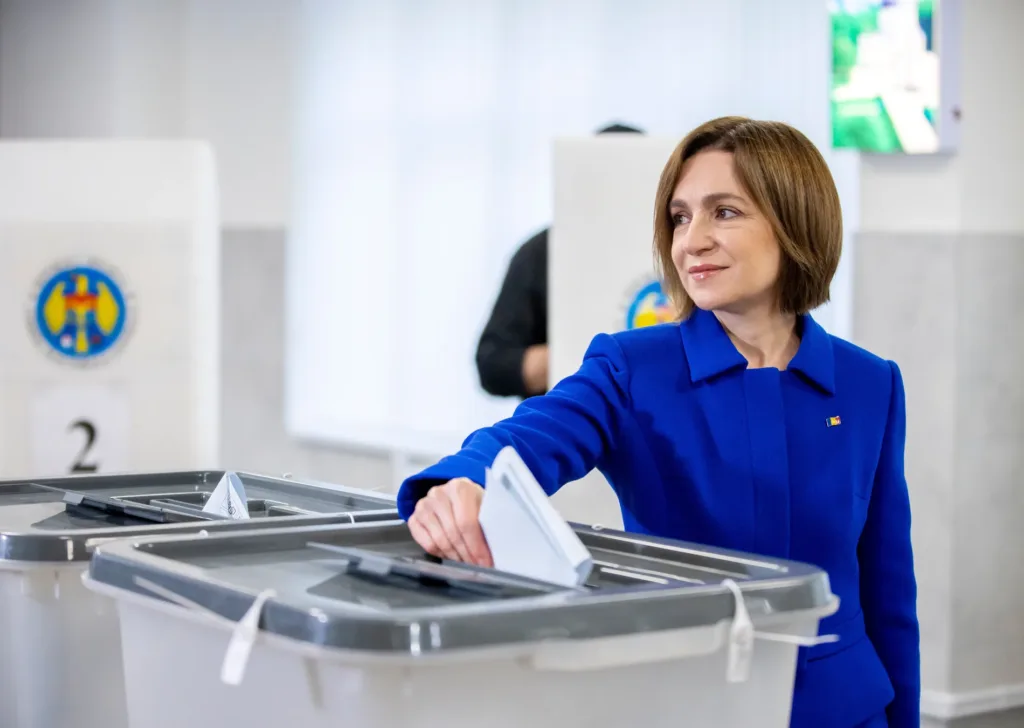
Moldova's electoral campaigns of 2023–2025 have substantially altered the style and informal rules of political competition in the country. Across the 2023 local elections, the 2024 presidential elections, and the 2025 parliamentary elections, governing authority was largely retained by the reform‑oriented, pro‑European Party of Action and Solidarity (PAS) and its de facto leader, President Maia Sandu. Nevertheless, a number of authoritative international organizations have begun to speak of a “shrinking civic space” and “negative effects on freedom of expression and association.”
The measures that prompted such assessments were not, in the past, characteristic of PAS's governing style. They emerged as a response to a sharp intensification of external interference in democratic processes through the instruments of the digital age. Unlike previous electoral cycles, this interference was not episodic but systemic — a constellation of interconnected tools unified by a common strategy aimed at shaping electoral behavior, the information environment, and the institutional resilience of the state.
The primary actor behind this interference was, predictably, Moscow, seeking to establish leverage over a small and resource‑poor Moldova on account of its strategic geography (sharing a border with three macro‑regions of Ukraine: West, Centre, and South) and its vulnerability stemming from non‑membership in European and Euro‑Atlantic structures.
Moldova's political system faced a complex campaign of pressure: from the organization of street protests to the orchestration of managed voting by diaspora members in countries under Moscow's influence; from the creation of pseudo‑pro-European electoral blocs and swarms of semi‑virtual political parties to the procurement of a “universal” electoral resource capable of being redirected at the last moment to support whichever contestant the Kremlin designated. In Moldova, the Kremlin deployed both traditional and “innovative” political technologies, combining information operations, various forms of illicit financing, institutional pressure through pro‑Russian forces, and managed protest activity.
This interference complex is best understood as the sum of several mutually reinforcing instruments:
Moldova's electoral campaigns of 2023–2025 have substantially altered the style and informal rules of political competition in the country. Across the 2023 local elections, the 2024 presidential elections, and the 2025 parliamentary elections, governing authority was largely retained by the reform‑oriented, pro‑European Party of Action and Solidarity (PAS) and its de facto leader, President Maia Sandu. Nevertheless, a number of authoritative international organizations have begun to speak of a “shrinking civic space” and “negative effects on freedom of expression and association.”
The measures that prompted such assessments were not, in the past, characteristic of PAS's governing style. They emerged as a response to a sharp intensification of external interference in democratic processes through the instruments of the digital age. Unlike previous electoral cycles, this interference was not episodic but systemic — a constellation of interconnected tools unified by a common strategy aimed at shaping electoral behavior, the information environment, and the institutional resilience of the state.
The primary actor behind this interference was, predictably, Moscow, seeking to establish leverage over a small and resource‑poor Moldova on account of its strategic geography (sharing a border with three macro‑regions of Ukraine: West, Centre, and South) and its vulnerability stemming from non‑membership in European and Euro‑Atlantic structures.
Moldova's political system faced a complex campaign of pressure: from the organization of street protests to the orchestration of managed voting by diaspora members in countries under Moscow's influence; from the creation of pseudo‑pro-European electoral blocs and swarms of semi‑virtual political parties to the procurement of a “universal” electoral resource capable of being redirected at the last moment to support whichever contestant the Kremlin designated. In Moldova, the Kremlin deployed both traditional and “innovative” political technologies, combining information operations, various forms of illicit financing, institutional pressure through pro‑Russian forces, and managed protest activity.
This interference complex is best understood as the sum of several mutually reinforcing instruments:
It would be inaccurate to say that Moscow had not previously employed any of these individual methods in its interference in other countries' electoral processes. What was unique was not the tools themselves, but their combination and mutual adaptation to local conditions. The simultaneous deployment of these methods ensured not only scale but also operational resilience, enabling the shortcomings of any single instrument to be compensated by the others.
The intervention into Moldova’s social media environment was particularly extensive. According to Meta Corporation and independent investigations, more than 100 coordinated pages and accounts were identified within the Facebook and Instagram ecosystem alone, disseminating political content with a combined reach of approximately 155 million impressions. These campaigns were far from chaotic: they relied on audience segmentation and precise message calibration for different groups, from rural voters to diaspora communities.
TikTok played a distinctive role, with the mass circulation of short political videos documented throughout the campaigns. Analysts noted the use of micro‑influencer networks: hundreds of accounts with between 10,000 and 100,000 followers published similar content with variations, enabling them to circumvent algorithmic restrictions and increase organic reach. In certain cases, individual videos accumulated over one million views.
A network of Telegram channels, frequently disguised as regional news outlets, served as a key infrastructural element. Channels bearing names such as “Comrad News” or “Balti Today” published synchronized content with minimal delay, creating the impression of broad public consensus. These channels served not only to disseminate messaging but also as entry points into closed chats and bots through which operational coordination was conducted.
Investigations identified dozens of channels with audiences ranging from a few thousand to 50,000–60,000 subscribers, operating in synchrony and administered from abroad or through anonymous accounts.
The intervention into Moldova’s social media environment was particularly extensive. According to Meta Corporation and independent investigations, more than 100 coordinated pages and accounts were identified within the Facebook and Instagram ecosystem alone, disseminating political content with a combined reach of approximately 155 million impressions. These campaigns were far from chaotic: they relied on audience segmentation and precise message calibration for different groups, from rural voters to diaspora communities.
TikTok played a distinctive role, with the mass circulation of short political videos documented throughout the campaigns. Analysts noted the use of micro‑influencer networks: hundreds of accounts with between 10,000 and 100,000 followers published similar content with variations, enabling them to circumvent algorithmic restrictions and increase organic reach. In certain cases, individual videos accumulated over one million views.
A network of Telegram channels, frequently disguised as regional news outlets, served as a key infrastructural element. Channels bearing names such as “Comrad News” or “Balti Today” published synchronized content with minimal delay, creating the impression of broad public consensus. These channels served not only to disseminate messaging but also as entry points into closed chats and bots through which operational coordination was conducted.
Investigations identified dozens of channels with audiences ranging from a few thousand to 50,000–60,000 subscribers, operating in synchrony and administered from abroad or through anonymous accounts.


Through closed Telegram chats and bots, participants received daily assignments, for example, to post comments under news articles or share specific content, as well as instructions for protest attendance and template messages for social media. “Task packages” were also deployed: participants would be offered a set of actions (such as 10 comments, 3 reposts, and attendance at an offline event) in exchange for a fixed payment. In this way, digital operations fulfilled not only an information‑dissemination function but also the role of the infrastructural backbone of the entire campaign, from participant recruitment to the coordination of offline activities.
To exert direct influence on the electoral behavior of Moldovan voters, a network was established commonly associated with the politician and businessman Ilan Shor, who has been convicted in absentia in Moldova on charges of large‑scale financial crimes and currently resides between Israel and Russia. According to the National Anti‑Corruption Centre, the volume of funds distributed through this network reached $39 million, with approximately 130,000 individuals involved — a substantial figure for a country whose government‑controlled territory has a population of fewer than 2.5 million. In practice, however, only an “active core” of approximately 20,000–30,000 individuals carried out assignments on a regular basis.
The organization operated on a multi‑tier structure. At the apex were coordinators operating from outside the country. Below them were regional supervisors overseeing networks of 100–300 individuals. Below them in turn were so‑called “brigadiers” managing small groups of operatives. The latter received specific assignments: attending protests, disseminating messages on social media, canvassing acquaintances, and, ultimately, voting in a designated manner. Communication was conducted via Telegram and messaging apps, as well as through in‑person meetings.
The financial incentive structure was constructed with some sophistication. Participants received payments for registration, task completion, and the recruitment of new members. Participation in rallies was remunerated at 200–400 Moldovan lei (approximately €10–20) per day, rising to 700 lei in some cases during extended actions; bonuses for recruiting new participants reached up to 300 lei per person; and payments for voting ranged from 500 to 1,500 lei. Political mobilization acquired the characteristics of a commercial enterprise with elements of network marketing, with the same individuals potentially receiving payments across multiple campaigns and events. Financial flows were routed through diverse channels: physical importation of cash, bank transfers via intermediaries, and cryptocurrency transactions, with subsequent conversion to cash in Moldova, with the latter instrument enabling circumvention of conventional financial monitoring mechanisms.
In essence, what emerged was a hybrid financial‑political network capable of converting resources into electoral behavior with a high degree of manageability. Unlike traditional voter purchasing, this model proved scalable and replicable.
To exert direct influence on the electoral behavior of Moldovan voters, a network was established commonly associated with the politician and businessman Ilan Shor, who has been convicted in absentia in Moldova on charges of large‑scale financial crimes and currently resides between Israel and Russia. According to the National Anti‑Corruption Centre, the volume of funds distributed through this network reached $39 million, with approximately 130,000 individuals involved — a substantial figure for a country whose government‑controlled territory has a population of fewer than 2.5 million. In practice, however, only an “active core” of approximately 20,000–30,000 individuals carried out assignments on a regular basis.
The organization operated on a multi‑tier structure. At the apex were coordinators operating from outside the country. Below them were regional supervisors overseeing networks of 100–300 individuals. Below them in turn were so‑called “brigadiers” managing small groups of operatives. The latter received specific assignments: attending protests, disseminating messages on social media, canvassing acquaintances, and, ultimately, voting in a designated manner. Communication was conducted via Telegram and messaging apps, as well as through in‑person meetings.
The financial incentive structure was constructed with some sophistication. Participants received payments for registration, task completion, and the recruitment of new members. Participation in rallies was remunerated at 200–400 Moldovan lei (approximately €10–20) per day, rising to 700 lei in some cases during extended actions; bonuses for recruiting new participants reached up to 300 lei per person; and payments for voting ranged from 500 to 1,500 lei. Political mobilization acquired the characteristics of a commercial enterprise with elements of network marketing, with the same individuals potentially receiving payments across multiple campaigns and events. Financial flows were routed through diverse channels: physical importation of cash, bank transfers via intermediaries, and cryptocurrency transactions, with subsequent conversion to cash in Moldova, with the latter instrument enabling circumvention of conventional financial monitoring mechanisms.
In essence, what emerged was a hybrid financial‑political network capable of converting resources into electoral behavior with a high degree of manageability. Unlike traditional voter purchasing, this model proved scalable and replicable.
Protest activity in Chișinău and other cities was in many cases centrally organized and financed through the same networks. Participants had transportation costs reimbursed, were provided with food, and in some instances received direct payments for attendance. Delivery by coach from the regions, based on lists, was documented. Managed protests served a dual function: on the one hand, exerting pressure on the authorities and projecting an image of mass public discontent; on the other, serving as an instrument for testing and mobilizing loyal networks.
The formation of pseudo‑pro-European electoral blocs and swarms of semi‑virtual political parties further compounded the challenge for the authorities. The Kremlin's ability to cultivate a ready pool of registered voters and redirect their support at the last moment to whichever political actor was deemed most useful demonstrated the operational sophistication of the interference model being deployed.
Protest activity in Chișinău and other cities was in many cases centrally organized and financed through the same networks. Participants had transportation costs reimbursed, were provided with food, and in some instances received direct payments for attendance. Delivery by coach from the regions, based on lists, was documented. Managed protests served a dual function: on the one hand, exerting pressure on the authorities and projecting an image of mass public discontent; on the other, serving as an instrument for testing and mobilizing loyal networks.
The formation of pseudo‑pro-European electoral blocs and swarms of semi‑virtual political parties further compounded the challenge for the authorities. The Kremlin's ability to cultivate a ready pool of registered voters and redirect their support at the last moment to whichever political actor was deemed most useful demonstrated the operational sophistication of the interference model being deployed.
Having grasped the scale of the system that had been constructed and the qualitatively new threat it posed to the state, the Moldovan authorities moved to neutralize it. As early as 2023, Moldova's Constitutional Court declared the Shor political party unconstitutional, on the basis of evidence of systematic voter bribery and illegal foreign financing. When Shor‑affiliated structures attempted to contest elections under new names, the authorities applied pre‑emptive restrictions: the party “Șansă” (“Chance”), for instance, was removed from local elections just two days before polling, automatically resulting in the exclusion of approximately 600 candidates from the ballot. The practice of barring parties from participation was extended ahead of the 2025 parliamentary elections. The Shor network's strategy of cultivating a pool of voters prepared to be directed at the last moment to a designated party was effectively neutralized by the blanket exclusion of Shor‑affiliated candidates from the electoral process.
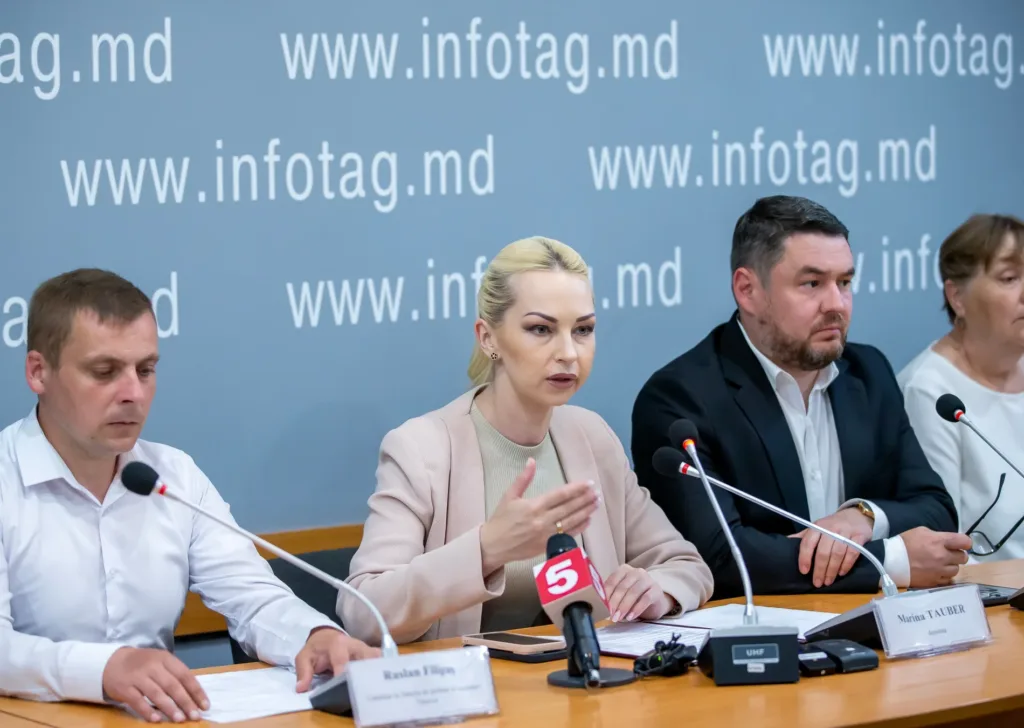
Criminal proceedings were initiated against Shor's associates. Marina Tauber, who had effectively led the Shor party following the businessman's flight from Moldova, was convicted in absentia; Evghenia Guțul, the Başkan (executive head) of Gagauzia, Moldova's autonomous region, was imprisoned. Both were in effect charged with the management of funds received from an organized criminal group.
The licenses of 13 Moldovan television channels were suspended, and several never resumed broadcasting. More than 100 online resources, including websites linked to Russian information sources, faced blocked access from within the Republic's territory. Owners of independent Telegram channels who had published content for payment — an unlawful but previously unpunished practice — received informal warnings from the authorities.
Having grasped the scale of the system that had been constructed and the qualitatively new threat it posed to the state, the Moldovan authorities moved to neutralize it. As early as 2023, Moldova's Constitutional Court declared the Shor political party unconstitutional, on the basis of evidence of systematic voter bribery and illegal foreign financing. When Shor‑affiliated structures attempted to contest elections under new names, the authorities applied pre‑emptive restrictions: the party “Șansă” (“Chance”), for instance, was removed from local elections just two days before polling, automatically resulting in the exclusion of approximately 600 candidates from the ballot. The practice of barring parties from participation was extended ahead of the 2025 parliamentary elections. The Shor network's strategy of cultivating a pool of voters prepared to be directed at the last moment to a designated party was effectively neutralized by the blanket exclusion of Shor‑affiliated candidates from the electoral process.
Criminal proceedings were initiated against Shor's associates. Marina Tauber, who had effectively led the Shor party following the businessman's flight from Moldova, was convicted in absentia; Evghenia Guțul, the Başkan (executive head) of Gagauzia, Moldova's autonomous region, was imprisoned. Both were in effect charged with the management of funds received from an organized criminal group.
The licenses of 13 Moldovan television channels were suspended, and several never resumed broadcasting. More than 100 online resources, including websites linked to Russian information sources, faced blocked access from within the Republic's territory. Owners of independent Telegram channels who had published content for payment — an unlawful but previously unpunished practice — received informal warnings from the authorities.


The number of polling stations opened for Moldovan citizens voting in Russia in the 2024–25 elections stood at just two (for comparison: 26 in France, 36 in Germany, 75 in Italy). In 2025, only 12 polling stations were opened on the right bank of the Dniester for Transnistria residents, compared with 30 in 2024. The Central Electoral Commission explicitly cited the risks of voter purchasing and organized transportation as justification for these decisions.
These measures should be understood as a shift toward a strategy of “active defense” of the democratic process, one that involves not only reactive but also pre‑emptive restriction of actors and channels exploited for external interference. And it is at this stage that the fundamental dilemma becomes most apparent: measures designed to protect democracy and its institutions from external pressure have begun to impinge upon democracy's foundational principles: political pluralism, freedom of expression, and the universality of the franchise.
International observers noted that such restrictions, while grounded in security considerations, affect the principle of universal suffrage. The Venice Commission underlined the necessity of proportionality in the banning of parties and of individualized treatment of candidates. The OSCE noted limited avenues for judicial appeal and a reduction in the level of political competition. Freedom House and Reporters Without Borders criticized the opacity of decisions concerning the effective closure of media outlets and the potential risks to freedom of expression.
It is worth noting that international criticism of Moldova's authorities has been expressed with considerable restraint. Virtually all critics, beyond pro‑Russian voices, demonstrate a clear understanding of the challenges and threats to genuine electoral freedom posed by Putin's Russia, and none have questioned the malicious and harmful nature of Russian influence. Yet the dilemma described above is not unique to Moldova. It reflects a broader tendency already confronting, or soon to confront, other democratic states. And it cannot go unremarked that while failing to achieve its primary objective — namely, to reverse Moldova's pro‑European orientation — Moscow has succeeded in achieving a measurable degradation of democratic regulatory standards governing political competition and media activity.
These measures should be understood as a shift toward a strategy of “active defense” of the democratic process, one that involves not only reactive but also pre‑emptive restriction of actors and channels exploited for external interference. And it is at this stage that the fundamental dilemma becomes most apparent: measures designed to protect democracy and its institutions from external pressure have begun to impinge upon democracy's foundational principles: political pluralism, freedom of expression, and the universality of the franchise.
International observers noted that such restrictions, while grounded in security considerations, affect the principle of universal suffrage. The Venice Commission underlined the necessity of proportionality in the banning of parties and of individualized treatment of candidates. The OSCE noted limited avenues for judicial appeal and a reduction in the level of political competition. Freedom House and Reporters Without Borders criticized the opacity of decisions concerning the effective closure of media outlets and the potential risks to freedom of expression.
It is worth noting that international criticism of Moldova's authorities has been expressed with considerable restraint. Virtually all critics, beyond pro‑Russian voices, demonstrate a clear understanding of the challenges and threats to genuine electoral freedom posed by Putin's Russia, and none have questioned the malicious and harmful nature of Russian influence. Yet the dilemma described above is not unique to Moldova. It reflects a broader tendency already confronting, or soon to confront, other democratic states. And it cannot go unremarked that while failing to achieve its primary objective — namely, to reverse Moldova's pro‑European orientation — Moscow has succeeded in achieving a measurable degradation of democratic regulatory standards governing political competition and media activity.
The Moldovan case must be examined in its broader macro‑regional context. Similar elements — the use of digital platforms, financial networks, and proxy structures — are already being documented in other Central European countries and across the Balkans, including Romania and Bulgaria. As experience accumulates from electoral campaigns across EU member states, adaptation of these tools to more complex political and institutional environments can be anticipated.
For European states, this implies the necessity of developing more finely calibrated countermeasures: ones capable of identifying and neutralizing external influence networks at an early stage; of ensuring the transparency and accountability of restrictive decisions; and of preserving the conditions for political competition and public deliberation even in contexts of elevated threat.
Existing approaches, as Moldova's experience demonstrates, frequently prove either insufficient to neutralize interference or excessive in their impact on the democratic environment. The concept of “militant” or “defending democracy” (streitbare Demokratie) may become highly relevant for many European countries in the very near term. Its practical realization, however, requires not only political will but also institutional design capable of sustaining the balance between effectiveness and legitimacy. Without this, the risk of democratic standards eroding under external pressure will only intensify — regardless of the outcome of any individual electoral campaign.
The Moldovan case must be examined in its broader macro‑regional context. Similar elements — the use of digital platforms, financial networks, and proxy structures — are already being documented in other Central European countries and across the Balkans, including Romania and Bulgaria. As experience accumulates from electoral campaigns across EU member states, adaptation of these tools to more complex political and institutional environments can be anticipated.
For European states, this implies the necessity of developing more finely calibrated countermeasures: ones capable of identifying and neutralizing external influence networks at an early stage; of ensuring the transparency and accountability of restrictive decisions; and of preserving the conditions for political competition and public deliberation even in contexts of elevated threat.
Existing approaches, as Moldova's experience demonstrates, frequently prove either insufficient to neutralize interference or excessive in their impact on the democratic environment. The concept of “militant” or “defending democracy” (streitbare Demokratie) may become highly relevant for many European countries in the very near term. Its practical realization, however, requires not only political will but also institutional design capable of sustaining the balance between effectiveness and legitimacy. Without this, the risk of democratic standards eroding under external pressure will only intensify — regardless of the outcome of any individual electoral campaign.

To overcome the hardships of war and emigration, Russians in exile need to adopt a global mindset
By Natalia Arno
By Grigory Frolov
By Vladimir Milov
January 12, 2026
Article How the Russian State Is Trying to Turn Science Backward in the Era of Total War
By Sasha Starost
May 13, 2026
Interview Sergei Davidis and Ivan Pavlov on the lessons of last year’s exchange, the future of political prisoners, and practical tools for fighting for freedom
By Free Russia Foundation
August 05, 2025
To overcome the hardships of war and emigration, Russians in exile need to adopt a global mindset
By Natalia Arno
By Grigory Frolov
By Vladimir Milov
January 12, 2026
Article How the Russian State Is Trying to Turn Science Backward in the Era of Total War
By Sasha Starost
May 13, 2026
Interview Sergei Davidis and Ivan Pavlov on the lessons of last year’s exchange, the future of political prisoners, and practical tools for fighting for freedom
By Free Russia Foundation
August 05, 2025