
Politics
South Caucasus
Georgian Dream's Political Prisoner System
Mass Imprisonment as a Tool of Authoritarian Rule
By Free Russia Foundation March 22, 2026
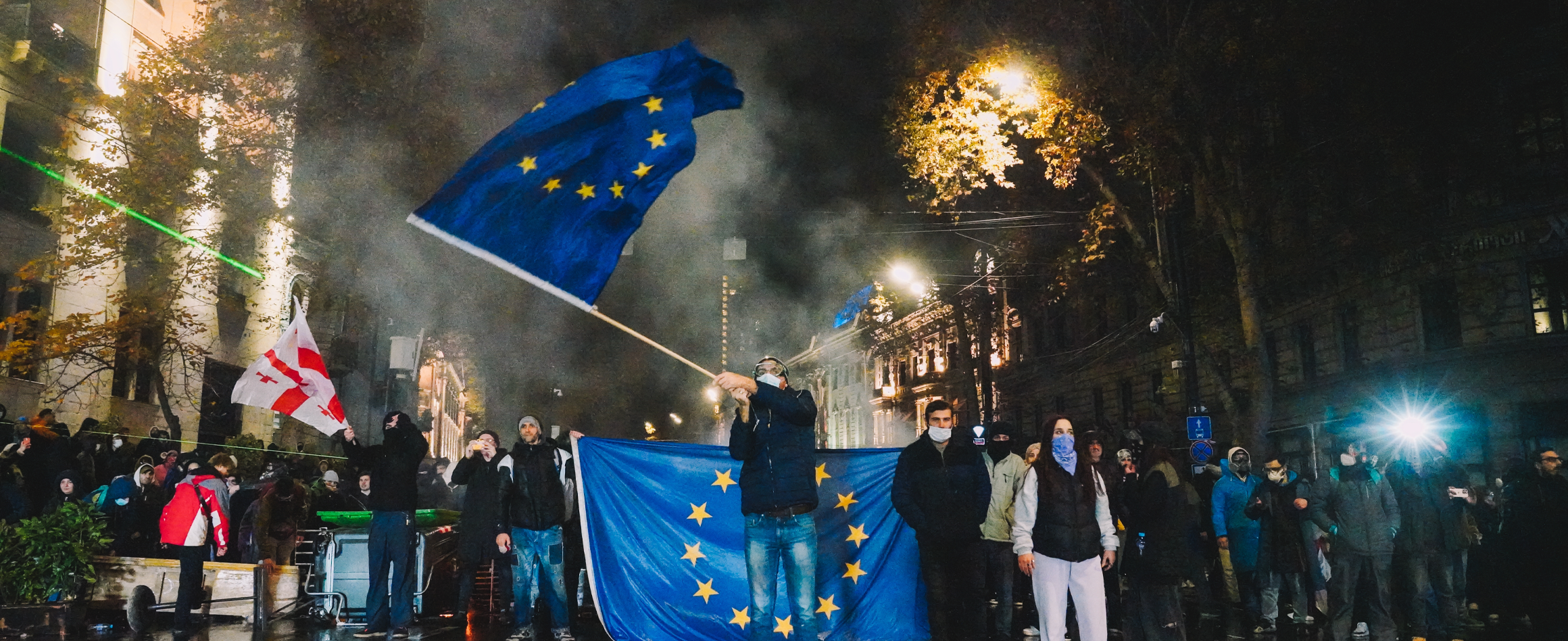


Mass Imprisonment as a Tool of Authoritarian Rule
By Free Russia Foundation March 22, 2026
Since late 2024, Georgia has crossed a critical threshold from democratic backsliding into systemic political repression. Following the Georgian Dream government's unilateral suspension of EU integration, the state has constructed a de facto political prisoner system—one that uses mass imprisonment, fabricated criminal cases, and judicial subordination as routine tools of governance. Political repression is no longer episodic or reactive; it has become institutionalized.
This paper documents how political imprisonment now functions as a core enforcement mechanism of authoritarian rule in Georgia. Drawing on emblematic cases and institutional patterns, it shows how courts, prosecutors, law enforcement bodies, and detention institutions have been repurposed to suppress dissent, deter civic mobilization, and neutralize opposition leadership. Since late 2024, hundreds of protesters, activists, journalists, and opposition figures have been detained or imprisoned on politically motivated grounds, giving Georgia a per capita rate of political imprisonment that approaches, and by some assessments exceeds, that of Russia. Under Council of Europe criteria, these detainees qualify as political prisoners due to political motive, rights violations, and grossly disproportionate punishment.
The repression follows a clear internal logic. Mass protest has been criminalized through expansive “group violence” prosecutions unsupported by credible evidence. Targeted activists and journalists have faced fabricated charges, including drug‑planting cases carrying severe sentences and lasting stigma. Acts of political expression—graffiti, slogans, symbolic protest—have been reclassified as serious criminal offenses, while opposition leaders are increasingly charged under national‑security statutes as alleged threats to the state and “sabotage,” echoing the darkest times of Soviet totalitarianism. Throughout, the judiciary has functioned as a transmission belt rather than a safeguard, approving nearly all prosecutorial requests, delaying proceedings to foreclose pardons, and closing hearings once public sympathy for detainees became politically inconvenient.
This political prisoner system is enabled by deeper institutional capture. Long before the mass arrests of 2024–2025, Georgian Dream dismantled judicial independence, subordinated the prosecution service, and neutralized civil society and independent media through Russia‑inspired legislation, financial coercion, and intimidation. As a result, torture, ill‑treatment, and procedural abuse remain systematically uninvestigated, while officials implicated in repression operate with impunity.
The paper argues that this repression is inseparable from Georgia's broader geopolitical trajectory. Those most aggressively targeted are actors exposing corruption, documenting Russian influence, supporting Ukraine, or advocating for Euro‑Atlantic integration. Political imprisonment thus serves both domestic consolidation and the strategic silencing of pro‑Western constituencies, aligning Georgia's internal governance model more closely with Kremlin‑compatible authoritarian systems and with the Kremlin itself.
The report concludes that the long‑standing policy of largely symbolic restraint by international partners has failed. Preventing further consolidation of this system requires targeted accountability measures, sustained international monitoring, and protection of civil society and independent media. The recommendations outline concrete steps for the European Union and its partners to raise the costs of repression, restore scrutiny, and prevent the normalization of mass political imprisonment in Georgia before the system hardens further.
Since late 2024, Georgia has crossed a critical threshold from democratic backsliding into systemic political repression. Following the Georgian Dream government's unilateral suspension of EU integration, the state has constructed a de facto political prisoner system—one that uses mass imprisonment, fabricated criminal cases, and judicial subordination as routine tools of governance. Political repression is no longer episodic or reactive; it has become institutionalized.
This paper documents how political imprisonment now functions as a core enforcement mechanism of authoritarian rule in Georgia. Drawing on emblematic cases and institutional patterns, it shows how courts, prosecutors, law enforcement bodies, and detention institutions have been repurposed to suppress dissent, deter civic mobilization, and neutralize opposition leadership. Since late 2024, hundreds of protesters, activists, journalists, and opposition figures have been detained or imprisoned on politically motivated grounds, giving Georgia a per capita rate of political imprisonment that approaches, and by some assessments exceeds, that of Russia. Under Council of Europe criteria, these detainees qualify as political prisoners due to political motive, rights violations, and grossly disproportionate punishment.
The repression follows a clear internal logic. Mass protest has been criminalized through expansive “group violence” prosecutions unsupported by credible evidence. Targeted activists and journalists have faced fabricated charges, including drug‑planting cases carrying severe sentences and lasting stigma. Acts of political expression—graffiti, slogans, symbolic protest—have been reclassified as serious criminal offenses, while opposition leaders are increasingly charged under national‑security statutes as alleged threats to the state and “sabotage,” echoing the darkest times of Soviet totalitarianism. Throughout, the judiciary has functioned as a transmission belt rather than a safeguard, approving nearly all prosecutorial requests, delaying proceedings to foreclose pardons, and closing hearings once public sympathy for detainees became politically inconvenient.
This political prisoner system is enabled by deeper institutional capture. Long before the mass arrests of 2024–2025, Georgian Dream dismantled judicial independence, subordinated the prosecution service, and neutralized civil society and independent media through Russia‑inspired legislation, financial coercion, and intimidation. As a result, torture, ill‑treatment, and procedural abuse remain systematically uninvestigated, while officials implicated in repression operate with impunity.
The paper argues that this repression is inseparable from Georgia's broader geopolitical trajectory. Those most aggressively targeted are actors exposing corruption, documenting Russian influence, supporting Ukraine, or advocating for Euro‑Atlantic integration. Political imprisonment thus serves both domestic consolidation and the strategic silencing of pro‑Western constituencies, aligning Georgia's internal governance model more closely with Kremlin‑compatible authoritarian systems and with the Kremlin itself.
The report concludes that the long‑standing policy of largely symbolic restraint by international partners has failed. Preventing further consolidation of this system requires targeted accountability measures, sustained international monitoring, and protection of civil society and independent media. The recommendations outline concrete steps for the European Union and its partners to raise the costs of repression, restore scrutiny, and prevent the normalization of mass political imprisonment in Georgia before the system hardens further.
Georgian Dream has elevated political repression into a system of governance described by some observers as a form of “nihilistic totalitarianism”. Since the regime's unilateral suspension of Georgia's EU integration in late 2024 triggered sustained mass demonstrations, repression has become systematic, coordinated, and openly punitive in its effort to crush dissent, targeting protesters, politicians, journalists, and civil society activists alike. This paper argues that Georgia now operates a de facto political prisoner system—one that functions as a core enforcement mechanism of authoritarian repression, rather than as an incidental excess of crowd control or judicial overreach.
Since late 2024, hundreds of individuals have been detained or imprisoned on politically motivated grounds, resulting in a per capita rate of political imprisonment that approaches, and in some assessments exceeds, Russia's own levels, despite Georgia's far smaller population. Applying the criteria of the Council of Europe, these detainees qualify as political prisoners: their detention stems from political motives, violates fundamental human rights, and relies on grossly disproportionate punishments. Institutions that once carried reformist legitimacy – courts, prosecutors, and law enforcement — have been repurposed into instruments of repression and state capture.
Initial police violence during demonstrations, including the use of water cannons, tear gas, rubber bullets, and unmarked vehicles used for off‑site beatings, was rapidly replaced by systematic criminalization. Investigations by the Public Defender and Council of Europe bodies have documented torture and cruel, inhuman, or degrading treatment. Rather than triggering accountability, these findings coincided with an expansion of repressive legal tools.
By December 2024, the authorities shifted from short‑term administrative detentions to criminal prosecutions under a Soviet‑era legal framework, supplemented in 2025 by amendments extending administrative detention to 60 days for vaguely defined offenses such as “obstructing traffic”, a formulation broad enough to criminalize merely standing on a sidewalk. Courts, dominated by the sanctioned High Council of Justice “clan,” approved virtually all prosecutorial requests, routinely delaying proceedings to prevent the use of presidential pardons and later closing hearings to public scrutiny once polling showed high public sympathy for detainees.
The cases examined in this report cluster into clear typologies that reveal the architecture of repression, rather than isolated abuses. These include:
Georgian Dream has elevated political repression into a system of governance described by some observers as a form of “nihilistic totalitarianism”. Since the regime's unilateral suspension of Georgia's EU integration in late 2024 triggered sustained mass demonstrations, repression has become systematic, coordinated, and openly punitive in its effort to crush dissent, targeting protesters, politicians, journalists, and civil society activists alike. This paper argues that Georgia now operates a de facto political prisoner system—one that functions as a core enforcement mechanism of authoritarian repression, rather than as an incidental excess of crowd control or judicial overreach.
Since late 2024, hundreds of individuals have been detained or imprisoned on politically motivated grounds, resulting in a per capita rate of political imprisonment that approaches, and in some assessments exceeds, Russia's own levels, despite Georgia's far smaller population. Applying the criteria of the Council of Europe, these detainees qualify as political prisoners: their detention stems from political motives, violates fundamental human rights, and relies on grossly disproportionate punishments. Institutions that once carried reformist legitimacy – courts, prosecutors, and law enforcement — have been repurposed into instruments of repression and state capture.
Initial police violence during demonstrations, including the use of water cannons, tear gas, rubber bullets, and unmarked vehicles used for off‑site beatings, was rapidly replaced by systematic criminalization. Investigations by the Public Defender and Council of Europe bodies have documented torture and cruel, inhuman, or degrading treatment. Rather than triggering accountability, these findings coincided with an expansion of repressive legal tools.
By December 2024, the authorities shifted from short‑term administrative detentions to criminal prosecutions under a Soviet‑era legal framework, supplemented in 2025 by amendments extending administrative detention to 60 days for vaguely defined offenses such as “obstructing traffic”, a formulation broad enough to criminalize merely standing on a sidewalk. Courts, dominated by the sanctioned High Council of Justice “clan,” approved virtually all prosecutorial requests, routinely delaying proceedings to prevent the use of presidential pardons and later closing hearings to public scrutiny once polling showed high public sympathy for detainees.
The cases examined in this report cluster into clear typologies that reveal the architecture of repression, rather than isolated abuses. These include:
Together, these patterns demonstrate a coordinated strategy to deter mobilization, neutralize oversight, and eliminate pro‑Western political alternatives.
This repression is integral to Georgia's broader Russian‑aligned geopolitical trajectory. Political imprisonment functions as the enforcement arm of Georgia's authoritarian realignment.
This paper documents how that system operates in practice and provides recommendations for the international community. It analyzes the legal mechanisms, institutional drivers, and emblematic cases that illustrate how Georgia has crossed from democratic backsliding into systemic political repression, and concludes with policy options aimed at raising the costs of repression and restoring sustained international scrutiny before the system hardens further.
Together, these patterns demonstrate a coordinated strategy to deter mobilization, neutralize oversight, and eliminate pro‑Western political alternatives.
This repression is integral to Georgia's broader Russian‑aligned geopolitical trajectory. Political imprisonment functions as the enforcement arm of Georgia's authoritarian realignment.
This paper documents how that system operates in practice and provides recommendations for the international community. It analyzes the legal mechanisms, institutional drivers, and emblematic cases that illustrate how Georgia has crossed from democratic backsliding into systemic political repression, and concludes with policy options aimed at raising the costs of repression and restoring sustained international scrutiny before the system hardens further.
The large‑scale use of political imprisonment in Georgia would not be possible without the systematic capture of state institutions—above all, the judiciary, prosecution service, and law enforcement bodies. Long before the mass arrests of 2024–2025, Georgian Dream had methodically dismantled institutional checks, replacing independent oversight with political loyalty.
The large‑scale use of political imprisonment in Georgia would not be possible without the systematic capture of state institutions—above all, the judiciary, prosecution service, and law enforcement bodies. Long before the mass arrests of 2024–2025, Georgian Dream had methodically dismantled institutional checks, replacing independent oversight with political loyalty.
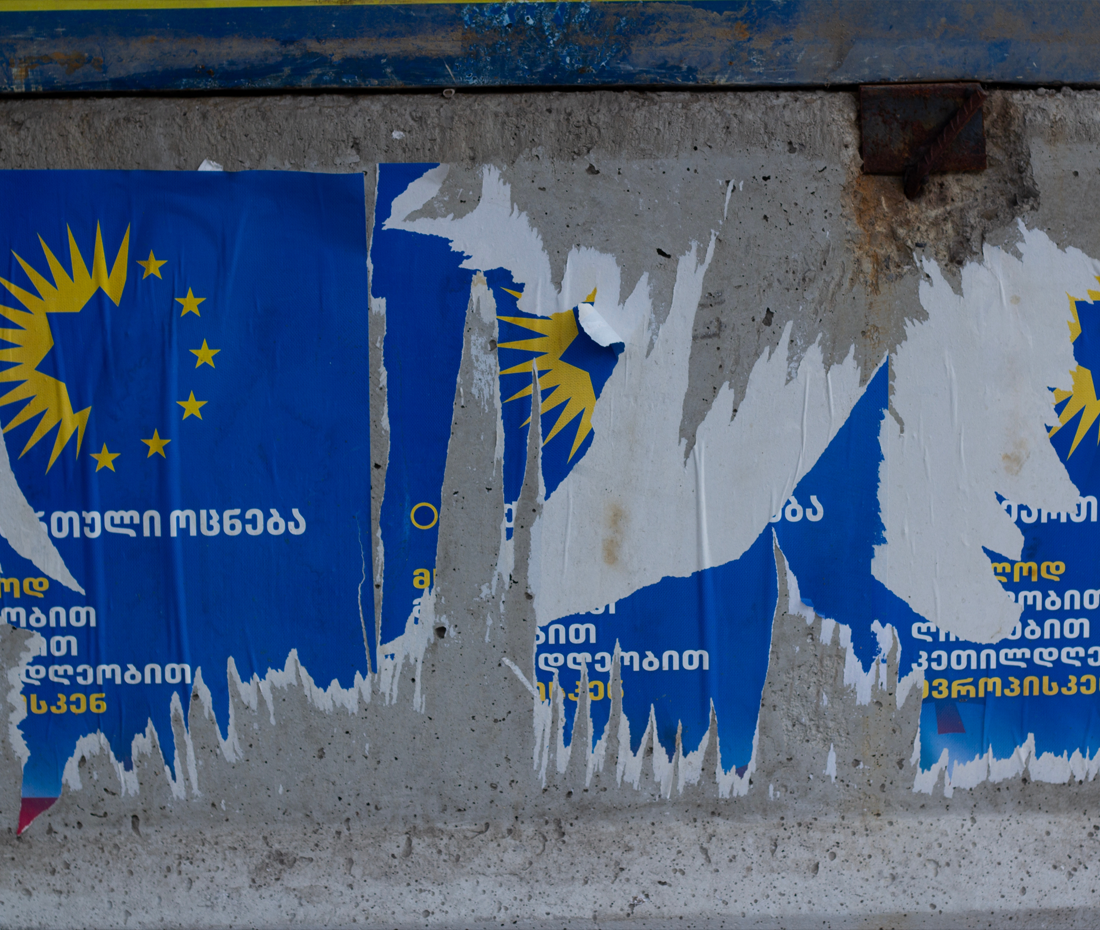
For more than a decade, the Georgian Dream party has politicized and subordinated the judiciary, consolidating control over judicial governance and appointments. The High Council of Justice (HCOJ), responsible for judicial appointments, promotions, and discipline, has been dominated by a small, informal group commonly referred to as “the clan”, whose members operate with effective impunity and align closely with the ruling party. Judicial appointments increasingly reflect political loyalty rather than merit, a trend repeatedly documented by domestic watchdogs and international observers. By 2024, key members of this network, along with dozens of judges, had been sanctioned by the United States (US), United Kingdom (UK), and several European states.
International monitoring bodies confirmed the depth of this erosion. OSCE/ODIHR raised serious concerns that recent Supreme Court appointments lacked fairness, transparency, and objectivity. The Venice Commission and the European Commission called for urgent judicial integrity checks and internationally supervised vetting to restore judicial independence. Georgian Dream rejected these recommendations outright, dismissing them as “foreign interference in domestic affairs” —a rhetorical posture closely mirroring that employed by Russia and Belarus to deflect external scrutiny.
Political influence has also permeated institutions formally designed to act as safeguards. The 2025 EU Enlargement Report noted concerns regarding the Constitutional Court and other oversight bodies. Meanwhile, the Prosecutor's Office, though nominally independent under the constitution, has become a central instrument of political enforcement, advancing cases that align with regime priorities while systematically refusing to investigate credible allegations of abuse by law enforcement officials.
The capture of formal institutions was accompanied by the systematic dismantling of Georgia's once‑vibrant civil society. Independent media, watchdog organizations, and human rights groups represented the last remaining actors capable of documenting abuse, mobilizing public scrutiny, and sustaining pro‑European political pressure. Neutralizing these actors was a structural precondition for making political imprisonment scalable and sustainable.
The 2024 adoption of the Russia‑inspired Law on Transparency of Foreign Influence, requiring civil society organizations and media outlets receiving more than 20 percent of their funding from foreign sources to register as “agents of foreign influence,” marked a turning point. The campaign intensified further with the passage of additional legislative and administrative measures in 2025, expanding state control over foreign funding, while law enforcement bodies increasingly relied on intrusive inspections, asset freezes, and criminal accusations against nongovernmental organizations (NGOs) and activists on vague grounds such as “undermining state interests” or “assisting unrest.”
Amnesty International and Human Rights Watch documented the resulting chilling effect, warning that these measures were designed to neutralize these actors before mass political imprisonment could be normalized. By 2025, this strategy had largely succeeded: many of Georgia's most reputable civil society organizations were forced to suspend operations or relocate abroad, leaving detainees increasingly isolated and abuse shielded from public oversight.
Alongside the consolidation of judicial control, Georgia's human rights records have plummeted since 2024, with Freedom House ratings declining, V‑Dem downgrading the country to an “electoral autocracy,” and Human Rights Watch reporting profound setbacks in rights and rule‑of-law protections due to repressive laws.
This institutional configuration proved decisive once mass protests erupted in late 2024. Georgian Dream's abrupt decision to halt EU integration did not trigger repression on its own; it merely exposed how fully the state had been prepared for it. Without a captured judiciary and prosecution service, the scale, speed, and brutality of the crackdown would not have been possible.
During the violent dispersal of demonstrations, special forces and plainclothes units operated with visible impunity, deploying water cannons, tear gas, rubber bullets, and targeted beatings against largely peaceful demonstrators. Multiple credible reports documented the use of unmarked minivans as mobile detention and torture sites, where detainees were subjected to prolonged physical abuse and threats. International and domestic monitors, including the Public Defender and the Council of Europe's Commissioner for Human Rights, classified this conduct as disproportionate, and, in many cases, amounting to torture or cruel, inhuman, or degrading treatment.
Crucially, none of these grave abuses were properly investigated. Instead, some officials implicated in the crackdown, including those sanctioned by the US, UK and a few EU member states, were publicly commended with state decorations. The agency nominally responsible for investigating police violence was abolished altogether in June 2025, removing even the appearance of accountability. Former Prosecutor General of Georgia Giorgi Gabitashvili, who spearheaded the last wave of repression, was sanctioned by the UK FCDO for failing to investigate torture and ill‑treatment. As protests continued, the role of the judiciary shifted from containment and enabling violence to formalizing repression through systematic criminalization. Hundreds of demonstrators were initially detained on administrative charges for disobeying police orders. By early December 2024, authorities escalated to criminal investigations across Tbilisi and Batumi, often on fabricated or grossly exaggerated allegations. Courts approved every prosecutorial request for pretrial detention, sending dozens of protesters directly to penitentiary facilities.
Parliament reinforced this judicial offensive by fast‑tracking amendments that extended maximum administrative detention from 15 to 60 days and broadened the definitions of minor offenses, including blocking roads, “insulting officials” (including online), and petty hooliganism, to capture even minor protest activity. Administrative courts delivered a nearly 100 percent conviction rate under the unreformed Soviet‑era Code of Administrative Offenses, with detainees deliberately transferred to remote facilities far from legal counsel and family. The message was clear: public dissent would now carry immediate and severe punitive cost.
Deliberate procedural manipulation further entrenched this repression. Courts routinely delayed hearings to prevent then‑President Salome Zurabishvili from exercising her pardon authority before the end of her term in 2024. Beginning in June 2025, all court hearings in political cases were closed to both video and audio recording, curtailing public oversight. Restrictions on courtroom access were introduced after national polling showing widespread public sympathy toward political prisoners, underscoring the political logic behind these measures.
These developments demonstrate that Georgia's political imprisonment crisis is not the result of isolated abuses or overzealous policing. It is the outcome of a deliberately constructed institutional ecosystem, in which courts, prosecutors, and law enforcement bodies operate in coordination to neutralize dissent while preserving a facade of legality.
For more than a decade, the Georgian Dream party has politicized and subordinated the judiciary, consolidating control over judicial governance and appointments. The High Council of Justice (HCOJ), responsible for judicial appointments, promotions, and discipline, has been dominated by a small, informal group commonly referred to as “the clan”, whose members operate with effective impunity and align closely with the ruling party. Judicial appointments increasingly reflect political loyalty rather than merit, a trend repeatedly documented by domestic watchdogs and international observers. By 2024, key members of this network, along with dozens of judges, had been sanctioned by the United States (US), United Kingdom (UK), and several European states.
International monitoring bodies confirmed the depth of this erosion. OSCE/ODIHR raised serious concerns that recent Supreme Court appointments lacked fairness, transparency, and objectivity. The Venice Commission and the European Commission called for urgent judicial integrity checks and internationally supervised vetting to restore judicial independence. Georgian Dream rejected these recommendations outright, dismissing them as “foreign interference in domestic affairs” —a rhetorical posture closely mirroring that employed by Russia and Belarus to deflect external scrutiny.
Political influence has also permeated institutions formally designed to act as safeguards. The 2025 EU Enlargement Report noted concerns regarding the Constitutional Court and other oversight bodies. Meanwhile, the Prosecutor's Office, though nominally independent under the constitution, has become a central instrument of political enforcement, advancing cases that align with regime priorities while systematically refusing to investigate credible allegations of abuse by law enforcement officials.
The capture of formal institutions was accompanied by the systematic dismantling of Georgia's once‑vibrant civil society. Independent media, watchdog organizations, and human rights groups represented the last remaining actors capable of documenting abuse, mobilizing public scrutiny, and sustaining pro‑European political pressure. Neutralizing these actors was a structural precondition for making political imprisonment scalable and sustainable.
The 2024 adoption of the Russia‑inspired Law on Transparency of Foreign Influence, requiring civil society organizations and media outlets receiving more than 20 percent of their funding from foreign sources to register as “agents of foreign influence,” marked a turning point. The campaign intensified further with the passage of additional legislative and administrative measures in 2025, expanding state control over foreign funding, while law enforcement bodies increasingly relied on intrusive inspections, asset freezes, and criminal accusations against nongovernmental organizations (NGOs) and activists on vague grounds such as “undermining state interests” or “assisting unrest.”
Amnesty International and Human Rights Watch documented the resulting chilling effect, warning that these measures were designed to neutralize these actors before mass political imprisonment could be normalized. By 2025, this strategy had largely succeeded: many of Georgia's most reputable civil society organizations were forced to suspend operations or relocate abroad, leaving detainees increasingly isolated and abuse shielded from public oversight.
Alongside the consolidation of judicial control, Georgia's human rights records have plummeted since 2024, with Freedom House ratings declining, V‑Dem downgrading the country to an “electoral autocracy,” and Human Rights Watch reporting profound setbacks in rights and rule‑of-law protections due to repressive laws.
This institutional configuration proved decisive once mass protests erupted in late 2024. Georgian Dream's abrupt decision to halt EU integration did not trigger repression on its own; it merely exposed how fully the state had been prepared for it. Without a captured judiciary and prosecution service, the scale, speed, and brutality of the crackdown would not have been possible.
During the violent dispersal of demonstrations, special forces and plainclothes units operated with visible impunity, deploying water cannons, tear gas, rubber bullets, and targeted beatings against largely peaceful demonstrators. Multiple credible reports documented the use of unmarked minivans as mobile detention and torture sites, where detainees were subjected to prolonged physical abuse and threats. International and domestic monitors, including the Public Defender and the Council of Europe's Commissioner for Human Rights, classified this conduct as disproportionate, and, in many cases, amounting to torture or cruel, inhuman, or degrading treatment.
Crucially, none of these grave abuses were properly investigated. Instead, some officials implicated in the crackdown, including those sanctioned by the US, UK and a few EU member states, were publicly commended with state decorations. The agency nominally responsible for investigating police violence was abolished altogether in June 2025, removing even the appearance of accountability. Former Prosecutor General of Georgia Giorgi Gabitashvili, who spearheaded the last wave of repression, was sanctioned by the UK FCDO for failing to investigate torture and ill‑treatment. As protests continued, the role of the judiciary shifted from containment and enabling violence to formalizing repression through systematic criminalization. Hundreds of demonstrators were initially detained on administrative charges for disobeying police orders. By early December 2024, authorities escalated to criminal investigations across Tbilisi and Batumi, often on fabricated or grossly exaggerated allegations. Courts approved every prosecutorial request for pretrial detention, sending dozens of protesters directly to penitentiary facilities.
Parliament reinforced this judicial offensive by fast‑tracking amendments that extended maximum administrative detention from 15 to 60 days and broadened the definitions of minor offenses, including blocking roads, “insulting officials” (including online), and petty hooliganism, to capture even minor protest activity. Administrative courts delivered a nearly 100 percent conviction rate under the unreformed Soviet‑era Code of Administrative Offenses, with detainees deliberately transferred to remote facilities far from legal counsel and family. The message was clear: public dissent would now carry immediate and severe punitive cost.
Deliberate procedural manipulation further entrenched this repression. Courts routinely delayed hearings to prevent then‑President Salome Zurabishvili from exercising her pardon authority before the end of her term in 2024. Beginning in June 2025, all court hearings in political cases were closed to both video and audio recording, curtailing public oversight. Restrictions on courtroom access were introduced after national polling showing widespread public sympathy toward political prisoners, underscoring the political logic behind these measures.
These developments demonstrate that Georgia's political imprisonment crisis is not the result of isolated abuses or overzealous policing. It is the outcome of a deliberately constructed institutional ecosystem, in which courts, prosecutors, and law enforcement bodies operate in coordination to neutralize dissent while preserving a facade of legality.
Protest‑related prosecutions constitute the backbone of Georgian Dream's political imprisonment system. Following the decision to halt Georgia's European Union (EU) integration in late 2024, the wave of repression rapidly evolved into the largest campaign of political imprisonment in Georgia's post‑independence history.
What initially appeared as disproportionate police violence and mass administrative detentions rapidly evolved into a coordinated prosecution strategy. Hundreds of demonstrators were detained daily on politically motivated grounds. By early 2025, this approach escalated decisively: criminal investigations were opened across Tbilisi and Batumi on fabricated or grossly exaggerated allegations, with courts approving virtually every request for pretrial detention.
Protest‑related prosecutions constitute the backbone of Georgian Dream's political imprisonment system. Following the decision to halt Georgia's European Union (EU) integration in late 2024, the wave of repression rapidly evolved into the largest campaign of political imprisonment in Georgia's post‑independence history.
What initially appeared as disproportionate police violence and mass administrative detentions rapidly evolved into a coordinated prosecution strategy. Hundreds of demonstrators were detained daily on politically motivated grounds. By early 2025, this approach escalated decisively: criminal investigations were opened across Tbilisi and Batumi on fabricated or grossly exaggerated allegations, with courts approving virtually every request for pretrial detention.
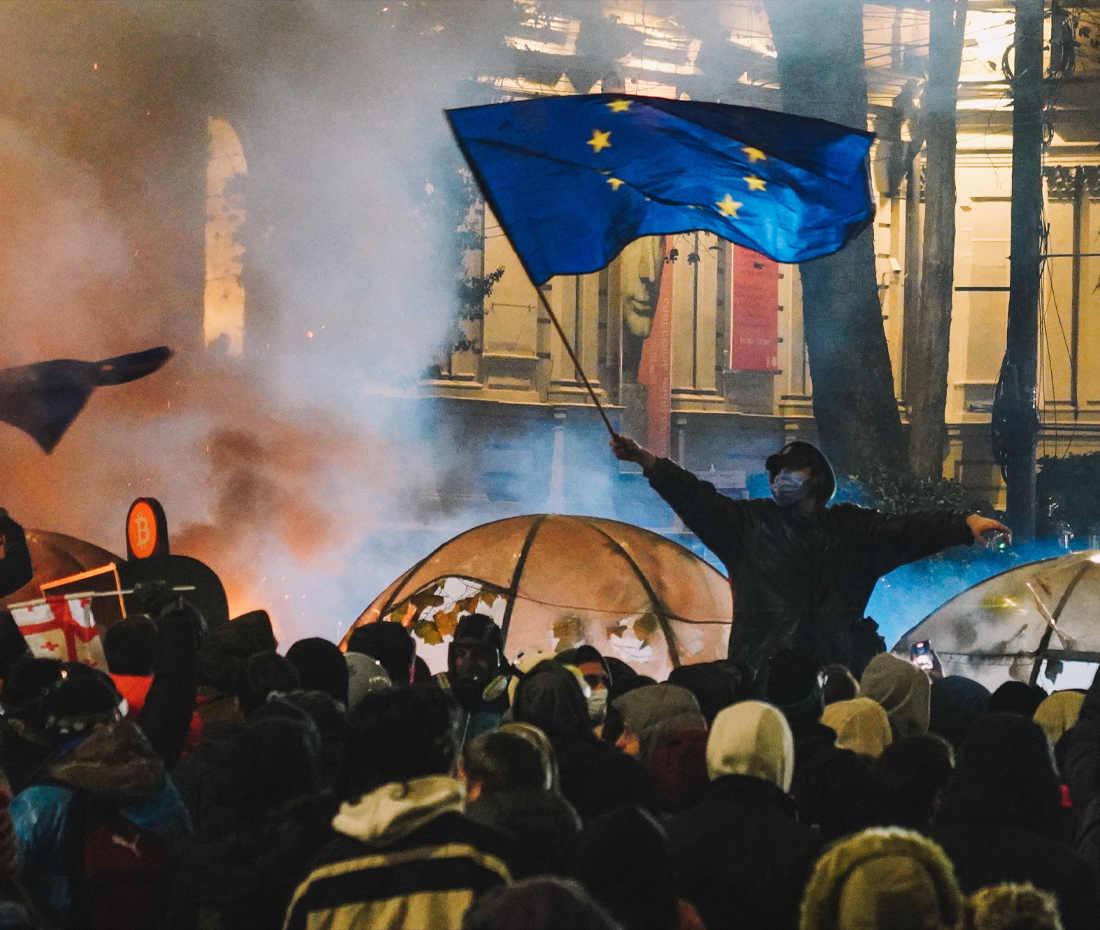
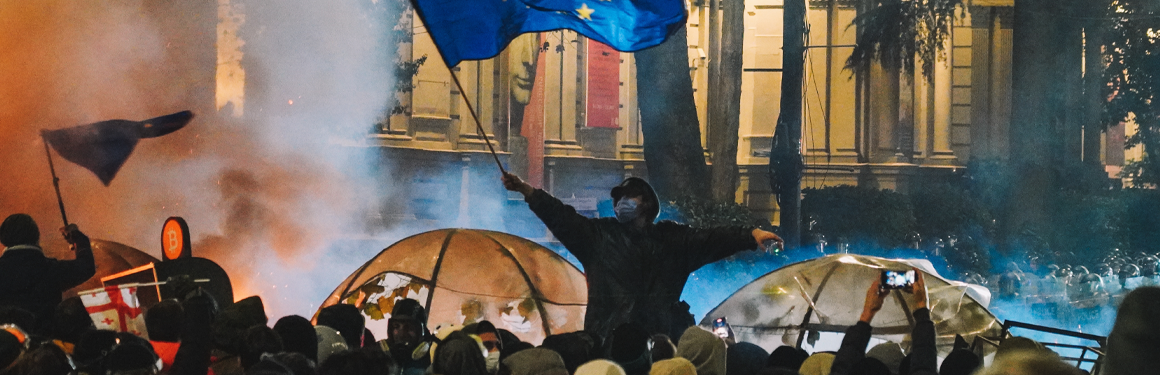
By September 2025, nineteen individuals arrested during the November–December protests had been sentenced to prison, following the reduction of initial charges of organizing group violence to the lesser accusation of participating in a group disturbing public order. The downgrading of charges did not result in reduced punishment: sentences ranged from two to two and a half years, despite the absence of evidence demonstrating coordination, leadership, or serious harm.
On September 2, eight young people — several under the age of 21 — were sentenced after prosecutors alleged they had coordinated violent actions against riot police. Defense attorneys demonstrated that video footage showed no coordinated behavior, that no communications linked the defendants, and that none of the evidence established injury to police officers.
The following day, September 3, another eleven protesters received nearly identical two‑year prison sentences under strikingly similar grounds. This group included prominent public figures like actor Andro Chichinadze, comedian Onise Tskhadadze, and two Ukrainian nationals. Once again, prosecutors asserted the group had coordinated attacks against riot police; once again, defense teams argued the video evidence neither demonstrated coordination nor verified harm. The proceedings were conducted at unusual speed, clearly aimed at concluding the cases before the three‑month pretrial detention deadline expired.
Subsequent analysis by journalists revealed that approximately 60 percent of the wording in the verdicts issued on September 2 and 3—by different judges—was identical. This level of textual overlap is a hallmark of politicized adjudication, mirroring patterns documented in highly repressive systems such as Belarus.
Beyond these emblematic trials, numerous additional protesters received lengthy prison sentences under similar “group violence” theories, reinforcing a consistent pattern:
By September 2025, nineteen individuals arrested during the November–December protests had been sentenced to prison, following the reduction of initial charges of organizing group violence to the lesser accusation of participating in a group disturbing public order. The downgrading of charges did not result in reduced punishment: sentences ranged from two to two and a half years, despite the absence of evidence demonstrating coordination, leadership, or serious harm.
On September 2, eight young people — several under the age of 21 — were sentenced after prosecutors alleged they had coordinated violent actions against riot police. Defense attorneys demonstrated that video footage showed no coordinated behavior, that no communications linked the defendants, and that none of the evidence established injury to police officers.
The following day, September 3, another eleven protesters received nearly identical two‑year prison sentences under strikingly similar grounds. This group included prominent public figures like actor Andro Chichinadze, comedian Onise Tskhadadze, and two Ukrainian nationals. Once again, prosecutors asserted the group had coordinated attacks against riot police; once again, defense teams argued the video evidence neither demonstrated coordination nor verified harm. The proceedings were conducted at unusual speed, clearly aimed at concluding the cases before the three‑month pretrial detention deadline expired.
Subsequent analysis by journalists revealed that approximately 60 percent of the wording in the verdicts issued on September 2 and 3—by different judges—was identical. This level of textual overlap is a hallmark of politicized adjudication, mirroring patterns documented in highly repressive systems such as Belarus.
Beyond these emblematic trials, numerous additional protesters received lengthy prison sentences under similar “group violence” theories, reinforcing a consistent pattern:
Several cases further illustrate the punitive logic underlying this approach. Musician Davit Khomeriki was sentenced to four years and six months in prison for allegedly preparing an explosive device after police claimed to find incendiary materials in his backpack during a December 2, 2024 protest. Forensic analysis later established that the substance was neither flammable nor explosive in its recovered form, and no ignition mechanism consistent with the search record was found. Despite these evidentiary failures, the conviction was upheld.
Student Giorgi Mindadze received a five‑year prison sentence for allegedly throwing fireworks at police, despite the absence of evidence that the pyrotechnic device struck anyone or caused injury. Archil Museliantsi, 29, was held incommunicado for days following his November 30 arrest, denied access to legal counsel, allegedly beaten, and pressured to implicate opposition figures before being charged criminally. His conviction relied heavily on a video circulated by pro‑regime media depicting a masked individual setting fire to cables. Subsequent police “identification” was based on subjective recognition rather than reliable forensic analysis, which Museliantsi contested throughout the proceedings. He was ultimately sentenced to four years in prison.
Earlier protest waves in spring 2024, following the adoption of the Law on Foreign Influence, widely referred to as the “Russian law,” as well as protests after the fraudulent parliamentary elections in October 2024, reveal the same judicial logic. Protesters arrested in the aftermath of these demonstrations received grossly disproportionate sentences for minor property damage, including 18 months in prison and an additional year of probation for causing 400 GEL (150 USD) in damage, which had been repaid.
These cases demonstrate that “group violence” prosecutions serve a clear systemic function, as they allow the regime to:
Several cases further illustrate the punitive logic underlying this approach. Musician Davit Khomeriki was sentenced to four years and six months in prison for allegedly preparing an explosive device after police claimed to find incendiary materials in his backpack during a December 2, 2024 protest. Forensic analysis later established that the substance was neither flammable nor explosive in its recovered form, and no ignition mechanism consistent with the search record was found. Despite these evidentiary failures, the conviction was upheld.
Student Giorgi Mindadze received a five‑year prison sentence for allegedly throwing fireworks at police, despite the absence of evidence that the pyrotechnic device struck anyone or caused injury. Archil Museliantsi, 29, was held incommunicado for days following his November 30 arrest, denied access to legal counsel, allegedly beaten, and pressured to implicate opposition figures before being charged criminally. His conviction relied heavily on a video circulated by pro‑regime media depicting a masked individual setting fire to cables. Subsequent police “identification” was based on subjective recognition rather than reliable forensic analysis, which Museliantsi contested throughout the proceedings. He was ultimately sentenced to four years in prison.
Earlier protest waves in spring 2024, following the adoption of the Law on Foreign Influence, widely referred to as the “Russian law,” as well as protests after the fraudulent parliamentary elections in October 2024, reveal the same judicial logic. Protesters arrested in the aftermath of these demonstrations received grossly disproportionate sentences for minor property damage, including 18 months in prison and an additional year of probation for causing 400 GEL (150 USD) in damage, which had been repaid.
These cases demonstrate that “group violence” prosecutions serve a clear systemic function, as they allow the regime to:
The same preemptive logic was applied in February 2025, when authorities designated roads near Tbilisi Mall as “strategic sites” days before a planned protest and arrested eight activists and politicians—Gigi Ugulava, Dimitri Bidzinashvili, Irakli Tabatadze, Irakli Tsignadze, Aleksandre Gogogaladze, Nikoloz Kumsishvili, Vasil Eliava, and Nikoloz Kutubidze, although the group never blocked the highway—demonstrating how legal reclassification is used to criminalize anticipated dissent rather than actual conduct. All were later released on bail, which ranged from 3,500 to 5,000 GEL. Defense lawyers argue the law used against them is unconstitutional and that the protesters were detained despite obeying police directions.
The objective is therefore not law enforcement but deterrence. By imposing multi‑year prison sentences for loosely defined or non‑violent conduct, Georgian Dream signals that any participation in protest carries the risk of long‑term incarceration.
The same preemptive logic was applied in February 2025, when authorities designated roads near Tbilisi Mall as “strategic sites” days before a planned protest and arrested eight activists and politicians—Gigi Ugulava, Dimitri Bidzinashvili, Irakli Tabatadze, Irakli Tsignadze, Aleksandre Gogogaladze, Nikoloz Kumsishvili, Vasil Eliava, and Nikoloz Kutubidze, although the group never blocked the highway—demonstrating how legal reclassification is used to criminalize anticipated dissent rather than actual conduct. All were later released on bail, which ranged from 3,500 to 5,000 GEL. Defense lawyers argue the law used against them is unconstitutional and that the protesters were detained despite obeying police directions.
The objective is therefore not law enforcement but deterrence. By imposing multi‑year prison sentences for loosely defined or non‑violent conduct, Georgian Dream signals that any participation in protest carries the risk of long‑term incarceration.
Beyond mass protest prosecutions, Georgian Dream has systematically deployed fabricated criminal charges as a tool of targeted repression. Among the most extreme manifestations of this strategy is the planting of narcotics and the use of fictitious criminal allegations, practices historically associated with authoritarian regimes, most notably Russia.
Drug‑planting cases represent a deliberate effort to neutralize politically undesirable individuals through charges carrying severe penalties and social stigma. Unlike protest‑related prosecutions, which rely on mass deterrence, these cases are designed to discredit, incapacitate, and permanently marginalize specific activists. Notably, these tactics are also used against Russian nationals who joined pro‑European demonstrations after fleeing Russia for their anti‑Putin activism following the full‑scale invasion of Ukraine.
In total, six activists were charged with drug offenses that their lawyers and supporters claim were fabricated as retaliation for their political activism. These cases share several defining features:
Beyond mass protest prosecutions, Georgian Dream has systematically deployed fabricated criminal charges as a tool of targeted repression. Among the most extreme manifestations of this strategy is the planting of narcotics and the use of fictitious criminal allegations, practices historically associated with authoritarian regimes, most notably Russia.
Drug‑planting cases represent a deliberate effort to neutralize politically undesirable individuals through charges carrying severe penalties and social stigma. Unlike protest‑related prosecutions, which rely on mass deterrence, these cases are designed to discredit, incapacitate, and permanently marginalize specific activists. Notably, these tactics are also used against Russian nationals who joined pro‑European demonstrations after fleeing Russia for their anti‑Putin activism following the full‑scale invasion of Ukraine.
In total, six activists were charged with drug offenses that their lawyers and supporters claim were fabricated as retaliation for their political activism. These cases share several defining features:
Russian nationals and anti‑Putin activists Anastasia Zinovkina and Artem Gribul were detained after police claimed to have discovered synthetic drugs in their possessions. Crucial video evidence was missing, and impartial witnesses were reportedly prevented from testifying. Both activists reported facing intimidation during interrogation before ultimately being sentenced to eight and a half years in prison.
Similarly, activist Anton Chechin, another Russian national known for his involvement in anti‑Kremlin protests, was arrested near his home and accused of drug possession. His defense maintains the narcotics were planted by police, pointing to procedural violations and inconsistencies in the case file. Chechin received the same prison sentence of eight and a half years, underscoring the punitive symmetry applied in these prosecutions.
The selective nature of this repression is underscored by contrasting outcomes. Three Georgian citizens—doctor and civic activist Giorgi Akhobadze, Tevdore Abramovi, and Nikoloz Katsia—were acquitted after spending up to nine months in pretrial detention. In their cases, courts ultimately acknowledged that the state had failed to meet even minimal evidentiary standards required under Georgian law and Constitutional Court jurisprudence.
Parallel to drug‑planting cases, authorities have relied on wholly fictitious criminal charges to intimidate and remove activists from public life. These prosecutions are often initiated weeks after underlying protest events, rely on false witness testimony, and are accompanied by unjustified pretrial detention orders issued without individualized assessment.
Russian nationals and anti‑Putin activists Anastasia Zinovkina and Artem Gribul were detained after police claimed to have discovered synthetic drugs in their possessions. Crucial video evidence was missing, and impartial witnesses were reportedly prevented from testifying. Both activists reported facing intimidation during interrogation before ultimately being sentenced to eight and a half years in prison.
Similarly, activist Anton Chechin, another Russian national known for his involvement in anti‑Kremlin protests, was arrested near his home and accused of drug possession. His defense maintains the narcotics were planted by police, pointing to procedural violations and inconsistencies in the case file. Chechin received the same prison sentence of eight and a half years, underscoring the punitive symmetry applied in these prosecutions.
The selective nature of this repression is underscored by contrasting outcomes. Three Georgian citizens—doctor and civic activist Giorgi Akhobadze, Tevdore Abramovi, and Nikoloz Katsia—were acquitted after spending up to nine months in pretrial detention. In their cases, courts ultimately acknowledged that the state had failed to meet even minimal evidentiary standards required under Georgian law and Constitutional Court jurisprudence.
Parallel to drug‑planting cases, authorities have relied on wholly fictitious criminal charges to intimidate and remove activists from public life. These prosecutions are often initiated weeks after underlying protest events, rely on false witness testimony, and are accompanied by unjustified pretrial detention orders issued without individualized assessment.
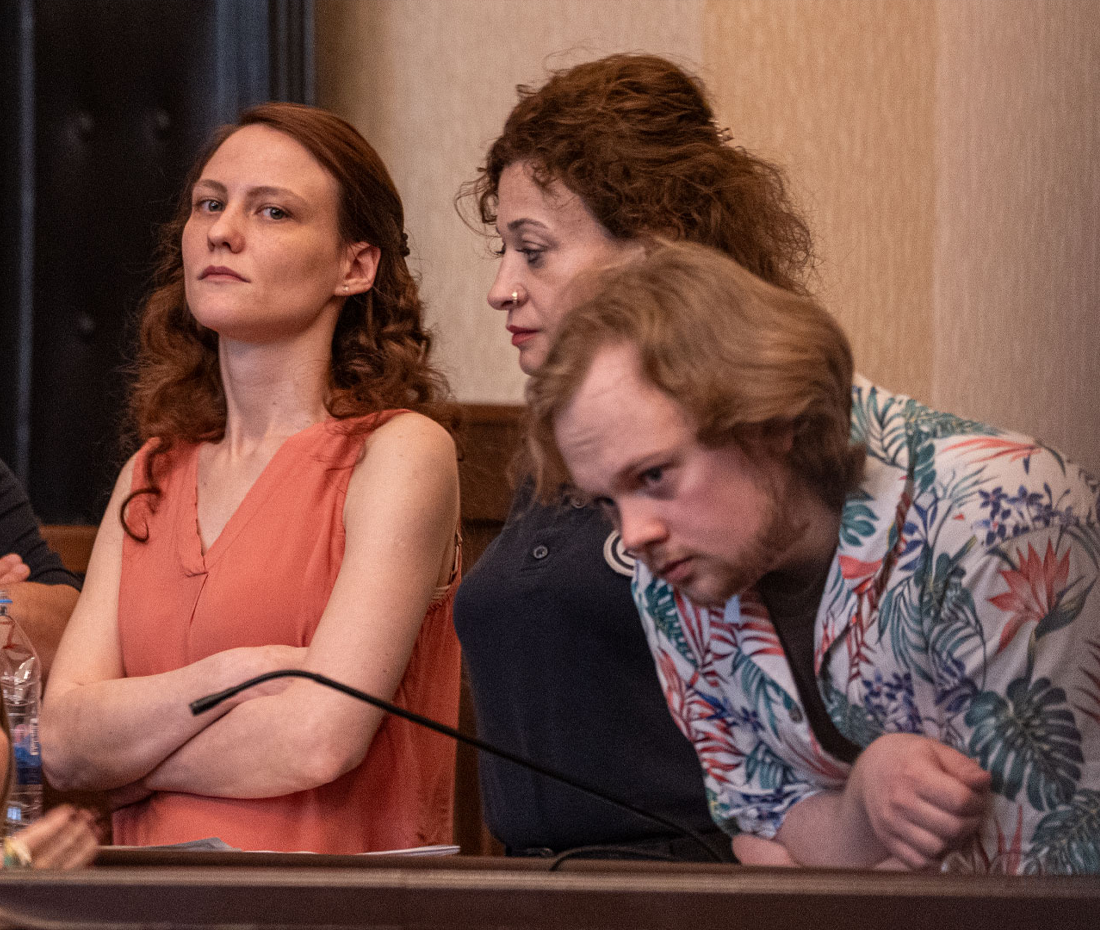

Activists Gela Khasaia, Tornike Toshkhua, Mindia Shervadze, and Saba Skhvitaridze exemplify this pattern. Khasaia was detained following prior threats and assaults that were never investigated. Despite a lack of evidence and the involvement of an unknown third party, he was charged with group assault, alongside another individual he did not know.
Toshkhua and Shervadze were arrested weeks after a protest altercation that witnesses report was provoked by a government supporter brandishing a knife, yet only the protesters were charged and held in pretrial detention.
Saba Skhvitaridze, an opposition activist, received a two‑year prison sentence for allegedly causing harm during a protest, though his lawyers claim he acted in self‑defense against a plainclothes officer, and Amnesty International has called for an impartial investigation into reports of abuse in custody, which to date has not occurred.
These cases are unified not by the nature of the alleged offenses but by the logic of their deployment. Fabricated criminality serves several regime objectives:
Activists Gela Khasaia, Tornike Toshkhua, Mindia Shervadze, and Saba Skhvitaridze exemplify this pattern. Khasaia was detained following prior threats and assaults that were never investigated. Despite a lack of evidence and the involvement of an unknown third party, he was charged with group assault, alongside another individual he did not know.
Toshkhua and Shervadze were arrested weeks after a protest altercation that witnesses report was provoked by a government supporter brandishing a knife, yet only the protesters were charged and held in pretrial detention.
Saba Skhvitaridze, an opposition activist, received a two‑year prison sentence for allegedly causing harm during a protest, though his lawyers claim he acted in self‑defense against a plainclothes officer, and Amnesty International has called for an impartial investigation into reports of abuse in custody, which to date has not occurred.
These cases are unified not by the nature of the alleged offenses but by the logic of their deployment. Fabricated criminality serves several regime objectives:
Notably, these prosecutions depend on a captured judiciary willing to accept evidence obtained through unlawful searches, coercion, or procedural violations. Defense attorneys were frequently denied full access to case materials, while judges granted prosecutorial requests without meaningful scrutiny. The result is a reproducible method of enforcing repression.
A similar pattern is evident in the prosecution of businessman Giorgi Chikvaidze, whose lengthy sentence on embezzlement charges—brought amid allegations of surveillance and retaliation for pro‑European activism—illustrates how ordinary economic crimes are selectively elevated into instruments of political punishment.
Fabricated criminality thus functions as the regime's scalpel—complementing the blunt instrument of mass protest prosecutions. Where “group violence” cases deter crowds, drug‑planting and fictitious charges eliminate politically undesirable individuals, particularly those capable of sustaining protest, documentation, or international attention.
Notably, these prosecutions depend on a captured judiciary willing to accept evidence obtained through unlawful searches, coercion, or procedural violations. Defense attorneys were frequently denied full access to case materials, while judges granted prosecutorial requests without meaningful scrutiny. The result is a reproducible method of enforcing repression.
A similar pattern is evident in the prosecution of businessman Giorgi Chikvaidze, whose lengthy sentence on embezzlement charges—brought amid allegations of surveillance and retaliation for pro‑European activism—illustrates how ordinary economic crimes are selectively elevated into instruments of political punishment.
Fabricated criminality thus functions as the regime's scalpel—complementing the blunt instrument of mass protest prosecutions. Where “group violence” cases deter crowds, drug‑planting and fictitious charges eliminate politically undesirable individuals, particularly those capable of sustaining protest, documentation, or international attention.
Acts of symbolic dissent—graffiti, slogans, minor property markings—were effectively reclassified as serious criminal offenses, transforming expression into prosecutable conduct and dissent into criminal liability. Several activists and politicians were taken into custody for expressing their political views during the 2024–2025 election period for acts of expression that caused minimal, easily reparable damage and were clearly political in nature.
Megi Diasamidze, a 22‑year-old activist, was apprehended after police alleged that she damaged campaign posters belonging to Tbilisi mayoral candidate Kakha Kaladze from the ruling party, by writing “Russian Dream” on them. Diasamidze's actions were reportedly in response to a prior incident, during which supporters of Kaladze are said to have exited a campaign office and assaulted protesters, prompting her to publicly demonstrate dissent.
Despite the total damage being assessed at only 380 GEL (approximately USD 140), Diasamidze was charged under Article 187 of the Criminal Code—a statute that allows penalties ranging from monetary fines to up to five years of imprisonment. The charge selection was discretionary and punitive, transforming a minor expressive act into a serious criminal case. Her conduct is more accurately understood as political expression rather than criminal activity. Following extensive public criticism regarding her arrest, the Prosecutor's Office revised its position and requested a bail of 2,000 GEL in lieu of pretrial detention. However, the criminal case remains pending, leaving Diasamidze exposed to future punishment and prolonged legal pressure.
Key opposition leader Elene Khoshtaria, leader of the opposition Droa party, was arrested on September 15, 2025, after writing similar protest messages on campaign banners supporting Kakha Kaladze, in solidarity with Diasamidze. She publicly acknowledged the act, framing it as political expression rather than vandalism. Nevertheless, authorities launched a criminal investigation under Article 187 following a complaint filed by the ruling Georgian Dream party itself.
Two days later, the Tbilisi City Court set bail at 5,000 GEL, but Khoshtaria refused to attend the hearing or accept legal counsel, insisting she had committed no crime and calling on supporters not to pay bail on her behalf. Her refusal—an act of political defiance—was treated as aggravating, and on November 3 her pretrial detention was reinstated. On November 6, authorities escalated further, filing additional charges “against the state,” accusing her of “sabotage” and “activities on behalf of hostile foreign powers” exposing her to potential sentences of up to 15 years in prison.
The escalation from graffiti to alleged crimes against the state illustrates how expressive acts are deliberately folded into national security frameworks. These cases share defining characteristics:
Acts of symbolic dissent—graffiti, slogans, minor property markings—were effectively reclassified as serious criminal offenses, transforming expression into prosecutable conduct and dissent into criminal liability. Several activists and politicians were taken into custody for expressing their political views during the 2024–2025 election period for acts of expression that caused minimal, easily reparable damage and were clearly political in nature.
Megi Diasamidze, a 22‑year-old activist, was apprehended after police alleged that she damaged campaign posters belonging to Tbilisi mayoral candidate Kakha Kaladze from the ruling party, by writing “Russian Dream” on them. Diasamidze's actions were reportedly in response to a prior incident, during which supporters of Kaladze are said to have exited a campaign office and assaulted protesters, prompting her to publicly demonstrate dissent.
Despite the total damage being assessed at only 380 GEL (approximately USD 140), Diasamidze was charged under Article 187 of the Criminal Code—a statute that allows penalties ranging from monetary fines to up to five years of imprisonment. The charge selection was discretionary and punitive, transforming a minor expressive act into a serious criminal case. Her conduct is more accurately understood as political expression rather than criminal activity. Following extensive public criticism regarding her arrest, the Prosecutor's Office revised its position and requested a bail of 2,000 GEL in lieu of pretrial detention. However, the criminal case remains pending, leaving Diasamidze exposed to future punishment and prolonged legal pressure.
Key opposition leader Elene Khoshtaria, leader of the opposition Droa party, was arrested on September 15, 2025, after writing similar protest messages on campaign banners supporting Kakha Kaladze, in solidarity with Diasamidze. She publicly acknowledged the act, framing it as political expression rather than vandalism. Nevertheless, authorities launched a criminal investigation under Article 187 following a complaint filed by the ruling Georgian Dream party itself.
Two days later, the Tbilisi City Court set bail at 5,000 GEL, but Khoshtaria refused to attend the hearing or accept legal counsel, insisting she had committed no crime and calling on supporters not to pay bail on her behalf. Her refusal—an act of political defiance—was treated as aggravating, and on November 3 her pretrial detention was reinstated. On November 6, authorities escalated further, filing additional charges “against the state,” accusing her of “sabotage” and “activities on behalf of hostile foreign powers” exposing her to potential sentences of up to 15 years in prison.
The escalation from graffiti to alleged crimes against the state illustrates how expressive acts are deliberately folded into national security frameworks. These cases share defining characteristics:
This logic has extended beyond street protest to expressive dissent in institutional and cultural spaces, including the criminal investigation of civic activist and teacher Nino Datashvili, and the imprisonment of eminent Georgian poet Zviad Ratiani after a protest outside Parliament—cases that further illustrate the regime's readiness to recast speech, presence, or symbolic resistance as criminal conduct. Together with fabricated criminality and protest‑related prosecutions, these cases complete the enforcement spectrum. Where mass arrests discipline crowds and drug‑planting eliminates individuals, the criminalization of expression extinguishes the language of resistance itself.
This logic has extended beyond street protest to expressive dissent in institutional and cultural spaces, including the criminal investigation of civic activist and teacher Nino Datashvili, and the imprisonment of eminent Georgian poet Zviad Ratiani after a protest outside Parliament—cases that further illustrate the regime's readiness to recast speech, presence, or symbolic resistance as criminal conduct. Together with fabricated criminality and protest‑related prosecutions, these cases complete the enforcement spectrum. Where mass arrests discipline crowds and drug‑planting eliminates individuals, the criminalization of expression extinguishes the language of resistance itself.
Beyond mass protest prosecutions and the criminalization of expression, Georgian Dream has moved decisively to neutralize political leadership and independent agenda‑setters. This phase of repression targets those with organizational capacity, public legitimacy, and the ability to convert social mobilization into sustained political pressure—opposition leaders and independent journalists. The objective is structural and preemptive: to decapitate the opposition, fragment civil resistance, and eliminate trusted intermediaries between society and international partners.
Beyond mass protest prosecutions and the criminalization of expression, Georgian Dream has moved decisively to neutralize political leadership and independent agenda‑setters. This phase of repression targets those with organizational capacity, public legitimacy, and the ability to convert social mobilization into sustained political pressure—opposition leaders and independent journalists. The objective is structural and preemptive: to decapitate the opposition, fragment civil resistance, and eliminate trusted intermediaries between society and international partners.
In February 2025, the Georgian Dream‑controlled parliament established an inquiry commission in blatant violation of the Georgian Constitution, which requires opposition members to make up at least half of such commissions, as well as the Parliament's Rules of Procedure. The commission's mandate was deliberately left open‑ended and repeatedly amended, allowing Georgian Dream politicians to investigate virtually any political activity retroactively.
Rather than a fact‑finding body, the commission served as a coercive instrument, designed to compel political compliance and retroactively legitimize Georgian Dream's authority following the widely contested October 2024 parliamentary elections.
In February 2025, the Georgian Dream‑controlled parliament established an inquiry commission in blatant violation of the Georgian Constitution, which requires opposition members to make up at least half of such commissions, as well as the Parliament's Rules of Procedure. The commission's mandate was deliberately left open‑ended and repeatedly amended, allowing Georgian Dream politicians to investigate virtually any political activity retroactively.
Rather than a fact‑finding body, the commission served as a coercive instrument, designed to compel political compliance and retroactively legitimize Georgian Dream's authority following the widely contested October 2024 parliamentary elections.
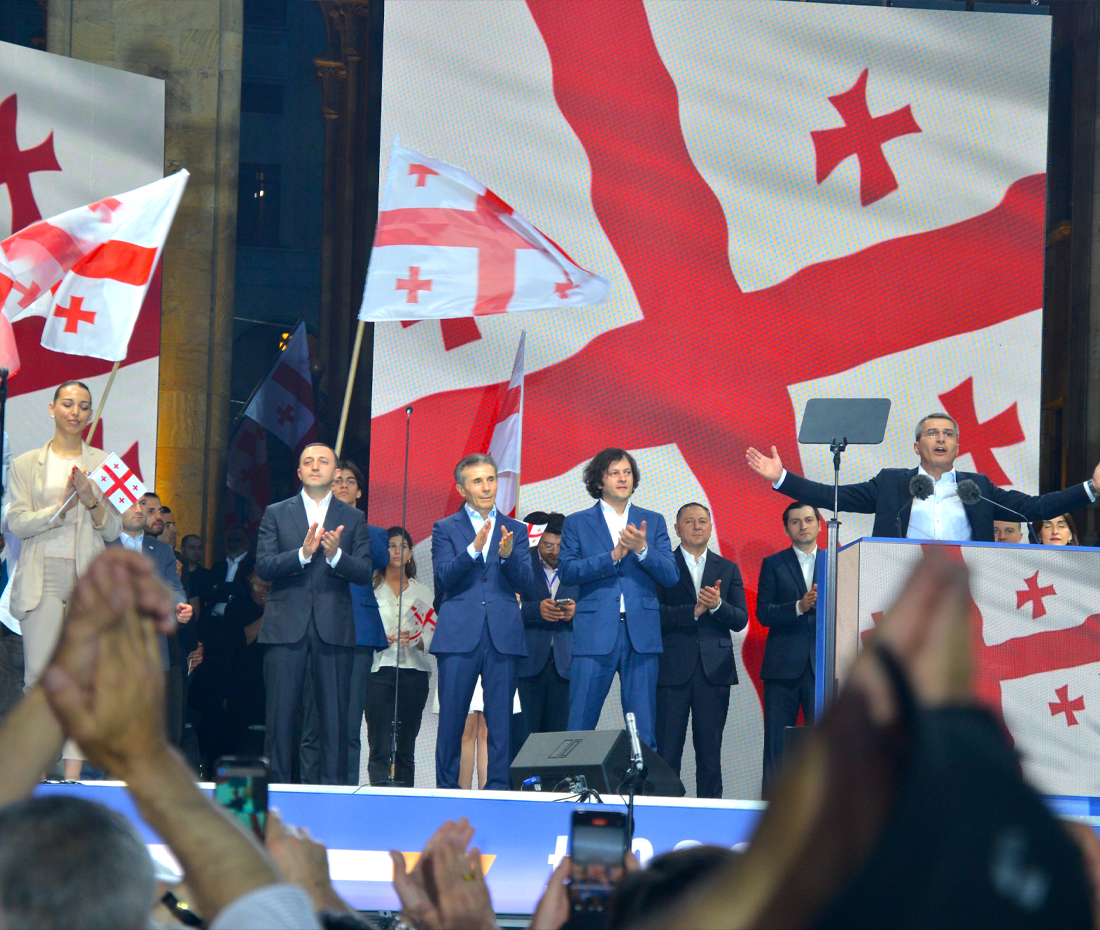
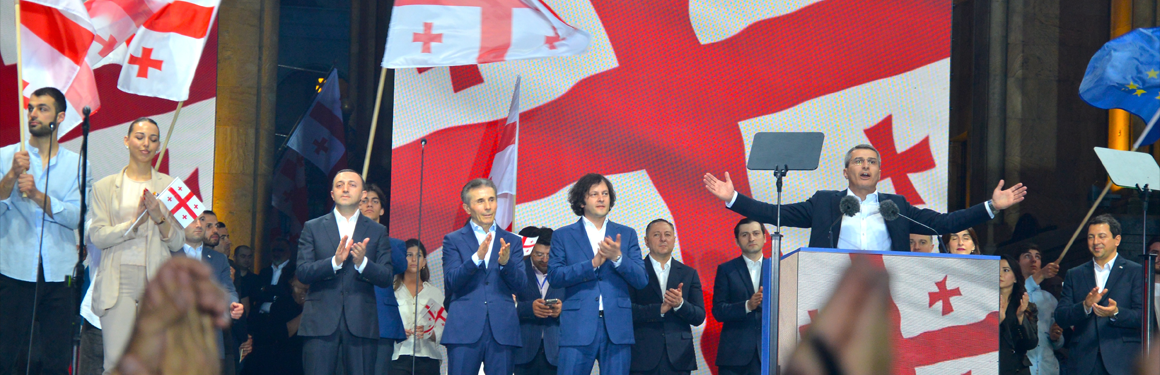
Eight opposition politicians and former officials refused to appear before the Parliamentary Inquiry Commission, explicitly rejecting the legitimacy of a parliament formed through fraudulent elections. Under Georgian law, non‑compliance with a summons from a parliamentary inquiry commission can be prosecuted administratively or criminally; authorities deliberately chose the harsher criminal provisions, despite legal alternatives.
As a result, six leaders from four opposition parties, along with two former politicians, were imprisoned. In September 2025, only two of these politicians—Mamuka Khazaradze and Badri Japaridze—were pardoned by the Georgian Dream‑appointed President, coinciding with their participation in local elections.
The remaining opposition leaders—Nika Gvaramia, Nika Melia, Zurab Japaridze, and Giorgi Vashadze—along with the two pardoned politicians, were subsequently charged with “crimes against the state,” including alleged sabotage and cooperation with hostile foreign powers. Gvaramia, Japaridze, and Vashadze were released from prison between December 2025 and February 2026, after serving sentences for defying parliament, while Melia remains imprisoned with an extended sentence. However, all three released opposition leaders remain under investigation on new charges of “sabotage” and have been granted bail under strict travel restrictions, with their passports confiscated.
Former defense minister Irakli Okruashvili was also convicted in a separate case for a crime dating back to 2004 and sentenced to an additional seven years. The retroactive revival of decades‑old charges further underscores the instrumentalization of criminal justice for political removal rather than accountability.
This enforcement logic has also been applied to former regime insiders. The prosecution and subsequent detention of Giorgi Bachiashvili—once closely associated with Bidzina Ivanishvili and entrusted with managing sensitive financial arrangements—illustrates how criminal justice mechanisms are deployed not only against opposition actors but also to discipline elite defection and consolidate loyalty within the ruling system.
As detailed in a 2025 New York Times investigation, the dispute at the heart of the case centers on opaque and informal cryptocurrency investment arrangements characteristic of Ivanishvili's shadow financial ecosystem—structures that operated outside transparent legal frameworks but were long tolerated while political alignment remained intact. The conflict escalated into criminal prosecution only after Bachiashvili fell out with Ivanishvili, at which point allegations of large‑scale financial crimes were activated and pursued aggressively.
In March 2025, Bachiashvili was sentenced in absentia to 11 years in prison on charges of embezzling more than USD 39 million in cryptocurrency assets. The charges were brought after public statements by Ivanishvili himself. Bachiashvili fled Georgia but was later returned under circumstances he describes as an unlawful transfer involving security services, and subsequently received an additional 4.5‑year sentence for illegal border crossing. Transparency International Georgia has raised serious concerns regarding the legal and factual foundations of the prosecution, citing procedural irregularities and the selective application of criminal law. While in custody, Bachiashvili reportedly suffered mistreatment, prompting further scrutiny of detention conditions. His parents were also subjected to criminal prosecution.
On February 18, 2026, Bachiashvili was released from prison following a plea agreement. As part of the agreement, he received a one‑year probation period in exchange for agreeing to repay Ivanishvili the disputed funds, and all charges against his parents were dismissed.
The significance of this case lies not only in its individual facts, but in what it reveals about the regime's enforcement logic. Financial opacity is tolerated when it serves regime cohesion; once it threatens elite control, it becomes criminalized. Criminal prosecution thus functions as a mechanism of internal discipline, signaling to political and economic elites that autonomy, defection, or exposure of informal financial arrangements carries severe personal risk.
This pattern mirrors practices observed in consolidated authoritarian systems, where selective anti‑corruption enforcement and financial criminalization are used to manage elite loyalty rather than uphold the rule of law. In Georgia's case, it further demonstrates that political imprisonment extends beyond street‑level repression to encompass the coercive regulation of capital, assets, and elite behavior—integrating economic coercion into the broader architecture of authoritarian governance.
Eight opposition politicians and former officials refused to appear before the Parliamentary Inquiry Commission, explicitly rejecting the legitimacy of a parliament formed through fraudulent elections. Under Georgian law, non‑compliance with a summons from a parliamentary inquiry commission can be prosecuted administratively or criminally; authorities deliberately chose the harsher criminal provisions, despite legal alternatives.
As a result, six leaders from four opposition parties, along with two former politicians, were imprisoned. In September 2025, only two of these politicians—Mamuka Khazaradze and Badri Japaridze—were pardoned by the Georgian Dream‑appointed President, coinciding with their participation in local elections.
The remaining opposition leaders—Nika Gvaramia, Nika Melia, Zurab Japaridze, and Giorgi Vashadze—along with the two pardoned politicians, were subsequently charged with “crimes against the state,” including alleged sabotage and cooperation with hostile foreign powers. Gvaramia, Japaridze, and Vashadze were released from prison between December 2025 and February 2026, after serving sentences for defying parliament, while Melia remains imprisoned with an extended sentence. However, all three released opposition leaders remain under investigation on new charges of “sabotage” and have been granted bail under strict travel restrictions, with their passports confiscated.
Former defense minister Irakli Okruashvili was also convicted in a separate case for a crime dating back to 2004 and sentenced to an additional seven years. The retroactive revival of decades‑old charges further underscores the instrumentalization of criminal justice for political removal rather than accountability.
This enforcement logic has also been applied to former regime insiders. The prosecution and subsequent detention of Giorgi Bachiashvili—once closely associated with Bidzina Ivanishvili and entrusted with managing sensitive financial arrangements—illustrates how criminal justice mechanisms are deployed not only against opposition actors but also to discipline elite defection and consolidate loyalty within the ruling system.
As detailed in a 2025 New York Times investigation, the dispute at the heart of the case centers on opaque and informal cryptocurrency investment arrangements characteristic of Ivanishvili's shadow financial ecosystem—structures that operated outside transparent legal frameworks but were long tolerated while political alignment remained intact. The conflict escalated into criminal prosecution only after Bachiashvili fell out with Ivanishvili, at which point allegations of large‑scale financial crimes were activated and pursued aggressively.
In March 2025, Bachiashvili was sentenced in absentia to 11 years in prison on charges of embezzling more than USD 39 million in cryptocurrency assets. The charges were brought after public statements by Ivanishvili himself. Bachiashvili fled Georgia but was later returned under circumstances he describes as an unlawful transfer involving security services, and subsequently received an additional 4.5‑year sentence for illegal border crossing. Transparency International Georgia has raised serious concerns regarding the legal and factual foundations of the prosecution, citing procedural irregularities and the selective application of criminal law. While in custody, Bachiashvili reportedly suffered mistreatment, prompting further scrutiny of detention conditions. His parents were also subjected to criminal prosecution.
On February 18, 2026, Bachiashvili was released from prison following a plea agreement. As part of the agreement, he received a one‑year probation period in exchange for agreeing to repay Ivanishvili the disputed funds, and all charges against his parents were dismissed.
The significance of this case lies not only in its individual facts, but in what it reveals about the regime's enforcement logic. Financial opacity is tolerated when it serves regime cohesion; once it threatens elite control, it becomes criminalized. Criminal prosecution thus functions as a mechanism of internal discipline, signaling to political and economic elites that autonomy, defection, or exposure of informal financial arrangements carries severe personal risk.
This pattern mirrors practices observed in consolidated authoritarian systems, where selective anti‑corruption enforcement and financial criminalization are used to manage elite loyalty rather than uphold the rule of law. In Georgia's case, it further demonstrates that political imprisonment extends beyond street‑level repression to encompass the coercive regulation of capital, assets, and elite behavior—integrating economic coercion into the broader architecture of authoritarian governance.
The imprisonment of Mzia Amaghlobeli, journalist and co‑founder of Batumelebi and Netgazeti, illustrates how the same logic is applied to independent media figures capable of shaping public narratives.
Amaghlobeli was sentenced to two years in prison on charges of resisting, threatening, or assaulting a police officer after an incident in which she slapped Batumi Police Chief Irakli Dgebuadze during a chaotic night marked by mass arrests. Her legal team maintains the act constituted self‑defense in response to intimidation and aggression by police.
While in custody, Amaghlobeli reported systemic degrading treatment, including verbal abuse, threats of physical violence, denial of water and restroom access, and spitting by Dgebuadze himself. These allegations were never meaningfully investigated.
To protest her imprisonment, Amaghlobeli embarked on a 38‑day hunger strike, during which her health significantly deteriorated. Despite repeated appeals by her supporters and human rights organizations, she was denied adequate medical care. Her case has since reached the European Court of Human Rights and is currently under review.
Amaghlobeli has received several international human rights awards, including the European Parliament's prestigious Sakharov Prize, and is widely recognized by both domestic and international observers as a political prisoner.
The imprisonment of Mzia Amaghlobeli, journalist and co‑founder of Batumelebi and Netgazeti, illustrates how the same logic is applied to independent media figures capable of shaping public narratives.
Amaghlobeli was sentenced to two years in prison on charges of resisting, threatening, or assaulting a police officer after an incident in which she slapped Batumi Police Chief Irakli Dgebuadze during a chaotic night marked by mass arrests. Her legal team maintains the act constituted self‑defense in response to intimidation and aggression by police.
While in custody, Amaghlobeli reported systemic degrading treatment, including verbal abuse, threats of physical violence, denial of water and restroom access, and spitting by Dgebuadze himself. These allegations were never meaningfully investigated.
To protest her imprisonment, Amaghlobeli embarked on a 38‑day hunger strike, during which her health significantly deteriorated. Despite repeated appeals by her supporters and human rights organizations, she was denied adequate medical care. Her case has since reached the European Court of Human Rights and is currently under review.
Amaghlobeli has received several international human rights awards, including the European Parliament's prestigious Sakharov Prize, and is widely recognized by both domestic and international observers as a political prisoner.
While earlier phases discipline crowds and suppress expression, these cases eliminate nodes of coordination, credibility, and international linkage.
Across opposition leaders and journalists, common features recur:
While earlier phases discipline crowds and suppress expression, these cases eliminate nodes of coordination, credibility, and international linkage.
Across opposition leaders and journalists, common features recur:
The result is not simply repression but preemption: the systematic removal of individuals capable of translating protest into political change.
The result is not simply repression but preemption: the systematic removal of individuals capable of translating protest into political change.
The cumulative evidence presented in this report demonstrates that political repression in Georgia now operates as an integrated system of governance rather than a series of reactive or improvised responses to protest. Since late 2024, coercion has been routinized through institutional coordination among law enforcement bodies, prosecutors, courts, and detention facilities, producing a stable enforcement model designed to suppress dissent, discipline political participation, and neutralize organized opposition.
At the center of this system is the captured judiciary. Courts no longer function as a corrective to executive power but as its formalizing mechanism, translating political decisions into legally sanctioned outcomes. Pretrial detention has become automatic in politically sensitive cases; evidentiary standards have been diluted; and procedural safeguards have been subordinated to expediency. The closure of hearings, restrictions on public access, and reliance on standardized judicial language reflect not administrative overload but deliberate insulation from public scrutiny at moments of heightened social sympathy for detainees. Legal process itself has become a tool of political containment.
The cumulative evidence presented in this report demonstrates that political repression in Georgia now operates as an integrated system of governance rather than a series of reactive or improvised responses to protest. Since late 2024, coercion has been routinized through institutional coordination among law enforcement bodies, prosecutors, courts, and detention facilities, producing a stable enforcement model designed to suppress dissent, discipline political participation, and neutralize organized opposition.
At the center of this system is the captured judiciary. Courts no longer function as a corrective to executive power but as its formalizing mechanism, translating political decisions into legally sanctioned outcomes. Pretrial detention has become automatic in politically sensitive cases; evidentiary standards have been diluted; and procedural safeguards have been subordinated to expediency. The closure of hearings, restrictions on public access, and reliance on standardized judicial language reflect not administrative overload but deliberate insulation from public scrutiny at moments of heightened social sympathy for detainees. Legal process itself has become a tool of political containment.
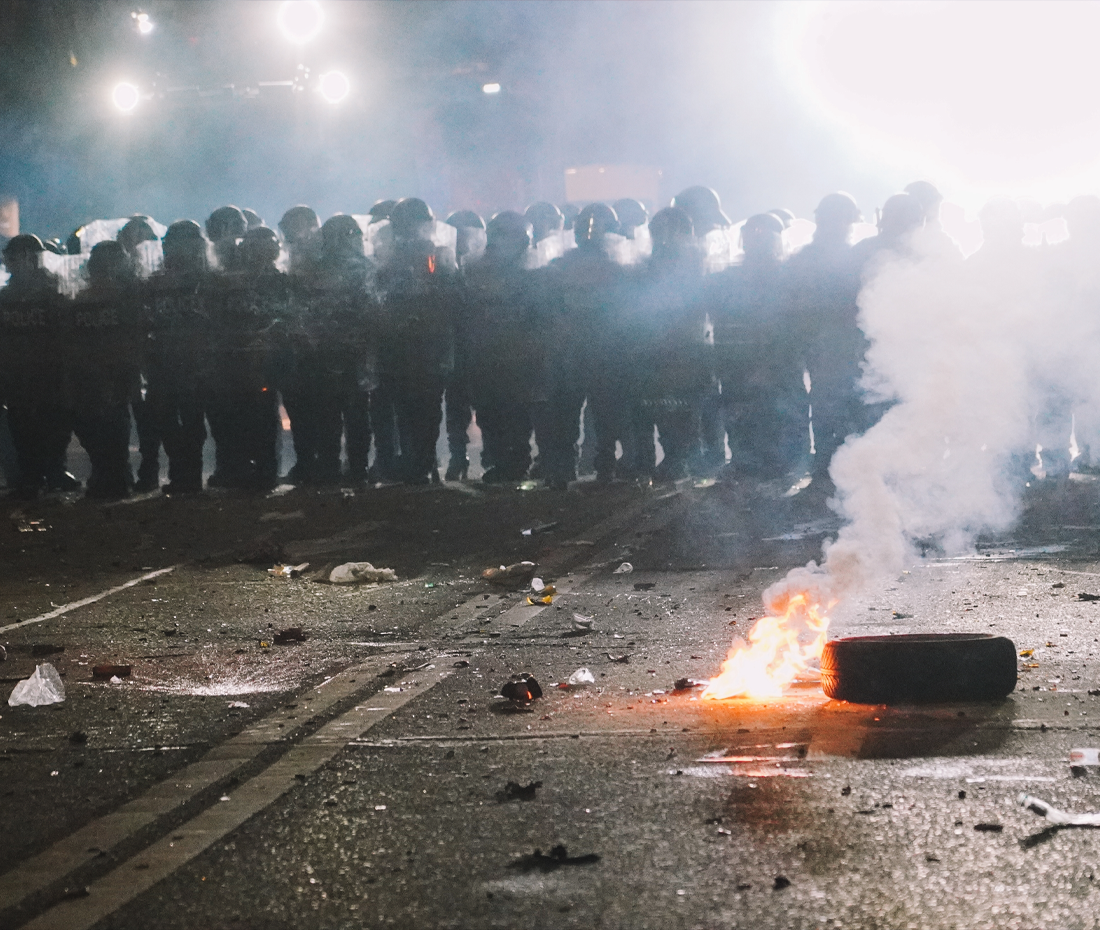
Law enforcement bodies operate in parallel, applying coercive force with near‑total impunity. Disproportionate violence, credible allegations of torture, and degrading treatment in detention have not triggered institutional correction. Instead, oversight mechanisms have been weakened or dismantled, and responsibility diffused across agencies. The absence of accountability signals that the use of unchecked force in defense of the regime is structurally protected, reinforcing a climate in which repression can be applied predictably and without restraint.
Prosecutorial practice completes this architecture. Charges are calibrated not to the gravity of alleged conduct but to their deterrent effect and symbolic value. Administrative offenses escalate into criminal liability; expressive acts are reframed as public‑order or state‑security threats; and severe accusations are selectively deployed against individuals with mobilizing capacity or public credibility. Even in exceptionally rare cases in which acquittals occur, they typically follow prolonged pretrial detention, underscoring that punishment is often imposed through process rather than verdict.
Detention itself has become a governing instrument. The use of remote facilities, restricted access to counsel, and procedural delays designed to foreclose relief transform incarceration into a mechanism of anticipatory discipline. The effect extends beyond those imprisoned: it recalibrates societal expectations by demonstrating that participation in dissent carries durable personal risk.
This enforcement logic performs multiple functions simultaneously. It raises the immediate cost of protest to levels that deter sustained mobilization; fragments opposition networks by removing leadership nodes; reframes political activity as criminal deviance; and normalizes repression by embedding it within ostensibly legal procedures. By operating through institutions rather than ad hoc violence alone, the system preserves a facade of legality while hollowing out its substance.
The targets of this system are not random. Those most consistently subjected to political imprisonment are individuals and organizations engaged in exposing corruption, documenting state violence, supporting Ukraine, or advocating for Euro‑Atlantic integration. In this sense, repression serves not only domestic consolidation but the strategic silencing of pro‑Western constituencies, reinforcing Georgia's broader authoritarian realignment.
Political imprisonment in Georgia has thus become a functional instrument of rule: predictable, institutionalized, and strategically deployed. Understanding this system—not merely its individual manifestations—is essential for assessing the depth of Georgia's democratic collapse and for calibrating international responses capable of altering the regime's cost‑benefit calculations.
Law enforcement bodies operate in parallel, applying coercive force with near‑total impunity. Disproportionate violence, credible allegations of torture, and degrading treatment in detention have not triggered institutional correction. Instead, oversight mechanisms have been weakened or dismantled, and responsibility diffused across agencies. The absence of accountability signals that the use of unchecked force in defense of the regime is structurally protected, reinforcing a climate in which repression can be applied predictably and without restraint.
Prosecutorial practice completes this architecture. Charges are calibrated not to the gravity of alleged conduct but to their deterrent effect and symbolic value. Administrative offenses escalate into criminal liability; expressive acts are reframed as public‑order or state‑security threats; and severe accusations are selectively deployed against individuals with mobilizing capacity or public credibility. Even in exceptionally rare cases in which acquittals occur, they typically follow prolonged pretrial detention, underscoring that punishment is often imposed through process rather than verdict.
Detention itself has become a governing instrument. The use of remote facilities, restricted access to counsel, and procedural delays designed to foreclose relief transform incarceration into a mechanism of anticipatory discipline. The effect extends beyond those imprisoned: it recalibrates societal expectations by demonstrating that participation in dissent carries durable personal risk.
This enforcement logic performs multiple functions simultaneously. It raises the immediate cost of protest to levels that deter sustained mobilization; fragments opposition networks by removing leadership nodes; reframes political activity as criminal deviance; and normalizes repression by embedding it within ostensibly legal procedures. By operating through institutions rather than ad hoc violence alone, the system preserves a facade of legality while hollowing out its substance.
The targets of this system are not random. Those most consistently subjected to political imprisonment are individuals and organizations engaged in exposing corruption, documenting state violence, supporting Ukraine, or advocating for Euro‑Atlantic integration. In this sense, repression serves not only domestic consolidation but the strategic silencing of pro‑Western constituencies, reinforcing Georgia's broader authoritarian realignment.
Political imprisonment in Georgia has thus become a functional instrument of rule: predictable, institutionalized, and strategically deployed. Understanding this system—not merely its individual manifestations—is essential for assessing the depth of Georgia's democratic collapse and for calibrating international responses capable of altering the regime's cost‑benefit calculations.
The preceding analysis demonstrates that Georgia's crisis is not an isolated episode of democratic backsliding, but a systemic transformation with direct geopolitical consequences. A definitive collapse of democracy in Georgia would be catastrophic for Georgian society and a strategic success for the Kremlin, whose leaders have openly welcomed Georgia's current trajectory.
Accordingly, the response of democratic actors must recognize this reality and prioritize measures that materially raise the cost of repression, while enabling the Georgian people—despite sustained violence, mass imprisonment, and legal intimidation—to retain the capacity to resist and ultimately reverse this course. The long‑standing logic of restraint, justified by fears of “pushing Georgia into Russia's hands,” has demonstrably failed and even backfired as the regime has done precisely what such restraint hoped to prevent. In practice, it has enabled the consolidation of repression while reducing Western leverage. Those responsible for engineering and enforcing political imprisonment must face tangible consequences.
The repression documented in this report is not episodic, reactive, or excess‑driven. Political imprisonment functions as a core enforcement mechanism of Georgia's emerging authoritarian governance model. Addressing it therefore requires targeted accountability tools, sustained international monitoring, and protection for those most exposed to state coercion.
The preceding analysis demonstrates that Georgia's crisis is not an isolated episode of democratic backsliding, but a systemic transformation with direct geopolitical consequences. A definitive collapse of democracy in Georgia would be catastrophic for Georgian society and a strategic success for the Kremlin, whose leaders have openly welcomed Georgia's current trajectory.
Accordingly, the response of democratic actors must recognize this reality and prioritize measures that materially raise the cost of repression, while enabling the Georgian people—despite sustained violence, mass imprisonment, and legal intimidation—to retain the capacity to resist and ultimately reverse this course. The long‑standing logic of restraint, justified by fears of “pushing Georgia into Russia's hands,” has demonstrably failed and even backfired as the regime has done precisely what such restraint hoped to prevent. In practice, it has enabled the consolidation of repression while reducing Western leverage. Those responsible for engineering and enforcing political imprisonment must face tangible consequences.
The repression documented in this report is not episodic, reactive, or excess‑driven. Political imprisonment functions as a core enforcement mechanism of Georgia's emerging authoritarian governance model. Addressing it therefore requires targeted accountability tools, sustained international monitoring, and protection for those most exposed to state coercion.
1. Apply the EU's Amended Visa Suspension Mechanism
Under the revised Visa Suspension Mechanism adopted in June, the EU may suspend visa liberalization for specific categories of individuals responsible for systemic human rights violations, without requiring full EU consensus.
The EU should publicly signal that unless all political prisoners are released and repressive legislation is repealed by the time the Commission issues its Rule of Law Report in late July, visa liberalization will be suspended for:
1. Apply the EU's Amended Visa Suspension Mechanism
Under the revised Visa Suspension Mechanism adopted in June, the EU may suspend visa liberalization for specific categories of individuals responsible for systemic human rights violations, without requiring full EU consensus.
The EU should publicly signal that unless all political prisoners are released and repressive legislation is repealed by the time the Commission issues its Rule of Law Report in late July, visa liberalization will be suspended for:
Extending these restrictions to family members would significantly increase deterrent impact and align consequences with the collective nature of decision‑making within the regime.
Extending these restrictions to family members would significantly increase deterrent impact and align consequences with the collective nature of decision‑making within the regime.
2. Establish an External Focal Point for Georgia (EFP4GEO)
As domestic monitoring capacity is systematically dismantled, the EU should support the creation of a dedicated external focal point to:
2. Establish an External Focal Point for Georgia (EFP4GEO)
As domestic monitoring capacity is systematically dismantled, the EU should support the creation of a dedicated external focal point to:
A Baltic‑based organization could host this mechanism, ensuring political insulation and regional credibility.
3. Sustain Civil Society Through Alternative Funding Mechanisms
EU funds redirected away from the Georgian government must be operationalized without further delay. This support, including the €15 million civil society envelope, should be rerouted through:
A Baltic‑based organization could host this mechanism, ensuring political insulation and regional credibility.
3. Sustain Civil Society Through Alternative Funding Mechanisms
EU funds redirected away from the Georgian government must be operationalized without further delay. This support, including the €15 million civil society envelope, should be rerouted through:
Funding should prioritize:
Funding should prioritize:
4. Activate International Legal and Economic Conditionality
Continued financing of large‑scale projects through international financial institutions creates strategic ambiguity and reinforces the regime's sense of impunity. Therefore, the European Union should pursue:
4. Activate International Legal and Economic Conditionality
Continued financing of large‑scale projects through international financial institutions creates strategic ambiguity and reinforces the regime's sense of impunity. Therefore, the European Union should pursue:
EU member states as well as the UK and the United States should actively engage with international financial institutions such as the IMF, World Bank, EBRD, EIB, AFD, KfW, and ADB to ensure unified conditionality and avoid enabling the Georgian Dream regime through continued financing, and should consider suspending non‑humanitarian development projects unless Georgia's course is reversed.
EU member states as well as the UK and the United States should actively engage with international financial institutions such as the IMF, World Bank, EBRD, EIB, AFD, KfW, and ADB to ensure unified conditionality and avoid enabling the Georgian Dream regime through continued financing, and should consider suspending non‑humanitarian development projects unless Georgia's course is reversed.
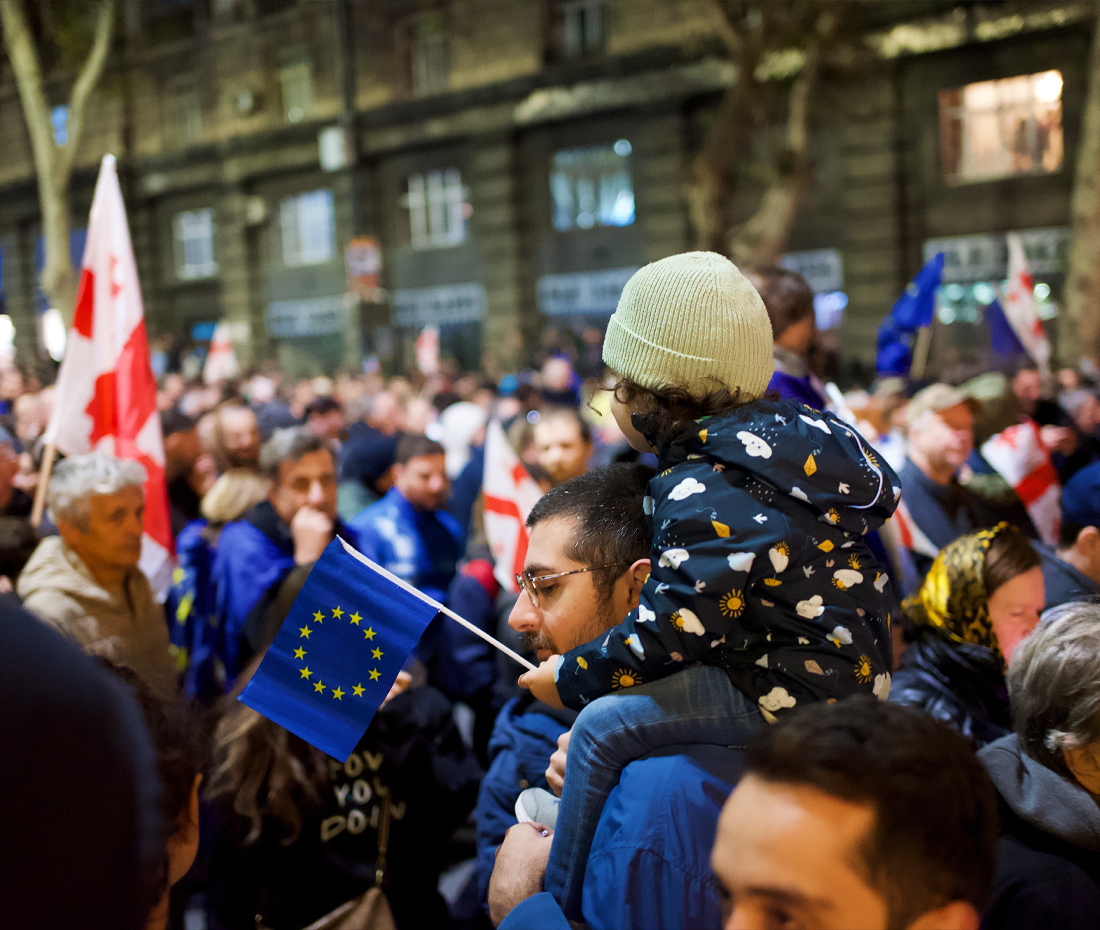
5. Pursue universal jurisdiction and sustained CPT engagement
Where legally permissible, European states should invoke universal jurisdiction for torture and inhuman or degrading treatment. Sustained advocacy is also required to ensure public follow‑up and accountability regarding CPT findings, including statements, repeat visits, and senior‑level engagement.
Additional mechanisms should include:
5. Pursue universal jurisdiction and sustained CPT engagement
Where legally permissible, European states should invoke universal jurisdiction for torture and inhuman or degrading treatment. Sustained advocacy is also required to ensure public follow‑up and accountability regarding CPT findings, including statements, repeat visits, and senior‑level engagement.
Additional mechanisms should include:
Drawing on case law of the Court, the inter‑state application would seek interim measures of the court in relation to the draconian legislation Georgian Dream has adopted that has suffocated Georgia's civil society and brought it to the brink of extinction.
National parliaments and international parliamentary bodies, including the European Parliament, PACE, and the OSCE Parliamentary Assembly—should continue coordinated political pressure to sustain visibility and prevent normalization of repression.
These accountability measures should be understood as complementary to the strategic recalibration outlined in the first paper of this series, How Georgia Turned Toward the Kremlin and Cracked Down on Pro‑Western Dissent, which addresses how Western actors can fine‑tune political, economic, and security leverage to prevent Georgia's consolidation as a Kremlin‑aligned authoritarian state.
Drawing on case law of the Court, the inter‑state application would seek interim measures of the court in relation to the draconian legislation Georgian Dream has adopted that has suffocated Georgia's civil society and brought it to the brink of extinction.
National parliaments and international parliamentary bodies, including the European Parliament, PACE, and the OSCE Parliamentary Assembly—should continue coordinated political pressure to sustain visibility and prevent normalization of repression.
These accountability measures should be understood as complementary to the strategic recalibration outlined in the first paper of this series, How Georgia Turned Toward the Kremlin and Cracked Down on Pro‑Western Dissent, which addresses how Western actors can fine‑tune political, economic, and security leverage to prevent Georgia's consolidation as a Kremlin‑aligned authoritarian state.
What unfolded in Georgia in 2024 was not a sudden rupture, but the culmination of a long‑running consolidation of power. The evidence presented illustrates how political imprisonment evolved into a governing instrument—used to silence dissent, deter collective action, and insulate a Kremlin‑aligned ruling system from accountability.
What is at stake is not only the future of Georgian democracy, but the credibility of Western deterrence against authoritarian state capture beyond Russia's borders. Georgia's trajectory remains reversible—but only if democratic actors abandon symbolic restraint and apply leverage commensurate with the scale of repression. Failure to do so will not preserve stability but will entrench impunity and reward alignment with coercive authoritarian power.
What unfolded in Georgia in 2024 was not a sudden rupture, but the culmination of a long‑running consolidation of power. The evidence presented illustrates how political imprisonment evolved into a governing instrument—used to silence dissent, deter collective action, and insulate a Kremlin‑aligned ruling system from accountability.
What is at stake is not only the future of Georgian democracy, but the credibility of Western deterrence against authoritarian state capture beyond Russia's borders. Georgia's trajectory remains reversible—but only if democratic actors abandon symbolic restraint and apply leverage commensurate with the scale of repression. Failure to do so will not preserve stability but will entrench impunity and reward alignment with coercive authoritarian power.
'
And Cracked Down on Pro‑Western Dissent
By Free Russia Foundation
February 05, 2026
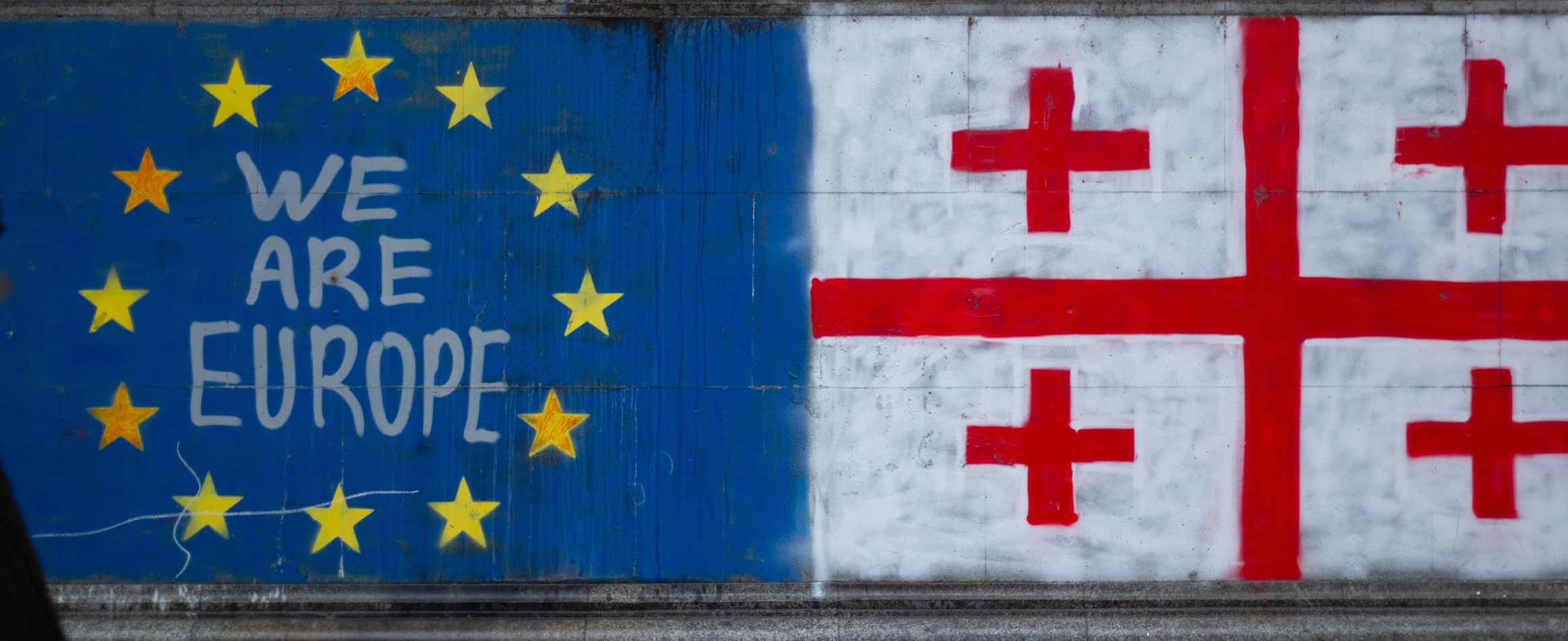 Report
 By Egor Kuroptev
February 03, 2020
 Article
 Before I start describing Georgia as a country and a reform leader in its region — Georgia is, after all, a country recognized for its success on its path toward inclusion in the Euro- and Euro‑Atlantic family — I would like to pose to readers of this material the question whether you personally believe that Georgia is an important country for the West or not?
By Egor Kuroptev
March 23, 2021

And Cracked Down on Pro‑Western Dissent
By Free Russia Foundation
February 05, 2026
Report By Egor Kuroptev
February 03, 2020
Article Before I start describing Georgia as a country and a reform leader in its region — Georgia is, after all, a country recognized for its success on its path toward inclusion in the Euro- and Euro‑Atlantic family — I would like to pose to readers of this material the question whether you personally believe that Georgia is an important country for the West or not?
By Egor Kuroptev
March 23, 2021