
Politics
Putin's Fatal Blow to Russia's Demographics
Latest Data
By Vladimir Milov March 16, 2026


Latest Data
By Vladimir Milov March 16, 2026
Putin's war against Ukraine delivered an unquestionable blow to Russia's demographics. Birth rates are down, mortality is up, mass emigration from Russia has been unprecedented, and the death toll from the war is the highest since World War II. But how exactly does all this look in terms of numbers, and what implications do these demographic developments have for Russia's ability to sustain its economy, continue to fight wars, and, more broadly, the country's long‑term future?
The current report provides some basic overview of the most recent demographic trends, and tries to understand the impact of the war, as well as the influence of emerging demographic challenges on Russia's ability to wage future mass‑scale wars.
One of the notable observations is that the negative demographic trends had not started after Russia's full‑scale invasion of Ukraine in February 2022 — they were, instead, emerging since around 2015, and should be connected with the negative consequences of the war against Ukraine and subsequent emergence of Russia's international isolation as far back as then. What happened in 2014–2021 also had a profound negative impact on Russia's demography.
Russia's current demographic crisis is developing in several major directions:
Putin's war against Ukraine delivered an unquestionable blow to Russia's demographics. Birth rates are down, mortality is up, mass emigration from Russia has been unprecedented, and the death toll from the war is the highest since World War II. But how exactly does all this look in terms of numbers, and what implications do these demographic developments have for Russia's ability to sustain its economy, continue to fight wars, and, more broadly, the country's long‑term future?
The current report provides some basic overview of the most recent demographic trends, and tries to understand the impact of the war, as well as the influence of emerging demographic challenges on Russia's ability to wage future mass‑scale wars.
One of the notable observations is that the negative demographic trends had not started after Russia's full‑scale invasion of Ukraine in February 2022 — they were, instead, emerging since around 2015, and should be connected with the negative consequences of the war against Ukraine and subsequent emergence of Russia's international isolation as far back as then. What happened in 2014–2021 also had a profound negative impact on Russia's demography.
Russia's current demographic crisis is developing in several major directions:
All of these trends are analyzed below in greater detail.
All of these trends are analyzed below in greater detail.
One of the worst demographic challenges of contemporary Russia is the rapid and massive wipeout of men in the most productive age groups, which is not compensated by comparable replacement from younger generations. This trend began not in February 2022, but much earlier: as data provided below suggests, most of the contraction happened before 2021. Putin's war against Ukraine, which began in 2014, and Russia's subsequent increasing international isolation and economic woes, have arguably contributed to that, as discussed below.
In September 2025, Russia's leading macroeconomic analysis center, known internationally under the Russian abbreviation CMAKP («Центр макроэкономического анализа и краткосрочного прогнозирования», or “Center for Macroeconomic Analysis and Short‑term Forecasting” in English), published quite an alarming report on Russian demographics called “Demographic crisis”, acknowledging Russia's most‑pressing demographic challenge arising from the war against Ukraine: a sharp decrease of the younger part of the working‑age population. According to CMAKP, in 2010–2024, Russia has kept dramatically losing population in the crucial younger age groups, with the total workforce rapidly aging.
One of the worst demographic challenges of contemporary Russia is the rapid and massive wipeout of men in the most productive age groups, which is not compensated by comparable replacement from younger generations. This trend began not in February 2022, but much earlier: as data provided below suggests, most of the contraction happened before 2021. Putin's war against Ukraine, which began in 2014, and Russia's subsequent increasing international isolation and economic woes, have arguably contributed to that, as discussed below.
In September 2025, Russia's leading macroeconomic analysis center, known internationally under the Russian abbreviation CMAKP («Центр макроэкономического анализа и краткосрочного прогнозирования», or “Center for Macroeconomic Analysis and Short‑term Forecasting” in English), published quite an alarming report on Russian demographics called “Demographic crisis”, acknowledging Russia's most‑pressing demographic challenge arising from the war against Ukraine: a sharp decrease of the younger part of the working‑age population. According to CMAKP, in 2010–2024, Russia has kept dramatically losing population in the crucial younger age groups, with the total workforce rapidly aging.
“Over the period 2010–2024, the number of employed people aged 20–29 decreased by 5.9 million people. After 2021, the growth in the share of employed people aged 40–50 and 50 years and older has accelerated significantly, and this trend will continue, all other things being equal.”
Center for macroeconomic analysis and short‑term forecasting
September 2025
“Over the period 2010–2024, the number of employed people aged 20–29 decreased by 5.9 million people. After 2021, the growth in the share of employed people aged 40–50 and 50 years and older has accelerated significantly, and this trend will continue, all other things being equal.”
Center for macroeconomic analysis and short‑term forecasting
September 2025
CMAKP is a highly influential think tank within Putin's system — its founder and longtime director, Andrey Belousov, is currently serving as Russia's Minister of Defense, after working as Putin's de‑facto chief economic strategist in various capacities for nearly two decades; CMAKP is currently chaired by Andrey Belousov's brother, Dmitry. That makes the admission of Russia's mounting demographic problems particularly notable. CMAKP also directly mentions the war against Ukraine (SVO, the Russian abbreviation for a “special military operation” as it is called by the Russian propaganda) and mass emigration (“relocation”, as it is politely described by the Russian official sources), as key new challenges to Russian demographics.
CMAKP is a highly influential think tank within Putin's system — its founder and longtime director, Andrey Belousov, is currently serving as Russia's Minister of Defense, after working as Putin's de‑facto chief economic strategist in various capacities for nearly two decades; CMAKP is currently chaired by Andrey Belousov's brother, Dmitry. That makes the admission of Russia's mounting demographic problems particularly notable. CMAKP also directly mentions the war against Ukraine (SVO, the Russian abbreviation for a “special military operation” as it is called by the Russian propaganda) and mass emigration (“relocation”, as it is politely described by the Russian official sources), as key new challenges to Russian demographics.
“The SVO has a negative impact on the birth rate, particularly by postponing some births.”
“A special aspect concerns relocated individuals (primarily young men): some of them have returned, while others are likely not to, which will undoubtedly impact the number of children born.”
Center for Macroeconomic Analysis and Short‑Term Forecasting
September 2025
“The SVO has a negative impact on the birth rate, particularly by postponing some births.”
“A special aspect concerns relocated individuals (primarily young men): some of them have returned, while others are likely not to, which will undoubtedly impact the number of children born.”
Center for Macroeconomic Analysis and Short‑Term Forecasting
September 2025
CMAKP figures on rapidly declining young working‑age population are widely supported by official statistics. That is particularly true for the male population, which is an essential demographic group for Putin's intentions to fight wars — currently against Ukraine, but most likely against other European countries in the future as well. According to Rosstat's “Demographic Yearbook of Russia”, the Russian male population aged between 20 and 29 has decreased by 4.6 million (or by nearly 40%) in 2010–2024. During that period, Russia's younger male population (aged below 20) increased by just 1.7 million — compensating for only about one third of the total male population loss in ages 20–29.
CMAKP figures on rapidly declining young working‑age population are widely supported by official statistics. That is particularly true for the male population, which is an essential demographic group for Putin's intentions to fight wars — currently against Ukraine, but most likely against other European countries in the future as well. According to Rosstat's “Demographic Yearbook of Russia”, the Russian male population aged between 20 and 29 has decreased by 4.6 million (or by nearly 40%) in 2010–2024. During that period, Russia's younger male population (aged below 20) increased by just 1.7 million — compensating for only about one third of the total male population loss in ages 20–29.
Since then, the situation has likely deteriorated further, particularly as of 2025 although the Russian government has classified the demographic statistics as of 2025, which is discussed in more detail below.
It has become a widespread trend to explain the massive loss of the young male population as a result of what is known as the “demographic dent” of the 1990s -- in other words, the decline in birth rates during that decade, which contributed to a reduction of male Russians reaching the age of 20 starting from 2010. However, other factors also seem to be at play, as shown in Box 1.
Since then, the situation has likely deteriorated further, particularly as of 2025 although the Russian government has classified the demographic statistics as of 2025, which is discussed in more detail below.
It has become a widespread trend to explain the massive loss of the young male population as a result of what is known as the “demographic dent” of the 1990s -- in other words, the decline in birth rates during that decade, which contributed to a reduction of male Russians reaching the age of 20 starting from 2010. However, other factors also seem to be at play, as shown in Box 1.
While the decline of birth rates in the 1990s is indeed a major reason behind shrinking availability of young male adults in Russia, it doesn't provide the full picture of the situation.
The decline in male births in the 1990s was indeed significant, but not as bad as the current situation with availability of young male population. In 1985–1994, the total number of males born (all figures in this box are taken from Rosstat's “Demographic Yearbook of Russia”) was 10.3 million, exceeding the number of males born in the subsequent years of 1995–2004 (6.9 million) by 49%. However, as can be seen from table 1 above, the currently available number of Russian males aged 30–39 (born in 1985–1994) exceeds the number of males aged 20–29 (born in 1995–2004) by as much as 55%.
This means that the current number of Russian males aged 20–29 is about 300,000–400,000 extra people short of the number that should have been there based simply on the difference in male births between the period of 1995–2004 and the previous decade. The obvious explanations here are wartime losses and mass emigration from Russia.
More interestingly is what happens with the younger age category: after the rebounding of birth rates in 2000s, one would naturally expect that the number of males aged 10–19 (born in 2005–2014) will grow as compared to males aged 20–29 (born in 1995–2004, at the bottom of the 1990s “demographic dent”).
This is indeed what happened in recent years, but, notably, at a much slower rate than the increase of actual births during 2005–2014. During that period, 29.5% more males were born than during the period of 1995–2004. However, as can be seen from Table 1, the current number of males aged 10–19 is just 13% higher than the number of males aged 20–29. Where have all these young males born after 2004 gone? The most obvious explanation is that these are children who left the country together with their parents. The patterns of Russian emigration since 2014 are discussed below, but studies show that most of the families that left are young Russians, many of them with children.
So, at the end of the day, Russian males aged 20–29 currently make a somewhat smaller share of the population than they should, basing purely on the analysis of birth dynamics in the 1990s. Additionally, males aged 10–19 comprise an even more strikingly small share of the population than can be expected given the increasing birth rates of 2005–2014; most likely, reflecting these young males' emigration with their parents since 2014.
While this issue needs to be studied further, it appears that the dynamics of Russia's young male population do not simply reflect the demographic patterns of the 1990s — other notable factors are clearly at play here as well.
While the decline of birth rates in the 1990s is indeed a major reason behind shrinking availability of young male adults in Russia, it doesn't provide the full picture of the situation.
The decline in male births in the 1990s was indeed significant, but not as bad as the current situation with availability of young male population. In 1985–1994, the total number of males born (all figures in this box are taken from Rosstat's “Demographic Yearbook of Russia”) was 10.3 million, exceeding the number of males born in the subsequent years of 1995–2004 (6.9 million) by 49%. However, as can be seen from table 1 above, the currently available number of Russian males aged 30–39 (born in 1985–1994) exceeds the number of males aged 20–29 (born in 1995–2004) by as much as 55%.
This means that the current number of Russian males aged 20–29 is about 300,000–400,000 extra people short of the number that should have been there based simply on the difference in male births between the period of 1995–2004 and the previous decade. The obvious explanations here are wartime losses and mass emigration from Russia.
More interestingly is what happens with the younger age category: after the rebounding of birth rates in 2000s, one would naturally expect that the number of males aged 10–19 (born in 2005–2014) will grow as compared to males aged 20–29 (born in 1995–2004, at the bottom of the 1990s “demographic dent”).
This is indeed what happened in recent years, but, notably, at a much slower rate than the increase of actual births during 2005–2014. During that period, 29.5% more males were born than during the period of 1995–2004. However, as can be seen from Table 1, the current number of males aged 10–19 is just 13% higher than the number of males aged 20–29. Where have all these young males born after 2004 gone? The most obvious explanation is that these are children who left the country together with their parents. The patterns of Russian emigration since 2014 are discussed below, but studies show that most of the families that left are young Russians, many of them with children.
So, at the end of the day, Russian males aged 20–29 currently make a somewhat smaller share of the population than they should, basing purely on the analysis of birth dynamics in the 1990s. Additionally, males aged 10–19 comprise an even more strikingly small share of the population than can be expected given the increasing birth rates of 2005–2014; most likely, reflecting these young males' emigration with their parents since 2014.
While this issue needs to be studied further, it appears that the dynamics of Russia's young male population do not simply reflect the demographic patterns of the 1990s — other notable factors are clearly at play here as well.
Clearly, factors other than the “demographic dent” of the 1990s, including war and mass emigration in the first place, have contributed to a major decline of Russia's young working age population in recent years. While the impact of these factors on Russia's demography cannot be quantified with precision, it is openly acknowledged even by pro‑government analytical centers like CMAKP, as shown above. Arguably, mass emigration was a much larger contributing factor, as discussed below. Deaths of young males on the battlefield in Ukraine are estimated to figure in the tens of thousands maximum, based on the Russian war losses estimated by BBC and Mediazona: as shown below, the majority of battlefield losses are suffered by older groups aged above 30. Emigration proves to be a much larger contributing factor, arguably in the range of hundreds of thousands of young Russian males, leaving the country.
The collapse of Russia's crucial demographic group, males aged from 20 to 29, has a profound impact on the labor market and Russia's ability to wage wars, as discussed below.
Clearly, factors other than the “demographic dent” of the 1990s, including war and mass emigration in the first place, have contributed to a major decline of Russia's young working age population in recent years. While the impact of these factors on Russia's demography cannot be quantified with precision, it is openly acknowledged even by pro‑government analytical centers like CMAKP, as shown above. Arguably, mass emigration was a much larger contributing factor, as discussed below. Deaths of young males on the battlefield in Ukraine are estimated to figure in the tens of thousands maximum, based on the Russian war losses estimated by BBC and Mediazona: as shown below, the majority of battlefield losses are suffered by older groups aged above 30. Emigration proves to be a much larger contributing factor, arguably in the range of hundreds of thousands of young Russian males, leaving the country.
The collapse of Russia's crucial demographic group, males aged from 20 to 29, has a profound impact on the labor market and Russia's ability to wage wars, as discussed below.
While there has been a lot of speculation about how many Russians have left the country following 2014, and, particularly, following the 2022 full‑scale invasion of Ukraine, in fairness, providing accurate numbers is impossible. The majority of Russians leaving the country never register with the official authorities (they are not strictly required to), and simply live in foreign countries unregistered. Numbers of emigration from Russia provided by Rosstat, for the most part, reflect foreigners with expiring residence permits, which is why citing these numbers while trying to assess the extent of emigration from Russia is methodologically incorrect. We suggest not spending too much time arguing about this issue, focusing instead on the following assumptions:
While there has been a lot of speculation about how many Russians have left the country following 2014, and, particularly, following the 2022 full‑scale invasion of Ukraine, in fairness, providing accurate numbers is impossible. The majority of Russians leaving the country never register with the official authorities (they are not strictly required to), and simply live in foreign countries unregistered. Numbers of emigration from Russia provided by Rosstat, for the most part, reflect foreigners with expiring residence permits, which is why citing these numbers while trying to assess the extent of emigration from Russia is methodologically incorrect. We suggest not spending too much time arguing about this issue, focusing instead on the following assumptions:
In August 2025, RBC cited a study by researchers from the Russian Presidential Academy of National Economy and Public Administration (RANEPA) that assessed the total number of “relocants” from 2022 as 650,000, of which 58% were males, and over 80%, aged from 25 to 45 (with people aged 25–34 representing half of the total number of “relocants”).
In August 2025, RBC cited a study by researchers from the Russian Presidential Academy of National Economy and Public Administration (RANEPA) that assessed the total number of “relocants” from 2022 as 650,000, of which 58% were males, and over 80%, aged from 25 to 45 (with people aged 25–34 representing half of the total number of “relocants”).
As can be seen from table 1 above, Russia's young and middle‑aged male population is not too large as such. When Russia's military capabilities are discussed, a stereotype of “limitless manpower” is often a commonplace assumption, citing Russia's 146‑million population.
In reality, as numbers from Table 1 suggest, Russia has no more than 19.4 million males aged between 20 and 39. That's just 13.3% of the country's total population, and also the largest group contributing to the military draft. Some may argue that this still equals a significant amount of people for potential drafting, however, it is not as simple:
As can be seen from table 1 above, Russia's young and middle‑aged male population is not too large as such. When Russia's military capabilities are discussed, a stereotype of “limitless manpower” is often a commonplace assumption, citing Russia's 146‑million population.
In reality, as numbers from Table 1 suggest, Russia has no more than 19.4 million males aged between 20 and 39. That's just 13.3% of the country's total population, and also the largest group contributing to the military draft. Some may argue that this still equals a significant amount of people for potential drafting, however, it is not as simple:
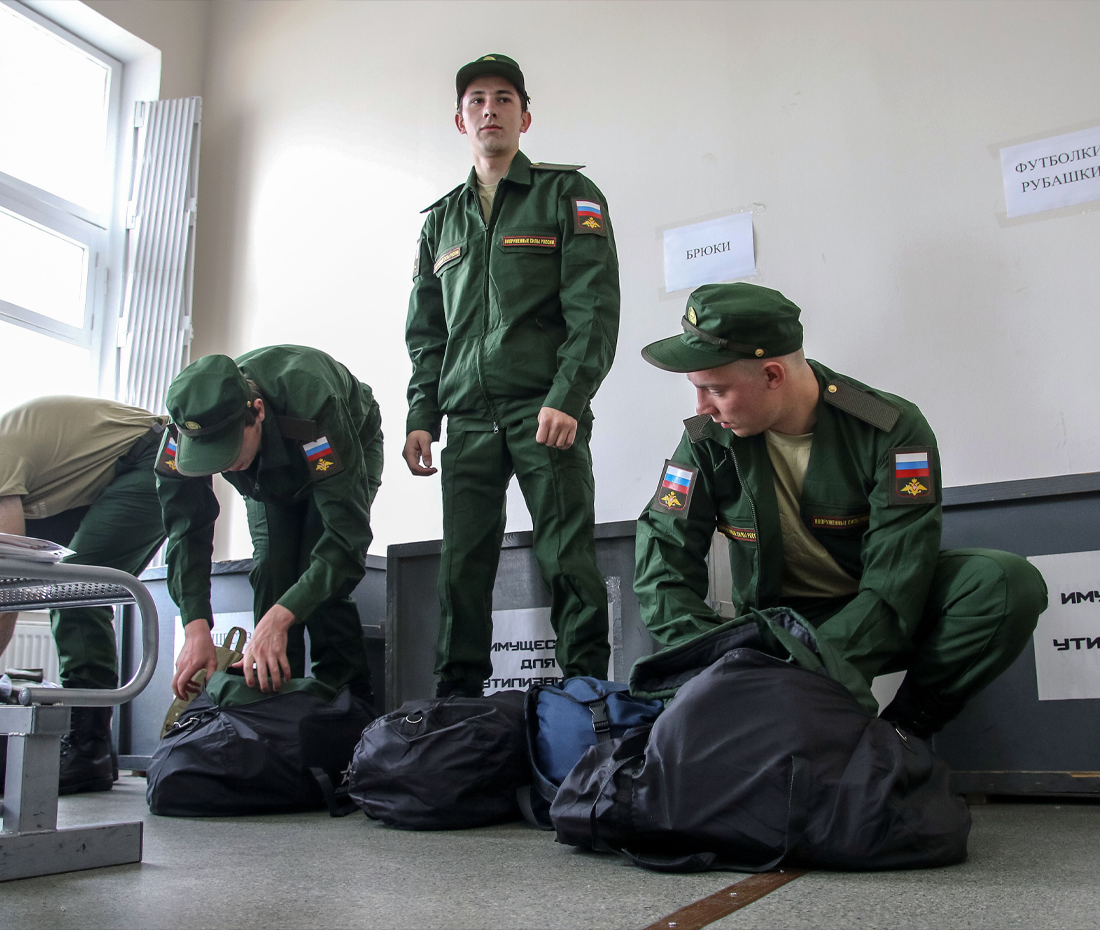
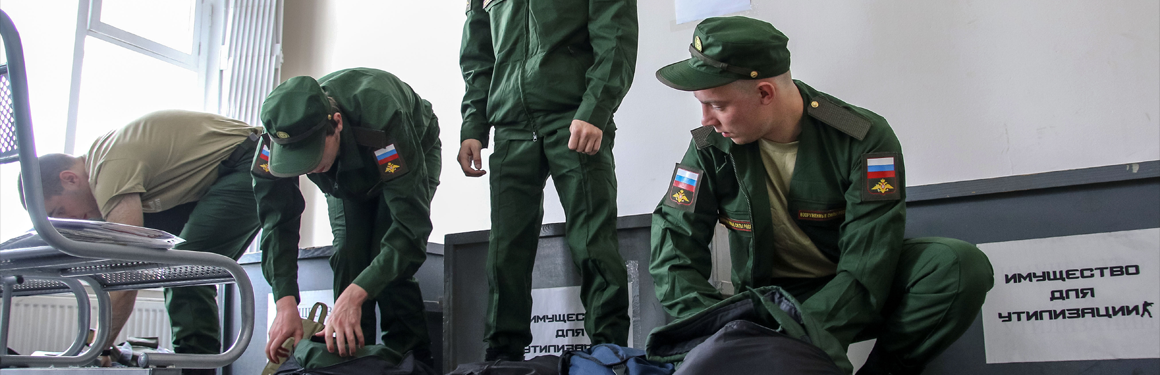
These factors shrink the number of males aged from 20 to 39 available for potential new military drafting to just around 10 million people.
10 million may still seem like a lot, however, drafting them for actual military service is easier said than done: this is the most capable and demanded age group as far as the Russian labor market is concerned, so military drafting of this group directly competes with the already ailing Russian economy.
These factors shrink the number of males aged from 20 to 39 available for potential new military drafting to just around 10 million people.
10 million may still seem like a lot, however, drafting them for actual military service is easier said than done: this is the most capable and demanded age group as far as the Russian labor market is concerned, so military drafting of this group directly competes with the already ailing Russian economy.
Russia's labor market currently finds itself in unprecedented distress. Unemployment levels are at historic lows -- with only 1.6 million people officially estimated as being unemployed. Males aged between 20 and 39 appear to comprise a very small fraction of the Russian unemployed population, as, according to Rosstat, unemployment is dominated by females and people from elder age groups.
According to the Russian Central Bank monthly review “Monitoring of enterprises”, a survey of about 15,000 Russian real sector enterprises, staff availability remains at absolute historic lows, with some industries (utilities, agriculture, logistics, manufacturing) reporting staffing shortages of as much as 40–50% of needed personnel. While it is unallowable to publicly argue against a potential new wave of mass military drafting in Russia, Russian media periodically reports that such a scenario would be catastrophic for the labor market.
The conflict of interest between mass military drafting and economy's demand for labor is arguably the major reasoning behind Putin's decision not to launch another round of mandatory mass mobilization within three and a half years (following the first round in September 2022). Although the 'inevitable' second round of mass mobilization was predicted many times different commentators, in reality, it never happened -- instead, the authorities opted for a much costlier and much less effective option to draft people for hire. As it appears, the potential damage to the Russian economy was the major factor behind Putin's restraint against another round of mobilization.
Given the current state of affairs in the Russian economy, including stagnation with the prospect of sliding into a recession and a lack of visible recovery prospects, a major blow to the labor market such as a new round of mass mobilization may be near‑fatal. Mobilization had already very negatively affected the Russian economy since September 2022, when the economy was in much better shape to afford it. Labor shortage was a major factor contributing to both lagging output growth and inflation; and inflation, in turn, sparked high interest rates and diminished corporate profits, reducing the available sources of investment financing and, accordingly, growth. The Russian economy is currently not in a position to withstand another round of mass military mobilization.
Russia's labor market currently finds itself in unprecedented distress. Unemployment levels are at historic lows -- with only 1.6 million people officially estimated as being unemployed. Males aged between 20 and 39 appear to comprise a very small fraction of the Russian unemployed population, as, according to Rosstat, unemployment is dominated by females and people from elder age groups.
According to the Russian Central Bank monthly review “Monitoring of enterprises”, a survey of about 15,000 Russian real sector enterprises, staff availability remains at absolute historic lows, with some industries (utilities, agriculture, logistics, manufacturing) reporting staffing shortages of as much as 40–50% of needed personnel. While it is unallowable to publicly argue against a potential new wave of mass military drafting in Russia, Russian media periodically reports that such a scenario would be catastrophic for the labor market.
The conflict of interest between mass military drafting and economy's demand for labor is arguably the major reasoning behind Putin's decision not to launch another round of mandatory mass mobilization within three and a half years (following the first round in September 2022). Although the 'inevitable' second round of mass mobilization was predicted many times different commentators, in reality, it never happened -- instead, the authorities opted for a much costlier and much less effective option to draft people for hire. As it appears, the potential damage to the Russian economy was the major factor behind Putin's restraint against another round of mobilization.
Given the current state of affairs in the Russian economy, including stagnation with the prospect of sliding into a recession and a lack of visible recovery prospects, a major blow to the labor market such as a new round of mass mobilization may be near‑fatal. Mobilization had already very negatively affected the Russian economy since September 2022, when the economy was in much better shape to afford it. Labor shortage was a major factor contributing to both lagging output growth and inflation; and inflation, in turn, sparked high interest rates and diminished corporate profits, reducing the available sources of investment financing and, accordingly, growth. The Russian economy is currently not in a position to withstand another round of mass military mobilization.
Paid drafting is also shrinking in numbers, because there simply isn't as many people left available. We will not discuss the estimates of monthly drafting in Russia offered by some analysts here, but the figures widely circulating in the Western media seem to be greatly exaggerated, as explained in Box 2 below. Either way, there is mounting evidence that the flow of paid draftees is shrinking.
Paid drafting is also shrinking in numbers, because there simply isn't as many people left available. We will not discuss the estimates of monthly drafting in Russia offered by some analysts here, but the figures widely circulating in the Western media seem to be greatly exaggerated, as explained in Box 2 below. Either way, there is mounting evidence that the flow of paid draftees is shrinking.
There are many estimates circulating in the Western and Russian independent media suggesting that Russia drafts around 30,000 or even as high as 35,000 people per month through new contracts with the Ministry of Defense. These numbers are hardly believable for several reasons.
First, this is too large a number not to be noticed in labor force balance sheets. The total annual number of draftees, if the monthly figure of 30,000–35,000 draftees is accepted, would be near to or around 400,000. Workforce balance sheets do not show disappearance of workforce in such large numbers from the civilian labor market. If experts providing their estimates of 30,000–35,000 military draftees per month can show from which other areas of the labor market these people are taken, that would be much appreciated — but so far, it's failed to be done.
400,000 draftees per year is not an insignificant number for the civilian labor market. This number would be bigger than the total number of employees of Rosneft, and about 4 times bigger than the total number of employees of Lukoil, two of the top 5 largest Russian companies by revenue. A drafting of that scale would mean disappearance of a large, top‑5 level corporation from the Russian labor market each year. But that's not happening.
Second, commentators who come up with the estimate of 30,000–35,000 draftees per month produce their numbers based on available budget spending data on signing contracts with the Russian Ministry of Defense: monthly spending total is being divided by the figure of a one‑time contract sign‑up bonus.
We believe this approach is flawed. Regular Russian reporting on budgetary spending is more resemblant of a loose cash flow statement than firm proof that this money was (1) paid to draftees, and (2) paid to draftees recruited on a specific month. The total sum may include various overhead and unrelated expenses. It may include payments of sign‑up bonuses for past periods. It may even include unspent payments of future periods (a line in a budgetary cash flow statement simply reflects the amount of money transferred to the relevant administering regional agency, not paid to the actual people).
Therefore, the widespread estimate of 30,000–35,000 draftees per month seems to be unrealistic. We tend to agree more with the estimate provided in 2025 by Oleksandr Syrskyi, Commander‑in-Chief of the Armed Forces of Ukraine, which estimated 8,000–9,000 paid draftees per month (source: https://www.pravda.com.ua/rus/news/2025/04/09/7506725/).
How does Russia compensate for its losses at the battlefield then? There are several plausible explanations:
There are many estimates circulating in the Western and Russian independent media suggesting that Russia drafts around 30,000 or even as high as 35,000 people per month through new contracts with the Ministry of Defense. These numbers are hardly believable for several reasons.
First, this is too large a number not to be noticed in labor force balance sheets. The total annual number of draftees, if the monthly figure of 30,000–35,000 draftees is accepted, would be near to or around 400,000. Workforce balance sheets do not show disappearance of workforce in such large numbers from the civilian labor market. If experts providing their estimates of 30,000–35,000 military draftees per month can show from which other areas of the labor market these people are taken, that would be much appreciated — but so far, it's failed to be done.
400,000 draftees per year is not an insignificant number for the civilian labor market. This number would be bigger than the total number of employees of Rosneft, and about 4 times bigger than the total number of employees of Lukoil, two of the top 5 largest Russian companies by revenue. A drafting of that scale would mean disappearance of a large, top‑5 level corporation from the Russian labor market each year. But that's not happening.
Second, commentators who come up with the estimate of 30,000–35,000 draftees per month produce their numbers based on available budget spending data on signing contracts with the Russian Ministry of Defense: monthly spending total is being divided by the figure of a one‑time contract sign‑up bonus.
We believe this approach is flawed. Regular Russian reporting on budgetary spending is more resemblant of a loose cash flow statement than firm proof that this money was (1) paid to draftees, and (2) paid to draftees recruited on a specific month. The total sum may include various overhead and unrelated expenses. It may include payments of sign‑up bonuses for past periods. It may even include unspent payments of future periods (a line in a budgetary cash flow statement simply reflects the amount of money transferred to the relevant administering regional agency, not paid to the actual people).
Therefore, the widespread estimate of 30,000–35,000 draftees per month seems to be unrealistic. We tend to agree more with the estimate provided in 2025 by Oleksandr Syrskyi, Commander‑in-Chief of the Armed Forces of Ukraine, which estimated 8,000–9,000 paid draftees per month (source: https://www.pravda.com.ua/rus/news/2025/04/09/7506725/).
How does Russia compensate for its losses at the battlefield then? There are several plausible explanations:
There are two other conclusions that can be drawn from the numbers of Russia's male population age breakdown as illustrated in Table 1.
First, the incoming younger generation doesn't compensate for the loss of young males aged between 20 and 29: the growth in male population aged below 20 was just 1.7 million in 2023 as compared to 2010, which is only about a third of the 4.6 million male population lost in the 20–29 age group.
Second, there's larger potential, also for military drafting, in an elderly group of males aged between 40 and 59, which currently accounts for nearly 19 million people. The Russian government, in fact, is doing just that: trying to recruit as many people as possible from older generations. Data on battlefield losses in 2025 provided by BBC and Mediazona suggests that the average age of KIA increased from 25 in 2022 to 40 in 2025; average age of KIA of contract draftees is 45–47. However, as the recent battlefield experience proves, the elder generation has limited combat capabilities, which undermines the effectiveness of offensive operations.
Putin has explored many options to draft more personnel for combat in Ukraine abroad, ranging from setting up recruitment networks in foreign countries, to reaching out to the North Korean government requesting to send their troops to fight against Ukraine. However, all these efforts failed to yield significant troop numbers that would make a major difference on the front. The most notable of these efforts was involvement of over 10,000 North Korean troops in combat operations in the Kursk region of Russia following the operation launched by Ukrainian armed forces there. But to make a difference on the battlefield, Putin would need to recruit foreigners in the hundreds of thousands. So far, he failed to come anywhere near that point.
Main conclusions from the current demographic dynamics for Russia's military capabilities include:
There are two other conclusions that can be drawn from the numbers of Russia's male population age breakdown as illustrated in Table 1.
First, the incoming younger generation doesn't compensate for the loss of young males aged between 20 and 29: the growth in male population aged below 20 was just 1.7 million in 2023 as compared to 2010, which is only about a third of the 4.6 million male population lost in the 20–29 age group.
Second, there's larger potential, also for military drafting, in an elderly group of males aged between 40 and 59, which currently accounts for nearly 19 million people. The Russian government, in fact, is doing just that: trying to recruit as many people as possible from older generations. Data on battlefield losses in 2025 provided by BBC and Mediazona suggests that the average age of KIA increased from 25 in 2022 to 40 in 2025; average age of KIA of contract draftees is 45–47. However, as the recent battlefield experience proves, the elder generation has limited combat capabilities, which undermines the effectiveness of offensive operations.
Putin has explored many options to draft more personnel for combat in Ukraine abroad, ranging from setting up recruitment networks in foreign countries, to reaching out to the North Korean government requesting to send their troops to fight against Ukraine. However, all these efforts failed to yield significant troop numbers that would make a major difference on the front. The most notable of these efforts was involvement of over 10,000 North Korean troops in combat operations in the Kursk region of Russia following the operation launched by Ukrainian armed forces there. But to make a difference on the battlefield, Putin would need to recruit foreigners in the hundreds of thousands. So far, he failed to come anywhere near that point.
Main conclusions from the current demographic dynamics for Russia's military capabilities include:
The core conclusion is that the current Russian demographic situation doesn't allow the Russian government to carry out large‑scale wars in the future. Even the current drafting for war in Ukraine is taking place under great stress, with the age of draftees increasing rapidly, and their combat capabilities declining accordingly. In 5–10 years, the possibility of mass drafting of even 40‑year olds will be nearly gone. Further mass military drafting will enter an existential, unsolvable conflict with the economy and labor market, unless Russia will enormously leapfrog in improving labor productivity (which is unlikely, given the current trends: in 2022–2024, according to Rosstat, labor productivity grew by less than 3%).
The core conclusion is that the current Russian demographic situation doesn't allow the Russian government to carry out large‑scale wars in the future. Even the current drafting for war in Ukraine is taking place under great stress, with the age of draftees increasing rapidly, and their combat capabilities declining accordingly. In 5–10 years, the possibility of mass drafting of even 40‑year olds will be nearly gone. Further mass military drafting will enter an existential, unsolvable conflict with the economy and labor market, unless Russia will enormously leapfrog in improving labor productivity (which is unlikely, given the current trends: in 2022–2024, according to Rosstat, labor productivity grew by less than 3%).

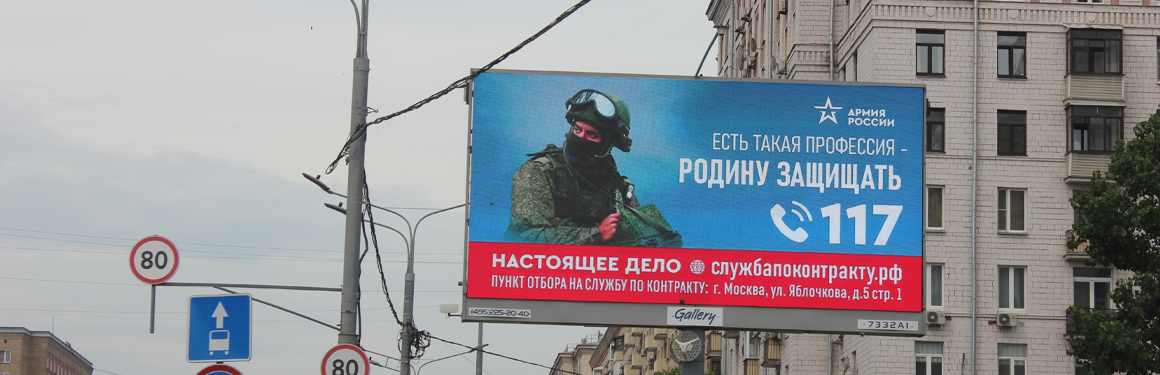
Immigration indeed provided some support to Russian demographics in recent years, but it cannot be considered a systemic solution to the country's demographic challenges, and its potential is rapidly fading into insignificance.
In 2024, just over 200,000 foreigners received Russian citizenship; after 9 months of 2025 (the latest data available at the time when this report was written), the number has plunged further, by 30% as compared to the relevant period of 2024 (111,000 foreigners receiving Russian citizenship during 9 months of 2025). Russia has awarded as high as 500–700,000 new passports per year to foreigners in 2019–2022, but this was largely due to accelerated passports for citizens of Eastern Ukraine — that potential is largely expired now.
The naturalization process for foreigners is also becoming more complicated due to pressure from security services, which is why foreigners can only increase Russia's population by 100–200,000 people annually, which hardly influences the overall picture. The extent of naturalization of foreigners is broadly insufficient to compensate for natural loss of population, which grew to nearly 600,000 people in 2024, and continued to slightly decline further in the beginning of 2025, before demographic data was classified.
The program of naturalization of ethnic Russians living abroad (“compatriot resettlement program”) is not yielding any meaningful results anymore -- in 2025, the number of people resettling in Russia under that program was below 30,000.
Over 500,000 immigrants received temporary residence and work permits in Russia in 2024 (full data for 2025 is unavailable). These numbers are often cited as “migratory population growth”, thought to be offsetting the natural population decline. However, since these new incoming immigrants are not becoming Russian citizens, and may leave any time, the numbers of temporary immigration greatly fluctuate: for instance, they have been slowly decreasing after 2014, or even sharply plunging in 2020 or 2022.
So, temporary immigration is not a fundamental solution to Russia's demographic problems. Also, it is likely to slow down or decline in the coming years, due to introduction of an array of new restrictive requirements promoted by the Russian security services and the overall anti‑immigrant bias of current policymakers: for instance, hardening of the language requirements for immigrants is leading to a situation where 35% of them are unable to pass the first exam in the Russian language.
In February 2026, the Russian Government introduced new legislation to the State Duma significantly toughening immigration rules for labor migrants: for instance, there are plans to ban issuing working patents to low‑income immigrants, and to introduce highly restrictive rules for entry of immigrants' children (foreign children who reach 18 years of age will be required to leave Russia or to obtain a patent themselves).
As far as the Russian labor market is concerned, immigrants from countries that export the highest workforce to Russia, predominantly Central Asia, for the most part fail to provide sufficiently skilled labor that is needed by industries currently experiencing labor force shortages. For instance, in the words of Arkady Zlochevsky, President of the Russian Grain Union, immigrants mostly lack sufficient skill to work as machine operators in harvesting grain crops, Russia's main agricultural product.
Immigration indeed provided some support to Russian demographics in recent years, but it cannot be considered a systemic solution to the country's demographic challenges, and its potential is rapidly fading into insignificance.
In 2024, just over 200,000 foreigners received Russian citizenship; after 9 months of 2025 (the latest data available at the time when this report was written), the number has plunged further, by 30% as compared to the relevant period of 2024 (111,000 foreigners receiving Russian citizenship during 9 months of 2025). Russia has awarded as high as 500–700,000 new passports per year to foreigners in 2019–2022, but this was largely due to accelerated passports for citizens of Eastern Ukraine — that potential is largely expired now.
The naturalization process for foreigners is also becoming more complicated due to pressure from security services, which is why foreigners can only increase Russia's population by 100–200,000 people annually, which hardly influences the overall picture. The extent of naturalization of foreigners is broadly insufficient to compensate for natural loss of population, which grew to nearly 600,000 people in 2024, and continued to slightly decline further in the beginning of 2025, before demographic data was classified.
The program of naturalization of ethnic Russians living abroad (“compatriot resettlement program”) is not yielding any meaningful results anymore -- in 2025, the number of people resettling in Russia under that program was below 30,000.
Over 500,000 immigrants received temporary residence and work permits in Russia in 2024 (full data for 2025 is unavailable). These numbers are often cited as “migratory population growth”, thought to be offsetting the natural population decline. However, since these new incoming immigrants are not becoming Russian citizens, and may leave any time, the numbers of temporary immigration greatly fluctuate: for instance, they have been slowly decreasing after 2014, or even sharply plunging in 2020 or 2022.
So, temporary immigration is not a fundamental solution to Russia's demographic problems. Also, it is likely to slow down or decline in the coming years, due to introduction of an array of new restrictive requirements promoted by the Russian security services and the overall anti‑immigrant bias of current policymakers: for instance, hardening of the language requirements for immigrants is leading to a situation where 35% of them are unable to pass the first exam in the Russian language.
In February 2026, the Russian Government introduced new legislation to the State Duma significantly toughening immigration rules for labor migrants: for instance, there are plans to ban issuing working patents to low‑income immigrants, and to introduce highly restrictive rules for entry of immigrants' children (foreign children who reach 18 years of age will be required to leave Russia or to obtain a patent themselves).
As far as the Russian labor market is concerned, immigrants from countries that export the highest workforce to Russia, predominantly Central Asia, for the most part fail to provide sufficiently skilled labor that is needed by industries currently experiencing labor force shortages. For instance, in the words of Arkady Zlochevsky, President of the Russian Grain Union, immigrants mostly lack sufficient skill to work as machine operators in harvesting grain crops, Russia's main agricultural product.
As far as the longer‑term demographic challenges are concerned, Russia's currently most‑pressing problem is the sharp plunge in birth rates. These rates began to fall notably after peaking in 2015, despite Putin setting much higher goals for birth rates in his inaugural strategic “May decrees” both in 2012 and 2018 (see more on that below). Since 2022, the process had rapidly accelerated, as shown in Table 2 below.
Following the sharp deterioration in demographic data, Russia has classified most of the demographic statistics in mid‑2025. However, in January 2026, Russian media published excerpts from the non‑public data provided by Rosstat, which became available to journalists, showing that Russia's overall fertility rate (live births per one woman) has plunged in 2025 to the lowest level in nearly two decades: 1.374. This is 23% lower compared to Putin's era of peak Russian fertility rate in 2015 (1.777), and a return to figures that were common for the mid‑1990s.
As far as the longer‑term demographic challenges are concerned, Russia's currently most‑pressing problem is the sharp plunge in birth rates. These rates began to fall notably after peaking in 2015, despite Putin setting much higher goals for birth rates in his inaugural strategic “May decrees” both in 2012 and 2018 (see more on that below). Since 2022, the process had rapidly accelerated, as shown in Table 2 below.
Following the sharp deterioration in demographic data, Russia has classified most of the demographic statistics in mid‑2025. However, in January 2026, Russian media published excerpts from the non‑public data provided by Rosstat, which became available to journalists, showing that Russia's overall fertility rate (live births per one woman) has plunged in 2025 to the lowest level in nearly two decades: 1.374. This is 23% lower compared to Putin's era of peak Russian fertility rate in 2015 (1.777), and a return to figures that were common for the mid‑1990s.
In most Russian regions, the fertility rate was even lower. According to Demoscope analysis based on Rosstat data, fertility rates lower than the national average were reported in 2024 for about 60% of Russian regions, while the overall figure was supported by significantly higher‑than-average fertility rates in ethnic republics like Chechnya, Ingushetia, Dagestan, Tyva and others, in the range of 2.3–2.7.
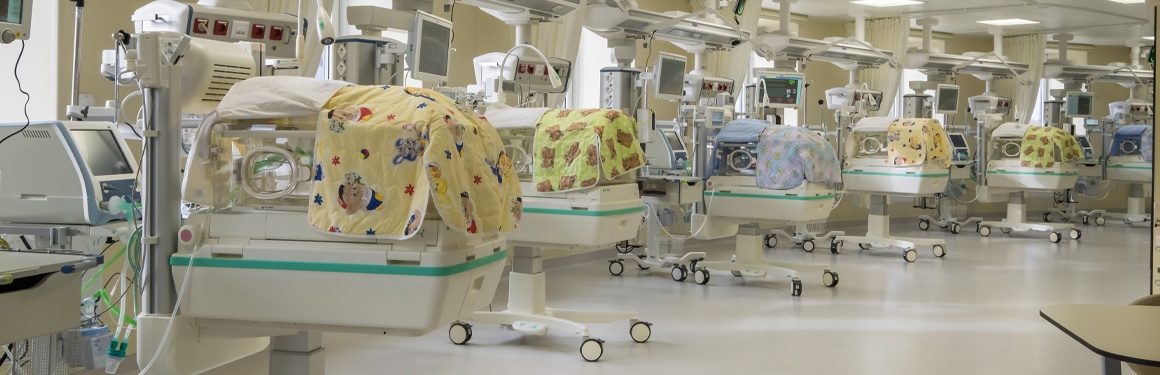
At the same time, while new nationwide birth data has been essentially classified since 2025, Russian regions report major ongoing decline in birth rates. In the absence of detailed data, available fragmented evidence from the regions doesn't allow us to evaluate the full picture in numbers but paints a rather striking snapshot of an ongoing unprecedented decline in birth rates. If one browses Russian regional media, it can be easily seen that mass closures of maternity hospitals across the country is one of the major contentious issues nationwide.
At times, while publicly explaining the closures, regional officials admit the jaw‑dropping extent of the problem -- as did recently the Minister of Health of the Omsk region Dmitry Markelov in an interview defending the closures of maternity hospitals. Markelov said that birth rates per doctor fell to as low as one per day as opposed to the normal range of 25–30 per day. Omsk is a relatively large industrialized Russian region; 26th in Russia by population and 35th by gross regional product; and Omsk, the regional capital, is Russia's 13th largest city.
In most Russian regions, the fertility rate was even lower. According to Demoscope analysis based on Rosstat data, fertility rates lower than the national average were reported in 2024 for about 60% of Russian regions, while the overall figure was supported by significantly higher‑than-average fertility rates in ethnic republics like Chechnya, Ingushetia, Dagestan, Tyva and others, in the range of 2.3–2.7.
At the same time, while new nationwide birth data has been essentially classified since 2025, Russian regions report major ongoing decline in birth rates. In the absence of detailed data, available fragmented evidence from the regions doesn't allow us to evaluate the full picture in numbers but paints a rather striking snapshot of an ongoing unprecedented decline in birth rates. If one browses Russian regional media, it can be easily seen that mass closures of maternity hospitals across the country is one of the major contentious issues nationwide.
At times, while publicly explaining the closures, regional officials admit the jaw‑dropping extent of the problem -- as did recently the Minister of Health of the Omsk region Dmitry Markelov in an interview defending the closures of maternity hospitals. Markelov said that birth rates per doctor fell to as low as one per day as opposed to the normal range of 25–30 per day. Omsk is a relatively large industrialized Russian region; 26th in Russia by population and 35th by gross regional product; and Omsk, the regional capital, is Russia's 13th largest city.
“When a maternity hospital designed to handle hundreds of births per month actually delivers significantly fewer, a systemic quality crisis arises. When a doctor delivers only one birth per day instead of the required 25--30, their professional skills inevitably deteriorate. This isn't their fault—it's just the way things are.”
Dmitry Markelov
Omsk Minister of Health
December 2025
“When a maternity hospital designed to handle hundreds of births per month actually delivers significantly fewer, a systemic quality crisis arises. When a doctor delivers only one birth per day instead of the required 25--30, their professional skills inevitably deteriorate. This isn't their fault—it's just the way things are.”
Dmitry Markelov
Omsk Minister of Health
December 2025
In January 2025, Moskovskii Komsomolets, one of Russia's largest daily newspapers, ran an article dedicated to mass closures of maternity hospitals across Russian regions, providing another confirmation of the record‑low birth rates across the country.
In January 2025, Moskovskii Komsomolets, one of Russia's largest daily newspapers, ran an article dedicated to mass closures of maternity hospitals across Russian regions, providing another confirmation of the record‑low birth rates across the country.
“With low birth rates, maintaining entire departments or specialized hospitals becomes unprofitable. From a financial standpoint, it's obvious—keeping 2–3 women in labor per day for 200 staff, as is the case in many small Russian cities, is expensive.”
Moskovskii Komsomolets, “Childbirth‑licensed medical facilities are closing en masse in Russia: personnel is shocked”
January 2025
“With low birth rates, maintaining entire departments or specialized hospitals becomes unprofitable. From a financial standpoint, it's obvious—keeping 2–3 women in labor per day for 200 staff, as is the case in many small Russian cities, is expensive.”
Moskovskii Komsomolets, “Childbirth‑licensed medical facilities are closing en masse in Russia: personnel is shocked”
January 2025
In January 2026, Moskovskii Komsomolets published another story about the closure of a small‑town maternity hospital in the township of Kolchugino, Vladimir region (37,800 residents as of 2024), providing specific birth data for the sole maternity hospital in town that is closing: 268 births in 2025 against 300 in 2023, down by more than 10% in just two years. In 2025, the only maternity hospital was closed for similar reasons (low birth rates and lack of economic rationale to maintain full maternity hospital staff and infrastructure) in nearby Gus‑Khrustalny (48,650 residents in 2025).
While Russian authorities have classified major birth data and prefer not to comment much on declining birth rates publicly, in early 2025, Russia's first deputy Health Minister Viktor Fisenko at a meeting of the expert council on healthcare under the Federation Council Committee on Social Policy admitted that birth rates have plunged to an absolute historic low level of the year 2000.
In January 2026, Moskovskii Komsomolets published another story about the closure of a small‑town maternity hospital in the township of Kolchugino, Vladimir region (37,800 residents as of 2024), providing specific birth data for the sole maternity hospital in town that is closing: 268 births in 2025 against 300 in 2023, down by more than 10% in just two years. In 2025, the only maternity hospital was closed for similar reasons (low birth rates and lack of economic rationale to maintain full maternity hospital staff and infrastructure) in nearby Gus‑Khrustalny (48,650 residents in 2025).
While Russian authorities have classified major birth data and prefer not to comment much on declining birth rates publicly, in early 2025, Russia's first deputy Health Minister Viktor Fisenko at a meeting of the expert council on healthcare under the Federation Council Committee on Social Policy admitted that birth rates have plunged to an absolute historic low level of the year 2000.
“Absolute number of births approached the level of 2000, which was one of the lowest values of this indicator in the entire history of modern Russia.”
Viktor Fisenko
Russia's First Deputy Minister of Health
January 2025
“Absolute number of births approached the level of 2000, which was one of the lowest values of this indicator in the entire history of modern Russia.”
Viktor Fisenko
Russia's First Deputy Minister of Health
January 2025
Russia's birth rates are greatly lagging behind Putin's goals set in the so‑called “May decrees” issued in 2012 and 2018:
Russia's birth rates are greatly lagging behind Putin's goals set in the so‑called “May decrees” issued in 2012 and 2018:
It is commonplace for commentators on Russian demographics to primarily attribute the plunge of Russia's fertility rates in the recent decade as consequences of the low birth rates of the 1990s — in the recent decade, the number of women entering fertile age declined for that reason. However, this factor alone cannot explain recent dynamics.
To begin with, the mean age of childbearing mothers in Russia is notably increasing. According to Rosstat, the average age of mothers giving birth was rapidly increasing lately — in 2022, 52% of all births were given by mothers aged 30 and above, who were mostly born before the major decline of birth rates in the 1990s. Before 1992, birth rates in Russia, although fluctuating, were not that different from those in the early 1980s; the sharp decrease only started from 1992 onward (as can be seen from Table 2 above). In 2015, when the notable decline in fertility rates began, 76% of births were delivered by women aged 25 or above, or born before 1991 (or before the occurrence of the 1990s “demographic dent”), according to Rosstat's “The Demographic Yearbook of Russia”.
Therefore, the 1990s birth rate decline only partially explains the phenomenon of the sharp plunge in fertility rates in 2015–2025. However, Russian government‑related commentators and traditional demographic school experts prefer to focus on the 1990s demographic dent alone as an explanation for the recent birth rates decline. Such an approach appears to be superficial.
The reasons behind declining birth rates have been discussed at length even in Russian media published inside the country in the past few years, and the frequently offered explanation is the degrading social and economic situation, as well as problematic political course of Vladimir Putin's government. As per Forbes Russia citing an academic study published in the “Voprosy Ekonomiki” journal: “In recent years, the decision to postpone or delay childbirth has often been linked to negative attitudes toward the country's political course, according to a study by the Higher School of Economics. Other common reasons include negative emotional background and financial well‑being issues. A negative attitude toward the current political course of the state increases the likelihood of postponing or delaying childbirth.”
It is commonplace for commentators on Russian demographics to primarily attribute the plunge of Russia's fertility rates in the recent decade as consequences of the low birth rates of the 1990s — in the recent decade, the number of women entering fertile age declined for that reason. However, this factor alone cannot explain recent dynamics.
To begin with, the mean age of childbearing mothers in Russia is notably increasing. According to Rosstat, the average age of mothers giving birth was rapidly increasing lately — in 2022, 52% of all births were given by mothers aged 30 and above, who were mostly born before the major decline of birth rates in the 1990s. Before 1992, birth rates in Russia, although fluctuating, were not that different from those in the early 1980s; the sharp decrease only started from 1992 onward (as can be seen from Table 2 above). In 2015, when the notable decline in fertility rates began, 76% of births were delivered by women aged 25 or above, or born before 1991 (or before the occurrence of the 1990s “demographic dent”), according to Rosstat's “The Demographic Yearbook of Russia”.
Therefore, the 1990s birth rate decline only partially explains the phenomenon of the sharp plunge in fertility rates in 2015–2025. However, Russian government‑related commentators and traditional demographic school experts prefer to focus on the 1990s demographic dent alone as an explanation for the recent birth rates decline. Such an approach appears to be superficial.
The reasons behind declining birth rates have been discussed at length even in Russian media published inside the country in the past few years, and the frequently offered explanation is the degrading social and economic situation, as well as problematic political course of Vladimir Putin's government. As per Forbes Russia citing an academic study published in the “Voprosy Ekonomiki” journal: “In recent years, the decision to postpone or delay childbirth has often been linked to negative attitudes toward the country's political course, according to a study by the Higher School of Economics. Other common reasons include negative emotional background and financial well‑being issues. A negative attitude toward the current political course of the state increases the likelihood of postponing or delaying childbirth.”
“Psychological factors were found to play a more significant role. Anxiety and fear, as well as disagreement with the country's direction, prompt respondents to postpone having children indefinitely.”
Academic study by Higher School of Economics researchers published in the “Voprosy Ekonomiki” Journal, 2024
“Psychological factors were found to play a more significant role. Anxiety and fear, as well as disagreement with the country's direction, prompt respondents to postpone having children indefinitely.”
Academic study by Higher School of Economics researchers published in the “Voprosy Ekonomiki” Journal, 2024
In essence, the rapid decrease in birth rates may be, to a significant extent, contributed to the loss of “computational horizon” for a significant portion of the Russian population. People are distressed by the deteriorating social and economic conditions and have no confidence that the country's leadership policies — most notably, the war against Ukraine and international isolation — may lead to improvement of this situation any time soon.
These factors began to emerge as key reasons for declining birth rates as early as after 2015, when the overall fertility rate in Russia started to deteriorate. In 2015–2020, the demographic dent of the 1990s shouldn't have been a major impacting factor: in 2015, according to Rosstat, women aged under 25 years (born after 1990) were delivering only less than a quarter of total births, and women aged under 20 years (born after 1995) — just 4% of total births. But birth rates began to notably fall regardless. Russian media during that period, in the absence of the current wartime censorship, actively discussed the economic crisis emerging since 2014–2015 as a result of Western sanctions (introduced following Russia's invasion of Ukraine in 2014), and Russia's emerging international isolation, as key factors contributing to the plunge in birth rates.
In essence, the rapid decrease in birth rates may be, to a significant extent, contributed to the loss of “computational horizon” for a significant portion of the Russian population. People are distressed by the deteriorating social and economic conditions and have no confidence that the country's leadership policies — most notably, the war against Ukraine and international isolation — may lead to improvement of this situation any time soon.
These factors began to emerge as key reasons for declining birth rates as early as after 2015, when the overall fertility rate in Russia started to deteriorate. In 2015–2020, the demographic dent of the 1990s shouldn't have been a major impacting factor: in 2015, according to Rosstat, women aged under 25 years (born after 1990) were delivering only less than a quarter of total births, and women aged under 20 years (born after 1995) — just 4% of total births. But birth rates began to notably fall regardless. Russian media during that period, in the absence of the current wartime censorship, actively discussed the economic crisis emerging since 2014–2015 as a result of Western sanctions (introduced following Russia's invasion of Ukraine in 2014), and Russia's emerging international isolation, as key factors contributing to the plunge in birth rates.

While Russian authorities invest heavily in maintaining the propaganda facade of “confidence in Vladimir Putin” and “support” of his policies by most Russians, accidentally, the issue of a lack of confidence in the country's future and loss of the “computational horizon” is occasionally being publicly admitted. One of the recent examples of such admissions of the Russian society's growing sense of hopelessness is a study published in January 2026 by the Kremlin‑linked WCIOM opinion polling center, January 2026. The name of the study speaks for itself: “Lost connection with the future. Why are people leaving small towns?”. While the reasons for lack of a computational horizon and confidence in the future are similar for smaller and larger cities, it is true that Russia's small towns provide far less of a safety net to protect people from current social and economic hardships, which is why declining birth rates arguably affect them harder than larger cities -- as reflected in the sharp plunge of the number of births prompting the unpopular decisions on mass closures of maternity hospitals, as explained above.
In general, Russians' decision to refrain from having children speaks volumes about the public lack of confidence in the country's future under Vladimir Putin, and are a far more reliable source of measurement for the real public sentiment in Russia than any opinion poll or survey.
While Russian authorities invest heavily in maintaining the propaganda facade of “confidence in Vladimir Putin” and “support” of his policies by most Russians, accidentally, the issue of a lack of confidence in the country's future and loss of the “computational horizon” is occasionally being publicly admitted. One of the recent examples of such admissions of the Russian society's growing sense of hopelessness is a study published in January 2026 by the Kremlin‑linked WCIOM opinion polling center, January 2026. The name of the study speaks for itself: “Lost connection with the future. Why are people leaving small towns?”. While the reasons for lack of a computational horizon and confidence in the future are similar for smaller and larger cities, it is true that Russia's small towns provide far less of a safety net to protect people from current social and economic hardships, which is why declining birth rates arguably affect them harder than larger cities -- as reflected in the sharp plunge of the number of births prompting the unpopular decisions on mass closures of maternity hospitals, as explained above.
In general, Russians' decision to refrain from having children speaks volumes about the public lack of confidence in the country's future under Vladimir Putin, and are a far more reliable source of measurement for the real public sentiment in Russia than any opinion poll or survey.
It should also be noted that the birth rate decline of 2015–2025 allows to conclude that Putin's “maternity capital” program turned out to be largely a failure. Since 2007, the Russian government began to award money roughly in the equivalent of USD 10,000 according to exchange rates of the day for the birth of a second child (in most cases, these funds weren't allowed to be converted to cash, but only to be used to pay for education or housing).
However, due to a major devaluation of ruble as a result of the 2014–2015 crisis, that sum has devalued to the equivalent of 7–7,500 dollars according to 2015 exchange rates. Since 2020, maternity capital money began to be awarded for the first‑born child as well — in the equivalent of roughly USD 6,500, and the sum awarded for the birth of the second child was increased to roughly USD 8,500 (according to exchange rates of the day). By 2026, sums awarded for the birth of the first and second child were indexed to USD 9,400 and 12,400, respectively (according to exchange rates of early 2026).
But, as can be seen from the rapid decline of fertility rates in 2015–2025, the maternity capital program had largely failed to produce higher birth rates. Contributing factors to the decline in fertility rates are discussed in more detail below, but, as far as the maternity capital program is concerned, it appears that its enforcement may have only slowed down the birth rate decline at best but failed to improve the situation from 2015.
Russia's birth rates lagging far behind Putin's goals set in the so‑called “May decrees” issued in 2012 and 2018 (see above) also indicate that, the demographic dent of the 1990s aside, Putin's planners envisaged a far more significant positive impact of the maternity capital program on birth rates than achieved after all these years.
Federal financing of the maternity capital program currently amounts to around $7.5 billion annually (1.3% of the total annual federal budget expenditures, or 0.24% of GDP).
It should also be noted that the birth rate decline of 2015–2025 allows to conclude that Putin's “maternity capital” program turned out to be largely a failure. Since 2007, the Russian government began to award money roughly in the equivalent of USD 10,000 according to exchange rates of the day for the birth of a second child (in most cases, these funds weren't allowed to be converted to cash, but only to be used to pay for education or housing).
However, due to a major devaluation of ruble as a result of the 2014–2015 crisis, that sum has devalued to the equivalent of 7–7,500 dollars according to 2015 exchange rates. Since 2020, maternity capital money began to be awarded for the first‑born child as well — in the equivalent of roughly USD 6,500, and the sum awarded for the birth of the second child was increased to roughly USD 8,500 (according to exchange rates of the day). By 2026, sums awarded for the birth of the first and second child were indexed to USD 9,400 and 12,400, respectively (according to exchange rates of early 2026).
But, as can be seen from the rapid decline of fertility rates in 2015–2025, the maternity capital program had largely failed to produce higher birth rates. Contributing factors to the decline in fertility rates are discussed in more detail below, but, as far as the maternity capital program is concerned, it appears that its enforcement may have only slowed down the birth rate decline at best but failed to improve the situation from 2015.
Russia's birth rates lagging far behind Putin's goals set in the so‑called “May decrees” issued in 2012 and 2018 (see above) also indicate that, the demographic dent of the 1990s aside, Putin's planners envisaged a far more significant positive impact of the maternity capital program on birth rates than achieved after all these years.
Federal financing of the maternity capital program currently amounts to around $7.5 billion annually (1.3% of the total annual federal budget expenditures, or 0.24% of GDP).
While there's been a spike in mortality in Russia in recent years, the situation here — at least on paper — doesn't look as bad compared to birth rate statistics. While birth rates plunged to the historically low rates of late 1990s — early 2000s, death rates (annual deaths per 1000 population) in the past few years were still about 15–20% lower than the worst figures of that era.
While there's been a spike in mortality in Russia in recent years, the situation here — at least on paper — doesn't look as bad compared to birth rate statistics. While birth rates plunged to the historically low rates of late 1990s — early 2000s, death rates (annual deaths per 1000 population) in the past few years were still about 15–20% lower than the worst figures of that era.
As can be seen, the peak death count in Russia was associated not with Putin's war against Ukraine, as much as with the Covid‑19 pandemic in 2020–2021. During that period, Russia faced an estimated million deaths in excess as compared to normal levels.
It is true that the current Russian mortality rate may be a significant undercount, because many deaths resulting from the war against Ukraine are still hidden behind the “missing in action” (MIA) numbers. According to Mediazona count based on the analysis of court documents, just in the first half of 2025 alone, more than 26,000 lawsuits seeking to declare people missing or dead were filed in Russian district and garrison military courts, more than the total for the entire year of 2024, when there were 22,600 such lawsuits.
It shall be noted that claims filed in courts represent only a fraction of the actual number of people missing in action: many of those dead in action have no relatives to file complaints, information reaches relatives with delays, not everybody is capable of filing a court claim or wants to do it immediately (before receiving and verifying detailed information and expiring other non‑court options to declare their relatives missing or dead). According to journalists of the Echo project (former Echo of Moscow), who gained access to more than 6,000 complaints submitted in confidence to Russia's human rights ombudsman between April and September 2025, the dominating majority of all complaints (not necessarily backed by filing court claims) concern relatives or friends missing in action.
However, if one assumes that as many as 100,000–200,000 Russians may be undercounted as dead after becoming MIA in Ukraine, that would not change the death rate dramatically: it may increase above 13 per 1,000 of the population (from 12.5 officially reported in 2024), but probably not to the peak of 15–16 in early 2000s.
As for the death count resulting from the war in Ukraine, as of February 2026, the individual count by BBC Russian Service and Mediazona (based on identifying and confirming specific names of persons killed in action through obituaries, court documents, etc.) listed over 173,000 Russians confirmed as killed in Ukraine. BBC and Mediazona estimate this figure to cover between 45 and 65% of the actual death toll, which is accordingly higher.
So, at the end of the day, Russian mortality is currently high, but not at its highest historic levels, and record low birth rates represent a much larger challenge as far as Russia's long‑term demographic future is concerned.
However, the death toll from the war in Ukraine is strikingly high by historic standards. One of the issues currently rattling the Russian regions, as can be seen from the monitoring of regional media, alongside the issue of mass closures of maternity hospitals, is the lack of space at local cemeteries for burying those killed in the war in Ukraine, and the relevant conflicts related to authorities' decisions on seizure of lands allocated for urgently needed expansion of cemeteries, which cannot accommodate all those killed in Ukraine. Such conflicts are currently widespread across the country -- from Udmurtia to Yaroslavl to Novorossiysk to Kaliningrad.
As can be seen, the peak death count in Russia was associated not with Putin's war against Ukraine, as much as with the Covid‑19 pandemic in 2020–2021. During that period, Russia faced an estimated million deaths in excess as compared to normal levels.
It is true that the current Russian mortality rate may be a significant undercount, because many deaths resulting from the war against Ukraine are still hidden behind the “missing in action” (MIA) numbers. According to Mediazona count based on the analysis of court documents, just in the first half of 2025 alone, more than 26,000 lawsuits seeking to declare people missing or dead were filed in Russian district and garrison military courts, more than the total for the entire year of 2024, when there were 22,600 such lawsuits.
It shall be noted that claims filed in courts represent only a fraction of the actual number of people missing in action: many of those dead in action have no relatives to file complaints, information reaches relatives with delays, not everybody is capable of filing a court claim or wants to do it immediately (before receiving and verifying detailed information and expiring other non‑court options to declare their relatives missing or dead). According to journalists of the Echo project (former Echo of Moscow), who gained access to more than 6,000 complaints submitted in confidence to Russia's human rights ombudsman between April and September 2025, the dominating majority of all complaints (not necessarily backed by filing court claims) concern relatives or friends missing in action.
However, if one assumes that as many as 100,000–200,000 Russians may be undercounted as dead after becoming MIA in Ukraine, that would not change the death rate dramatically: it may increase above 13 per 1,000 of the population (from 12.5 officially reported in 2024), but probably not to the peak of 15–16 in early 2000s.
As for the death count resulting from the war in Ukraine, as of February 2026, the individual count by BBC Russian Service and Mediazona (based on identifying and confirming specific names of persons killed in action through obituaries, court documents, etc.) listed over 173,000 Russians confirmed as killed in Ukraine. BBC and Mediazona estimate this figure to cover between 45 and 65% of the actual death toll, which is accordingly higher.
So, at the end of the day, Russian mortality is currently high, but not at its highest historic levels, and record low birth rates represent a much larger challenge as far as Russia's long‑term demographic future is concerned.
However, the death toll from the war in Ukraine is strikingly high by historic standards. One of the issues currently rattling the Russian regions, as can be seen from the monitoring of regional media, alongside the issue of mass closures of maternity hospitals, is the lack of space at local cemeteries for burying those killed in the war in Ukraine, and the relevant conflicts related to authorities' decisions on seizure of lands allocated for urgently needed expansion of cemeteries, which cannot accommodate all those killed in Ukraine. Such conflicts are currently widespread across the country -- from Udmurtia to Yaroslavl to Novorossiysk to Kaliningrad.
Several main conclusions may be drawn from the above data and analysis.
1. Putin's war against Ukraine has plunged already weak Russian demographics into an unprecedented crisis with lasting consequences, that will be extremely difficult to overcome.
Russia already had a troubled demographic situation when it launched a full‑scale invasion of Ukraine. But the war exacerbated several major weaknesses to the point where the damage caused by the war will probably not be repaired in decades.
Putin's demographic policies were focused on rebuilding Russia's birth rates following the 1990s “demographic dent”. These policies partially worked only until 2015, after which birth rates began to decline, effectively coming back to the low point of 25 years ago. This dashes the hope that the Russian population may be successfully rebuilt following the demographic crisis of the 1990s. New generations are not coming in big numbers to compensate for the recent population losses.
The current young generation is being wiped out by war and mass emigration from the country. Russia's population is aging much more rapidly now than it was initially expected before.
2. Consequences of the war against Ukraine that started in 2014, and subsequent Western sanctions as well as Russia's international isolation, mattered: Russia's demographics began to frail after 2014, long before February of 2022.
Most of the negative demographic trends — such as the decline of birth rates — began not after February 2022, but much earlier, after the first round of Russia's invasion of Ukraine in 2014. There are studies available proving that this factor is involved in weakening birth rates.
3. The main short‑term challenge is the wipeout of the young adult male population, which has major consequences for both the Russian economy and the war.
Russia's male population aged between 20 and 29 decreased by nearly 40% in 2010–2024, reducing the overall number of males in that age group to below 8 million — as opposed to 11–12 million in 30–39 and 40–49 age groups. Mass emigration appears to be a major factor contributing to these negative dynamics. The loss of young male population is not fully explained by low birth rates of the 1990s, and is not fully compensated by an increase in younger male population (aged below 20) — which failed to compensate two thirds of the loss of the male population aged 20–29.
Russia's male population is rapidly aging, which is a major challenge both economically and militarily. Modern economy, as well as effective combat operations, require entirely different levels of skill and physical capabilities than most Russian males aged 40 and above currently possess.
4. Potential mass mobilization for war in Ukraine (or any large‑scale war) will exacerbate the economic crisis, which is why Putin has to effectively choose between continuing the war and avoiding a major, full‑blown economic crisis. He can't have both.
Given the historically unprecedented labor shortage in critical industries (most of which also supplied large numbers of personnel to the military during mobilization and paid drafting in 2022–2024), it will be catastrophic for many of them to experience another round of workforce wipeout if Putin calls for a new round of mass mobilization; on top of existing severe problems like tax hikes, weak demand, expensive credit, shrinking profits and investment, etc. Additional mass labor shortage risks plunging the Russian economy into a lasting contraction spiral, exiting which may be difficult.
This is not to say that Putin is unable to decide to announce new rounds of mass mobilization. However, if he chooses to do so, he will have to completely sacrifice the very idea of a potential economic recovery. Therefore, Putin can't have both mobilization and a functioning economy at the same time — he will have to sacrifice one or the other, given the current male workforce availability.
5. Immigration can't be seen as a sustainable solution to Russia's demographic problems.
The number of naturalized immigrants is currently relatively low and insufficient to compensate for natural population loss. Temporary immigrants (about half a million per year) cannot be considered a stable population group and tend to leave the country any time Russia experiences a serious wave of crisis, as happened, for instance, in 2020 or 2022. Immigrants from Central Asian countries largely lack the necessary skill to help resolve the problem of the qualified labor shortage.
Several main conclusions may be drawn from the above data and analysis.
1. Putin's war against Ukraine has plunged already weak Russian demographics into an unprecedented crisis with lasting consequences, that will be extremely difficult to overcome.
Russia already had a troubled demographic situation when it launched a full‑scale invasion of Ukraine. But the war exacerbated several major weaknesses to the point where the damage caused by the war will probably not be repaired in decades.
Putin's demographic policies were focused on rebuilding Russia's birth rates following the 1990s “demographic dent”. These policies partially worked only until 2015, after which birth rates began to decline, effectively coming back to the low point of 25 years ago. This dashes the hope that the Russian population may be successfully rebuilt following the demographic crisis of the 1990s. New generations are not coming in big numbers to compensate for the recent population losses.
The current young generation is being wiped out by war and mass emigration from the country. Russia's population is aging much more rapidly now than it was initially expected before.
2. Consequences of the war against Ukraine that started in 2014, and subsequent Western sanctions as well as Russia's international isolation, mattered: Russia's demographics began to frail after 2014, long before February of 2022.
Most of the negative demographic trends — such as the decline of birth rates — began not after February 2022, but much earlier, after the first round of Russia's invasion of Ukraine in 2014. There are studies available proving that this factor is involved in weakening birth rates.
3. The main short‑term challenge is the wipeout of the young adult male population, which has major consequences for both the Russian economy and the war.
Russia's male population aged between 20 and 29 decreased by nearly 40% in 2010–2024, reducing the overall number of males in that age group to below 8 million — as opposed to 11–12 million in 30–39 and 40–49 age groups. Mass emigration appears to be a major factor contributing to these negative dynamics. The loss of young male population is not fully explained by low birth rates of the 1990s, and is not fully compensated by an increase in younger male population (aged below 20) — which failed to compensate two thirds of the loss of the male population aged 20–29.
Russia's male population is rapidly aging, which is a major challenge both economically and militarily. Modern economy, as well as effective combat operations, require entirely different levels of skill and physical capabilities than most Russian males aged 40 and above currently possess.
4. Potential mass mobilization for war in Ukraine (or any large‑scale war) will exacerbate the economic crisis, which is why Putin has to effectively choose between continuing the war and avoiding a major, full‑blown economic crisis. He can't have both.
Given the historically unprecedented labor shortage in critical industries (most of which also supplied large numbers of personnel to the military during mobilization and paid drafting in 2022–2024), it will be catastrophic for many of them to experience another round of workforce wipeout if Putin calls for a new round of mass mobilization; on top of existing severe problems like tax hikes, weak demand, expensive credit, shrinking profits and investment, etc. Additional mass labor shortage risks plunging the Russian economy into a lasting contraction spiral, exiting which may be difficult.
This is not to say that Putin is unable to decide to announce new rounds of mass mobilization. However, if he chooses to do so, he will have to completely sacrifice the very idea of a potential economic recovery. Therefore, Putin can't have both mobilization and a functioning economy at the same time — he will have to sacrifice one or the other, given the current male workforce availability.
5. Immigration can't be seen as a sustainable solution to Russia's demographic problems.
The number of naturalized immigrants is currently relatively low and insufficient to compensate for natural population loss. Temporary immigrants (about half a million per year) cannot be considered a stable population group and tend to leave the country any time Russia experiences a serious wave of crisis, as happened, for instance, in 2020 or 2022. Immigrants from Central Asian countries largely lack the necessary skill to help resolve the problem of the qualified labor shortage.
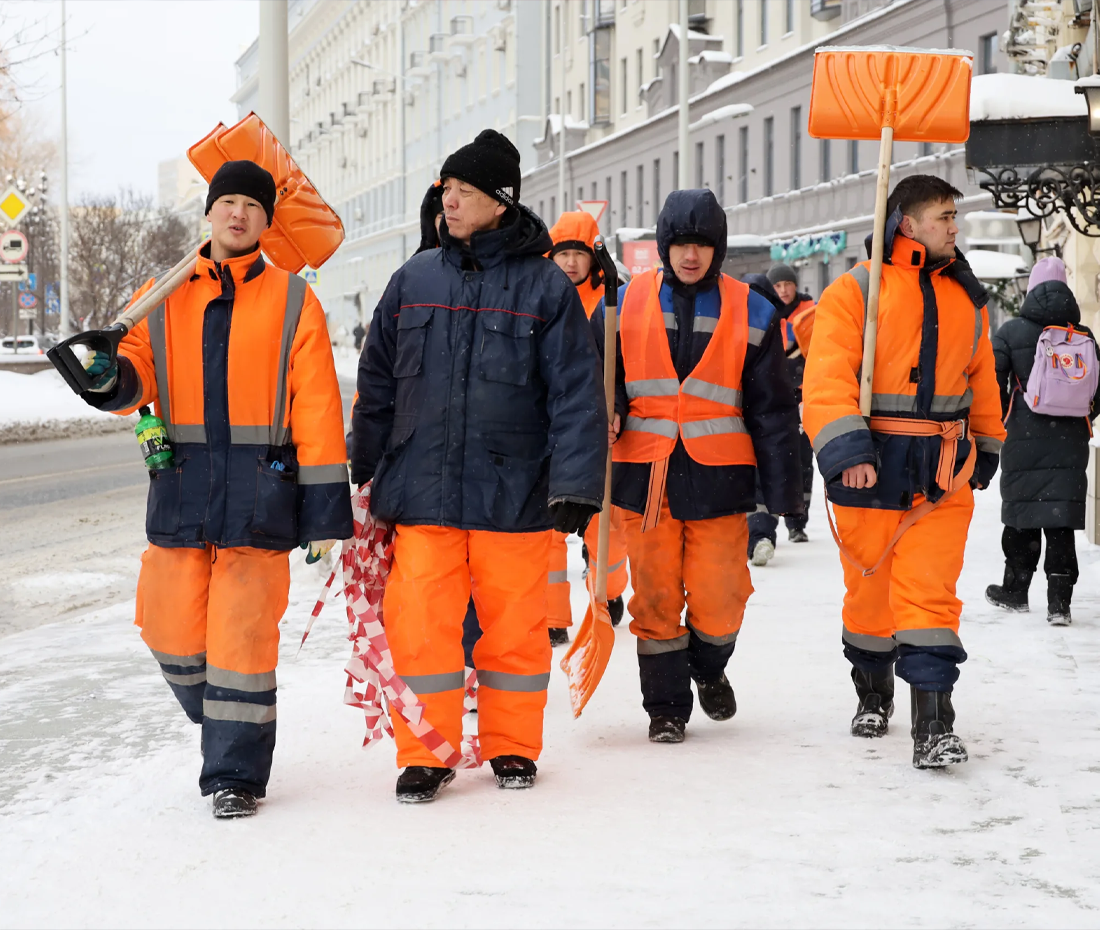

6. The primary long‑term challenge is the record low birth rates, which are only worsening with no sign of improvement.
Russia returned to the low birth rates last recorded in the 1990s, which is widely considered to be the worst demographic period in modern history, having a profound negative impact on Russia's demographics to this day. For instance, the mainstream explanation of current low birth rates is associated with the “demographic dent” of the 1990s. The fact that the country has so quickly plunged back to such low birth rates completely defies Putin's policy attempts to improve birth dynamics, and plunges Russia into a protracted demographic crisis for decades to come.
The birth crisis may continue indefinitely — and even keep worsening — as long as the period of social and economic uncertainty caused by the war and sanctions continues.
7. Given the current situation, Russia is not in a position to plan for mass‑scale wars in the coming future.
Although demographic analysis alone is insufficient to judge Putin's intentions to continue the war in Ukraine or start new wars in the future — and, as the 2022 full‑scale invasion of Ukraine proves, Putin can miscalculate the sufficiency of resources being driven by his geopolitical impulses — demographics are nonetheless a very severe constraint for Russia as far as waging mass‑scale wars against Ukraine or Europe is concerned.
Again, this is not to say that Putin will not launch new wars — but the analysis of Russian demographics proves that Russia is ill‑positioned for fighting and winning major wars, given its weak demographic situation, and thus, conquering Russia in current and future wars is possible against the backdrop of this major vulnerability.
Free Russia Foundation will continue to share its analysis of the Russian demographic and societal trends in the near future, in an effort to raise awareness and inform key policy decisions.
6. The primary long‑term challenge is the record low birth rates, which are only worsening with no sign of improvement.
Russia returned to the low birth rates last recorded in the 1990s, which is widely considered to be the worst demographic period in modern history, having a profound negative impact on Russia's demographics to this day. For instance, the mainstream explanation of current low birth rates is associated with the “demographic dent” of the 1990s. The fact that the country has so quickly plunged back to such low birth rates completely defies Putin's policy attempts to improve birth dynamics, and plunges Russia into a protracted demographic crisis for decades to come.
The birth crisis may continue indefinitely — and even keep worsening — as long as the period of social and economic uncertainty caused by the war and sanctions continues.
7. Given the current situation, Russia is not in a position to plan for mass‑scale wars in the coming future.
Although demographic analysis alone is insufficient to judge Putin's intentions to continue the war in Ukraine or start new wars in the future — and, as the 2022 full‑scale invasion of Ukraine proves, Putin can miscalculate the sufficiency of resources being driven by his geopolitical impulses — demographics are nonetheless a very severe constraint for Russia as far as waging mass‑scale wars against Ukraine or Europe is concerned.
Again, this is not to say that Putin will not launch new wars — but the analysis of Russian demographics proves that Russia is ill‑positioned for fighting and winning major wars, given its weak demographic situation, and thus, conquering Russia in current and future wars is possible against the backdrop of this major vulnerability.
Free Russia Foundation will continue to share its analysis of the Russian demographic and societal trends in the near future, in an effort to raise awareness and inform key policy decisions.
Recession, Inflation, Budgetary Crisis
By Vladimir Milov
January 29, 2026
 Article
 To overcome the hardships of war and emigration, Russians in exile need to adopt a global mindset
By Natalia Arno
By Grigory Frolov
By Vladimir Milov
January 12, 2026
 Report
 And what it means for the war in Ukraine
By Vladimir Milov
November 04, 2025
Recession, Inflation, Budgetary Crisis
By Vladimir Milov
January 29, 2026
Article To overcome the hardships of war and emigration, Russians in exile need to adopt a global mindset
By Natalia Arno
By Grigory Frolov
By Vladimir Milov
January 12, 2026
Report And what it means for the war in Ukraine
By Vladimir Milov
November 04, 2025