
War
Russia’s Escalating Use of Terrorism Charges Against Ukrainians
By Free Russia Foundation December 19, 2025


By Free Russia Foundation December 19, 2025
Hamlet observed that it is “an unweeded garden that grows to seed.” Grieving the murder of his father, the king, he bemoans the ugly and dangerous world in which he finds himself, an environment possessed by things “rank and gross.” Elsinore is a lawless place; by the end of the play, the entire royal family is dead, the state undone by its rulers’ own conspiracies, deceits, and machinations. But even at the play’s beginning, Hamlet perceives how quickly the foundations of order can be reduced to rubble. “That it should come to this! … O, most wicked speed, … It is not, nor it cannot come to good.”
Russia’s garden of laws, which for a short while seemed capable of blossoming despite its Soviet soil, has grown unweeded now for some time. To describe it that way is to acknowledge the flowering of a usable and modern legal system side‑by-side a weedy patch that uses law only for political repression. That is to say, a “dual state” has emerged in which law and legal systems that promote commerce and the fair regulation of disputes exist alongside legal mechanisms operated solely for the advancement of state interests. The paper that follows describes this rank and gross legal environment that the Russian state has fostered. The focus on the application of Russia’s burgeoning counter‑terrorism laws to captured Ukrainian soldiers and civilians living in Russian‑occupied Ukrainian territory presents a particular manifestation of this larger problem.
Russia, like Elsinore, was not always this way. State policy in the 1990s professed an interest in democracy and the rule of law. That reformist attitude kindled hope that Russia’s post‑Soviet future might privilege a place for law in state building that was unimaginable to those familiar with law’s instrumentalist manipulation in Russia’s recent past. But the rise of Vladimir Putin, now in his third decade of rule, erased that hope. His government now denounces and denies that past ambition.
As its title announces, this short paper emphasizes the “escalating” misapplication of terrorism charges against Ukrainians. It correctly traces this escalation back to the use of anti‑terrorism and anti‑extremist legislation that Russian state authorities used against its own citizens on its own territory. Tested there, these mechanisms of repression were then moved into the Donbas and Crimea. With Russia’s full‑scale invasion of Ukraine in February 2022, these now time‑tested tools are used across ever broader territory with increasing frequency. But their application may be traced back further still, to the torture, disappearances, sham prosecutions, and failures to investigate that pockmarked Russia’s wars in Chechnya and its brutal suppression of dissent in the years that followed. The cutting edge of these laws was also sharpened in their serial application to members of the political opposition, human rights defenders, and dissidents deep within the Russian Federation itself.
Escalation may also be discerned in the toxic effect rendered on different legal systems. As this paper documents, Russia’s pernicious misuse of law has not only been at the domestic level, but at the international level as well, implicating international humanitarian law and international human rights law, international criminal law, and (of course) the most basic foundation of the international legal order: uti possidetis juris. This phenomenon has been well‑documented by many international, state, and non‑state authorities.
Perhaps most succinct and penetrating on these points, as well as authoritative, have been the statements of Erik Møse, Chair of the Independent International Commission of Inquiry on Ukraine, at the 58th session of the UN Human Rights Council. Noting the Commission’s work over the past three years to interview “a total of almost 1,800 persons, including victims and witnesses of violations and crimes”, Judge Møse observed that the Commission has found that Russian authorities have committed war crimes and crimes against humanity of torture and enforced disappearances. The victims have been both civilians and prisoners of war.
As the paper that follows rightly notes, there is a space for states to “legitimately limit certain rights when countering terrorism.” But Russia’s actions over the course of more than a decade in and beyond its borders have demonstrated escalating defiance of the principles and standards by which that exceptional space for limitation is prevented from becoming the norm. These actions evince a disdain for law as anything other than another means of state control. As was observed shortly after the commencement of Russia’s full‑scale invasion by its own former counsel before the International Court of Justice, Alain Pellet:
Dear Russian friends, what a disappointment and sadness it is that your country, so endearing in so many ways, is calling into question those principles that we wanted to believe were recognised by all ‘civilised nations’, i.e. by the international community of States as a whole. … Yesterday I sent my letter of resignation to the competent authorities: lawyers can defend more or less questionable causes. But it has become impossible to represent in forums dedicated to the application of the law a country that so cynically despises it.
The lawyers will continue to argue just as the war continues, deaths mount, and the record of atrocities grows. The result is as Horatio remarked in the play’s final scene, as he cradled a dying Hamlet himself surrounded by corpses:
And let me speak to th’ yet unknowing world
How these things came about. So shall you hear
Of carnal, bloody, and unnatural acts,
Of accidental judgments, casual slaughters,
Of deaths put on by cunning and forced cause,
And, in this upshot, purposes mistook
Fall’n on th’ inventors’ heads.
Hamlet observed that it is “an unweeded garden that grows to seed.” Grieving the murder of his father, the king, he bemoans the ugly and dangerous world in which he finds himself, an environment possessed by things “rank and gross.” Elsinore is a lawless place; by the end of the play, the entire royal family is dead, the state undone by its rulers’ own conspiracies, deceits, and machinations. But even at the play’s beginning, Hamlet perceives how quickly the foundations of order can be reduced to rubble. “That it should come to this! … O, most wicked speed, … It is not, nor it cannot come to good.”
Russia’s garden of laws, which for a short while seemed capable of blossoming despite its Soviet soil, has grown unweeded now for some time. To describe it that way is to acknowledge the flowering of a usable and modern legal system side‑by-side a weedy patch that uses law only for political repression. That is to say, a “dual state” has emerged in which law and legal systems that promote commerce and the fair regulation of disputes exist alongside legal mechanisms operated solely for the advancement of state interests. The paper that follows describes this rank and gross legal environment that the Russian state has fostered. The focus on the application of Russia’s burgeoning counter‑terrorism laws to captured Ukrainian soldiers and civilians living in Russian‑occupied Ukrainian territory presents a particular manifestation of this larger problem.
Russia, like Elsinore, was not always this way. State policy in the 1990s professed an interest in democracy and the rule of law. That reformist attitude kindled hope that Russia’s post‑Soviet future might privilege a place for law in state building that was unimaginable to those familiar with law’s instrumentalist manipulation in Russia’s recent past. But the rise of Vladimir Putin, now in his third decade of rule, erased that hope. His government now denounces and denies that past ambition.
As its title announces, this short paper emphasizes the “escalating” misapplication of terrorism charges against Ukrainians. It correctly traces this escalation back to the use of anti‑terrorism and anti‑extremist legislation that Russian state authorities used against its own citizens on its own territory. Tested there, these mechanisms of repression were then moved into the Donbas and Crimea. With Russia’s full‑scale invasion of Ukraine in February 2022, these now time‑tested tools are used across ever broader territory with increasing frequency. But their application may be traced back further still, to the torture, disappearances, sham prosecutions, and failures to investigate that pockmarked Russia’s wars in Chechnya and its brutal suppression of dissent in the years that followed. The cutting edge of these laws was also sharpened in their serial application to members of the political opposition, human rights defenders, and dissidents deep within the Russian Federation itself.
Escalation may also be discerned in the toxic effect rendered on different legal systems. As this paper documents, Russia’s pernicious misuse of law has not only been at the domestic level, but at the international level as well, implicating international humanitarian law and international human rights law, international criminal law, and (of course) the most basic foundation of the international legal order: uti possidetis juris. This phenomenon has been well‑documented by many international, state, and non‑state authorities.
Perhaps most succinct and penetrating on these points, as well as authoritative, have been the statements of Erik Møse, Chair of the Independent International Commission of Inquiry on Ukraine, at the 58th session of the UN Human Rights Council. Noting the Commission’s work over the past three years to interview “a total of almost 1,800 persons, including victims and witnesses of violations and crimes”, Judge Møse observed that the Commission has found that Russian authorities have committed war crimes and crimes against humanity of torture and enforced disappearances. The victims have been both civilians and prisoners of war.
As the paper that follows rightly notes, there is a space for states to “legitimately limit certain rights when countering terrorism.” But Russia’s actions over the course of more than a decade in and beyond its borders have demonstrated escalating defiance of the principles and standards by which that exceptional space for limitation is prevented from becoming the norm. These actions evince a disdain for law as anything other than another means of state control. As was observed shortly after the commencement of Russia’s full‑scale invasion by its own former counsel before the International Court of Justice, Alain Pellet:
Dear Russian friends, what a disappointment and sadness it is that your country, so endearing in so many ways, is calling into question those principles that we wanted to believe were recognised by all ‘civilised nations’, i.e. by the international community of States as a whole. … Yesterday I sent my letter of resignation to the competent authorities: lawyers can defend more or less questionable causes. But it has become impossible to represent in forums dedicated to the application of the law a country that so cynically despises it.
The lawyers will continue to argue just as the war continues, deaths mount, and the record of atrocities grows. The result is as Horatio remarked in the play’s final scene, as he cradled a dying Hamlet himself surrounded by corpses:
And let me speak to th’ yet unknowing world
How these things came about. So shall you hear
Of carnal, bloody, and unnatural acts,
Of accidental judgments, casual slaughters,
Of deaths put on by cunning and forced cause,
And, in this upshot, purposes mistook
Fall’n on th’ inventors’ heads.
The Russian Federation continues to expand its practice of prosecuting Ukrainian civilians and prisoners of war (POWs) under domestic terrorism or extremism laws. Below is an overview of this trend, accompanied by several illustrative case studies and an examination of the legality of these actions under international humanitarian law (IHL) and international human rights law (IHRL). It concludes with a set of recommendations for the Russian Federation, the international community and civil society.
Since at least 2014 with the invasion and occupation of Crimea, Russian authorities have increasingly employed counterterrorism frameworks to justify arrests, coercive interrogations, incommunicado detention, and long‑term imprisonment of Ukrainians in and from occupied territories. These prosecutions show a strategic shift of reclassifying individuals protected under international law as “terrorists,“ serving both political and punitive aims.
The Russian Federation continues to expand its practice of prosecuting Ukrainian civilians and prisoners of war (POWs) under domestic terrorism or extremism laws. Below is an overview of this trend, accompanied by several illustrative case studies and an examination of the legality of these actions under international humanitarian law (IHL) and international human rights law (IHRL). It concludes with a set of recommendations for the Russian Federation, the international community and civil society.
Since at least 2014 with the invasion and occupation of Crimea, Russian authorities have increasingly employed counterterrorism frameworks to justify arrests, coercive interrogations, incommunicado detention, and long‑term imprisonment of Ukrainians in and from occupied territories. These prosecutions show a strategic shift of reclassifying individuals protected under international law as “terrorists,” serving both political and punitive aims.
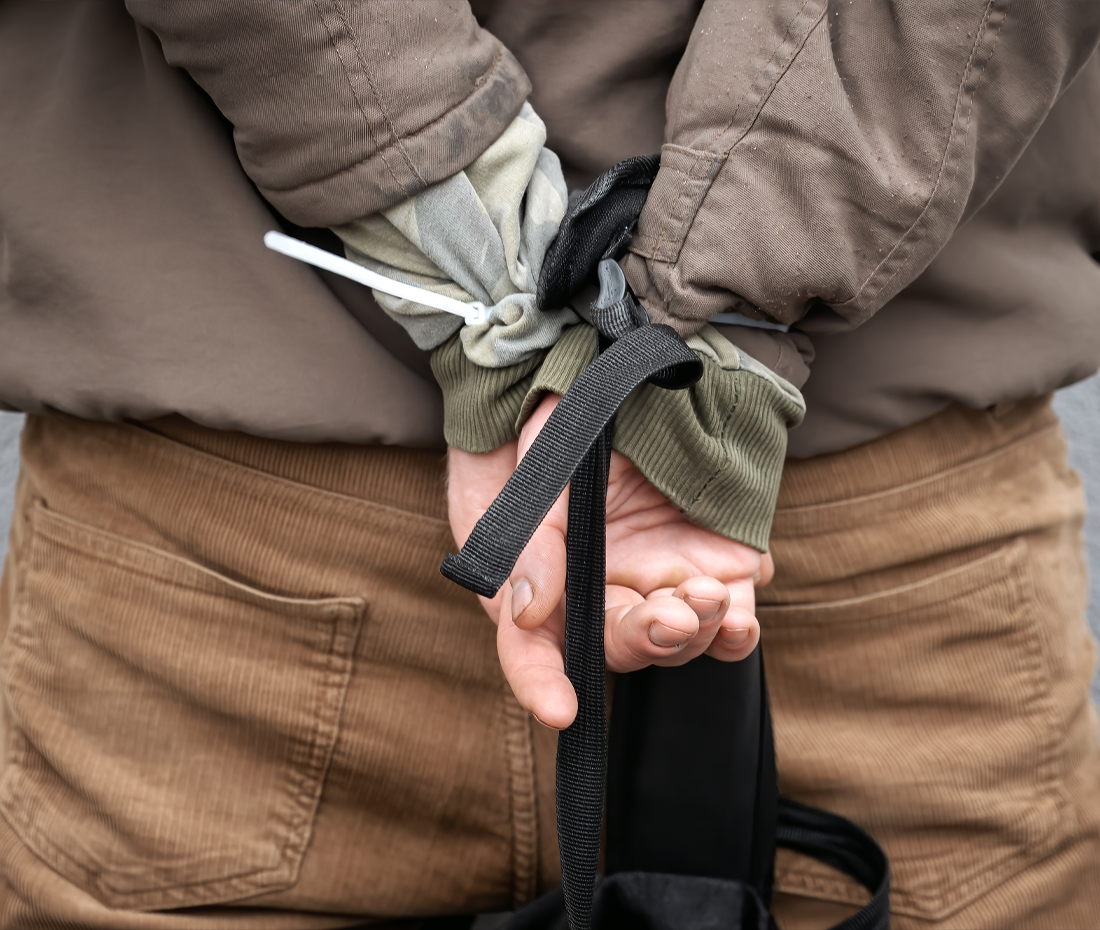

This analysis explores how Ukrainian civilians in occupied territories are being prosecuted under Russian terrorism laws for activities such as assisting the Ukrainian armed forces or expressing pro‑Ukrainian views. The alleged conduct, even if substantiated, does not meet the threshold of terrorism under international norms. It also assesses the treatment of Ukrainian POWs, who are explicitly immune from prosecution for lawful acts of war, yet are nevertheless being charged with terrorism‑related offenses for actions undertaken in their capacity as combatants.
Finally, the analysis sets out a legal framework for evaluating these practices, demonstrating that the domestic laws invoked not only contradict international standards on transparency and legal specificity but also result in direct violations of Geneva Conventions III and IV, alongside multiple core international human rights protections.
Rather than isolated irregularities, this state‑sanctioned practice forms part of a broader political agenda aimed at delegitimizing Ukraine’s resistance and national identity, while also deterring civil society from exercising core international rights such as freedom of expression and association. The paper concludes by outlining requests to the Russian Federation and policy recommendations for governments, international organizations, and civil society to document cases more effectively, support affected communities, and create meaningful accountability mechanisms.
This analysis explores how Ukrainian civilians in occupied territories are being prosecuted under Russian terrorism laws for activities such as assisting the Ukrainian armed forces or expressing pro‑Ukrainian views. The alleged conduct, even if substantiated, does not meet the threshold of terrorism under international norms. It also assesses the treatment of Ukrainian POWs, who are explicitly immune from prosecution for lawful acts of war, yet are nevertheless being charged with terrorism‑related offenses for actions undertaken in their capacity as combatants.
Finally, the analysis sets out a legal framework for evaluating these practices, demonstrating that the domestic laws invoked not only contradict international standards on transparency and legal specificity but also result in direct violations of Geneva Conventions III and IV, alongside multiple core international human rights protections.
Rather than isolated irregularities, this state‑sanctioned practice forms part of a broader political agenda aimed at delegitimizing Ukraine’s resistance and national identity, while also deterring civil society from exercising core international rights such as freedom of expression and association. The paper concludes by outlining requests to the Russian Federation and policy recommendations for governments, international organizations, and civil society to document cases more effectively, support affected communities, and create meaningful accountability mechanisms.
The Russian Federation has long used terrorism and extremism laws as tools within its own borders. However, over the past decade, Russian authorities have expanded the reach of these domestic laws, applying them to occupied territories in Ukraine. Ukrainian civilians, dissenters, and POWs are increasingly being charged with terrorism‑related offenses with concerning regularity.
International, regional, and civil society sources, as well as documented case studies, illustrate the ways in which Russia has manipulated national‑security legislation into a mechanism of political repression. From arbitrary detention, torture, and prosecutions before military and civilian courts, this conduct represents a blatant violation of normative international legal frameworks.
The Russian Federation has long used terrorism and extremism laws as tools within its own borders. However, over the past decade, Russian authorities have expanded the reach of these domestic laws, applying them to occupied territories in Ukraine. Ukrainian civilians, dissenters, and POWs are increasingly being charged with terrorism‑related offenses with concerning regularity.
International, regional, and civil society sources, as well as documented case studies, illustrate the ways in which Russia has manipulated national‑security legislation into a mechanism of political repression. From arbitrary detention, torture, and prosecutions before military and civilian courts, this conduct represents a blatant violation of normative international legal frameworks.
Although such practices existed before, Russia’s full‑scale invasion of Ukraine in February 2022 has markedly intensified the misuse and weaponization of anti‑terrorism and anti‑extremism laws to legitimize the prosecution of Ukrainian civilians and POWs.
This trend is a common practice inside Russia. Since at least 2007, Russia has systematically abused vaguely worded anti‑terrorism and anti‑extremism legislation to suppress dissent. Amnesty International reports that over the past decade, convictions for terrorism‑related offenses that did not involve actual terrorist attacks increased by fifty times. The scope of the laws has also widened.
The government amended the terrorism‑related provisions to broaden the definition of extremist activity to include “justifying terrorism,“ enabling the prosecution of individuals who criticize government officials or policies. It increased penalties for “public justification of terrorism” online, criminalized the “failure to report a crime,” and imposed severe restrictions on religious activities outside officially recognized institutions.
Authorities have used these laws to selectively prosecute religious minorities, including Jehovah’s Witnesses (banned as extremists in 2017) and alleged Hizb ut‑Tahrir members in Crimea (following Russia’s 2014 occupation), resulting in hundreds of lengthy prison sentences for peaceful religious practice.
Following the full‑scale invasion in February 2022, Russian authorities have continued to expand these practices, using anti‑terrorism laws to justify arbitrary detentions, forced transfers, and politically motivated actions prosecutions. Although Russian nationals have faced similar abuses, the surge in anti‑terrorism and anti‑extremism prosecutions against Ukrainian civilians and POWs is “unprecedented,“ increasing by almost 5,000 cases from 2022 to 2024.
Although such practices existed before, Russia’s full‑scale invasion of Ukraine in February 2022 has markedly intensified the misuse and weaponization of anti‑terrorism and anti‑extremism laws to legitimize the prosecution of Ukrainian civilians and POWs.
This trend is a common practice inside Russia. Since at least 2007, Russia has systematically abused vaguely worded anti‑terrorism and anti‑extremism legislation to suppress dissent. Amnesty International reports that over the past decade, convictions for terrorism‑related offenses that did not involve actual terrorist attacks increased by fifty times. The scope of the laws has also widened.
The government amended the terrorism‑related provisions to broaden the definition of extremist activity to include “justifying terrorism,“ enabling the prosecution of individuals who criticize government officials or policies. It increased penalties for “public justification of terrorism” online, criminalized the “failure to report a crime,” and imposed severe restrictions on religious activities outside officially recognized institutions.
Authorities have used these laws to selectively prosecute religious minorities, including Jehovah’s Witnesses (banned as extremists in 2017) and alleged Hizb ut‑Tahrir members in Crimea (following Russia’s 2014 occupation), resulting in hundreds of lengthy prison sentences for peaceful religious practice.
Following the full‑scale invasion in February 2022, Russian authorities have continued to expand these practices, using anti‑terrorism laws to justify arbitrary detentions, forced transfers, and politically motivated actions prosecutions. Although Russian nationals have faced similar abuses, the surge in anti‑terrorism and anti‑extremism prosecutions against Ukrainian civilians and POWs is “unprecedented,” increasing by almost 5,000 cases from 2022 to 2024.
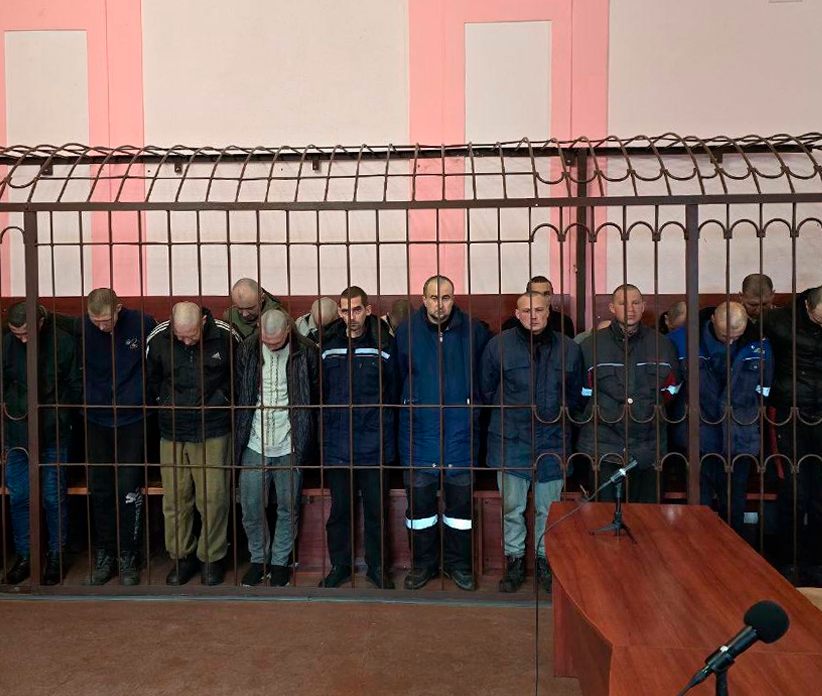
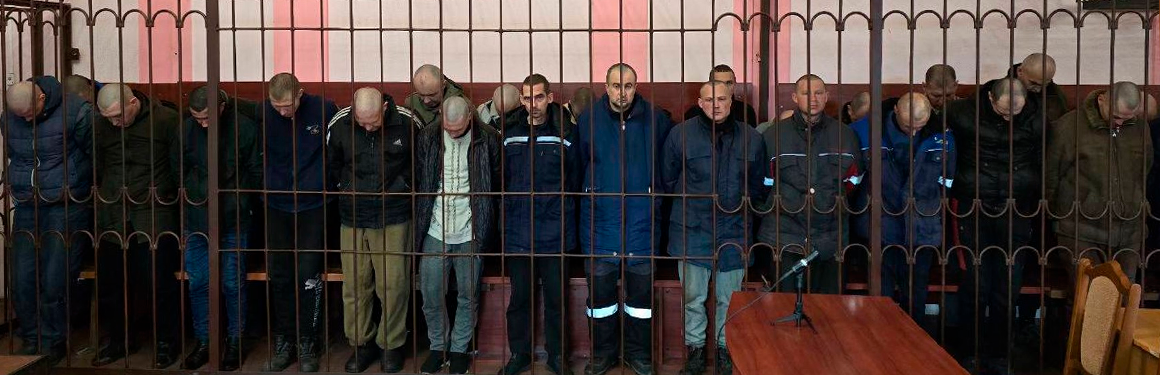
In such cases, authorities use terrorism‑related offenses like “justifying terrorism” (Article 205.2), “participation in a terrorist organization” (Article 205.4), and “training for terrorist activities” (Article 205.3). These provisions raise serious due process concerns because of their vague wording, overreach, and incompatibility with established legal standards. They are systematically used against activists, journalists, human rights defenders, and civilians suspected of sympathizing with Ukrainian forces.
After occupying Crimea in 2014, Russia imposed these provisions on the region and has continued to do so in newly occupied territories since 2022. The European Court of Human Rights has already held that “the extension of Russian law to Crimea… which started in 2014 and is continuing, could not be regarded as lawful” under the European Convention on Human Rights. The same reasoning applies to Russia’s continued expansion of repressive legislation across other parts of Ukraine.
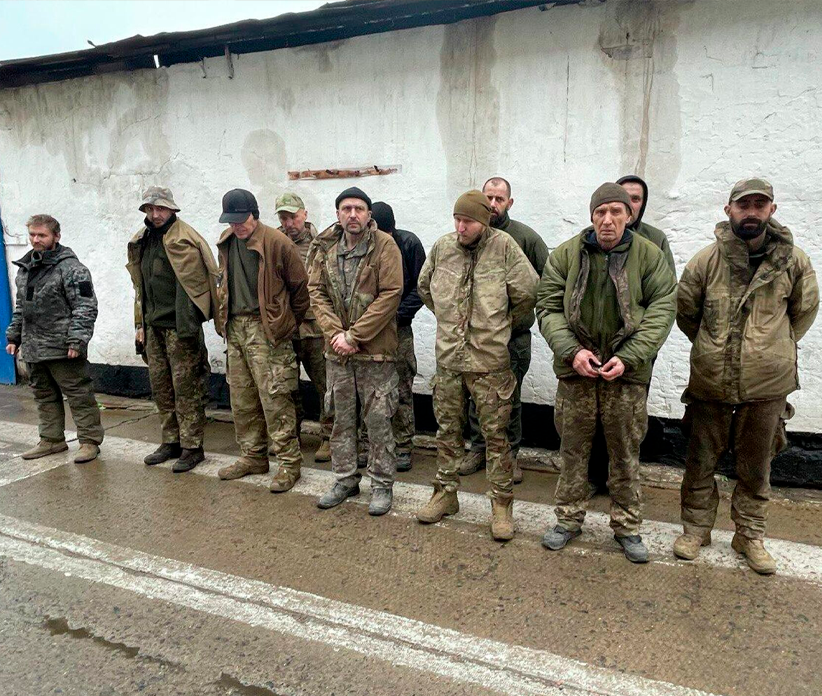
Both civilians and POWs are prosecuted by the Russian forces or their proxies. At least 1,800 civilians and more than 6,000 POWs are being held by Russia since its invasion. According to Poshuk Polon, the real numbers of unlawfully detained Ukrainians are significantly higher. Ukrainian civilians‑including local administrators, teachers, aid volunteers, and journalists‑are increasingly charged under these anti‑terrorism laws for refusing cooperation with occupying forces or supporting Ukrainian sovereignty, particularly in Kherson, Zaporizhzhia, Luhansk, and Donetsk.
Between 2022 and 2024, almost 40% of recorded cases against Ukrainian civilians detained in the conflict and more than 12% of cases against POWs involved terrorism‑related charges. Former military or law enforcement personnel face fabricated charges of belonging to “terrorist groups,“ often without access to lawyers or due process. The UN Special Rapporteur describes the use of counter‑terrorism legislation against civilians as “deliberate, widespread and systematic,” emphasizing that cases often lack any allegation of violent conduct or genuine threat.
Civilians are prosecuted for social media posts, alleged contact with Ukrainian organizations, or purely peaceful expressions of support for Ukraine. Russia has reclassified entire Ukrainian military formations as “terrorist organizations.“ The Supreme Court, in closed proceedings, recognized units including the Azov Brigade as terrorist organizations between 2022 and 2024. Consequently, POWs are treated as “terrorists” rather than combatants deserving of those protections laid out in the Geneva Convention and customary international law. Trials are held in military courts, usually closed to the public, with limited transparency and restricted legal representation.
Detainees are subjected to severe torture and mistreatment, with OHCHR documenting that over 92% of interviewed civilian detainees reported having been tortured or ill‑treated. Physical abuse includes beatings, electric shocks, stress positions, and threats of execution. Psychological pressure‑threats to family members, constant interrogations, and solitary confinement‑is systematic. POWs report being forced to sing the Russian anthem and eat food laced with chemicals. Civilians are detained without warrants at home, checkpoints, filtration stations, or on the street, held incommunicado in unofficial facilities, and tortured into confessions.
Alongside its judicial procedures, Russia frequently uses extrajudicial methods to exert pressure, such as adding individuals to the Rosfinmonitoring List‑a register of people suspected of extremist or terrorist activities. Security agencies can impose this measure without court approval, which leads to blocked bank accounts, limits on both professional and public engagement, and causes those listed to be publicly stigmatized. It also has a profound chilling effect on civil society.
This trend represents a sharp escalation in the use of Russia’s anti‑terrorism legal framework to suppress dissent, punish loyalty to Ukraine, and construct a false narrative of internal security threats justifying long‑term occupation; it also aligns with Russia’s broader pattern of deploying counter‑terrorism legislation as a political tool.
Such practices violate fundamental principles of international human, and humanitarian law, including the rights of POWs under the Third Geneva Convention and the protections owed to civilians in occupied territories under the Fourth Geneva Convention. International legal bodies, including the United Nations and the Council of Europe, have condemned these abuses.
In such cases, authorities use terrorism‑related offenses like “justifying terrorism” (Article 205.2), “participation in a terrorist organization” (Article 205.4), and “training for terrorist activities” (Article 205.3). These provisions raise serious due process concerns because of their vague wording, overreach, and incompatibility with established legal standards. They are systematically used against activists, journalists, human rights defenders, and civilians suspected of sympathizing with Ukrainian forces.
After occupying Crimea in 2014, Russia imposed these provisions on the region and has continued to do so in newly occupied territories since 2022. The European Court of Human Rights has already held that “the extension of Russian law to Crimea… which started in 2014 and is continuing, could not be regarded as lawful” under the European Convention on Human Rights. The same reasoning applies to Russia’s continued expansion of repressive legislation across other parts of Ukraine.
Both civilians and POWs are prosecuted by the Russian forces or their proxies. At least 1,800 civilians and more than 6,000 POWs are being held by Russia since its invasion. According to Poshuk Polon, the real numbers of unlawfully detained Ukrainians are significantly higher. Ukrainian civilians‑including local administrators, teachers, aid volunteers, and journalists‑are increasingly charged under these anti‑terrorism laws for refusing cooperation with occupying forces or supporting Ukrainian sovereignty, particularly in Kherson, Zaporizhzhia, Luhansk, and Donetsk.
Between 2022 and 2024, almost 40% of recorded cases against Ukrainian civilians detained in the conflict and more than 12% of cases against POWs involved terrorism‑related charges. Former military or law enforcement personnel face fabricated charges of belonging to “terrorist groups,“ often without access to lawyers or due process. The UN Special Rapporteur describes the use of counter‑terrorism legislation against civilians as “deliberate, widespread and systematic,” emphasizing that cases often lack any allegation of violent conduct or genuine threat.
Civilians are prosecuted for social media posts, alleged contact with Ukrainian organizations, or purely peaceful expressions of support for Ukraine. Russia has reclassified entire Ukrainian military formations as “terrorist organizations.” The Supreme Court, in closed proceedings, recognized units including the Azov Brigade as terrorist organizations between 2022 and 2024. Consequently, POWs are treated as “terrorists” rather than combatants deserving of those protections laid out in the Geneva Convention and customary international law. Trials are held in military courts, usually closed to the public, with limited transparency and restricted legal representation.
Detainees are subjected to severe torture and mistreatment, with OHCHR documenting that over 92% of interviewed civilian detainees reported having been tortured or ill‑treated. Physical abuse includes beatings, electric shocks, stress positions, and threats of execution. Psychological pressure‑threats to family members, constant interrogations, and solitary confinement‑is systematic. POWs report being forced to sing the Russian anthem and eat food laced with chemicals. Civilians are detained without warrants at home, checkpoints, filtration stations, or on the street, held incommunicado in unofficial facilities, and tortured into confessions.
Alongside its judicial procedures, Russia frequently uses extrajudicial methods to exert pressure, such as adding individuals to the Rosfinmonitoring List‑a register of people suspected of extremist or terrorist activities. Security agencies can impose this measure without court approval, which leads to blocked bank accounts, limits on both professional and public engagement, and causes those listed to be publicly stigmatized. It also has a profound chilling effect on civil society.
This trend represents a sharp escalation in the use of Russia’s anti‑terrorism legal framework to suppress dissent, punish loyalty to Ukraine, and construct a false narrative of internal security threats justifying long‑term occupation; it also aligns with Russia’s broader pattern of deploying counter‑terrorism legislation as a political tool.
Such practices violate fundamental principles of international human, and humanitarian law, including the rights of POWs under the Third Geneva Convention and the protections owed to civilians in occupied territories under the Fourth Geneva Convention. International legal bodies, including the United Nations and the Council of Europe, have condemned these abuses.
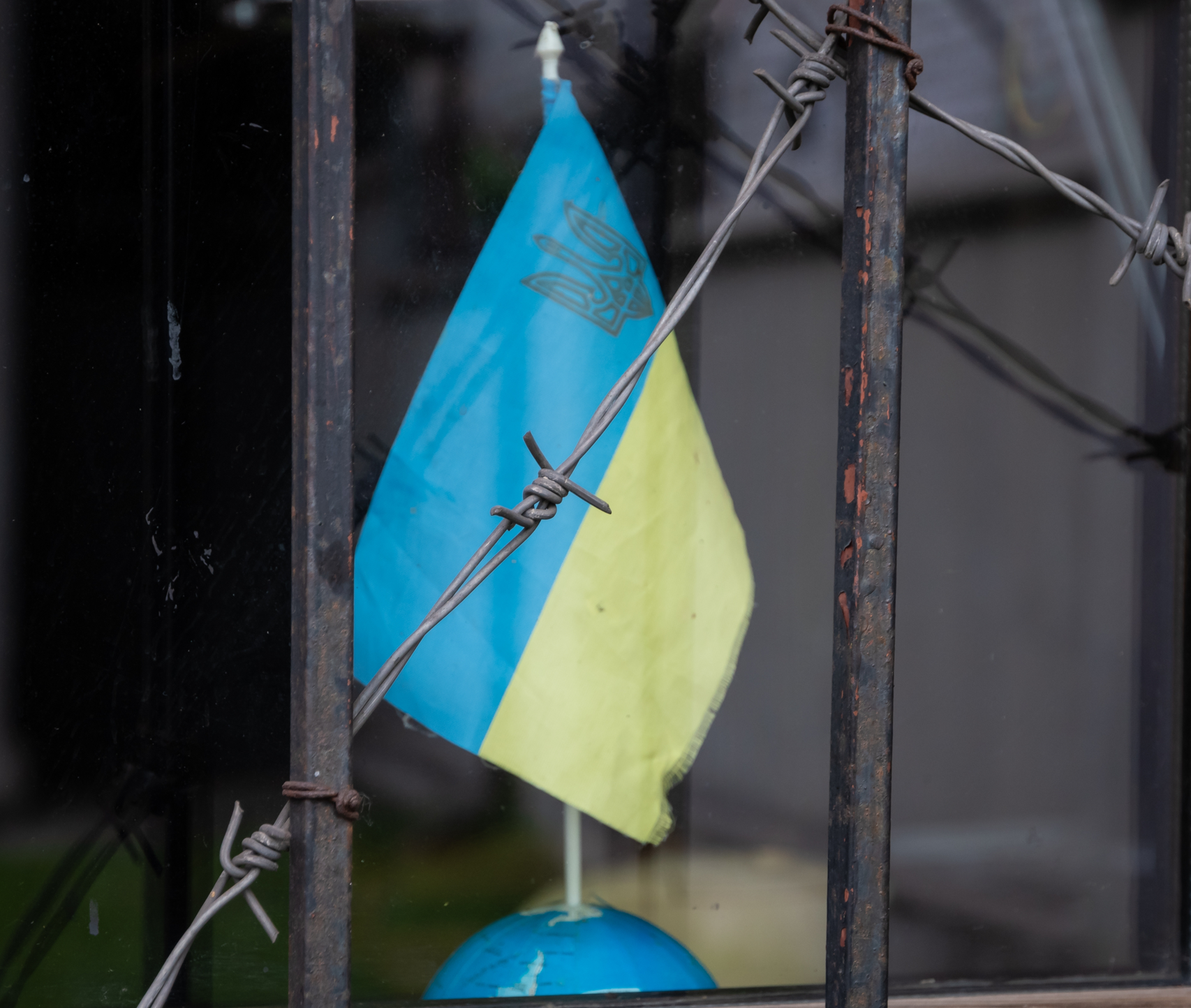
The Free Russia Foundation’s Poshuk Polon project has gathered many cases showing that the misuse of anti‑terrorism laws are not isolated incidents, but rather a consistent and deliberate trend of abuse. The following section highlights just a few illustrative cases; however, in light of ongoing security concerns, identifying details have been withheld to protect survivors and their families.
The Free Russia Foundation’s Poshuk Polon project has gathered many cases showing that the misuse of anti‑terrorism laws are not isolated incidents, but rather a consistent and deliberate trend of abuse. The following section highlights just a few illustrative cases; however, in light of ongoing security concerns, identifying details have been withheld to protect survivors and their families.
In August 2022, a car bomb killed a Russian‑appointed official in an occupied town. In December 2023, a man and four other civilian hostages were arrested and “tried” by Russian authorities in connection with this case. The charge was for “committing a terrorist act by prior conspiracy” under Article 205.
For months, he was held incommunicado, with his family having no information about his whereabouts or his condition. In January 2024, despite lacking any evidence to link him to the crime, a court extended his detention. During these proceedings, he was denied access to a lawyer. Since his confinement, he has lost significant weight, and his family reports that he is in an extremely poor physical and emotional condition.
In August 2022, a car bomb killed a Russian‑appointed official in an occupied town. In December 2023, a man and four other civilian hostages were arrested and “tried” by Russian authorities in connection with this case. The charge was for “committing a terrorist act by prior conspiracy” under Article 205.
For months, he was held incommunicado, with his family having no information about his whereabouts or his condition. In January 2024, despite lacking any evidence to link him to the crime, a court extended his detention. During these proceedings, he was denied access to a lawyer. Since his confinement, he has lost significant weight, and his family reports that he is in an extremely poor physical and emotional condition.
In June 2025, the Southern District Military Court issued a verdict against a serviceman, who was charged under Article 205.4 of the Criminal Code of the Russian Federation for participating in a terrorist community (Aidar).
He was sentenced to 13 years in prison. Aidar is an assault battalion of the Ukrainian Ground Forces, a formally recognized branch of the Ukrainian army. As a member of the army, he was obliged to carry out military orders and serve in combat positions.
In November 2024, he was captured. Despite being a combatant and a formal member of the military, he was denied POW status and instead unlawfully tried under Russian anti‑terrorism law.
In June 2025, the Southern District Military Court issued a verdict against a serviceman, who was charged under Article 205.4 of the Criminal Code of the Russian Federation for participating in a terrorist community (Aidar).
He was sentenced to 13 years in prison. Aidar is an assault battalion of the Ukrainian Ground Forces, a formally recognized branch of the Ukrainian army. As a member of the army, he was obliged to carry out military orders and serve in combat positions.
In November 2024, he was captured. Despite being a combatant and a formal member of the military, he was denied POW status and instead unlawfully tried under Russian anti‑terrorism law.
A woman was found guilty of committing crimes under Article 205, 205.4, and 222.1 of the Criminal Code of the Russian Federation. Collectively, she was sentenced to 12 years in prison and a hefty fine of 500,000 rubles.
She was accused of preparing explosives at civilian facilities. An investigation failed to identify other members of this “criminal group” they were alleged to be a part of. After prolonged torture, she “confessed” to the crime and remains in prison.
A woman was found guilty of committing crimes under Article 205, 205.4, and 222.1 of the Criminal Code of the Russian Federation. Collectively, she was sentenced to 12 years in prison and a hefty fine of 500,000 rubles.
She was accused of preparing explosives at civilian facilities. An investigation failed to identify other members of this “criminal group” they were alleged to be a part of. After prolonged torture, she “confessed” to the crime and remains in prison.
A striking example of extrajudicial repression was the inclusion, in January 2023, of a lawyer and human rights defender on the Foreign Agent list. He was also declared wanted by Russian authorities, charged with administrative offenses and put on the Rosfinmonitoring list. He is known for his work defending political prisoners and Ukrainian prisoners of war.
This decision illustrates how extrajudicial mechanisms complement judicial ones, creating a comprehensive system of political pressure that extends beyond the framework of criminal proceedings.
Far from being anomalies, these cases are just a small part demonstrating a larger systemic pattern and widespread violations of international law.
A striking example of extrajudicial repression was the inclusion, in January 2023, of a lawyer and human rights defender on the Foreign Agent list. He was also declared wanted by Russian authorities, charged with administrative offenses and put on the Rosfinmonitoring list. He is known for his work defending political prisoners and Ukrainian prisoners of war.
This decision illustrates how extrajudicial mechanisms complement judicial ones, creating a comprehensive system of political pressure that extends beyond the framework of criminal proceedings.
Far from being anomalies, these cases are just a small part demonstrating a larger systemic pattern and widespread violations of international law.
The International Court of Justice has established that international human rights law (IHRL) and international humanitarian law (IHL) apply concurrently during armed conflict and occupation. In its 2004 Advisory Opinion on the Legal Consequences of the Construction of a Wall in the Occupied Palestinian Territory, the International Court of Justice held that “the protection offered by human rights conventions does not cease in case of armed conflict, save through the effect of provisions for derogation of the kind to be found in Article 4 of the International Covenant on Civil and Political Rights.”
The Court held that international human rights instruments are “applicable in respect of acts done by a State in the exercise of its jurisdiction outside its own territory,” including in occupied territories. Furthermore, in 2003, the Security Council mandated that counter‑terrorism measures “comply with all their obligations under international law, and should adopt such measures in accordance with international law, in particular international human rights, refugee, and humanitarian law.“
While states are permitted to legitimately restrict certain rights in countering terrorism, they must do so in accordance with international law. For restrictions on activities to comply with rule of law standards, states must observe the principle of legal certainty, which requires that laws be sufficiently clear and precise so that individuals can understand what conduct is prohibited. Criminal offenses must be defined with sufficient specificity so that a person can know when their actions violate the law.
According to the Madrid Guiding Principles on foreign terrorist fighters, governments must define offenses with sufficient precision within their legal systems and ensure that criminalization aligns with “their international legal obligations.” This principle extends to ambiguous language used in terrorism‑related statutes. For example, terminology like “encouraging,” “advancing,“ “supporting,” “justifying,” or “glorifying” terrorism, as well as “inciting” terrorist acts, would require explicit statutory definition to satisfy legal certainty requirements.
The nexus of international human rights law and international humanitarian law is applied here and outlined below. Russia’s prosecution of Ukrainian civilians and prisoners of war under terrorism laws must be evaluated against this integrated framework.
The International Court of Justice has established that international human rights law (IHRL) and international humanitarian law (IHL) apply concurrently during armed conflict and occupation. In its 2004 Advisory Opinion on the Legal Consequences of the Construction of a Wall in the Occupied Palestinian Territory, the International Court of Justice held that “the protection offered by human rights conventions does not cease in case of armed conflict, save through the effect of provisions for derogation of the kind to be found in Article 4 of the International Covenant on Civil and Political Rights.”
The Court held that international human rights instruments are “applicable in respect of acts done by a State in the exercise of its jurisdiction outside its own territory,” including in occupied territories. Furthermore, in 2003, the Security Council mandated that counter‑terrorism measures “comply with all their obligations under international law, and should adopt such measures in accordance with international law, in particular international human rights, refugee, and humanitarian law.“
While states are permitted to legitimately restrict certain rights in countering terrorism, they must do so in accordance with international law. For restrictions on activities to comply with rule of law standards, states must observe the principle of legal certainty, which requires that laws be sufficiently clear and precise so that individuals can understand what conduct is prohibited. Criminal offenses must be defined with sufficient specificity so that a person can know when their actions violate the law.
According to the Madrid Guiding Principles on foreign terrorist fighters, governments must define offenses with sufficient precision within their legal systems and ensure that criminalization aligns with “their international legal obligations.” This principle extends to ambiguous language used in terrorism‑related statutes. For example, terminology like “encouraging,” “advancing,“ “supporting,” “justifying,” or “glorifying” terrorism, as well as “inciting” terrorist acts, would require explicit statutory definition to satisfy legal certainty requirements.
The nexus of international human rights law and international humanitarian law is applied here and outlined below. Russia’s prosecution of Ukrainian civilians and prisoners of war under terrorism laws must be evaluated against this integrated framework.
International human rights law (IHRL) applies in times of peace and during armed conflict and occupation. The IHRL framework is derived from multiple sources, including binding treaties such as the International Covenant on Civil and Political Rights (ICCPR) and the Convention against Torture (CAT); regional human rights instruments; customary international law (CIL); and soft‑law instruments that, although not formally binding, serve as authoritative guidance. As a state party to the ICCPR and CAT, Russia must comply with these treaties during peace and armed conflict.
While there is no single, universally agreed‑upon definition of “terrorism” that applies across all international law, specific binding treaties establish narrowly‑tailored criteria. For example, the Terrorist Bombing Convention (1997), to which Russia is a state party, requires:
International human rights law (IHRL) applies in times of peace and during armed conflict and occupation. The IHRL framework is derived from multiple sources, including binding treaties such as the International Covenant on Civil and Political Rights (ICCPR) and the Convention against Torture (CAT); regional human rights instruments; customary international law (CIL); and soft‑law instruments that, although not formally binding, serve as authoritative guidance. As a state party to the ICCPR and CAT, Russia must comply with these treaties during peace and armed conflict.
While there is no single, universally agreed‑upon definition of “terrorism” that applies across all international law, specific binding treaties establish narrowly‑tailored criteria. For example, the Terrorist Bombing Convention (1997), to which Russia is a state party, requires:
The Convention further limits jurisdiction to cases involving attempts to compel state action. This specificity is essential because vague or overbroad definitions enable both unintentional human rights violations and deliberate misuse of counterterrorism laws to suppress legitimate political opposition.
The Convention further limits jurisdiction to cases involving attempts to compel state action. This specificity is essential because vague or overbroad definitions enable both unintentional human rights violations and deliberate misuse of counterterrorism laws to suppress legitimate political opposition.
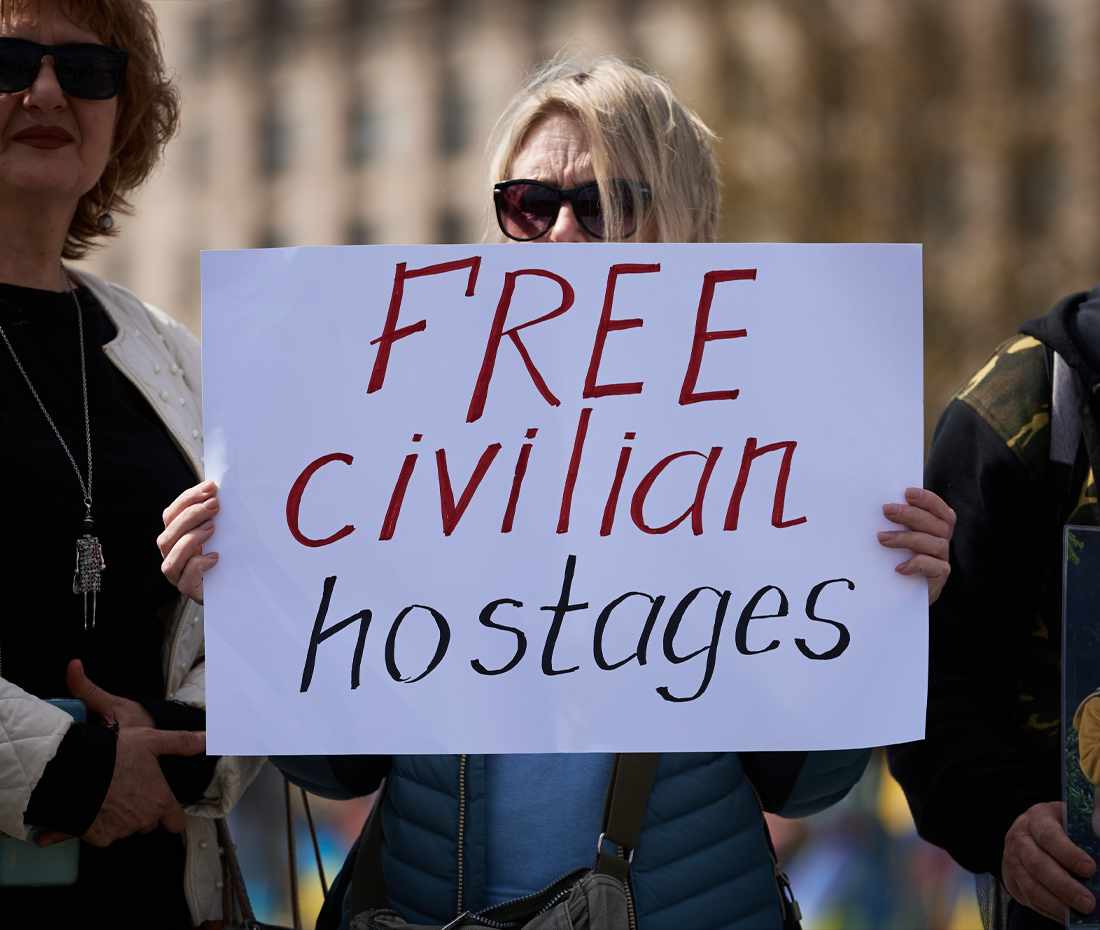
States bear an obligation to ensure that terrorism‑related charges‑whether framed as “encouragement,“ “glorification,” “justification,” or “extremist activity”—do not serve as pretexts to silence legitimate discourse. Broadly, Russia’s anti‑terrorism laws contravene the Madrid Guiding Principles and the principle of legal certainty because their vague definition of “extremist activity”‑which does not require violence and includes inciting undefined “social discord”—allows authorities to recast peaceful dissent as a security threat. As a result, Ukrainian civilians and POWs are arbitrarily prosecuted for political expression, association, and other conduct protected under international law.
More specifically, Russia’s conduct violates a number of core legal protections. For instance, international law recognizes freedom of expression as essential to democratic governance, transparency, and public accountability. Under ICCPR Article 19, individuals possess the right to seek, receive, and share information and ideas across borders and through any medium, including digital platforms.
Political speech, public commentary, and human rights advocacy are all protected forms of expression. Because free expression is essential to democratic governance, states can only restrict it in limited circumstances‑specifically, to protect others' rights and reputation, or to preserve national security, public order, public health, or morality. In addition to targeting peaceful protesters and dissenters, Russian authorities have prosecuted Ukrainian civilians for ordinary social media activity, treating posts that express pro‑Ukraine sentiment, criticize the occupation, or share news from Ukrainian sources as “discrediting Russian Armed Forces, or a form of extremism.
Further, international law protects the right to form and participate in collective organizations as essential to democratic participation. Article 22 of the ICCPR establishes that associational rights may be curtailed only when restrictions are prescribed by law and demonstrably necessary to protect enumerated interests: national security, public safety, public order, public health, public morals, or the rights and freedoms of others. These limitations must operate within a democratic framework and remain proportionate to genuine threats. Russia’s designation of Ukrainian military units and civic organizations as “terrorist” or “extremist” entities violates these protections.
By labeling formally recognized military formations‑such as the Azov Brigade and Aidar Battalion‑as terrorist organizations, Russia criminalizes membership in legitimate state institutions. Similarly, prosecuting civilians for past association with Ukrainian governmental, educational, or humanitarian organizations transforms lawful civic participation into criminal conduct. These designations bear no relation to the narrow circumstances under which international law permits restrictions on associational rights, instead serving as tools to suppress Ukrainian identity and punish loyalty to Ukraine’s sovereignty.
Torture and other cruel, inhuman, or degrading treatment‑conduct by Russian authorities that has been widely documented‑is prohibited under Article 7 of the ICCPR and Article 2 of CAT, both of which preclude derogations, even in situations of war or public emergency.
Russia’s conduct clearly infringes the protections for freedom of expression, association, and peaceful assembly guaranteed under IHRL and reinforced by customary international norms. The degrading treatment and torture of both civilians and POWs is a further violation of IHRL.
States bear an obligation to ensure that terrorism‑related charges‑whether framed as “encouragement,“ “glorification,” “justification,” or “extremist activity”—do not serve as pretexts to silence legitimate discourse. Broadly, Russia’s anti‑terrorism laws contravene the Madrid Guiding Principles and the principle of legal certainty because their vague definition of “extremist activity”‑which does not require violence and includes inciting undefined “social discord”—allows authorities to recast peaceful dissent as a security threat. As a result, Ukrainian civilians and POWs are arbitrarily prosecuted for political expression, association, and other conduct protected under international law.
More specifically, Russia’s conduct violates a number of core legal protections. For instance, international law recognizes freedom of expression as essential to democratic governance, transparency, and public accountability. Under ICCPR Article 19, individuals possess the right to seek, receive, and share information and ideas across borders and through any medium, including digital platforms.
Political speech, public commentary, and human rights advocacy are all protected forms of expression. Because free expression is essential to democratic governance, states can only restrict it in limited circumstances‑specifically, to protect others' rights and reputation, or to preserve national security, public order, public health, or morality. In addition to targeting peaceful protesters and dissenters, Russian authorities have prosecuted Ukrainian civilians for ordinary social media activity, treating posts that express pro‑Ukraine sentiment, criticize the occupation, or share news from Ukrainian sources as “discrediting Russian Armed Forces, or a form of extremism.
Further, international law protects the right to form and participate in collective organizations as essential to democratic participation. Article 22 of the ICCPR establishes that associational rights may be curtailed only when restrictions are prescribed by law and demonstrably necessary to protect enumerated interests: national security, public safety, public order, public health, public morals, or the rights and freedoms of others. These limitations must operate within a democratic framework and remain proportionate to genuine threats. Russia’s designation of Ukrainian military units and civic organizations as “terrorist” or “extremist” entities violates these protections.
By labeling formally recognized military formations‑such as the Azov Brigade and Aidar Battalion‑as terrorist organizations, Russia criminalizes membership in legitimate state institutions. Similarly, prosecuting civilians for past association with Ukrainian governmental, educational, or humanitarian organizations transforms lawful civic participation into criminal conduct. These designations bear no relation to the narrow circumstances under which international law permits restrictions on associational rights, instead serving as tools to suppress Ukrainian identity and punish loyalty to Ukraine’s sovereignty.
Torture and other cruel, inhuman, or degrading treatment‑conduct by Russian authorities that has been widely documented‑is prohibited under Article 7 of the ICCPR and Article 2 of CAT, both of which preclude derogations, even in situations of war or public emergency.
Russia’s conduct clearly infringes the protections for freedom of expression, association, and peaceful assembly guaranteed under IHRL and reinforced by customary international norms. The degrading treatment and torture of both civilians and POWs is a further violation of IHRL.
International humanitarian law (IHL), often described as the law of war and primarily guided by the Geneva Conventions of 1949 and their Additional Protocols, governs the conduct of parties engaged in armed conflict and aims to protect individuals who are not, or are no longer, participating in hostilities, including civilians and prisoners of war (POWs). Geneva Convention IV (GC IV) protects civilians in occupied territories, and Geneva Convention III (GC III) protects POWs. Despite clearly defined protections, Russian authorities continue to openly violate central protections under IHL. One such violation is the misuse of anti‑terrorism laws during conflict and occupation.
Under GC IV, Article 47 of GC IV provides that protected persons “shall not be deprived, in any case or in any manner whatsoever, of the benefits of the present Convention.“ The application of anti‑terrorism laws to peaceful civic activity, including non‑violent expression and association, as seen in Russian‑occupied Ukraine, constitutes an impermissible use of penal law against protected persons and violates Articles 33 and 64 of the Fourth Geneva Convention. In addition to a number of violations of penal procedures, IHL broadly prohibits arbitrary detention and requires humane treatment of all detainees. These protections have been systematically disregarded, as widely documented in Russian forces’ treatment of detainees.
POWs possess a unique set of protections under IHL. Specifically, POWs are entitled to immunity from prosecution for lawful acts of war, even if such acts would constitute crimes under domestic law. In an international armed conflict, counterterrorism laws cannot be used for mere participation in hostilities.
However, POWs can be prosecuted for war crimes or for terrorism acts unrelated to the conflict. Where prosecution concerns alleged war crimes, criminal responsibility must be individual and target actual perpetrators of the offense and not entire units. And if an author cannot be determined, it must be accepted that the violation will remain unpunished.
Prosecuting entire units for membership in designated organizations might constitute the form of collective punishment which is prohibited by IHL. Therefore, Russia’s designation of legitimate Ukrainian military units ('Azov' and 'Aidar') as terrorist organizations, coupled with prosecution of POWs for mere membership based solely on unit affiliation, violates both combatant immunity and the prohibition on collective punishment.
International humanitarian law (IHL), often described as the law of war and primarily guided by the Geneva Conventions of 1949 and their Additional Protocols, governs the conduct of parties engaged in armed conflict and aims to protect individuals who are not, or are no longer, participating in hostilities, including civilians and prisoners of war (POWs). Geneva Convention IV (GC IV) protects civilians in occupied territories, and Geneva Convention III (GC III) protects POWs. Despite clearly defined protections, Russian authorities continue to openly violate central protections under IHL. One such violation is the misuse of anti‑terrorism laws during conflict and occupation.
Under GC IV, Article 47 of GC IV provides that protected persons “shall not be deprived, in any case or in any manner whatsoever, of the benefits of the present Convention.” The application of anti‑terrorism laws to peaceful civic activity, including non‑violent expression and association, as seen in Russian‑occupied Ukraine, constitutes an impermissible use of penal law against protected persons and violates Articles 33 and 64 of the Fourth Geneva Convention. In addition to a number of violations of penal procedures, IHL broadly prohibits arbitrary detention and requires humane treatment of all detainees. These protections have been systematically disregarded, as widely documented in Russian forces’ treatment of detainees.
POWs possess a unique set of protections under IHL. Specifically, POWs are entitled to immunity from prosecution for lawful acts of war, even if such acts would constitute crimes under domestic law. In an international armed conflict, counterterrorism laws cannot be used for mere participation in hostilities.
However, POWs can be prosecuted for war crimes or for terrorism acts unrelated to the conflict. Where prosecution concerns alleged war crimes, criminal responsibility must be individual and target actual perpetrators of the offense and not entire units. And if an author cannot be determined, it must be accepted that the violation will remain unpunished.
Prosecuting entire units for membership in designated organizations might constitute the form of collective punishment which is prohibited by IHL. Therefore, Russia’s designation of legitimate Ukrainian military units ('Azov' and 'Aidar') as terrorist organizations, coupled with prosecution of POWs for mere membership based solely on unit affiliation, violates both combatant immunity and the prohibition on collective punishment.
Russia’s use of anti‑terrorism laws raises interconnected violations of international human rights law and international humanitarian law, rooted in the political manipulation of criminal law, the systematic dismantling of due‑process guarantees, and the resulting suppression of civic life and free expression in occupied regions.
Investigations‑if they can properly be described as such‑often begin with abductions or arbitrary arrests. Civilians are searched and seized at home, at checkpoints, or on the street, largely without warrants, and held incommunicado for prolonged periods in unofficial or undisclosed facilities.
While detained, they are tortured and confessions coerced. Should their cases proceed to trial‑which many never reach‑the proceedings are commonly conducted behind closed doors and before military courts. These are not isolated or accidental violations of due process; rather, the entire sequence from arrest to sentencing is structured to ensure convictions and to instill a broader climate of fear, thereby chilling civil society and discouraging dissent.
This pattern of criminal proceedings illustrates that Russia is intentionally misusing national security laws to advance political objectives and silence dissent. Russia officially and explicitly links “Ukrainian nationalism” with extremism and neo‑Nazism and the national strategy on countering extremism lists the elimination of “threats of an extremist nature emanating from Ukraine” as a priority. Accordingly, these attacks are embedded in a broader political campaign to recast Ukrainian identity and resistance as criminal extremism.
Russia’s unlawful application of counter‑terrorism laws in occupied areas blatantly violates fundamental protections under international law. However, this conduct also aims to incapacitate: the strategic use of vague and punitive anti‑terrorism charges functions to suppress civic participation, silence criticism, and create a pervasive chilling effect on civil freedoms and national identity.
Russia’s use of anti‑terrorism laws raises interconnected violations of international human rights law and international humanitarian law, rooted in the political manipulation of criminal law, the systematic dismantling of due‑process guarantees, and the resulting suppression of civic life and free expression in occupied regions.
Investigations‑if they can properly be described as such‑often begin with abductions or arbitrary arrests. Civilians are searched and seized at home, at checkpoints, or on the street, largely without warrants, and held incommunicado for prolonged periods in unofficial or undisclosed facilities.
While detained, they are tortured and confessions coerced. Should their cases proceed to trial‑which many never reach‑the proceedings are commonly conducted behind closed doors and before military courts. These are not isolated or accidental violations of due process; rather, the entire sequence from arrest to sentencing is structured to ensure convictions and to instill a broader climate of fear, thereby chilling civil society and discouraging dissent.
This pattern of criminal proceedings illustrates that Russia is intentionally misusing national security laws to advance political objectives and silence dissent. Russia officially and explicitly links “Ukrainian nationalism” with extremism and neo‑Nazism and the national strategy on countering extremism lists the elimination of “threats of an extremist nature emanating from Ukraine” as a priority. Accordingly, these attacks are embedded in a broader political campaign to recast Ukrainian identity and resistance as criminal extremism.
Russia’s unlawful application of counter‑terrorism laws in occupied areas blatantly violates fundamental protections under international law. However, this conduct also aims to incapacitate: the strategic use of vague and punitive anti‑terrorism charges functions to suppress civic participation, silence criticism, and create a pervasive chilling effect on civil freedoms and national identity.
To address the serious and ongoing violations of international law documented in occupied and conflict‑affected areas of Ukraine, FRF offers the following recommendations.
To the Russian Federation, FRF demands:
To address the serious and ongoing violations of international law documented in occupied and conflict‑affected areas of Ukraine, FRF offers the following recommendations.
To the Russian Federation, FRF demands:

To the international community, FRF calls to:
To the international community, FRF calls to:
To Civil Society Organizations, FRF calls to:
To Civil Society Organizations, FRF calls to:
Through systematic abuse of anti‑terrorism provisions, Russian authorities have weaponized national security laws to delegitimize Ukrainian identity, criminalize resistance to occupation, and terrorize civilian populations into submission.
By prosecuting Ukrainian civilians for legitimate acts of wartime resistance, expressions of national identity, and support for their own armed forces‑while simultaneously designating Ukrainian military units as “terrorist organizations”—Russia has violated and continues to violate international law by using its counter‑terrorism laws to serve its war of aggression.
Through systematic abuse of anti‑terrorism provisions, Russian authorities have weaponized national security laws to delegitimize Ukrainian identity, criminalize resistance to occupation, and terrorize civilian populations into submission.
By prosecuting Ukrainian civilians for legitimate acts of wartime resistance, expressions of national identity, and support for their own armed forces‑while simultaneously designating Ukrainian military units as “terrorist organizations”—Russia has violated and continues to violate international law by using its counter‑terrorism laws to serve its war of aggression.
A Systematic Tool of Repression
By Free Russia Foundation
December 10, 2025
 Report
 Updates for 2024–2025
By Free Russia Foundation
October 08, 2025
 Article
 “Poshuk. Polon”: The fate of tens of thousands of military and civilian Ukrainians remains unknown
By Vladimir Zhbankov
November 19, 2024
A Systematic Tool of Repression
By Free Russia Foundation
December 10, 2025
Report Updates for 2024–2025
By Free Russia Foundation
October 08, 2025
Article “Poshuk. Polon”: The fate of tens of thousands of military and civilian Ukrainians remains unknown
By Vladimir Zhbankov
November 19, 2024