
War
Russia’s Weaponization of Terrorism Charges Against Ukrainians
A Systematic Tool of Repression
By Free Russia Foundation December 10, 2025


A Systematic Tool of Repression
By Free Russia Foundation December 10, 2025
Behind the language of “counter‑terrorism,” Russia has built a system that detains, tortures, and prosecutes Ukrainian civilians and POWs, violating every core principle of international humanitarian and human rights law. This brief by Free Russia Foundation, with insights from its Poshuk. Polon initiative, captures the human toll of that system and shows how it fits into a wider strategy to delegitimize Ukrainian identity and weaken the legal norms meant to protect civilians in conflict.
Through its work assisting Ukrainian civilians and prisoners of war (POWs), Free Russia Foundation (FRF) contributes to the growing body of evidence that Russia systematically manipulates national security legislation as a tool of political repression.
FRF’s humanitarian initiative Poshuk. Polon, which documents disappearances and identifies unlawfully detained Ukrainians, provides verified case data and direct reporting that underpin key findings of this brief. This practice, predating Russia’s 2022 invasion of Ukraine, is widespread in its scale and scope, politically motivated, and in clear violation of international humanitarian and human rights law.
Since at least 2007, Russia has systematically abused vaguely worded anti‑terrorism and anti‑extremism legislation to suppress dissent. Amnesty International reports that convictions for non‑violent terrorism‑related offenses have increased fiftyfold over the past decade. The scope of these laws has also widened.
The government amended the terrorism‑related provisions to expand the definition of extremist activity to include “justifying terrorism,“ enabling the prosecution of individuals who criticize government officials or policies. It increased penalties for “public justification of terrorism” online, criminalized the “failure to report a crime,” and imposed sweeping restrictions on religious activity outside officially recognized institutions. Authorities have used these laws to target religious minorities including Jehovah’s Witnesses (banned as extremist in 2017) and alleged Hizb ut‑Tahrir members in Crimea (following Russia’s 2014 occupation), resulting in hundreds of lengthy prison sentences for peaceful religious practice.
Following the full‑scale invasion in February 2022, Russian authorities have further intensified their misuse of anti‑terrorism and anti‑extremism laws to legitimize arbitrary detentions, forced transfers, and politically motivated prosecutions. Although Russian nationals have faced similar abuses, the surge in anti‑terrorism and anti‑extremism prosecutions against Ukrainian civilians and POWs is “unprecedented,“ with nearly 5,000 new cases from 2022 to 2024.
In such cases, authorities use “terrorism”‑related offenses such as “justifying terrorism” (Article 205.2), “participation in a terrorist organization” (Article 205.4), and “training for terrorist activities” (Article 205.3). These provisions raise serious concerns due to their vague wording, overreach, and incompatibility with established legal standards. They are systematically and strategically used against activists, journalists, human rights defenders, and civilians suspected of any sympathy toward Ukrainian forces. After occupying Crimea in 2014, Russia imposed these provisions on the region and has continued to do so since 2022.
According to official sources, at least 1,800 civilians and more than 6,000 POWs are being held by Russia since its invasion. However, these figures are conservative, and the actual numbers are significantly higher. Data collected by Poshuk. Polon, including verified cases and credible disappearance reports, indicates that tens of thousands of Ukrainians are unlawfully detained by the Russian Federation.
Through its work assisting Ukrainian civilians and prisoners of war (POWs), Free Russia Foundation (FRF) contributes to the growing body of evidence that Russia systematically manipulates national security legislation as a tool of political repression.
FRF’s humanitarian initiative Poshuk. Polon, which documents disappearances and identifies unlawfully detained Ukrainians, provides verified case data and direct reporting that underpin key findings of this brief. This practice, predating Russia’s 2022 invasion of Ukraine, is widespread in its scale and scope, politically motivated, and in clear violation of international humanitarian and human rights law.
Since at least 2007, Russia has systematically abused vaguely worded anti‑terrorism and anti‑extremism legislation to suppress dissent. Amnesty International reports that convictions for non‑violent terrorism‑related offenses have increased fiftyfold over the past decade. The scope of these laws has also widened.
The government amended the terrorism‑related provisions to expand the definition of extremist activity to include “justifying terrorism,“ enabling the prosecution of individuals who criticize government officials or policies. It increased penalties for “public justification of terrorism” online, criminalized the “failure to report a crime,” and imposed sweeping restrictions on religious activity outside officially recognized institutions. Authorities have used these laws to target religious minorities including Jehovah’s Witnesses (banned as extremist in 2017) and alleged Hizb ut‑Tahrir members in Crimea (following Russia’s 2014 occupation), resulting in hundreds of lengthy prison sentences for peaceful religious practice.
Following the full‑scale invasion in February 2022, Russian authorities have further intensified their misuse of anti‑terrorism and anti‑extremism laws to legitimize arbitrary detentions, forced transfers, and politically motivated prosecutions. Although Russian nationals have faced similar abuses, the surge in anti‑terrorism and anti‑extremism prosecutions against Ukrainian civilians and POWs is “unprecedented,” with nearly 5,000 new cases from 2022 to 2024.
In such cases, authorities use “terrorism”‑related offenses such as “justifying terrorism” (Article 205.2), “participation in a terrorist organization” (Article 205.4), and “training for terrorist activities” (Article 205.3). These provisions raise serious concerns due to their vague wording, overreach, and incompatibility with established legal standards. They are systematically and strategically used against activists, journalists, human rights defenders, and civilians suspected of any sympathy toward Ukrainian forces. After occupying Crimea in 2014, Russia imposed these provisions on the region and has continued to do so since 2022.
According to official sources, at least 1,800 civilians and more than 6,000 POWs are being held by Russia since its invasion. However, these figures are conservative, and the actual numbers are significantly higher. Data collected by Poshuk. Polon, including verified cases and credible disappearance reports, indicates that tens of thousands of Ukrainians are unlawfully detained by the Russian Federation.
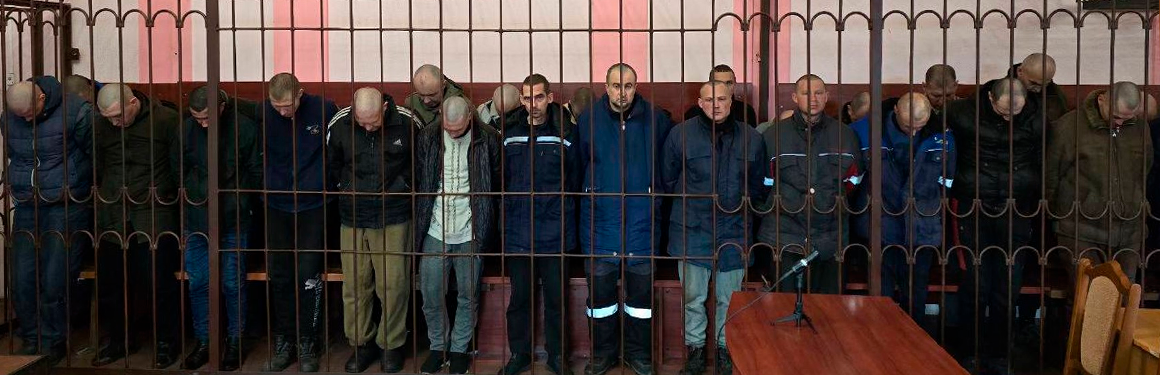
Ukrainian civilians‑including local administrators, teachers, aid volunteers, and journalists‑are increasingly charged under anti‑terrorism legislation for refusing cooperation with occupying forces or supporting Ukrainian sovereignty. Between 2022 and 2024, 38% of recorded cases against Ukrainian civilians detained in the conflict and more than 12% of cases against POWs involved terrorism‑related charges. Former military or law enforcement personnel face fabricated charges of belonging to “terrorist groups,“ often without access to legal counsel or basic due process. The UN Special Rapporteur describes the use of counter‑terrorism legislation against civilians as “deliberate, widespread, and systematic,” emphasizing that cases often lack any allegation of violent conduct or genuine threat.
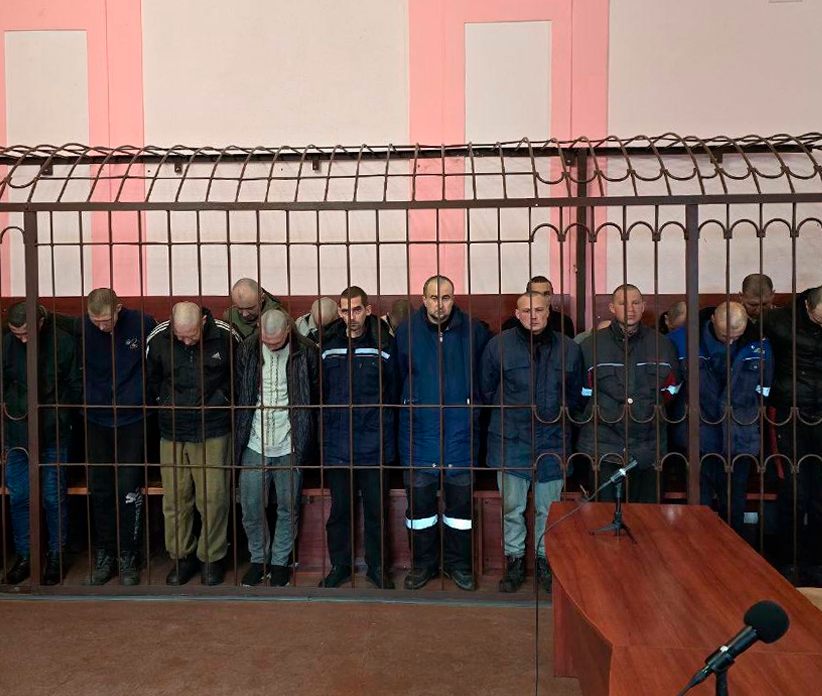
Russia has reclassified entire Ukrainian military formations as “terrorist organizations.“ In closed proceedings between 2022 and 2024, the Supreme Court designated units including the Azov Brigade as terrorist organizations. As a result, POWs are treated as “terrorists” rather than combatants deserving of the protections laid out in the Geneva Conventions and international law. Trials are held in military courts, typically closed to the public, with minimal transparency and restricted legal representation.
Detainees are subjected to severe torture and mistreatment. OHCHR reports that over 92% of interviewed civilian detainees experienced torture or ill‑treatment. Physical abuse includes beatings, electric shocks, stress positions, and threats of execution. Psychological pressure‑threats to family members, constant interrogations, and solitary confinement‑is systematic. POWs report being forced to sing the Russian anthem and eat food laced with chemicals. Civilians are detained without warrants at home, checkpoints, filtration stations, or on the street, held incommunicado in unofficial facilities, and tortured into confessions.
Ukrainian civilians‑including local administrators, teachers, aid volunteers, and journalists‑are increasingly charged under anti‑terrorism legislation for refusing cooperation with occupying forces or supporting Ukrainian sovereignty. Between 2022 and 2024, 38% of recorded cases against Ukrainian civilians detained in the conflict and more than 12% of cases against POWs involved terrorism‑related charges. Former military or law enforcement personnel face fabricated charges of belonging to “terrorist groups,“ often without access to legal counsel or basic due process. The UN Special Rapporteur describes the use of counter‑terrorism legislation against civilians as “deliberate, widespread, and systematic,” emphasizing that cases often lack any allegation of violent conduct or genuine threat.
Russia has reclassified entire Ukrainian military formations as “terrorist organizations.” In closed proceedings between 2022 and 2024, the Supreme Court designated units including the Azov Brigade as terrorist organizations. As a result, POWs are treated as “terrorists” rather than combatants deserving of the protections laid out in the Geneva Conventions and international law. Trials are held in military courts, typically closed to the public, with minimal transparency and restricted legal representation.
Detainees are subjected to severe torture and mistreatment. OHCHR reports that over 92% of interviewed civilian detainees experienced torture or ill‑treatment. Physical abuse includes beatings, electric shocks, stress positions, and threats of execution. Psychological pressure‑threats to family members, constant interrogations, and solitary confinement‑is systematic. POWs report being forced to sing the Russian anthem and eat food laced with chemicals. Civilians are detained without warrants at home, checkpoints, filtration stations, or on the street, held incommunicado in unofficial facilities, and tortured into confessions.
Recent cases documented by FRF illustrate the continuation of these illegal practices and their profound, inhumane impact on civilians and POWs.
Following a 2022 car bombing in an occupied village, Oleh A. (Civilian 1) and four other civilians were charged with “committing a terrorist act by prior conspiracy” under Article 205. Civilian 1 was held incommunicado for months. Despite the absence of evidence linking him to the crime, a court extended his detention in January 2024 without legal counsel. As the trial is ongoing, he remains in detention in extremely poor condition, having lost a significant amount of weight.
In another case, Ivan B. (POW 1), a member of the Aidar assault battalion of the Ukrainian Ground Forces, was captured in November 2024. Despite being a combatant entitled to POW protections, he was denied POW status, was charged under Article 205.4, and tried in court. In June 2025, he was convicted and sentenced to 13 years in prison. These cases are not isolated; the entire process — from arrest to sentencing — is engineered to ensure convictions, intimidate civilian populations, and discourage dissent.
Recent cases documented by FRF illustrate the continuation of these illegal practices and their profound, inhumane impact on civilians and POWs.
Following a 2022 car bombing in an occupied village, Oleh A. (Civilian 1) and four other civilians were charged with “committing a terrorist act by prior conspiracy” under Article 205. Civilian 1 was held incommunicado for months. Despite the absence of evidence linking him to the crime, a court extended his detention in January 2024 without legal counsel. As the trial is ongoing, he remains in detention in extremely poor condition, having lost a significant amount of weight.
In another case, Ivan B. (POW 1), a member of the Aidar assault battalion of the Ukrainian Ground Forces, was captured in November 2024. Despite being a combatant entitled to POW protections, he was denied POW status, was charged under Article 205.4, and tried in court. In June 2025, he was convicted and sentenced to 13 years in prison. These cases are not isolated; the entire process — from arrest to sentencing — is engineered to ensure convictions, intimidate civilian populations, and discourage dissent.
In 2003, the Security Council mandated that counter‑terrorism measures must “comply with all their obligations under international law, and should adopt such measures in accordance with international law, in particular international human rights, refugee, and humanitarian law.“ While states may limit certain rights to address terrorism, they must ensure legal certainty, in line with international law. Laws must be clear, precise and not open to arbitrary interpretation.
Because there is no universally agreed‑upon definition of “terrorism” in international law, states have considerable discretion in crafting domestic legislation. This discretion, however, creates vulnerability: vague or overbroad definitions allow for both unintentional human rights violations and deliberate misuse of counter‑terrorism laws to suppress legitimate dissent and political opposition. Russia’s anti‑terrorism laws violate legal certainty due to their vague and overbroad definition of “extremist activity,” which can encompass peaceful dissent or criticism. As a result, Ukrainian civilians and POWs are arbitrarily prosecuted for conduct protected under international humanitarian law, such as political expression, association, and other civic activities
Under the Geneva Conventions (GC), GC IV protects civilians in occupied territories and prohibits penal laws designed to suppress legitimate civic activity or deprive protected persons of Convention rights. GC III provides POWs with combatant immunity from prosecution for lawful acts of war. Russia’s reclassification of Ukrainian military units as “terrorist organizations,“ and subsequent prosecution of POWs under domestic terrorism statutes constitutes a clear violation of these obligations.
Russia is also in breach of its obligations under the International Covenant on Civil and Political Rights (ICCPR) and the Convention against Torture (CAT). Articles 19 and 22 of the ICCPR protect freedom of expression and association, while Article 7 and Article 2 of CAT prohibit torture without exception. States must ensure that terrorism‑related offences‑whether framed as “justification,“ “glorification,” or “extremist activity”‑are not used as pretexts to silence political opposition or criminalize identity‑based expression.
In 2003, the Security Council mandated that counter‑terrorism measures must “comply with all their obligations under international law, and should adopt such measures in accordance with international law, in particular international human rights, refugee, and humanitarian law.” While states may limit certain rights to address terrorism, they must ensure legal certainty, in line with international law. Laws must be clear, precise and not open to arbitrary interpretation.
Because there is no universally agreed‑upon definition of “terrorism” in international law, states have considerable discretion in crafting domestic legislation. This discretion, however, creates vulnerability: vague or overbroad definitions allow for both unintentional human rights violations and deliberate misuse of counter‑terrorism laws to suppress legitimate dissent and political opposition. Russia’s anti‑terrorism laws violate legal certainty due to their vague and overbroad definition of “extremist activity,“ which can encompass peaceful dissent or criticism. As a result, Ukrainian civilians and POWs are arbitrarily prosecuted for conduct protected under international humanitarian law, such as political expression, association, and other civic activities
Under the Geneva Conventions (GC), GC IV protects civilians in occupied territories and prohibits penal laws designed to suppress legitimate civic activity or deprive protected persons of Convention rights. GC III provides POWs with combatant immunity from prosecution for lawful acts of war. Russia’s reclassification of Ukrainian military units as “terrorist organizations,” and subsequent prosecution of POWs under domestic terrorism statutes constitutes a clear violation of these obligations.
Russia is also in breach of its obligations under the International Covenant on Civil and Political Rights (ICCPR) and the Convention against Torture (CAT). Articles 19 and 22 of the ICCPR protect freedom of expression and association, while Article 7 and Article 2 of CAT prohibit torture without exception. States must ensure that terrorism‑related offences‑whether framed as “justification,“ “glorification,” or “extremist activity”‑are not used as pretexts to silence political opposition or criminalize identity‑based expression.
To the Russian Federation, we demand:
To the Russian Federation, we demand:
To the international community:
To the international community:
Through the systematic abuse of anti‑terrorism legislation, Russian authorities have weaponized counter‑terrorism laws as an instrument of occupation and repression used to delegitimize Ukrainian identity, criminalize resistance to occupation, and terrorize civilian populations into submission. By prosecuting Ukrainian civilians for legitimate acts of wartime resistance, expressions of national identity, and support for their own armed forces‑while simultaneously designating Ukrainian military units as “terrorist organizations”‑Russia attempts to criminalize Ukrainian statehood itself. This practice violates international law, erodes core protections for civilians and POWs, and serves as a legal facade for Russia’s ongoing war of aggression.
Russia’s manipulation of counter‑terrorism law threatens not only Ukrainians but the integrity of the global security and human rights framework by blurring the line between lawful combat, political expression, and “terrorism.“ If unchallenged, this precedent invites wider authoritarian abuse, eroding the Geneva Conventions and weakening international protections meant to prevent precisely this kind of state‑engineered repression.
To prevent further abuses and uphold the protections guaranteed under international law, the international community must respond with coordinated pressure, sustained accountability efforts, and unwavering support for the civilians, POWs, and defenders targeted by these practices.
Free Russia Foundation will continue to document violations, support victims and their families, and advocate for accountability across international mechanisms to ensure these abuses do not go unanswered.
A significant portion of the findings in this brief draws on disappearance data and case materials provided by FRF’s humanitarian initiative Poshuk. Polon, whose documentation has been essential in uncovering the scale and pattern of these abuses.
Through the systematic abuse of anti‑terrorism legislation, Russian authorities have weaponized counter‑terrorism laws as an instrument of occupation and repression used to delegitimize Ukrainian identity, criminalize resistance to occupation, and terrorize civilian populations into submission. By prosecuting Ukrainian civilians for legitimate acts of wartime resistance, expressions of national identity, and support for their own armed forces‑while simultaneously designating Ukrainian military units as “terrorist organizations”‑Russia attempts to criminalize Ukrainian statehood itself. This practice violates international law, erodes core protections for civilians and POWs, and serves as a legal facade for Russia’s ongoing war of aggression.
Russia’s manipulation of counter‑terrorism law threatens not only Ukrainians but the integrity of the global security and human rights framework by blurring the line between lawful combat, political expression, and “terrorism.” If unchallenged, this precedent invites wider authoritarian abuse, eroding the Geneva Conventions and weakening international protections meant to prevent precisely this kind of state‑engineered repression.
To prevent further abuses and uphold the protections guaranteed under international law, the international community must respond with coordinated pressure, sustained accountability efforts, and unwavering support for the civilians, POWs, and defenders targeted by these practices.
Free Russia Foundation will continue to document violations, support victims and their families, and advocate for accountability across international mechanisms to ensure these abuses do not go unanswered.
A significant portion of the findings in this brief draws on disappearance data and case materials provided by FRF’s humanitarian initiative Poshuk. Polon, whose documentation has been essential in uncovering the scale and pattern of these abuses.
Updates for 2024–2025
By Free Russia Foundation
October 08, 2025
 Interview
 Vladimir Zhbankov on the fate of kidnapped Ukrainian citizens
By Vladimir Zhbankov
September 30, 2025
 Article
 “Poshuk. Polon”: The fate of tens of thousands of military and civilian Ukrainians remains unknown
By Vladimir Zhbankov
November 19, 2024
Updates for 2024–2025
By Free Russia Foundation
October 08, 2025
Interview Vladimir Zhbankov on the fate of kidnapped Ukrainian citizens
By Vladimir Zhbankov
September 30, 2025
Article “Poshuk. Polon”: The fate of tens of thousands of military and civilian Ukrainians remains unknown
By Vladimir Zhbankov
November 19, 2024