Executive Summary
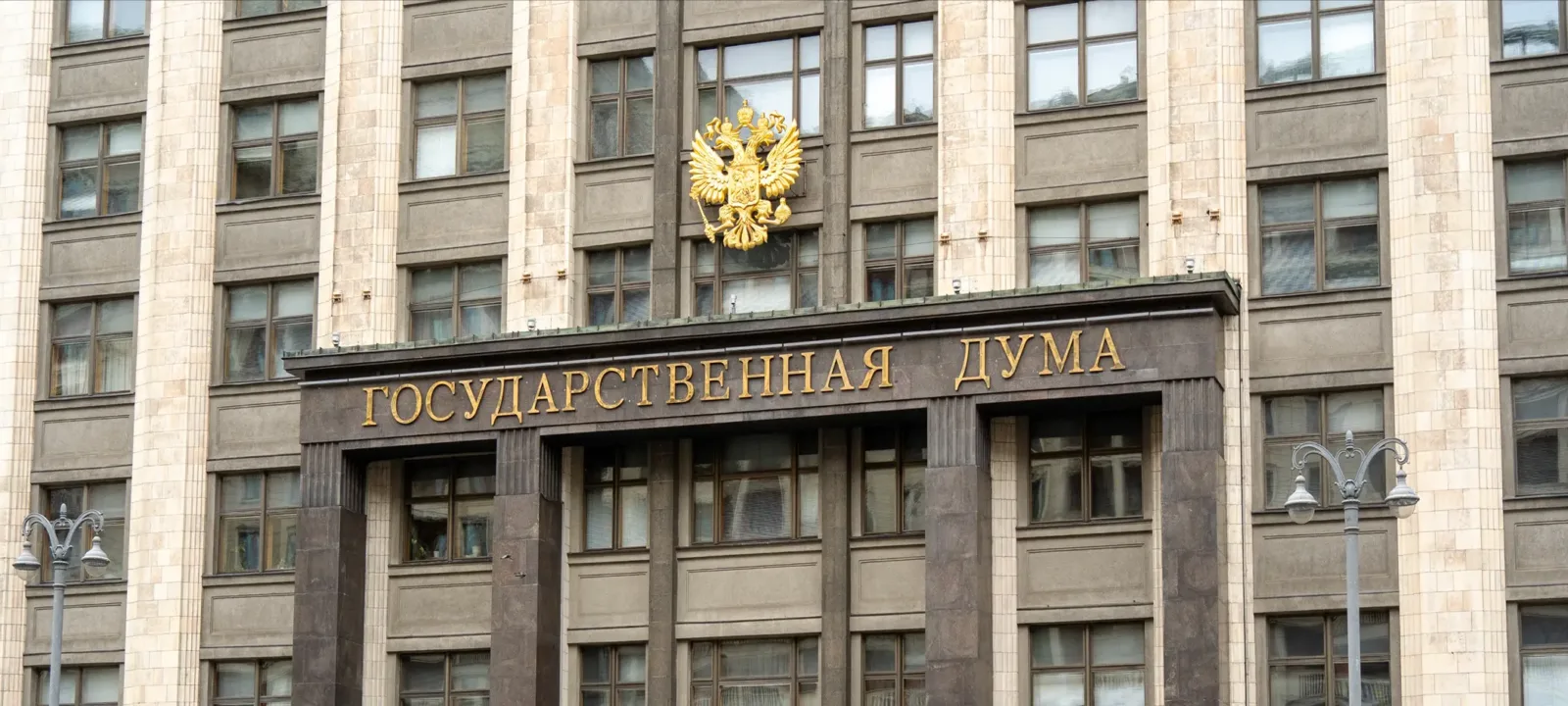
Russia has officially entered the campaign period for the 2026 elections to the State Duma, the lower house of the federal parliament. Voting will take place on September 18–20 and will mark the country’s first parliamentary election since Russia launched its full-scale invasion of Ukraine in February 2022.
The outcome of the election appears largely predetermined amid an unprecedented crackdown that has affected even officially registered opposition politicians. The ruling United Russia party is expected to secure another constitutional majority. Yet the campaign’s significance lies not in its expected outcome but in three broader political processes unfolding behind it.
First, the authorities are reshaping Russia’s political system to reflect new domestic political realities and a changing balance of power within the elite. Second, the Kremlin is attempting to integrate veterans of the war against Ukraine into civilian politics while maintaining full control over the future composition of parliament. Third, there are growing signs that the political system is coming under increasing strain as public support for the authorities declines amid the mounting economic costs of the war.
For the Kremlin, the primary objective is to ensure that loyal voters turn out while keeping the electoral process as tightly controlled as possible. Yet this seemingly low-profile parliamentary campaign may ultimately prove to be one of the most consequential of Vladimir Putin’s rule. If a transfer of power is eventually carried out within the existing legal framework, the State Duma is likely to become the key institution through which it is formalized.
Initial Balance Between Public Support and Parliamentary Representation
United Russia currently controls 324 of the State Duma’s 450 seats (72%). Yet according to the independent Levada Center, the party’s public approval rating ahead of the 2021 parliamentary election stood at only about 30%. Nevertheless, the official election results credited the party with 49.82% of the proportional-list vote.
This discrepancy can largely be explained by two mechanisms.
The first was electoral fraud. Electoral analyst Sergey Shpilkin, who examined statistical anomalies in turnout across polling stations, estimated that United Russia’s actual level of support was approximately 31–33%. He concluded that roughly 13.8 million votes belonged to the statistically anomalous portion of the vote count. According to his calculations, the Communist Party (CPRF) likely received 25–27% of the vote rather than its officially reported 18.93%.
The second mechanism stems from Russia’s single-member district system, where a simple plurality is sufficient to win a seat. Given a fragmented opposition and extensive administrative pressure on voters, United Russia candidates frequently secured victories with only 30–35% of the vote. As a result, the party captured 198 of the 225 single-member districts.
Following the launch of the full-scale invasion of Ukraine, support for the ruling party temporarily increased to around 40%. In every election held after the outbreak of the war, United Russia outperformed its pre-war results. By 2026, however, this so-called rally-around-the-flag effect had largely dissipated. According to the state-owned polling agency VCIOM, the party’s approval rating had fallen to 25% by April 2026.
Against the backdrop of declining approval ratings for both the government and Vladimir Putin personally, VCIOM revised its polling methodology. Following the methodological change, published approval ratings rebounded to approximately 30%, only to resume their decline by June. It was under these circumstances that United Russia’s party congress, for the first time since 2007, explicitly emphasized that the organization remained “Putin’s party,” despite concerns that the party’s declining popularity could negatively affect the president’s own approval ratings.
The Perfect Storm: The Context of the 2026 Campaign
Ahead of elections, Russian authorities have traditionally sought to boost public loyalty through social spending, introducing new benefits, indexing wages and pensions, and expanding state support programs. This campaign, however, is unfolding against the backdrop of several simultaneous crises. None of these developments individually threatens the Kremlin’s ability to deliver its preferred electoral outcome. Taken together, however, they have created the most challenging political environment Russia has faced since launching its full-scale invasion of Ukraine.
The economy has become the principal source of public dissatisfaction. During the first years of the war, the authorities attempted to offset its economic costs through increased government spending. Today, however, the state is increasingly shifting those costs on to ordinary citizens by raising taxes, excise duties, and other mandatory payments.
The resources of Russia’s National Wealth Fund have been largely depleted. Inflation remains elevated, and although the Central Bank has gradually lowered its key interest rate, it continues to keep it at around 14% in an effort to contain price growth. As a result, borrowing costs for businesses remain prohibitively high.
Rising tax burdens and tightening credit triggered a wave of business closures beginning in late 2025. For the first time in three years, Russians’ real incomes declined. Public-sector employees and pensioners remain the core electorate of the ruling party. Yet their incomes are increasingly unable to keep pace with inflation, while delays in social benefit payments have been reported in some regions. According to a January 2026 survey by the Russian Field polling project, 61% of Russians believed the new year would be more difficult than the previous one, while only 19% expected conditions to improve.
Repression Targeting the Elite
In 2025, the number of arrests of senior government officials increased fourfold compared with the prewar period and by 30% compared with 2024. The value of assets seized from defendants in these cases tripled compared with the previous year. Before the war, however, asset confiscation–as well as the prosecution of family members or representatives of the same political and economic clan–was the exception rather than the rule.
The 2025 report Transition Without a Successor by the NEST analytical center argues that Vladimir Putin has been systematically weakening established elite groups while redistributing influence to individuals personally loyal to him. At the same time, Russia’s security services have become increasingly autonomous, coordinating arrests with the Presidential Administration less frequently than before. As a result, whereas a parliamentary seat was once widely viewed as protection against criminal prosecution, public office can now instead attract additional scrutiny from law enforcement agencies toward its holder’s assets. Consequently, many business elites have lost interest in parliamentary positions, and a significant number of Russia’s wealthiest legislators chose not to seek reelection.
Disappointment with the Ukraine Negotiations
Donald Trump’s return to the U.S. presidency raised hopes among part of Russian society that relations with the West could normalize, and the war might come to an end. These expectations were encouraged by the Russian authorities themselves. However, the fighting has continued. Moreover, Russia’s invasion of Ukraine–which official propaganda regularly compares to the Great Patriotic War (Russian traditional naming for the Second World War)–has now lasted longer than the Great Patriotic War itself, reinforcing public perceptions of a protracted conflict and deepening war fatigue.
Communication Blackouts
Since 2025, the Kremlin has steadily expanded restrictions on WhatsApp and Telegram, Russia’s two most widely used messaging platforms for communication, work, and access to information. At the same time, residents across multiple regions have faced recurring mobile internet shutdowns, which authorities justify as necessary security measures to protect against Ukrainian drone attacks.
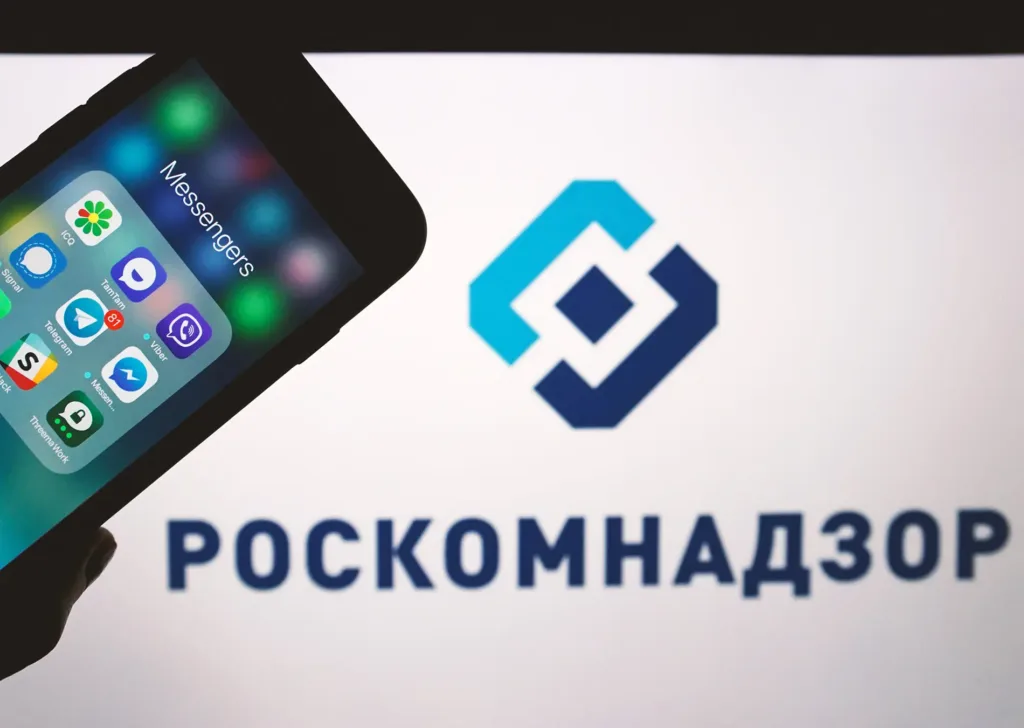
These disruptions have become an additional source of hardship as government and commercial services increasingly move online, complicating both everyday life and business operations. At the same time, the authorities are cutting themselves off from their own established channels of communication with the public. Efforts to push citizens toward the state-backed messaging app Max, which continues to suffer from technical instability, have generated more frustration than support.
The War as a Politically Untouchable Issue
Despite occupying a central place in the state’s official agenda, the war remains a politically toxic issue for electoral candidates. Public criticism of the military leadership or the conduct of military operations is punishable under criminal law. At the same time, support for the war is not, by itself, a meaningful electoral advantage. Nevertheless, virtually all parliamentary parties have felt compelled to include veterans or participants in the war among their candidates.
Why Authoritarian Regimes Hold Elections
For a quarter of a century, Putin’s political system has continued to hold regular elections. Political scientists Jennifer Gandhi and Adam Przeworski examined why authoritarian regimes preserve this institution in their comparative study.
Co-opting Elites
A parliamentary seat provides a degree of immunity, access to the legislative process, and a legitimate platform for advancing political and economic interests. By incorporating not only committed loyalists but also representatives of business, regional elites, the military, and other influential constituencies into the political system, the regime reduces the likelihood that these groups will unite in opposition to the government.
Gathering Public Information
Election campaigns also serve as a mechanism for collecting information about citizens’ concerns and attitudes. In effect, the regime receives structured feedback on the country’s most pressing problems, both nationwide and at the regional level. Political scientist and Free Russia Foundation expert Vsevolod Chernozub describes elections as “something like a tire tread indicator, allowing the authorities to judge whether something needs to be changed before the system suddenly veers off the road at the next sharp turn.”
Managing Elite Conflicts
Elections also perform functions of both domestic and international power legitimation, although their importance for the Kremlin has declined significantly since the start of the full-scale war. At the same time, competition for seats in the State Duma remains a legal mechanism through which rival Kremlin factions, regional elites, and security agencies compete with one another while keeping their conflicts within institutional boundaries. Single-member districts, in particular, continue to serve as an important bargaining tool in negotiations between the federal center and the regions, as well as between the ruling party and the systemic opposition.
The State Duma as a Reflection of Elite Power Balances
The institutional relationship between the State Duma and the government remains highly asymmetrical. Members of parliament introduced roughly half of all bills during the current convocation, while the government accounted for only about 22%. The distribution of enacted legislation, however, tells a different story. Nearly 97% of government-sponsored bills were adopted, making up approximately half of all laws enacted during the current term. By contrast, only about 27% of bills introduced by deputies ultimately became law.
Nevertheless, a substantial share of parliamentary initiatives reflects the interests of specific elite constituencies. Duma Bingo, a Transparency International project that tracks corporate lobbying in the State Duma, identifies several enduring centers of influence, including the security services,
state-owned corporations (such as Gazprom, Russian Railways, and Rostec), the construction sector, and the pharmaceutical industry. In 2024 alone, contractors working with Russian Railways donated approximately 22 billion rubles (roughly $240 million at the exchange rate at the time) to the ruling party, United Russia.
The composition of the State Duma therefore reflects the current balance of elite bargaining. It provides insight into which groups have secured privileged access to budgetary resources and regulatory leverage for the next five years. Although parliament’s influence over the formation of the state budget has gradually diminished, the State Duma will remain the institution through which all major legislative changes—including any legal framework for a future transfer of power—must pass.
Political Parties and Candidate Nomination
Seventeen political parties are eligible to participate in the current election. Of these, eleven are exempt from the requirement to collect 200,000 voter signatures–a decline from fourteen parties that enjoyed this privilege ahead of the 2021 election. At the same time, campaign budgets have continued to shrink. Large corporate donors have been steadily reducing political spending for several years, and this trend accelerated significantly after the start of the full-scale war. As a result, the political landscape has effectively narrowed to a handful of parliamentary parties and a limited number of smaller political projects whose survival largely depends on their relationship with the Presidential Administration. United Russia’s principal competitors enter the campaign in markedly different conditions.
Communist Party (KPRF): Fighting to Retain Second Place
The Communist Party enters the campaign in the most difficult position in its history. Its strong performance in the 2021 election resulted from a combination of factors. Backed by Alexei Navalny’s Smart Voting strategy and benefiting from rising protest sentiment, the party succeeded in attracting a substantial share of urban protest voters while retaining its traditional electoral base. According to polling by the state-run VTsIOM, support for the KPRF increased from 11% to 20% over the course of 2021. Based on the previously cited estimates of election analyst Sergey Shpilkin, while the official result was 18.9%, the party may in fact have received between 25% and 27% of the vote, which is a level comparable to support for United Russia. That coalition collapsed after the outbreak of the
full-scale invasion. The Communist Party leadership unequivocally backed the Kremlin’s actions, alienating part of its urban protest electorate. At the same time, the federal authorities appropriated many of the party’s traditional policy positions, including progressive taxation, revisiting the results of privatization, nationalization, and hardline foreign policy rhetoric.
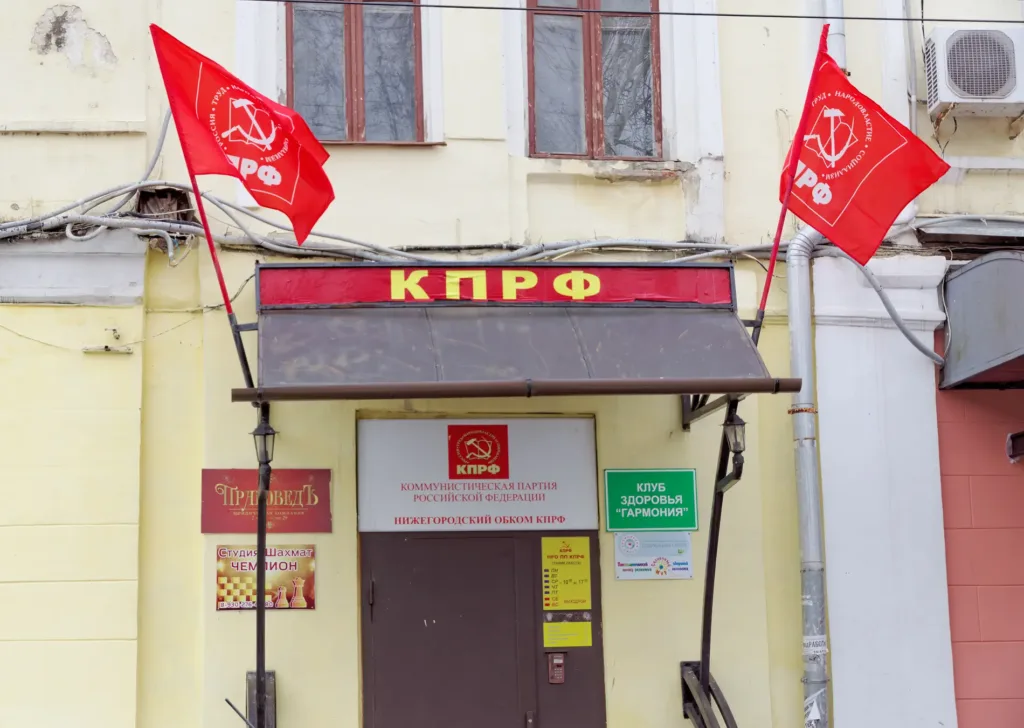
The party’s internal crisis has been accompanied by purges in regional branches and increasing pressure on its politicians. In the Altai region, for example, criminal cases were opened against eleven Communist Party activists and legislators, including the deputy speaker of the regional parliament. In the 2026 election, the party is attempting to win back protest-minded voters by criticizing rising prices, social inequality, communication restrictions, and internet shutdowns. Nevertheless, for the first time since 1993, the KPRF risks losing its status as Russia’s second-largest political force, potentially yielding that position to a political project fully controlled by the Kremlin.
Liberal Democratic Party (LDPR): A Loyal Party with a Protest Electorate
The Liberal Democratic Party remains one of the most unusual parties in Russia’s political system. On the one hand, the Presidential Administration views it as the most likely candidate to secure second place. On the other hand, following the death of Vladimir Zhirinovsky, the party has entered a prolonged leadership and organizational crisis. Leonid Slutsky lacks both the political stature and personal charisma of his predecessor. Meanwhile, the new leadership has launched a sweeping internal restructuring that has displaced much of the party’s old elite and weakened its regional organizations. Following the arrest of Governor Sergey Furgal, the party lost much of its influence in the Khabarovsk region and failed to maintain its position in several other regions. At the same time, the LDPR remains the most loyal parliamentary party: its deputies support government initiatives even more consistently than members of United Russia. The party’s electoral base is concentrated primarily in Russia’s northern regions, Siberia, and the Far East, where anti-Moscow sentiment has traditionally been stronger. Its typical voter lives in a small town or rural area—the very communities that have supplied a disproportionate number of participants in the war.
Historically, the LDPR’s electoral performance has been inversely correlated with that of United Russia, allowing it to function as a channel for managed protest voting.
New People: The Rapid Rise of a Moderate Party
New People is the youngest parliamentary party in Russia. It was founded in 2020 by Alexei Nechaev, owner of the cosmetics company Faberlic, Russia’s largest direct-sales cosmetics business, with annual revenue of roughly 30 billion rubles and an extensive nationwide distribution network. From the very beginning, the party’s organizational structure relied heavily on mobilizing the company’s employees and distributors. In an interview with The New York Times, Nechaev outlined what he described as the three unspoken rules for registering a political party in contemporary Russia: do not criticize Vladimir Putin or his inner circle, do not organize protest rallies, and do not receive foreign funding. According to VTsIOM polling, support for New People has nearly doubled since the spring of 2026 compared with the previous year, making it the second party with a 12% approval rating ahead of both the Communist Party and the LDPR. Polls conducted by the Public Opinion Foundation (FOM), however, paint a more modest picture, placing the party at 7–8%, or roughly third place.
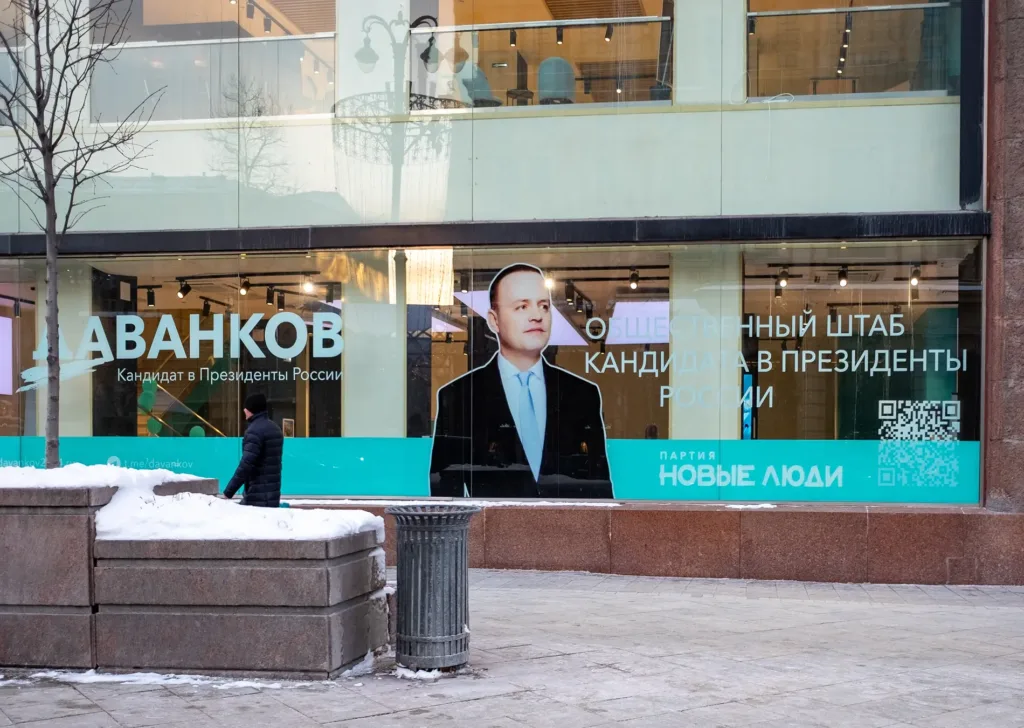
The party seeks to occupy the niche of legal urban protest politics by combining economically liberal policies with moderate patriotism. Its core electorate consists of younger voters and representatives of small and medium-sized businesses–groups that have been particularly frustrated by internet restrictions and the deteriorating economic situation.
Unlike the Communist Party or the LDPR, New People has faced relatively little administrative pressure or internal conflict. Its principal weakness remains its underdeveloped regional organizational network.
A Just Russia: On the Verge of Falling Out of Parliament
A Just Russia enters the campaign as the weakest of Russia’s five parliamentary parties. Founded in 2006 as a moderate left-wing alternative to the Communist Party, it merged in 2021 with Zakhar Prilepin’s party For Truth, briefly stabilizing its polling numbers and preserving its parliamentary representation. However, the party’s shift toward ultrapatriotic rhetoric only accelerated its decline. The close ties between parts of its leadership and Yevgeny Prigozhin and the Wagner Group transformed from a political asset into a liability after the 2023 mutiny, resulting in both reputational damage and personnel losses. One consequence was the near-complete replacement of the party’s leadership in St. Petersburg.
Shortly before the start of the current campaign, Yana Lantratova left the party, giving up her parliamentary seat to become Russia’s Human Rights Commissioner. A significant share of the party’s officials and donors has since migrated to New People. Whether A Just Russia remains represented in the State Duma will depend largely on whether the Presidential Administration chooses to preserve the current five-party configuration of the political system. One possible scenario would be allocating the party several guaranteed single-member districts.
Yabloko: An Unpopular Party of Peace
Support for Russia’s oldest democratic party remains at the level of statistical insignificance. At the same time, Yabloko remains the only registered political party in Russia that has consistently and publicly opposed the war. By the end of 2025, two of the party’s deputy chairpersons had become targets of criminal prosecution. Maksim Kruglov was sentenced to seven years in prison under Russia’s law against spreading “fakes about the military”, while Lev Shlosberg remains in pretrial detention on similar charges. Party chairman Nikolai Rybakov and former chairperson Emilia Slabunova were fined for “displaying extremist symbols,” automatically barring them from running for office for one year. Another ten party leaders are prohibited from standing for election because they have been designated as “foreign agents.”
Despite these setbacks, Yabloko continues to hold parliamentary factions in the regional legislatures of Karelia, Pskov region, and St. Petersburg. All three legislatures will be elected simultaneously with the State Duma in the fall of 2026. Losing these regional seats could deprive the party of its right to participate in the next federal election without first collecting voter signatures.
United Russia Primaries: Change Without Transformation
United Russia has held party primaries since 2011. However, their results are only advisory. In 2026, the preliminary vote was conducted entirely online for the first time, while the party’s final slate of candidates was approved at its congress on June 28. A total of 4,374 candidates registered to participate in the primaries. Of these, 56% were members of United Russia, 25% were party supporters, and 19% were unaffiliated. One in five participants (20%) was an incumbent legislator. Another 535 candidates (12.2%) were registered as veterans of the war in Ukraine. This category received a special advantage: their preliminary vote totals were automatically increased by 25%.
According to the Vedomosti outlet, United Russia’s final candidate list for the State Duma included 76 veterans of the war in Ukraine.
The primary results, however, do not reliably predict the future composition of the parliamentary faction. Even a candidate placed in a nominally unwinnable position on the party list may ultimately receive a parliamentary seat. Following the 2021 election, for example, United Russia won 126 proportional-representation seats, yet 82 candidates who initially received mandates later declined them. Their seats were subsequently transferred to lower-ranked candidates, including some who had originally occupied non-electable positions on the party list. Despite the turnover among individual candidates, the mechanism for forming the parliamentary faction remains unchanged. The primaries do not function as an independent candidate-selection process: final decisions continue to reflect the balance of interests within the ruling elite rather than the outcome of intraparty competition. Their principal significance lies not in renewing the party’s candidate roster but in revealing shifts in the internal balance of power. The primaries largely reflect personnel decisions initiated by the Presidential Administration.
Most notably, the gradual dismantling of former Defense Minister Sergey Shoigu’s political network has continued following his transfer to the Security Council and the series of corruption scandals that engulfed the Ministry of Defense. Several deputies associated with Shoigu are unlikely to return in the next State Duma. Among them is Andrey Kartapolov, chairman of the Duma Defense Committee, who did not seek renomination. The composition of regional candidate lists has also been shaped by gubernatorial turnover and local conflicts between the federal center and regional elites. New candidates have replaced long-standing representatives from Dagestan, Samara region, and the Altai Republic. In Chelyabinsk region, one of the State Duma’s wealthiest deputies, war veteran Oleg Kolesnikov, declined to run after a conflict with the regional governor.
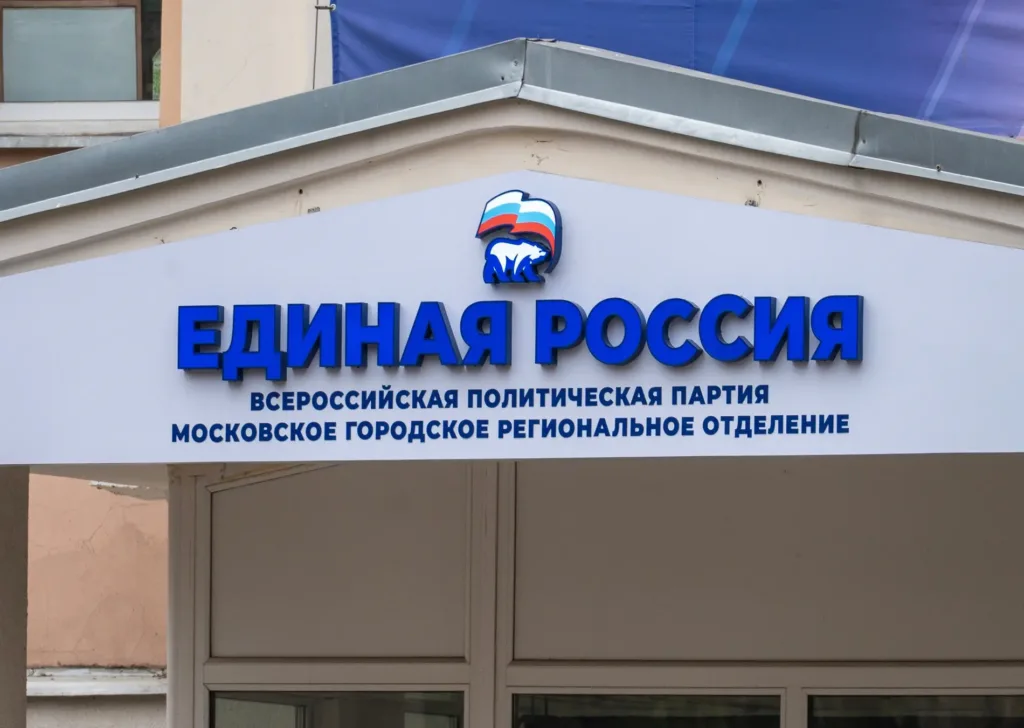
Another trend is evident across many regions: independent business figures are gradually being replaced by representatives of the state bureaucracy or executives from large state-owned and state-affiliated corporations.
In the Kaliningrad region, businessman Andrey Kolesnik has been replaced by Andrey Kozlov, a career Federal Security Service (FSB) officer and war veteran who was appointed an aide to the Secretary of the Security Council shortly before the campaign began. In the Kirov region, businessman Oleg Valenchuk has been replaced by Boris Vesnin, deputy CEO of the chemical company Uralchem. In the Irkutsk region, real estate developer Anton Krasnoshtanov has been replaced by Vadim Logunov, who is affiliated with the state-owned defense conglomerate Rostec.
In some cases, the underlying interest groups remain the same while only their representatives change. For example, Vitaly Bakhmetyev, the former CEO of the Magnitogorsk Iron and Steel Works, has been replaced by Vladimir Dremov, another longtime executive at the company. Likewise, Mikhail Romanov, who is associated with the Rotenberg business group, has been succeeded as the representative of Chelyabinsk’s metallurgical industry by Mikhail Rakhlin, the son of Vladimir Putin’s former judo coach.