

Under conditions of war and deepening authoritarianism, political loyalty acquires practical significance. While citizens formally retain the same legal status, the state can increasingly treat them differently in practice, depending on whether it regards them as loyal, trustworthy, or politically suspect. Such distinctions can emerge before they are written into law. They may first take shape in public rhetoric, where certain groups are morally condemned and then discussed as deserving different treatment by the state.
Russian rhetoric about citizens who left the country after the start of the full-scale invasion of Ukraine makes this process particularly visible.
The central question of this paper is: how does the moral condemnation of emigration become a language of politically acceptable unequal treatment and possible state coercion? In other words, how does suspicion of disloyalty begin to shape differences in trust, opportunities, rights, and potential sanctions among citizens who are formally equal?
To answer this question, the paper draws on a systematic content analysis of 1,225 Russian- and English-language publications that reflect Russian state rhetoric on emigration after February 2022 and its reproduction across the pro-government information space.
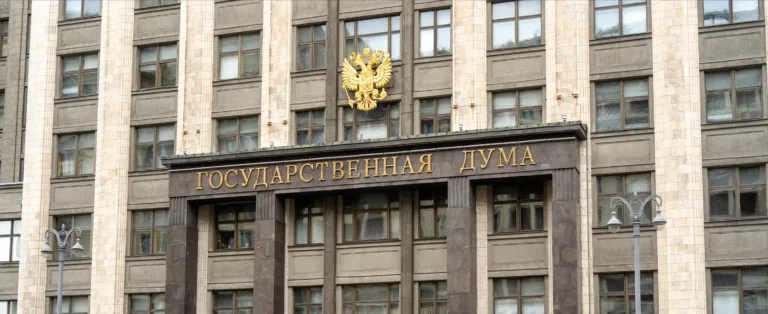
The paper focuses on the rhetoric of Vyacheslav Volodin, Speaker of the State Duma of the Russian Federation. His statements make it possible to trace how the language of loyalty and betrayal becomes linked to differences in trust, opportunities, and potential sanctions for citizens who left the country, while also showing how this process unfolds at the intersection of public political discourse and parliamentary politics.
Through this case, the paper examines a broader process: how a moral judgment about departure gradually becomes a basis for differential treatment of citizens by the state. The analysis traces how this process developed after 2022 and what it reveals about the role of political loyalty in the relationship between the Russian state and its citizens.
A note on methodology
The analysis draws on an empirical study of Russian state and pro-government rhetoric about citizens who left the country after the start of the full-scale invasion of Ukraine. Conducted in June 2026, the study aimed to identify the main patterns in this rhetoric and trace how it changed over time.
The empirical basis of this study is a content analysis of open-source Russian- and English-language materials. The study covers publications from February 24, 2022, to June 17, 2026, the date on which source collection ended. The final analytical corpus contains 1,225 publications.
The corpus was built systematically in several stages. First, an automated search was conducted using a predefined set of Russian- and English-language queries through the Yandex Search API and Google/Serper.dev. The search strategy covered direct and indirect references to emigration, individual state actors, related political events, and different forms of public evaluation. This produced 21,800 search results. After URL normalization and the removal of technical duplicates, 10,289 unique potential sources remained.
All potential sources then underwent a substantive relevance review. The final corpus included publicly accessible materials connected to state or pro-government communication that contained a direct or clearly identifiable indirect reference to Russians who left after February 2022, together with a substantive evaluation or interpretation of that emigration. After screening, the analytical corpus comprised 1,225 sources.
Coding was based on the full texts of the publications. The unit of analysis was the individual source publication. This is important for interpreting the quantitative results: the corpus captures the content of Russian politicians’ statements and the scale of their reproduction in state and pro-government media.
The same statement could therefore appear in the corpus more than once if it was reproduced by different media outlets. Repeated publications show the scale at which a particular position circulated. Thus, 287 publications in which Vyacheslav Volodin is the principal actor do not mean 287 separate statements by Volodin.
Together, these materials capture both the content of state rhetoric and the scale of its circulation across the pro-government media environment.
Why Volodin?
In the assembled corpus, Vyacheslav Volodin is the most visible individual representative of the Russian authorities in rhetoric about those who left. He is the principal actor in 287 publications, or 23.4% of the entire dataset. This is more than twice the number of materials associated with Dmitry Peskov, the second most prominent individual speaker. Volodin is also visible in the small English-language segment of the corpus, where he is the principal actor in 19 of 58 materials.
Frequency is only part of the reason Volodin’s rhetoric is of particular interest. As Speaker of the State Duma, he participates both in publicly defining the boundaries of political loyalty and in discussing possible legislative measures. In his statements, moral judgments about emigration regularly sit alongside appeals to public opinion and proposals for concrete state action.
Volodin’s rhetoric is therefore especially revealing for analyzing the shift from moral condemnation of those who left to discussion of concrete forms of state intervention, including taxation, property measures, restrictions on professional access, conditions of return, and legal liability.
2022: Departure becomes a question of loyalty
In 2022, Volodin’s rhetoric primarily gave departure a moral meaning.
In July, he said that people who had gone to “warm countries” to wait out the crisis should understand that they were “traitors”. During mobilization, this contrast became even more explicit. In October, Volodin compared those who had left with residents of Ukrainian territories that Russia had declared annexed. The latter, he said, would not “run away” or “betray” Russia at a difficult moment.
Within this logic, the choice to stay or leave acquired political meaning. Remaining in the country was associated with loyalty and resilience, while departure became a possible sign of weakness or betrayal.

By the end of the year, this moral judgment was being linked to practical consequences. In December, Volodin proposed higher taxes for Russians living abroad who continued to work for Russian companies. He framed the proposal in terms of fairness, while also claiming that a significant part of society viewed those who had left as people who had betrayed the country and their families.
This marks an important shift: political loyalty begins to serve as an argument for differential treatment of citizens. If departure is framed as betrayal, the withdrawal of previous advantages can be presented as a fair consequence of a person’s choice.
2023: Punishment becomes a politically acceptable option
The largest absolute number of corpus publications in which Volodin is the principal actor falls in 2023—144 materials. The scale of their reproduction shows how prominent his rhetoric had become in the public agenda.
During this period, the range of consequences under discussion expands substantially.
In January 2023, Volodin proposed confiscating the property of people who had left Russia and publicly criticized the country, its authorities, or the armed forces. He justified the measure by pointing to the limited effectiveness of existing penalties against people abroad and presented confiscation as a way to compensate for the alleged harm.
After criticism of the proposal, Volodin clarified that it should not automatically apply to everyone who had left. He said it should target people who had broken the law or caused harm to the country.
This drew a line between different groups of emigrants while establishing a broader principle: actions or statements made outside Russia could become grounds for property-related consequences inside the country.
At the same time, the idea of conditional return begins to take shape. In June, Volodin said that the opportunity to return still existed, but might no longer exist tomorrow. Return is thus presented as an option whose terms are largely set by the state.
Later, Volodin also spoke of limited prospects for returnees to regain their former position, and of legal liability for people accused of helping Ukraine or acting against Russia.
An increasingly clear differentiation emerges. Some of those who left may be portrayed as people who made a mistake and can still return. Others are treated as politically unreliable and deserving of limited trust. A third group consists of people whose actions are presented as warranting legal punishment.
Different categories of those who left are therefore linked to different consequences. A form of political sorting emerges: some retain a path back, others face diminished trust, and a third group is promised punishment.
2024: Routinization rather than retreat?
Volodin’s presence in the corpus falls sharply in 2024: he is the principal actor in only seven publications, compared with 144 a year earlier. This decline alone is insufficient to conclude that the issue disappeared. The corpus records published materials and the extent of their media reproduction, so publication counts cannot be directly equated with a complete tally of every public statement made by each politician.
The broader corpus shows that in 2024 the form of state rhetoric about emigrants changes most noticeably. Neutral and technical language becomes more prominent, while the substance remains harsh. Foreign-agent logic, legal prosecution, and the language of legal status, liability, and procedural restrictions become more visible. Links between emigrants and an external enemy, as well as symbolic exclusion, also remain prominent elements of the discourse.
Emotional intensity declines while the substantive harshness remains. Ideas of disloyalty, foreign influence, and security threat are increasingly expressed through the language of law, administrative procedures, and concrete restrictions. What had previously appeared primarily as a political accusation or threat gradually takes on a more routine legal form.
Against this background, Volodin’s reduced personal visibility can be read as a possible sign of partial routinization of an agenda that had already taken shape. Ideas that had earlier appeared as sharp parliamentary proposals could increasingly move into legislative initiatives, the work of state institutions, and bureaucratic language.
This is an interpretive finding; the data do not in themselves establish a causal link. It is consistent with the broader pattern in the corpus: once the language of suspicion and restriction had become established in the public agenda, its continued reproduction could proceed without constant intervention by the same speaker.
Institutionalization can make political rhetoric less visible: yesterday’s threat can become tomorrow’s legal or administrative procedure.
2025: Political trust becomes conditional
In 2025, Volodin again occupies a prominent place in the corpus. He is the principal actor in 58 publications, representing 39.2% of all materials from that year—the highest annual share in the period studied.
Attention now shifts to those who return to Russia.
In August 2025, Volodin said that before hiring a “relokant,”1 an employer should remember that however talented the person might be, they had abandoned their parents and betrayed their homeland. At the same time, he supported restricting returnees’ access to civil service positions and jobs in state-controlled companies.
A significant shift occurs here. Previously, the harshest consequences were linked primarily to specific actions abroad—for example, support for Ukraine or public criticism of the Russian authorities. Now the fact of departure itself begins to be used as a consideration in assessing political and professional reliability.
Even after returning, while retaining citizenship and relevant professional qualifications, a person may still be regarded as insufficiently reliable for work in institutions connected to the state. The possible consequences of perceived disloyalty therefore extend beyond criminal prosecution or property sanctions: they may take the form of diminished trust, blocked career opportunities, and a lasting status as a politically suspect citizen.
2026: Return as a point of enforcement
The 2026 data extend only through June 17, so conclusions for the year remain provisional. Even so, Volodin is already the principal actor in 32 publications, or 29.4% of materials from this period.
In May 2026, he distinguished between Russians who had gone abroad for work or study and those accused of insulting Russian servicemen, harming the state, assisting “unfriendly countries,” or financing the Armed Forces of Ukraine. The latter, he said, would face trial upon returning.

This formulation preserves the differentiation established in previous years. For possible criminal prosecution, the key factors are actions taken after departure—public statements, political activity, financial activity, or foreign ties. Return to Russia becomes the point at which these grounds can acquire practical legal significance.
In 2023, being abroad was described as an obstacle to applying sanctions; by 2026, distance is treated as temporary. The state can wait for a person to return.
The border, in this logic, becomes a point of enforcement.
The sequence becomes increasingly clear: moral classification generates suspicion; suspicion legitimizes differential treatment; differential treatment opens space for restrictions; and restrictions gradually move into the sphere of possible or expected enforcement.
How Volodin’s rhetoric changed function
Taken together, the annual patterns point to a functional shift in Volodin’s rhetoric: over time, it moved from moral boundary-setting toward the normalization of concrete restrictions and enforcement mechanisms. In 2022, departure was associated with disloyalty and betrayal, while differential taxation was introduced as a question of fairness. In 2023, punitive options, including confiscation, legal liability, and restrictions on return, became an increasingly legitimate subject of parliamentary discussion. By 2024, these themes had become less dependent on Volodin’s personal visibility and more embedded in legal and administrative language. In 2025, suspicion of disloyalty extended more clearly into questions of professional trust and access to state-linked employment. By 2026, return itself was increasingly presented as a moment when earlier conduct abroad could acquire practical legal consequences.
How the mechanism works: Volodin between propaganda and policy
Taken together, the findings suggest a recurring sequence in the move from rhetoric toward possible state measures. First, departure is given a moral meaning and linked to disloyalty or betrayal. Next, differential treatment of those who left is publicly justified through the language of fairness and claimed public demand. Moral judgment is then translated into concrete proposals—higher taxes, confiscation, professional restrictions, or legal liability. Public discussion and repeated circulation make these measures an increasingly familiar part of the political agenda. Finally, some of these ideas begin to move into legal and administrative language and acquire institutional significance.
Three main mechanisms sustain this sequence.
- First—presenting restrictions as a matter of fairness. Proposed measures are framed as a deserved response to the behavior of those who left and as an expression of public demand. This gives tax, professional, and other restrictions a moral justification.
- Second—dividing emigrants into different categories. Volodin distinguishes several groups among those who left. His statements identify people who made a mistake or were frightened; those whom the state should not fully trust; and those linked to activity against Russia. This differentiation connects different groups to different consequences.
- Third—turning moral accusations into concrete policy proposals. Public proposals for tax restrictions, confiscation, professional bans, or criminal prosecution can precede possible legal codification. Discussion of these measures by the Speaker of the State Duma, followed by their reproduction across the information space, makes them a familiar part of political debate.
This sequence is what makes Volodin’s rhetoric a link between propaganda and policy: moral judgment becomes first an argument for restrictions, then a subject of political debate, and in some cases a language of administrative or legal action.
Why this matters
The significance of this case extends far beyond the Russian state’s treatment of citizens who left after February 2022. It reveals a broader feature of Russia’s wartime authoritarianism: a citizen’s legal status may remain unchanged while their practical position increasingly depends on how loyal and politically reliable the state considers them.
Within a formally unified category of citizenship, differences emerge in the degree of political trust extended to citizens. It matters whether a person stayed in the country, left and returned, publicly opposed the war, or is linked by the state to Ukraine or other actors it regards as hostile.
For policymakers and analysts, this case matters for another reason. Parliamentary rhetoric has political significance in its own right. Public statements by senior officials can bring new restrictions into political debate, help normalize them, and signal to state institutions, employers, media outlets, and law enforcement which measures are becoming politically acceptable. In this sense, such rhetoric can serve as a testing ground for future restrictions before they are fully codified in law.
The practical implication for analysts is that early signs of further policy tightening can already be found in public rhetoric: in recurring proposals by senior officials, the scale of their reproduction in pro-government media, and the gradual translation of these ideas into legal and administrative language.
Rhetoric about emigrants can serve as an early-warning indicator of how the Russian state may govern dissent, return, and the boundaries of political belonging. It can reveal new grounds for suspicion and unequal treatment before they are fully codified in law.
Conclusion
The analysis of Vyacheslav Volodin’s rhetoric provides a direct answer to the paper’s central question. Moral condemnation of emigration becomes a language of politically acceptable unequal treatment when perceived disloyalty becomes grounds for differences in trust, opportunities, and sanctions among citizens. In this case, the trajectory runs from accusations of betrayal to discussion of tax restrictions, property confiscation, professional bans, and legal liability.
The significance of Volodin’s rhetoric therefore extends beyond the specific case of emigrants who left Russia after 2022. It shows how political suspicion can gradually move from the realm of moral judgment into administrative and legal measures. This process unfolds in stages: moral judgment first gains public justification, then becomes concrete policy proposals, while repetition and discussion create the conditions for further institutionalization. The result is that restrictions and sanctions against citizens whom the state considers disloyal become an increasingly routine part of the political agenda.
This reflects a broader logic of Russia’s wartime authoritarianism, in which political reliability increasingly shapes how the state treats different groups of citizens. Post-2022 emigrants provide one especially visible example. The same principle can be extended to other groups that the Russian authorities come to regard as politically unreliable.
The question, then, concerns not only the fate of post-2022 emigrants, but also where the Russian state will draw the next boundary of political loyalty.