
According to the human rights organization, Viasna, there are currently at least 839 political prisoners in Belarus. Of them, 112 are women. Sasha Starost spoke with Yevgeniya Dolgaya, founder of the initiative Palitvyazynka, about prisoner exchanges, the differences between life in men’s and women’s penal colonies, how human rights defenders learn about political prisoners’ fates and living conditions, and what Soviet-style repressive practices look like in 2026.
What is your view on political prisoner exchanges? Do you believe there will be more exchanges in the future?
—When it comes to prisoner exchanges, the principle is simple: people come first. I remember that even before the first exchange involving Russian political prisoners in August 2024, many of us—including Tanya Khomich, Maria Kalesnikava’s sister, and other relatives of political prisoners at the time—kept discussing the need to do something, to save people rather than wait for something to happen on its own. By that time, we were already receiving very disturbing reports about what was happening to political prisoners. People were dying in prison colonies. When the Russians were exchanged, I thought: “Wow, it turns out anything is possible if it’s advocated for effectively and if all sides see it as beneficial.”
That was when the conversation about exchanges really began. In Belarusian society, it remains a painful topic. Repression is still ongoing, unfortunately. Of course, we should strive to end it completely; it’s horrifying that any of this is happening in the first place. People question whether it is humane to trade human beings as commodities. But you know, I speak with political prisoners all the time, and I see both how important the chance for freedom is and how profoundly it changes a person. And in today’s world, sadly, there are few people with the influence and democratic values needed to help them. We don’t have many levers of pressure or many options available. But people have to be saved regardless.
Back in 2023, prisoner exchanges seemed unimaginable. Most people assumed political prisoners would simply serve out their enormous sentences. But when opposition leaders and others began to be released, hope emerged. Now, those who remain imprisoned hold on to the belief that they, too, will one day be free. That is incredibly important—for the political prisoners themselves, for their families, for everyone. So yes, I believe and hope that the process of securing releases will continue.
Not every country is so fortunate. Take Azerbaijan, for example. There are political prisoners there as well, but they remain behind bars, and very few people know anything about them.
Viasna reports that there are 839 political prisoners in Belarus, including 112 women. How accurate is that figure?
—It is fairly close to reality. There have been major releases—250 people at one point, and more than 100 before that. People come out and tell human rights defenders who are still imprisoned where these people are. Human rights organizations then add those individuals to their databases.
For example, there was a woman named Olga Chukareva. The only things known about her were that she had worked as an accountant, was a mother, and had been detained. That was it. But when Marina Zolatava, the editor-in-chief of TUT.BY was released, she told us that Olga had suffered a stroke and lost her eyesight in prison.
So, human rights defenders may know virtually nothing about a person until a certain point, simply because nobody has told them? Why does that happen? Don’t relatives know where the person is and what has happened to them?
—Often, relatives remain silent out of fear, worried they might make things worse, or they simply do not know where to turn. There is the story of Anna Kondratenko, who was released in the summer of 2024 and died shortly afterward from cancer that had been diagnosed while she was still incarcerated. Anna’s only surviving relative was her elderly mother, who lived in a village and had no idea whom to contact. So we learned what had happened to Anna only thanks to people who had been released from prison.
There is a dark repression-related joke that in Russia, people are only watching the first season of a series that is already approaching its finale in Belarus. I really do see Russia adopting many of our repressive practices, including the extensive use of incommunicado detention. Before 2022, I had only seen it in Belarus.
There must be many uniquely female issues that people never think about until they end up behind bars. What do women political prisoners have to endure?
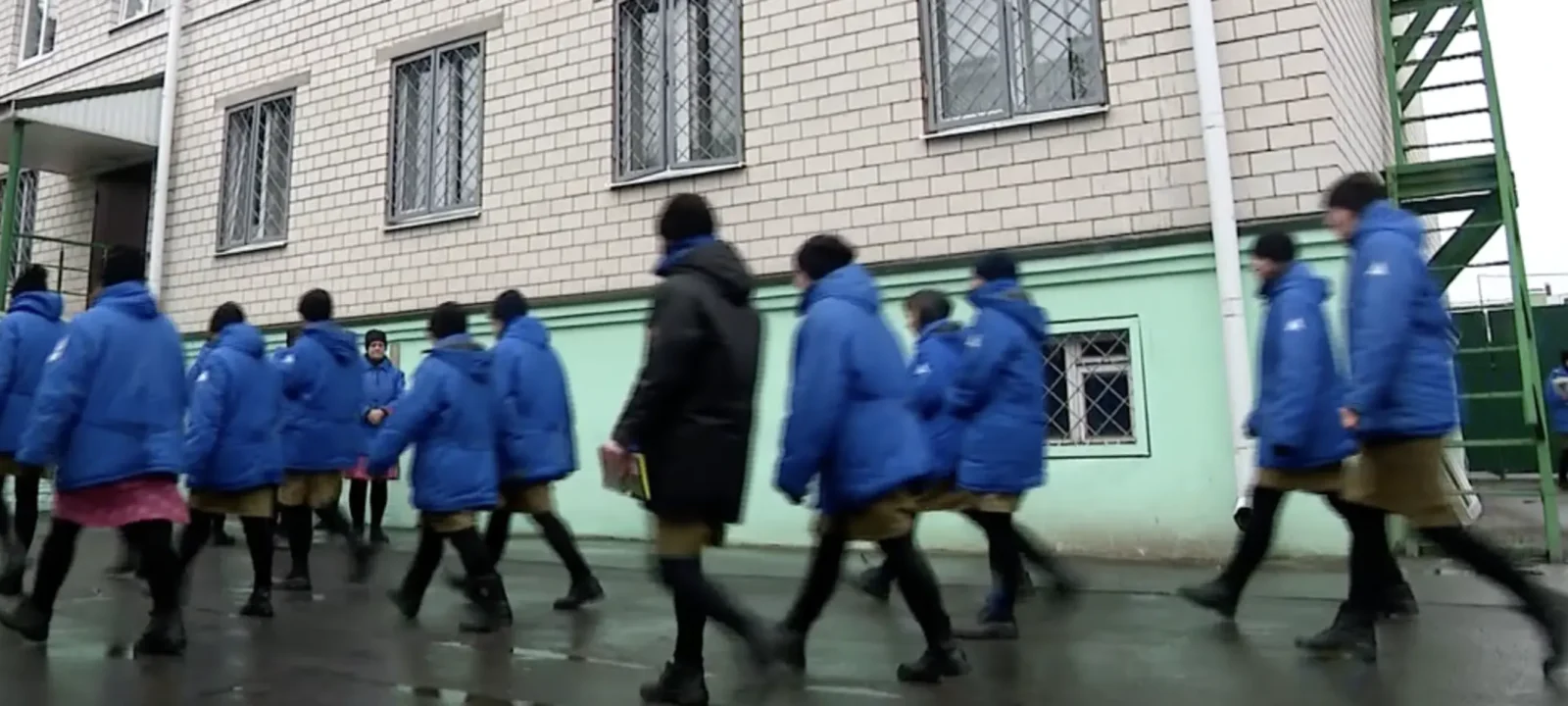
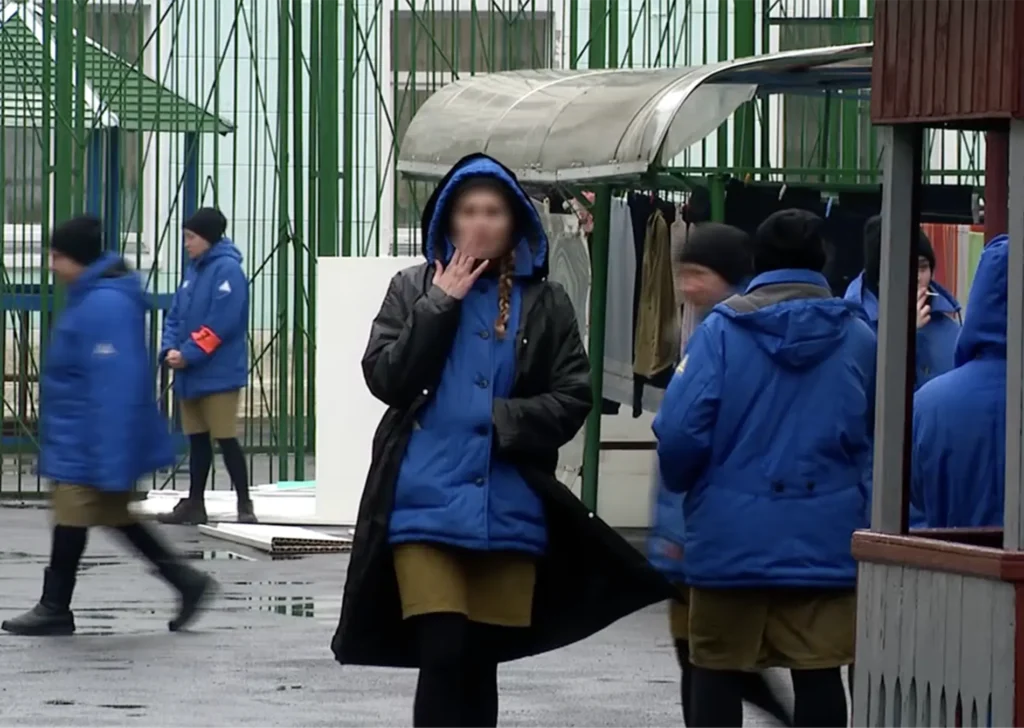
—The prison uniform that women are required to wear consists of a dress, blouse, jacket, and skirt—all made of thin fabric. There are no pants at all, even though our winters are still harsh. Special insulated bloomers are allowed to help keep out the cold, but they do little good. At the same time, women spend a great deal of time outdoors, including during winter. A penal colony is considered a secure facility, and there cannot be a single snowflake, raindrop, or puddle left on the grounds. So women are constantly clearing the territory even in snowstorms and severely freezing temperatures, while wearing their regular lightweight clothing.
Female hygiene products, such as sanitary pads, are a separate expense. People think ten pads do not take up much room or weigh very much. But ten pads mean one less jar of coffee, one less treat that a man might receive but a woman will not. A care package is limited to 30 kilograms. And women’s colonies also practice deprivation of care packages.
What can cause a prisoner to lose the right to receive a package?
—Sharing with another inmate. That is an internal prison rule.
If they see that you gave someone a cigarette or a sanitary pad, you may lose not only your package but also your visitation rights. In six years of working with political prisoners, I have never heard of anything similar in men’s colonies. On the contrary, I know of prisoners welcoming others back from solitary confinement, even throwing little parties, eating together, and celebrating. Of course, if prison authorities want to punish someone, they can always find a pretext. But as a formal rule, this exists only in women’s colonies.
Why specifically in women’s colonies?
—Because the system is designed to prevent prisoners from communicating, forming friendships, or helping one another. To achieve that, authorities pit them against each other and exploit jealousy, competition, and mutual resentment. The women’s colony in Belarus is a relic of Soviet prison rules—from absurd dress requirements to repressive practices.
What is the food situation like in women’s colonies?
—Overall, prison food is somewhat better now than it used to be, but it is still insufficient. It does not adequately sustain an adult woman engaged in hard physical labor.
All women except the elderly work in sewing factories that produce uniforms for law enforcement agencies. For this work, they earn next to nothing—at most 50 Belarusian rubles, or about $20 a month. Now imagine that because of some infraction, you lose access to a 30-kilogram care package and have to survive on $20 a month. You need to buy hygiene products, tea, cookies, and, if it happens to be available, cottage cheese, and calcium is badly needed.
Since we’re talking about nutrition and health, have you encountered cases involving pregnant prisoners?
—Let me tell you a wonderful story.
On December 13, Maria Kalesnikava, Viktar Babaryka, and more than 100 others were released. They were taken to Ukraine, and most were then brought to Poland, while a smaller group went to Lithuania. One young woman who had been released said she planned to move to Germany because she had an opportunity to get settled there. We helped her, hugged goodbye before Christmas, and parted ways.
Then, in March, I messaged her, asking: “Karina, how are you doing? Have you settled in? Do you need any help?” She replied: “I’m about to give birth.”
It turned out her husband had visited her for an extended family visit in October, and she became pregnant. Her periods stopped, but unfortunately, that is completely normal in prison because of stress, the overall environment, and constant exposure to cold. Karina asked for a pregnancy test and was told there were none available. Then she requested an ultrasound, and afterward, they told her everything was fine and her period would return soon. So she more or less let the matter go. Then, in Germany, she was checked again and told, “You’re due in June.”
Now we’re waiting for a baby boy who apparently decided he was not destined to be born in a prison colony in Gomel and would instead be born in Germany.
Let’s talk about living conditions in women’s colonies more generally. Are they better or worse than in men’s colonies?
—It seems to me that men are allowed more free time. In some colonies, they can play soccer or participate in competitions. Whenever I ask women about their daily lives, they are always working—at the sewing factory, outdoors, in the kitchen—constantly, without a break. At most, they may be sent to the local cultural center to watch a lecture delivered by other inmates. As a result, they live in a state of perpetual exhaustion.
Now, don’t get me wrong, the men who were released looked terrible as well—thin and depleted. But when they described their daily lives, I often got the impression that they had a little more air and space, so to speak, at least some free time. They were sent to solitary confinement, too, of course, but they still had opportunities to talk to each other and engage in activities other than work.
How difficult is it for a female political prisoner to fit into the colony hierarchy?
—It was especially hard for first-time offenders—the women arrested in 2020 and sent to prison colonies around 2021 and 2022. They were among the first political prisoners and, naturally, they bore the brunt of it. Inmates who cooperated with the administration made their lives miserable. They poured water into their beds and shoes. Honestly, all kinds of horrendous things happened.
It is somewhat better now because there are many more female political prisoners, and that has changed the overall atmosphere. They set an example and teach others. Maria Kalesnikava, for instance, managed to earn the respect of even the toughest inmates, according to many women who were imprisoned with her.
In the end, everything comes down to the human factor. At first, many ordinary inmates would say: “You’re going to ruin everything for us. Because of you, the administration will crack down on everyone.” But after some time, some of those same inmates began telling the administration: “Leave the political prisoners alone already.”
Of course, political prisoners are always under special scrutiny from prison authorities, and that affects their daily lives. For example, they are often the last to be allowed to call their families. Here is another difference between men’s and women’s colonies: women are given very little time for phone or video calls—sometimes as little as seven minutes. If a woman has three children, she may have to decide which child to talk to that day, even though all of them could easily fit in the video call window.
Incidentally, women often bring huge bags of food to men’s prisons and even marry incarcerated men. But in women’s colonies, family visitation rooms often sit empty–husbands leave.
How can activists, including Russian activists, help Belarusian political prisoners besides spreading information about them?
—A few years ago, I would have said: raise money, buy supplies, send assistance. But the situation has changed. Families are afraid to accept help or money from abroad—and in many cases, it is impossible anyway. We cannot send care packages ourselves; only relatives can do that.
So I do not really have anything new to say here. The most important thing remains spreading information. There are elderly women in prison who are in very poor condition. They need to be released. We need to advocate for them and lobby on their behalf. I used to think that sometimes it was better to stay quiet to avoid causing harm. But now there seems to be a window of opportunity as well as a point of contact, someone like Special Envoy Cole, who frequently visits Lukashenko and even hangs out with him during these visits; we absolutely need to use it.
In Belarus, it is actually easier to spread information about political prisoners, including those who are not public figures, and to learn about their situations. There is essentially one major women’s prison colony in the entire country (there is another, smaller one for habitual offenders). As a result, women who are released often know everyone and can provide information about people with whom all contact has been lost.
Our primary source of information is former political prisoners. They are also the ones who become involved in helping those who remain behind bars.
For example, Marfa Rabkova, a human rights defender sentenced to an astonishing sixteen years in prison, was released on March 19 and evacuated to Lithuania by the Americans. She immediately said she would advocate for all imprisoned women and spoke frequently about an elderly prisoner named Irina Melkher. Before that, all one could find online was Irina’s conviction and maybe a couple of photographs. Now we know much more about her situation.
After her release, Marina Zolatava wrote a detailed post about Natalia Levaya, who had also become pregnant during a family visit and was being held in appalling conditions in the Gomel colony, where temperatures at the time were reportedly around minus sixteen degrees Celsius. I do not know whether it was the post specifically or the publicity more generally, but Natalia was pardoned shortly afterward. A film was even made about her release from prison. Before that, we knew absolutely nothing about her. And if we know nothing, we cannot help.