Introduction
Since the beginning of its full-scale invasion of Ukraine in February 2022, Russia has devoted significant effort to expanding its military production base. Massive amounts of state financing have been allocated to military production industries, which have increased their output accordingly. Many observers began to speak of a new Russian model of economic and industrial development, driven by the country’s military industries—a “military economy.”
However, by the fall of 2026, signs had emerged that the Russian “military economy” was losing considerable momentum. Military output growth began to flatten, Russian authorities started to speak of a “military production plateau,” and extensive data on the severe financial difficulties of Russian military enterprises became available.
What is truly going on behind Russia’s “military economy” facade? This report seeks to answer that question in the most comprehensive way currently possible, bringing together various pieces of available data and assessments by Russian officials themselves. At its core, the report compares the widest possible range of data still available amid the growing veil of secrecy surrounding Russian military industries. While the Russian government has hidden and classified many indicators, others remain publicly available—and assembling these pieces produces a convincing picture of the current state and trajectory of the Russian military manufacturing sector.
The result stands in stark contrast to the popular notion of Russia’s “thriving military economy,” as well as to the official Russian narrative aimed at convincing domestic and international audiences that the Russian military manufacturing complex that has emerged since 2022 is a massive “success story” in progress. On the contrary: after reaping the “low-hanging fruit” from a massive increase in state financing of military production since 2022, the Russian military-industrial complex is increasingly mired in deep structural problems, lacking a clear and efficient economic model, with diminishing profits and fixed investment, and a looming—at best—production plateau, if not an outright output decline.
Below, these issues are considered in detail.
Methodology
The authors of this report sought to build a comprehensive picture of the performance of Russian military industries amid increased state secrecy surrounding the sector.
We have assembled all available data from official Russian sources related to the performance of military industries, including:
Official statistics that remain available. While a large part of the data covering the performance of the Russian military-industrial sector has been classified since 2022 (and some even before that), significant segments of data are still publicly available. For instance, Russia’s official statistical agency (Rosstat) provides data on changes in output, profits, and fixed investment of industrial sectors that include military production—”finished metal products” (includes weapons and ammunition), “computers, electronic and optical products” (includes radar devices, radio electronics, optical devices), and “other transport equipment” (includes combat vehicles—military aircraft, tanks, and armored vehicles—as well as missiles and drones). While figures provided for these sectors also include certain civilian products, military output clearly dominates the overall numbers; data and dynamics for these sectors since 2022 allow us to assess the performance of military industries with a high degree of accuracy.
Aggregate data provided by large military industry conglomerates. The Russian military industry is highly concentrated: most enterprises are united under the umbrella of a nationwide industrial conglomerate, Rostec, and a special government-owned bank, PSB, was designated in 2019 to provide targeted financing for the military industry. While Rostec does not publish detailed financial and performance reports, it does release key figures; PSB continues to publish its financial reports, albeit in a shortened form. Many other military enterprises continue to publish either financial accounts or some financial data through credit rating agencies and bond-related disclosures.
Public commentary by relevant Russian officials. While Russian officials generally say little about the actual state of affairs in the Russian military industries and prefer to offer upbeat commentary about the performance of the sector and its “successes,” occasionally they offer realistic assessments of the situation—in part because the Russian government has to address acute problems that the sector is facing, which makes it impossible to keep them entirely out of view. In preparing this report, we watched hundreds of hours of footage from various conferences and events related to discussions of the state of the Russian military industries, identifying many quotations that describe the actual situation without propaganda and confirm some of the conclusions drawn from analyzing statistical and financial data.
We also analyzed other publicly available sources, as noted throughout this report. The analysis of all this data is presented in Part I, “State of the Russian Military Industry: A General Overview.” This report focuses not on the physical output of weapons and ammunition but mainly on economic indicators, as the purpose of the report is to assess the economic situation in the Russian military-industrial complex.
We then examined the publicly available data on the performance of specific military enterprises, to move the analysis from the macro to the micro level and verify the assumptions derived from Part I of the report—analysis of macro indicators—through enterprise-level analysis. This part of our analysis is presented in Part II, “Russian Military Enterprises: An Overview.”
Compiling financial and economic data for specific Russian military enterprises was more challenging because of the lack of publicly available information and the tight secrecy regime surrounding military enterprises, but some data was still available, including:
Currently available financial reports. Surprising as it may sound, many Russian military companies continue to regularly publish their financial accounts. While many contain little detail, much of the data provided is still useful for systematic analysis, allowing us to confirm or refute certain hypotheses.
Financial reports available before 2022. While this data says little about recent trends, for most enterprises it shows that they were already in difficult financial condition (low profitability, high debt, etc.) when Russia launched its full-scale invasion of Ukraine in 2022. That is important background for assessing their further economic performance.
Litigation data. For many military-related enterprises, court documents are publicly available, allowing us to assess problems such as the payment arrears and nonpayment that plague the military industry.
Regional and local news. Much useful information about the economic performance of Russian military enterprises can be found in regional and local news outlets, which often face less stringent censorship on these matters simply because there is insufficient censorship capacity and expertise at the local government level to judge which information may prove sensitive for military enterprises when placed in a broader context (e.g., a local dispute over unpaid electricity and heating bills may not seem strategically important, but it can prove revealing in the broader context of the financial difficulties facing Russian military enterprises).
Remarks by regional, local, or enterprise officials. As with federal officials, many regional, local, and enterprise executives make public comments that help us assess the real state of affairs at Russian military enterprises.
In Part II of this report, we provide only the most important aggregate data on specific military enterprises; much of the primary data is not included directly but was used to produce aggregate assessments.
The following are the results of our analysis, conducted during the summer and fall of 2026.
Part I. State of the Russian Military Industry: A General Overview
Analyzing the Russian military industry has become much harder since Russia’s full-scale invasion of Ukraine in February 2022. A significant amount of sectoral data was already classified even before the invasion; after February 2022, most military producers stopped publishing their financial reports. Those that continue often do so in a shortened form, complicating the analysis of their financial and economic situation.
However, it is still very much possible to assess the state of the Russian military manufacturing sector by combining the data that are still published, historical knowledge of the sector’s performance accumulated over the years, other available indicators, and public comments by Russian officials. This information presents a very troubling picture for the sector.
Since 2022, the Russian military industries have enjoyed a massive increase in state spending—and a corresponding increase in output. State spending on the military-industrial complex was classified information even before 2022, but credible estimates can be derived from known total annual military budgets, excluding spending on military personnel salaries and army supplies (data on the latter were largely public). Since 2025, Russian authorities have stopped publishing the annual figure for actual total military spending and have provided only general information about plans to “cap” it at RUB 13 trillion (over $160 billion) per year, but the figures available through 2025 make clear that the surge in state spending on the military-industrial complex in 2022–2024 was massive—in dollar terms, this spending has more than tripled.
In theory, such a massive increase in fiscal stimulus to Russian military manufacturers should have created a thriving, competitive sector, able to use the enormously increased state aid to create a modern production base and embark on a trajectory of sustainable growth. Many commentators expected just that—speculating about the birth of Russia’s new successful “military economy.”
By the fall of 2026, however, the messages coming from the Russian government and military industry were very different and known statistical and financial indicators painted a sharply contrasting picture. The investment boom in the military industry proved very short-lived; output levels are quickly flattening out, and government officials speak of a “production plateau” and an inability to replicate the levels of output growth recorded in 2023–2025. The financial condition of military manufacturers is deteriorating; they are barely profitable and have serious difficulty financing further investment programs—even as capital stock is wearing out rapidly, because the sector is operating at maximum intensity, running equipment around the clock in three shifts.
Remarkably, the massive injection of cash into the Russian military industry was not supported by any meaningful efforts on the part of the Russian government to develop a working economic model that could have sustained this sector and ensured its competitiveness and development. The very absence of such a model means that all talk about “Russia’s new military economy” was superficial from the start: an emotional overreaction to surging Russian military spending that obscured the lack of a competitive economic model behind the facade of heavy state spending.
Below, we present extensive data to illustrate the systemic challenges that the Russian military industries are facing. First, we analyze the data on the performance of two leading institutions of the Russian military sector—Rostec, the holding company that controls the majority of enterprises and production of the Russian military industry, and PSB, the “anchor” bank for the military-industrial complex which provides most of the credit for military production.
We then analyze available official Russian statistics that allow us to evaluate the performance of the Russian military industries, as well as detailed quotations from public speeches by Russian government and military industry officials, which help us better understand the overall context and check some of the hypotheses arising from the analysis of available statistical and financial data.
The following picture emerges from this analysis.
Rostec: Awash in Cash, but No Profits
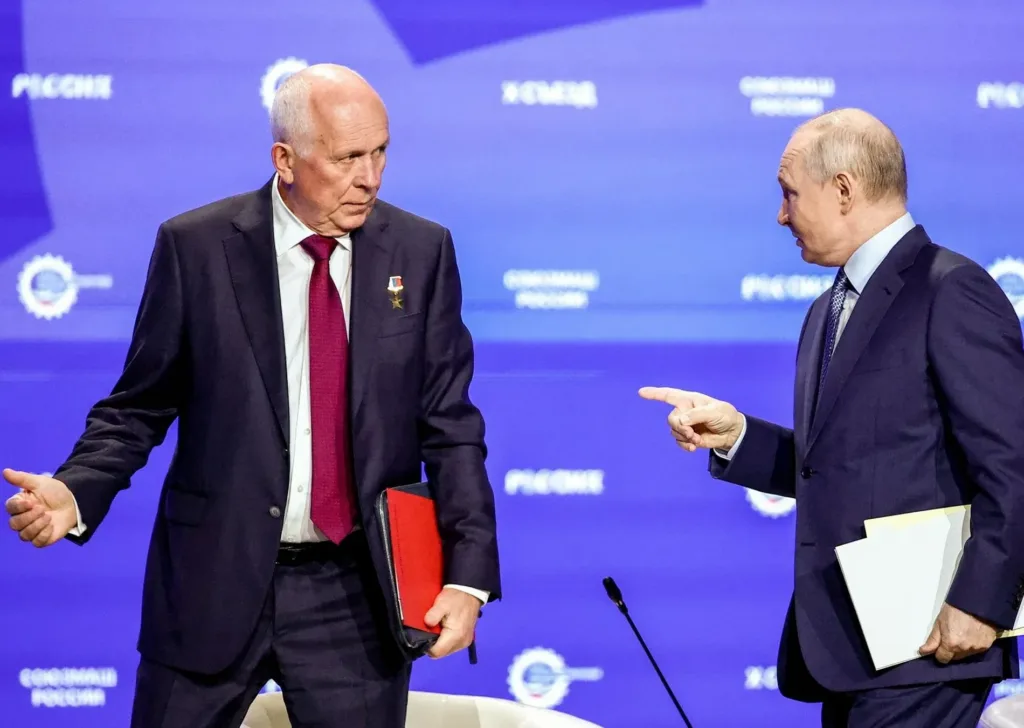
One of the best indicators of the economic and financial status of the Russian military producers is the aggregate data on the performance of Rostec, Russia’s largest military-industrial conglomerate, headed by one of Vladimir Putin’s closest cronies, Sergey Chemezov. Rostec does not disclose detailed data about its performance, but it provides aggregate annual performance indicators in press releases tied to Chemezov’s annual meeting with Putin, usually held in May, at which Chemezov reports on Rostec’s results for the previous calendar year. The most important numbers from these reports are shown in Table 2 below.
Rostec’s performance indicators are particularly interesting because, in Chemezov’s own words, Rostec produces about 80% of all Russian weapons used on the battlefield in Ukraine (which appears to be a realistic estimate of Rostec’s share of total Russian military production). Rostec’s numbers therefore reflect, with reasonable accuracy, the overall economic and financial condition of the Russian military industry as a whole.
What do these figures show us?
First, despite massive growth in revenue (in 2025, total revenue increased 2.2-fold compared with 2021, and military revenue increased threefold), Rostec is barely profitable. With total revenue of nearly $55 billion in 2025, more than $41 billion of it from military products, Rostec’s net profit margins were roughly 2–4% in 2022–2025, falling below 2% in 2025.
The situation is so dire that in mid-July 2026 Chemezov openly complained to Prime Minister Mikhail Mishustin that Rostec’s net profit had fallen by 42% in 2025 to less than $1 billion (on revenue of $55 billion) and that the company lacked the funds to finance new investment projects:
Sergey Chemezov, CEO of Rostec, at a meeting with Prime Minister Mikhail Mishustin, July 15, 2026:
“Unfortunately, we don’t have enough of our own funds to launch any investment projects.”
The reasons for the military industry’s persistently low profitability are discussed below in the section “Why such a struggle for survival?” But as Rostec’s numbers show, the problem is persistent and deeply entrenched in the military-industrial complex.
The actual profitability of Rostec’s military production is even lower than the official net profit margin of under 2%. One explanation for this is that the company earns about a quarter of its revenue from civilian production, which shows some profitability; when the share of civilian production revenue was higher (35–45% in 2020–2021), Rostec’s overall net profitability was notably higher, in the range of 6–8%. Profitability deteriorated sharply as the share of military revenue expanded, indicating that military output is barely profitable and that its expansion drags down overall profitability.
Another explanation is that the key profit maker within the Rostec group is its subsidiary bank, Novikombank. This bank is a much smaller creditor to the military industry than the state’s “anchor” bank for the military-industrial complex, state-owned PSB (discussed in more detail below): Novikombank’s total assets (about $20 billion) are only about 15% of PSB’s, and a significant share of its loan portfolio consists of loans to Rostec’s civilian subsidiaries. This is why Novikombank is less burdened with toxic military industry loans than PSB, and remains profitable: in 2025, Novikombank’s net profit exceeded $320 million.
Given that over a third of the Rostec Group’s profits come from its bank, and some additional profits come from civilian output, it is safe to assume that the actual net profit margin of Russian military producers is not merely below 2% but far lower, possibly zero or negative. There is ample publicly available indirect evidence of the latter, discussed in subsequent sections and in Part II of this report.
The near absence of profits puts significant pressure on investment. As Table 2 above shows, while Rostec’s annual capex growth exceeded 30% in 2022 and reached nearly 44% in 2023, it slowed to below 19% in 2024, and the 2025 capex figure was omitted entirely from Chemezov’s report to Putin in May 2026—an indication that investment growth may have become too weak to acknowledge publicly.
Corporate profits are the main source of financing for capital expenditure in Russia, accounting for over 60% of total capex financing. Another 15–20% is financed through direct budget subsidies and another 10–15% through bank credit (the remainder comes from miscellaneous sources; foreign direct investment accounts for less than 0.05%).
The low share of bank loans in financing fixed investment is explained not only by high interest rates and expensive credit, but also by the fact that the Russian financial system mostly provides only relatively short-term credit and lacks sufficient long-maturity assets to provide enough long-term credit to the real sector of the economy.
The shortage of long-term money for developing complex, capital-intensive sectors of the economy has been the subject of lengthy but fruitless debate; speaking at the annual Congress of the Union of Machine-Builders—a Chemezov-chaired lobby group for heavy industry, primarily military enterprises—Vladimir Putin himself acknowledged the lack of long-term loans as one of the “sad” problems he did not want to talk about.
Vladimir Putin, President of Russia, at the Congress of the Union of Machine-Builders, May 14, 2026:
“I won’t speak about the sad stuff—the key interest rate, the need for long-term money, or the strong ruble.”
Sergey Chemezov and other top military industry officials also complained at the same congress that overly expensive credit cannot serve as a source of investment financing while military enterprises’ profits are shrinking.
Sergey Chemezov, CEO of Rostec, at the Congress of the Union of Machine-Builders, May 14, 2026:
“The current interest rate certainly does nothing to foster the development of our enterprises. The number of investment projects has dropped significantly because, under current conditions, loans cannot fund the implementation of all necessary investment programs.”
In 2022–2025, Russian military enterprises relied heavily on the state budget as the main source of additional financing for fixed investment, but this option is no longer available because of severe budget constraints, as explained in the section “Fiscal stimulus of 2022–2024: impossible to repeat.”
With bank loans expensive, long-term loans largely absent, profits shrinking to near-zero at best, and state budget funds scarce—where will the military-industrial complex find the funds to finance capital expenditures and development? That is the million-dollar question for the Russian military-industrial complex, and for Rostec in particular, and it remains unanswered.
Military industries have particularly high capex needs because of accelerated depreciation of capital equipment and machinery caused by increased production intensity and three-shift operation (discussed further in the section “Investment crisis unfolding”). Wartime operation in three shifts takes a heavy toll on production machinery, which requires replacement at a higher-than-normal rate. A reduction in capex, therefore, may prove fatal for the future of Russian military production.
Rostec’s publicly provided performance indicators also support two further conclusions. One is that Putin does not appear to have planned for a full-scale war against Ukraine: he evidently hoped to conquer Ukraine in a swift blitzkrieg and did not plan for a protracted, all-out war lasting years and requiring full mobilization of the country’s resources. Indirect evidence of this is that Rostec, Russia’s key military producer, was able to raise its capital expenditure from the prewar levels of $3–4 billion in 2021–2022 to $6–7 billion per year only in 2023–2024. It clearly took time for the Russian government to allocate sufficient resources to run the war production machine at full capacity; Rostec’s numbers support the theory that Putin was not prepared for a protracted, resource-intensive war.
Another important conclusion is that, despite the large new opportunities for import substitution that opened up for Russian manufacturers after 2022, Rostec failed to increase its civilian output meaningfully: in 2025, Rostec’s revenue from civilian products increased by only 19% in ruble terms and by only 7% in dollar terms (from $12.7 billion to $13.6 billion) compared with 2021. Given that even Rosstat’s official figures show consumer prices rising by 45% between 2021 and 2025, Rostec’s inflation-adjusted revenue from civilian products actually contracted by about 14% in 2025 compared with 2021.
The main conclusion from this is that the Russian military industry is simply incapable of developing a competitive civilian production segment—which, if it existed, could substantially ease the economic pressure on military producers.
More generally, the Rostec case demonstrates that the massive injection of state budget financing in 2022–2025 has not improved economic performance indicators; indeed, these indicators have recently deteriorated markedly. The reasons for this are discussed in more detail below.
PSB: Main Military Bank Under Constant Pressure
Another way to assess the real economic status of the Russian military industry at a time of increased secrecy is through the balance sheets of PSB, a 100% state-owned bank and key creditor of Russian military industries. In December 2019, Vladimir Putin signed a law transforming PSB, one of Russia’s ten largest private banks that failed in 2017 and was nationalized in 2018, into an “anchor” bank for the military-industrial complex. This meant that PSB was entitled to special treatment by the Russian government (lax regulation, regular bailouts) in return for providing preferential borrowing terms to military enterprises. In practice, PSB’s transformation into the military industry’s backbone bank began before Putin signed the legislation—essentially with its nationalization in mid-2018.
PSB’s total assets have grown rapidly since its designation as an “anchor bank” for military industries: from $20 billion (RUB 1.3 trillion) in 2018 and $33 billion (RUB 2.2 trillion) in 2019 to over $110 billion (RUB 8.7–9.4 trillion) in 2025–2026. However, the quality of these assets—which are primarily loans to military enterprises—is deteriorating rapidly. PSB reported an impressive net profit of $1.4 billion in 2023, but this shrank to just over $700 million in 2024 and turned into a net loss of over $230 million in 2025. PSB returned to profitability in the first half of 2026, but most likely because of a massive write-off of bad debt with state financial assistance (see below).
PSB’s financial reports indicate that while it still shows healthy operating profit margins, its shrinking profits and subsequent losses stem from building up massive allowances for potential losses on toxic loans issued to military enterprises in previous years. The buildup of allowances is impressive: from 2023 to 2025, they increased more than threefold—from $1.06 billion in 2023 to $3.49 billion in 2025. In the first quarter of 2026, however, allowances fell sharply to near zero, boosting profit—most likely the result of a massive government-sponsored write-off of bad debt (explained in more detail below). But rapid growth in allowances resumed in the second quarter of 2026, approaching $1 billion again.
Why did PSB’s allowances for credit losses fall sharply (and profits rise again) in the first quarter of 2026?
Although PSB does not disclose enough data to explain this fully, the most likely explanation is that the accumulated toxic debt of military enterprises was written off in a single operation with financial assistance from the Russian government. As Table 4 below shows, in the first quarter of 2026, PSB’s total loan portfolio shrank by about RUB 800 billion (over $6 billion), which was reflected in a corresponding contraction of total assets—reversing the trend of previous years, when assets grew continuously. At the same time, as Table 3 above shows, allowances for credit losses fell by some 98% in the first quarter of 2026, and total financial aid received from the government shrank from $5.6 billion to just $400 million.
These dynamics are consistent with a possible massive write-off of bad debt with the help of state financial aid, which likely took place at PSB in the first quarter of 2026, although neither the bank nor the state has commented on it publicly. In the second quarter of 2026, PSB’s loan portfolio resumed growth—and so did the allowances for credit losses, which grew again by about $800 million in the second quarter of 2026 (see Table 3 above).
While PSB discloses little financial detail beyond the basic indicators in its IFRS reports, the above figures suggest that the financial situation in the military-industrial complex is deteriorating rapidly, given that it requires such a massive buildup of reserves for potentially toxic loans (bear in mind that PSB has virtually no clients other than military enterprises):
- PSB’s toxic debt grew much faster than its assets in 2023–2025 (more than threefold growth in toxic debt versus just a 25% increase in assets) and in the second quarter of 2026 (fourteenfold growth in toxic debt versus just 16% growth in assets);
- losses are covered only by massive injections of state financial aid.
For instance, despite the massive clearance of toxic debt in the first quarter of 2026, PSB’s allowances for bad debt jumped from 0.05% of the bank’s total assets at the end of March 2026 to 0.63% at the end of June 2026, already higher than at Sberbank, Russia’s largest bank (where allowances for bad debt amounted to only 0.48% of total assets in mid-2026).
At that pace of asset quality degradation, PSB will soon rebuild the stock of toxic debt with which it entered 2026, requiring more capital injections from the state budget.
The Russian government provides financial aid to PSB regularly in the form of capital injections: as of September 2026, PSB had been recapitalized from the federal budget five times in 2026 alone, most recently in August 2026, with each injection worth $250–500 million.
The Russian government is also using other measures to improve PSB’s financial position: in July 2026, Vladimir Putin signed a law speeding up the transfer of military procurement-related funds from banks that lost their “special authorized status” to PSB within 30 days.
The list of banks authorized to handle settlements for military procurement (“special authorized status”) was abolished by law on January 1, 2025, but some funds remained at the other banks; under the new law, they must now be transferred to PSB. However, while this will strengthen PSB’s funding base somewhat in the short term, the fundamental problem of insolvency among many of PSB’s military industry borrowers will not go away.
Given the mounting financial difficulties of Russian military producers, it is reasonable to expect more state capital injections into PSB, as well as more write-offs of toxic loans for military enterprises. Such write-offs are not new: in 2020, for instance, shortly before launching its full-scale invasion of Ukraine, Russia cleared accumulated military industry debt worth around RUB 750 billion (over $10 billion at the time)—a substantial sum, equivalent to 0.7% of Russia’s GDP in 2020. This debt was either written off or “restructured” on preferential terms that significantly eased conditions for borrowers. It now seems all but certain that this massive debt write-off was deliberate, intended to ensure that Russian military industries entered a major war free of their previously accumulated debt burden.
However, the failure of the Russian military-industrial complex to transform itself into a financially viable, profitable sector despite massive injections of state financing in 2022–2025 creates bleak prospects for PSB as the main creditor of military producers. The current state of affairs at PSB confirms the following:
- Major Russian military enterprises continue to generate losses and toxic debt, leading to a rapid deterioration of PSB’s financial position;
- Problems are being addressed only through government-financed bailouts, which are likely to increase over time as the military-industrial sector’s finances keep deteriorating (this topic is discussed in more detail below).
What Do the Official Statistics Say?
Russian military output data are classified, but Russia’s official statistical agency, Rosstat, continues to provide aggregated data on output dynamics and investment for three major industrial sectors that include military production. In accordance with the All-Russian Classifier of Economic Activities, these sectors include:
- Manufacturing of finished metal products, except machinery and equipment (includes weapons and ammunition);
- Manufacturing of computers, electronic and optical products (includes radar devices, radio electronics, optical devices);
- Manufacturing of “other transport equipment” (includes combat vehicles—military aircraft, tanks, and armored vehicles—as well as missiles and drones).
The explosive output growth in these three sectors since 2022, as shown in Table 5 below, reflects a massive increase in state spending on military industries following Russia’s full-scale invasion of Ukraine. While the figures in Table 5 do not precisely track military output as such (they also include some civilian products, which cannot be separated from the aggregated data provided by Rosstat), the numbers nonetheless indicate the impressive growth of military output, which reached as high as 30–40% per year in 2023–2024, with cumulative growth of 2.2–2.8 times by 2026 relative to 2021.
As Table 5 shows, output growth in military industries has slowed notably since 2025, and especially in recent months, except in “other transport equipment,” where relatively high growth continued until mid-2026, after which it too slowed and turned negative (in August 2026, output in “other transport equipment” contracted by 3% year-on-year, the first output contraction in that manufacturing category since December 2022). In October 2026, output growth in that category rebounded, but it has been volatile throughout 2026 and, for the first time since 2023, remained below 20% year-on-year for the first nine months of the year.
The slowdown was especially pronounced in electronics and optics, most likely because sanctions have constrained access to complex Western technology. According to Rosstat, in 2026, the production of electronics and optics was particularly unstable—turning negative in certain months (February and April 2026) or barely exceeding 1% year-on-year growth (January and May 2026).
Continued strong growth in “other transport equipment” can be attributed to two factors:
- Heavy emphasis on the manufacturing of drones and missiles (both of which are included in that category);
- The results of heavy investment and the buildup of an investment pipeline in the years prior to 2026, which are now yielding deliveries of heavy equipment (particularly aircraft and submarines) whose manufacture began some time ago.
The latter factor was emphasized in December 2025 by Denis Manturov, first deputy prime minister and a key ally of Sergey Chemezov, in an interview with Vedomosti. Manturov stressed that in some industries current deliveries reflect investments made over the past few years, while investment resources are now running thin:
Denis Manturov, First Deputy Prime Minister of Russia, December 2025:
“In recent years, many enterprises—particularly including … machinery manufacturing sectors—launched major investment projects with cycles spanning 2.5 to 4 years. In some instances, state subsidies helped to partially cushion the impact of the key interest rate. In some cases, … enterprises that had previously generated substantial profits have now largely exhausted their available resources.”
The slowdown in output growth for combat vehicles (“other transport equipment”) to below 20% in the first eight months of 2026, compared with about 30% annual output growth in 2023–2025, and the beginning of output contraction (−3% year-on-year in August 2026) are consistent with the view that the high output growth rates stemmed mainly from heavy investment in previous years. With investment now drying up, the capacity to increase production of combat vehicles (“other transport equipment”) further is in question.
The exhaustion of investment resources, which may slow military output further, is already under way, confirming the words of Rostec CEO Sergey Chemezov, quoted above, at his meeting with Prime Minister Mishustin on July 15, 2026. Russian military producers no longer have sufficient funds to finance new investment projects. Available statistical data already support this. In the section “Rostec: awash in cash, but no profits” above, we showed the extent of the slowdown in fixed investment growth at Rostec (Table 2), which has probably turned into an outright decline in capital expenditure by now.
Rosstat data for the first half of 2026 support the conclusion that fixed investment in military industries has begun to decline: as Table 6.1 below shows, in the electronics and optics sector, capex had already begun to decline in 2025, and in all military-related manufacturing sectors fixed investment contracted by as much as 20–40% in annualized terms in Q1 2026; the situation improved slightly in the second quarter for combat vehicles (“other transport equipment”), but remained markedly worse than in 2024–2025. In other military-related sectors, the contraction of fixed investment deepened in the second quarter of 2026, reaching −42.5% in the electronics and optics sector, and −26.9% in “finished metal products” (weapons and ammunition without combat vehicles).
An interesting observation from Tables 6.1–6.2 is that the state budget-driven “investment boom” in Russian military industries that followed the full-scale invasion of Ukraine in 2022 was relatively short-lived and difficult to sustain:
- In “finished metal products” (weapons and ammunition), notable investment growth did not really begin until 2022 (disregarding the 2021 post-COVID rebound) and effectively ended in 2025;
- In “electronic and optical products,” investment growth ended even earlier: 2025 was already marked by a massive decline in fixed investment;
- In “other transport equipment” (combat vehicles, missiles, drones), notable investment growth started only in 2024, a full two years after the 2022 full-scale invasion of Ukraine, and ended in 2026;
- Total fixed investment in military-related industries in the first half of 2026 was about 20% lower than in the first half of 2025 (down about 18% in US dollar terms and about 22% in ruble terms).
The main conclusion is that the massive fiscal stimulus of 2022–2024 produced only a very short-lived investment boom in the military industries, one that showed signs of exhaustion even before 2026 and is now plainly over. Fixed investment in military-related industries clearly peaked in 2025 at about $17 billion per year, yet the industry evidently needs far more capex. Reviving the investment boom will hardly be possible without additional stimulus comparable to that of 2022–2024. Russian military industries do not have sufficient resources of their own to finance investment.
Another conclusion is that Putin, as noted above, had not truly prepared for a protracted war in Ukraine and had not invested accordingly in military production capacity before invading. The massive growth in military output since 2022 resulted from bringing significant idle capacity into use, as well as from hastily assembled investment plans drawn up in the wake of the 2022 invasion.
Another observation is that the post-2022 “investment boom” in Russian military industries in many cases did not genuinely boost production capacity; it was instead an “equipment substitution boom” that did not expand the stock of capital equipment. This phenomenon is discussed in more detail in the next section.
Investment Crisis Unfolding
An interesting debate has recently emerged among Russian economic analysts over why the massive increase in investment spending after 2022 has not produced a significant increase in the fixed capital stock. This phenomenon also applies to military industries.
Earlier in 2026, this problem was examined in a report by the Russian Institute for Complex Strategic Studies (ICSS), as covered by Russian media. According to this report, while fixed investment in Russia grew from 2021 to 2024 by almost 38% in real terms (mostly driven by fixed investment in military industries), there was no real “investment boom”: although fixed investment volumes formally increased, this did not lead to a comparable upgrade of production capacity, and the commissioning of fixed assets lagged significantly behind nominal investment activity. ICSS lists several reasons for this:
- a significant number of projects have become longer and more complex due to sanctions, problems with equipment supplies, and higher financing costs;
- businesses were increasingly investing not in expanding their capital equipment base but in rebuilding and maintaining existing capacity;
- from 2022 onward, a significant portion of “fixed investment” went into replacing Western-made capital equipment with Russian or Chinese equivalents, which did not truly expand the capital equipment base even though it looked like “fixed investment expansion” on paper (“A Repair Economy Instead of a Development Economy,” as media coverage of the ICSS report put it, citing Rosstat surveys showing that approximately 70% of companies in 2025 cited the replacement of old equipment, rather than production expansion, as their primary investment goal).
This issue was further discussed in July 2026 at the Central Bank’s annual Financial Congress in St. Petersburg during a special session titled “Profit and Investment: What Level of Investment Do We Need?”. This discussion is crucial to understanding the consequences of the “investment boom” that began in 2022 in the Russian economy and, specifically, in military-related industries.
One of the speakers at the session, Rodion Latypov, chief economist of VTB, Russia’s second-largest bank, noted a significant discrepancy between investment dynamics and the accumulation of productive capital after 2022: while investment spending was growing rapidly, gross capital formation was not. Among the reasons for this, Mr. Latypov mentioned the following:
- the “substitutive” nature of a significant portion of investment following the departure of foreign manufacturers and forced replacement of equipment;
- the “rapid utilization of military industry capital,” which requires especially heavy investment spending in the military industries because of a higher rate of capital equipment depreciation.
Military production, as Mr. Latypov noted, is characterized by higher-than-normal depreciation rates because of intensive utilization schedules (operation of most military plants in three shifts). “More and more resources are being spent to maintain the same level of production,” notes Mr. Latypov in this regard. As a result, gross investment spending no longer reflects actual capital formation as it previously did.
Mr. Latypov’s remarks in St. Petersburg were echoed by Vladimir Salnikov, deputy director of the Center for Macroeconomic Analysis and Short-Term Forecasting, best known by its Russian abbreviation CMAKP (ЦМАКП). Notably, this Center was founded in the 1990s by the current Russian Minister of Defense, Andrey Belousov, and the minister’s brother, Dmitry Belousov, currently plays a leading role there. The Center is known for its extensive work advising the Russian government on macroeconomic affairs.
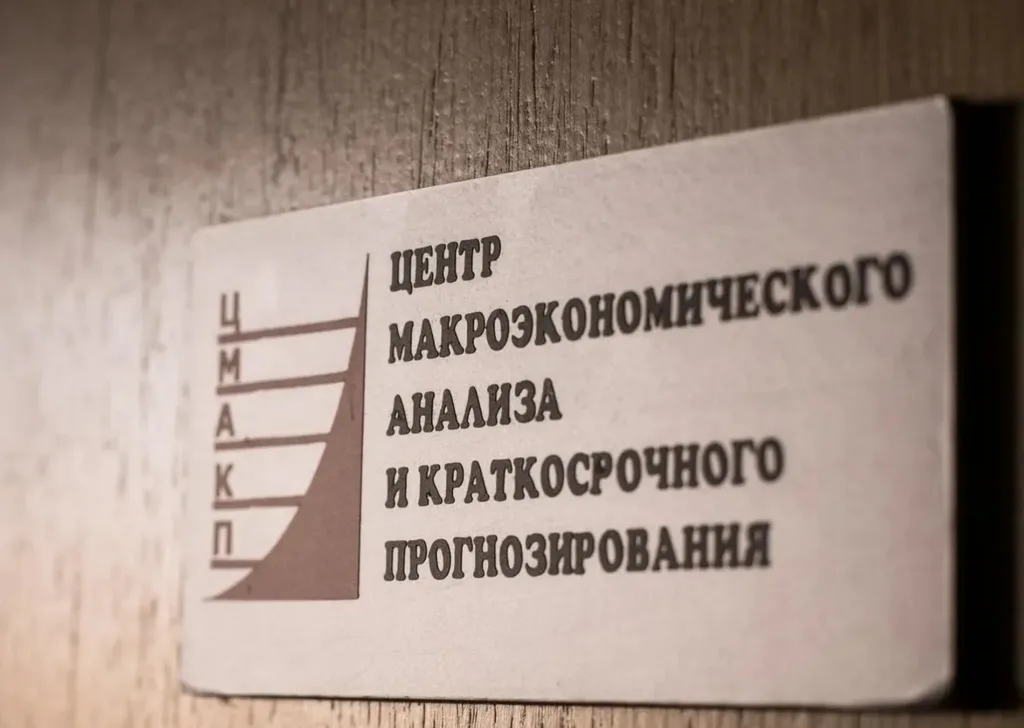
Mr. Salnikov of CMAKP, speaking at the Central Bank’s Financial Congress in St. Petersburg in July 2026, noted that an unprecedented gap has opened up since 2022 between the dynamics of gross investment spending and the supply of investment goods (capital equipment and the like). Previously, these indicators moved almost in sync, but after 2022 investment spending grew significantly faster than the supply of equipment, construction materials, software, and other components of investment demand. Particularly telling is the technological component of investment—machinery and equipment—where a comparable acceleration in supply has not been observed at all (supply of machinery and equipment stagnated). According to Mr. Salnikov, this is precisely why, in recent years, a significant portion of investment has gone to replacing capital equipment rather than creating new production capacity.
This is why Russian officials have recently begun to speak of a “production plateau” in the Russian military industries:
- the heavy investment spending since 2022 has failed to create substantial new production capacity;
- the existing stock of capital equipment is being rapidly depleted by intensive use in three shifts, 24/7;
- the financial model of Russian military industries does not generate enough capital to keep expanding production, or even to maintain current levels.
The figures in Tables 6.1–6.2 suggest that the fixed investment crisis in the Russian military industries is so severe that it is likely to damage the production base very soon, given the high rates of capital stock depletion, noted above, in military industries operating three shifts.
Military Industry Problems in Their Own Words
The current challenges facing Russian military industries are best described by Russian government and military sector officials themselves, in public statements stripped of fanfare and boasting about rising output. There is no shortage of public admissions of severe economic and production problems.
One notable recent event at which such admissions were made in abundance was the annual Congress of the Union of Machine-Builders, an umbrella association of many Russian manufacturing enterprises and military factories chaired by Rostec CEO Sergey Chemezov, held on May 14, 2026, and attended by Vladimir Putin in person. It was there that Russia’s Minister of Industry and Trade, Anton Alikhanov, first said that he expects Russian military output to peak soon:
Anton Alikhanov, Minister of Industry and Trade of Russia, at the Congress of the Union of Machine-Builders, May 14, 2026:
“You are well aware that defense orders cannot grow indefinitely. The growth curve will gradually plateau.”
Alikhanov later doubled down on his “peak output” statement at the Innoprom international industrial exhibition in Yekaterinburg on July 7, 2026, essentially confirming that the massive post-2022 investment spending in military industries went, in significant part, simply to substituting for Western production technologies:
Anton Alikhanov, Minister of Industry and Trade of Russia, Innoprom exhibition, July 7, 2026:
“Manufacturing sectors linked to the defense-industrial complex—which have been key drivers of growth in Russian manufacturing in recent years—are nearing peak output levels.
The two primary growth drivers that fueled rapid expansion in 2024 and 2025 are gradually losing their momentum. First, the industrial sector has already largely capitalized on the impetus provided by the shift toward countersanctions and the exit of foreign companies from the Russian market. Second, the defense-industrial complex—acting as the engine of growth—will soon reach peak output and a high baseline, meaning it will no longer generate the significant boost to manufacturing growth rates that it previously did.”
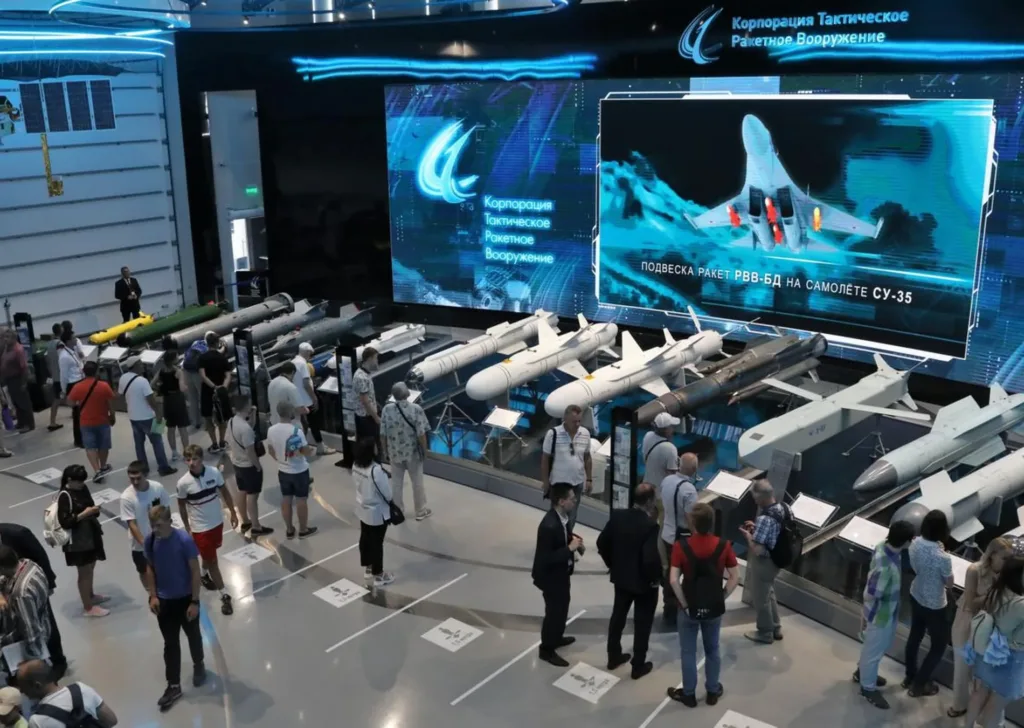
Russian military producers barely conceal that they are “scared” of the coming production plateau, as Boris Obnosov, CEO of Joint-Stock Company “Tactical Missiles Corporation” (KTRV), openly admitted:
Boris Obnosov, CEO of Joint-Stock Company “Tactical Missiles Corporation” (KTRV), at the Congress of the Union of Machine-Builders, May 14, 2026:
“Minister of Industry and Trade, Anton Andreyevich [Alikhanov], said that we should soon reach a certain plateau and build our industrial capacity based on that level… And that plateau awaiting us in the future—it scares me a little.”
Russian military industry officials broadly recognize that the current economic environment in Russia, together with the industry’s problematic economic model, makes the sector’s future uncertain. They heavily criticize the government’s tax hikes as one of the factors curbing investment, along with high interest rates, an overvalued ruble, insufficient state support and subsidies, and severe labor shortages:
Sergey Chemezov, CEO of Rostec, at the Congress of the Union of Machine-Builders, May 14, 2026:
“Problems constraining the pace of industrial development persist. These include inflation, an overvalued ruble, a heavy tax burden, bottlenecks in state defense procurement, and labor shortages. These challenges have affected not only traditionally highly leveraged sectors but also large export-oriented enterprises. Financial and economic pressures—including tax adjustments—combined with ongoing production demands are curbing fixed capital investment. The budget deficit acts as an additional factor, leading to reduced funding for state programs.”
“The strengthening of the ruble also has a negative impact on product exports. And then, of course, there is the key interest rate. Today, we need long-term, low-cost capital to develop our enterprises and create products that are competitive—products we can actively sell both abroad and domestically. The aviation industry is a case in point: given current interest rates, we, unfortunately, cannot produce affordable aircraft, so we must take steps to lower the interest rate as a matter of priority.”
Anton Alikhanov, Minister of Industry and Trade of Russia, at the Congress of the Union of Machine-Builders, May 14, 2026:
“High costs for working capital and investment loans have driven up debt servicing expenses. Overdue accounts payable—primarily to suppliers—are rising, albeit modestly. In light of this, we are currently exploring additional sources of funding to increase industrial subsidies.”
Vladimir Gutenev, Chairman of the State Duma Committee on Industry and Trade, at the Congress of the Union of Machine-Builders, May 14, 2026:
“An overvalued ruble reduces the competitiveness of domestic products, curbs exports, and intensifies pressure from imports on the domestic market. Today, we see the exchange rate already below 74 rubles to the dollar. We also realize that, even within our own market, it is becoming increasingly difficult for everyone—from high-tech manufacturers to small and medium-sized businesses—to compete with low-cost products from Southeast Asia.”
Vadim Badekha, CEO of Joint-Stock Company “United Aircraft Corporation,” at the Congress of the Union of Machine-Builders, May 14, 2026:
“Things are not as easy as they were a few years ago. We are facing significant pressure from the strong ruble and high interest rates, given that a substantial portion of the funds used to finance export-oriented contracts consist of borrowed capital. Thanks to the support of Mr. Chemezov, we secured a decision allowing us to access subsidized credit for these contracts; however, the current level of such funding is clearly insufficient. Due to the strong ruble, we no longer appear as highly competitive in the military-technical cooperation market as we once did—especially considering that players from our traditional markets, including Chinese manufacturers backed by massive state support, have recently become very active.”
Boris Obnosov, CEO of Joint-Stock Company “Tactical Missiles Corporation” (KTRV), at the Congress of the Union of Machine-Builders, May 14, 2026:
“We currently face a critical shortage of mid-level technical specialists. We regularly report to Mr. Manturov [first deputy prime minister] on the progress of capital construction projects. This is one of the most challenging issues today—capital construction—because finding workers with the required citizenship status who can also pass drug and criminal background checks is difficult [sic]. For instance, we are building a facility in Michurinsk; we needed a team of painters for several workshops, yet it proved impossible to find anyone for a salary under 200,000 rubles [about $2,500 per month]. We lack painters, plasterers, and workers in other mid-level technical trades that are absolutely vital today.”
Russian military industry officials have also spoken publicly about the accelerated depreciation, short lifespan, and critical shortage of capital equipment despite the massive investment spending of recent years, as described above:
Boris Obnosov, CEO of Joint-Stock Company “Tactical Missiles Corporation” (KTRV), at the Congress of the Union of Machine-Builders, May 14, 2026:
“I consider the rumors that we have already completed this technical equipment modernization to be fundamentally incorrect, because the share of modern equipment—machinery less than 10 years old—exceeds 20–25% at very few enterprises. Therefore, this [technical equipment modernization] is a continuous process that must be carried out regularly—at least every 5 to 7 years, if we want to compete with Western nations.”
Sergey Chemezov, CEO of Rostec, at the Congress of the Union of Machine-Builders, May 14, 2026:
“Boris Victorovich [Obnosov], of course, I agree with you—machinery needs to be replaced regularly because, yes, the service life is limited to around 10 years.”
Although Russian officials try hard in their public speeches to downplay the difficulties of the military industries and to highlight “successes” instead, it is easy to see that the current economic model of the Russian military industry has reached a clear peak. The investment spending of 2022–2026 did not expand production capacity to the desired extent; at most, it replaced some of the most advanced Western technology. Capacity utilization is currently very high, leading to accelerated depreciation of capital equipment. At the same time, new investment is constrained by multiple factors—inflation and growing costs, increasing taxes, high interest rates, a strong ruble, labor shortages, and high labor costs, to name a few.
Why Such a Struggle for Survival?
One may reasonably ask: why on earth are Russian military industries struggling to survive amid such impressive revenue growth over the past few years of war against Ukraine? While the figure on total procurement of weapons and ammunition is classified, the publicly available data on Rostec’s revenues from military production indicates that they tripled in ruble terms between 2021 and 2025—a figure indicative of the industry as a whole, given Rostec’s own estimate that it produces about 80% of all Russian weapons used on the battlefield in Ukraine. But Rostec is barely profitable and struggles to invest and expand, as its CEO Chemezov publicly admitted during a meeting with Prime Minister Mishustin in July 2026.
Why are there such major economic challenges amid such impressive revenue growth?
One of the key answers to that question lies in the very essence of the economic model under which the Russian military industry operates.
The first problem is that prices for weapons and ammunition purchased by the government under state military procurement contracts are state-regulated, and the regulation is quite strict: regulators normally allow only 5–10% profitability when setting prices.
Given that Russian inflation routinely and substantially exceeds expectations and official forecasts, and given rampant corruption in the military-industrial complex, ineffective and nontransparent organization, a lack of modern governance, and increased monopolization during Putin’s era (the creation of all sorts of “united corporations” across lines of military production, which are, in essence, monopolies that tend to drive costs up), it is no surprise that Russian military producers cannot keep their expenses under control.
As a result, their actual profitability cannot be kept within the set 5–10% range and usually turns out to be much lower: close to zero, or negative (see the enterprise analysis in Part II of this report).
As Table 7 below shows, the net profitability of Russian military-related industries in the first eight months of 2026 was near or below 10%; this is likely an overestimate, as Rosstat data for these sectors also include some civilian products. The share of loss-making enterprises in these sectors is around a third or more, reaching about 45% in combat vehicle production (“other transport equipment”).
Apart from regulated and capped profitability, there is also the problem of excessive expenditure. The military industry’s inability to control its spending—the flip side of monopolism, state ownership, opacity, and corruption—is nothing short of legendary; before the 2022 full-scale invasion of Ukraine, top Russian officials openly castigated it for this, including Vladimir Putin himself:
Vladimir Putin, Annual Address to the Federal Assembly, December 4, 2014:
“We have just held our customary meeting in Sochi with the leadership of the Ministry of Defense, commanders of the various military branches and service arms, and leading designers from defense enterprises. For certain items, prices have doubled, tripled, or quadrupled; in some instances, the price has risen elevenfold since the work began. You understand that this is completely out of proportion—incomparable to inflation or anything else—especially considering that advance payments cover virtually 100 percent of the cost.”
Apart from its own economic inefficiency, however, the Russian military industry faces strong external pressure that is driving costs up from several directions:
- Inflation that the government has still not been able to bring under control;
- High interest rates and expensive credit;
- Shortage of labor and continually rising labor costs;
- An excessively strong ruble that pushes costs up and reduces whatever remains of export competitiveness;
- A high level of corruption, which in Russia is a top-down phenomenon and cannot be solved by enterprise management alone.
These factors are frequently cited by top officials of the Russian military industries themselves, as quoted above in the section “Military industry problems in their own words.”
In theory, military enterprises could focus on cost savings to increase their profitability; there is ample potential for improving operating efficiency.
However, the current pricing system under state military procurement contracts strongly discourages them from doing so. The current system, established by the government price regulation rules for the military industry cited above, adds a 5–10% margin on top of the declared cost base, which means that when costs are cut, profits shrink too. This makes cost-saving measures pointless, because they also reduce the normative profits allowed by price regulators. That is the classic logic of a planned, regulated-price economy: cost cuts inevitably lead to price cuts, but not to profit increases.
This problem is discussed in detail in a recent article by the St. Petersburg media outlet Fontanka on the initial debates over the city’s 2027 budget in its legislative assembly, where the city government’s Committee on Industrial Policy explained why military enterprises cannot improve their cost efficiency to maximize profits and instead ask for state subsidies to increase them.
To solve this problem, Russian officials are currently pushing for a system of long-term fixed prices for weapons and ammunition, allowing military enterprises to keep the profits earned through cost-saving measures, without cutting prices or profits. The issue was discussed extensively at the Congress of the Union of Machine-Builders on May 14, 2026:
Vladimir Gutenev, Chairman of the State Duma Committee on Industry and Trade: “To build a scientific and technological foundation in both the military and civilian sectors, defense industry enterprises require financial resources. A solution to this problem, amid a tight budget deficit, is to reduce production costs, reserving the extra profits from cost cuts for targeted expenditures. The confiscation of such extra revenues [derived from cost saving] is unacceptable. Demotivating those implementing state defense contracts could seriously undermine the technological modernization of production assets.”
Anton Alikhanov, Minister of Industry and Trade of Russia: “Together, we must work with the client’s representatives to transition to long-term, fixed-price contracts. This creates additional economic incentives to improve efficiency, as the funds saved through such efforts remain within the enterprise and can be allocated to wages, additional R&D, and the development of fixed assets.”
But the proposed system of fixed prices, allowing military enterprises to maximize profits by reducing costs, simply will not work, for two reasons. First, inflation in Russia always exceeds official estimates and forecasts, which means that military enterprises themselves will keep asking for indexation of arms procurement prices, because the profits saved through cost efficiency will not be nearly sufficient. Second, and more fundamentally, the proposed system is an exact replica of the Soviet reforms of the 1980s that introduced a limited degree of economic independence for planned-economy enterprises, known as khozraschet (Russian: хозрасчёт, “economic accounting”).
In the 1980s, khozraschet failed spectacularly because, in the absence of the broader elements of a market economy—private property, capital, shareholder control, competition—isolated reforms simply did not work. Directors of Soviet enterprises, not constrained by good shareholder governance, had no incentive to maximize the return on capital, to preserve the capital base, etc.; in fact, many Soviet directors achieved extra profitability by running down fixed assets, or were simply unable to achieve meaningful results given the limited economic freedoms granted under khozraschet in what remained a largely centralized economy.
The current operating model of the Russian military production sector closely resembles the former Soviet economy: the absence of private ownership and effective corporate governance, price regulation, centralized planning of production and supplies, etc. There is every reason to believe that khozraschet 2.0 would not work, just as its Soviet predecessor did not.
Labor shortages, which are driving military industry costs up, are another significant factor contributing to shrinking profits. Demographic troubles exacerbated by war, military mobilization, and mass emigration are plaguing Russia’s labor market, and military industries are no exception; we discussed this in more detail in the Free Russia Foundation’s report “Putin’s Fatal Blow to Russia’s Demographics”.
Although Russian officials have recently refrained from commenting publicly in detail on labor shortages in the military production sector, in 2024 First Deputy Prime Minister Manturov estimated the shortage at no fewer than 160,000 people; later Oleg Morozov, Chairman of the State Duma Committee on Control, said that the military industry’s labor shortage had grown to 400,000 people. The situation has most likely worsened since then.
Although information on military industry labor shortages is now heavily censored, some data suggest that they remain severe. First, the Central Bank’s monthly “Monitoring of Enterprises” (a regular survey of about 15,000 Russian enterprises) shows that manufacturing industries (which include military production) are still among the sectors worst affected by labor shortages; although the situation has improved somewhat since the peak difficulties of 2024–2025, it remains notably worse than in 2021–2022.
Second, some admissions of labor shortages can be found in recent public statements from military enterprise officials themselves (such as the above-cited quote from KTRV CEO Boris Obnosov), or from officials in regions with a heavy concentration of military production, such as Udmurtia or Voronezh.
As Table 8 below shows, by mid-2026 the Russian military industry had been forced to more than double salaries compared with 2021. The overall consumer price index rose by about 1.5 times over the same period, while the average salary across the economy increased by just over 70%. To attract the personnel needed to keep production running, Russia’s military production sector must significantly outpace other industries in salary growth.
The risk of another mass military mobilization is a major potential concern for Russian military industries: although their employees largely receive exemptions from the draft, the labor market as a whole will deteriorate if mobilization occurs, which will also affect military producers. In any case, severe pressure on military industry costs caused by labor shortages will continue.
Another problem is that military producers receive only limited advance funding, and this goes largely to manufacturers of finished products—while most enterprises, including those producing intermediate components of weapons and ammunition, are heavily dependent on credit for current funding. Because of Russia’s high inflation and the Central Bank’s tight monetary policy, interest rates have been very high in recent years, averaging 20% or more for real-sector borrowers (including military enterprises) for most of 2024–2025 and only recently easing somewhat to an average of 17–18%. Most military producers have to borrow at higher-than-average interest rates; in 2025, Rostec CEO Sergey Chemezov admitted that borrowing is prohibitively expensive for Russian military producers:
Sergey Chemezov, CEO of Rostec, in an interview with RBC (2025):
“Under current conditions, the cost of business loans is several times higher than the average EBIT-based profitability of industrial enterprises. In essence, the cost of capital for the industrial sector exceeds the returns it can generate, and profits often fail to cover loan costs. Compounded by bank requirements for collateral, this creates significant risks for enterprises.”
This topic was discussed publicly and in detail at the annual “Russian Industrialist” forum held by the Russian Union of Industrialists and Entrepreneurs in October 2025, where prominent official speakers stressed that most military enterprises across the supply chain suffer acute shortages of working capital until the state pays in full for the finished product; that current high loan rates rule out profitable operations; and that banks entitled to provide subsidized loans, such as PSB, are overburdened with problem loans to military enterprises (“facing a difficult situation regarding compliance with capital adequacy requirements”) and have trouble extending more subsidized credit to military producers.
Denis Kravchenko, First Deputy Chairman of the State Duma Committee on Economic Policy: “This applies to the defense industry, which is currently fulfilling state defense orders—tasks that carry the risk of personal criminal liability for executives. While order volumes are rising, you are well aware that up to 80% of the industry relies on a cooperative supply chain; consequently, the other participants do not get paid until the final contractor receives payment. Today, even as our defense enterprises see their order books expand by 50% to 100%, they are effectively failing to receive—at a minimum—one-third of the necessary funds. They are forced to seek financing from sources beyond just PSB—since, unfortunately, PSB’s resources aren’t enough to go around for everyone—turning instead to commercial loans and incurring losses, given that the profitability of such enterprises is capped.” (Source: “Russian Industrialist” forum, October 2025)
Georgy Boos, member of the Executive Board of the Russian Union of Industrialists and Entrepreneurs, former Russian Taxation Minister: “The state of the defense industry is a separate issue. On one hand, the sector is currently receiving large-scale state orders; on the other, funding is not flowing further down the supply chain because the money remains tied up in Treasury accounts. Consequently, the only option available to the defense industry is to borrow from PSB. Yet PSB itself is currently facing a difficult situation regarding Central Bank regulations—specifically, compliance with capital adequacy requirements.” (Source: “Russian Industrialist” forum, October 2025)
These statements show that the massive injection of state funds into the Russian military production sector comes with significant challenges. The complex system of state financing deprives military contractors of sufficient working capital and current financing: they must wait for full payment long after delivering finished products under state contracts, which means that most participants in the supply chain have to borrow at high rates to finance production activities, further diminishing already limited profits.
This is one reason military enterprises have become a main source of the massive nonpayment problem now plaguing the Russian economy. This problem became evident as early as 2024–2025; by mid-2026, the Russian Union of Industrialists and Entrepreneurs’ quarterly survey of large businesses identified nonpayment as the main problem impeding economic activity in Russia (ahead of tax hikes, expensive credit, weak demand, and other factors), with the union explicitly blaming the problem mainly on state enterprises.
By May 2026, overdue accounts payable topped 4.2% of GDP, or 6.7% of total accounts payable—up from 3% of GDP and 5.0% of total accounts payable at the end of 2024.
Despite massive government spending on the military sector, low profitability, expensive credit, and the difficulty of receiving state funds have prevented the military industries from converting the massive fiscal stimulus of 2022–2026 into a sustainable financial position and positive development prospects. Moreover, the financial position of Russian military producers is rapidly deteriorating, and the prospects are grim because budget constraints prevent the state from providing a comparable amount of new fiscal stimulus (discussed further in the section “Fiscal stimulus of 2022–2024: impossible to repeat”).
What about other sources of revenue?
The full-scale war against Ukraine largely destroyed the Russian military industry’s ability to sustain its finances through revenues from markets other than state military procurement. First, exports: Russian arms sales abroad have plunged since 2021. Russia prioritized supplies of weapons and ammunition to the battlefield in Ukraine over export deliveries and was also unable to fulfill some export contracts because its production capacity was devoted primarily to wartime needs.
Since the beginning of the full-scale invasion of Ukraine in 2022, Russian arms exports have fallen dramatically: in late 2024, Rostec CEO Sergey Chemezov admitted that Russia’s total arms exports had fallen from about $15 billion in 2021 to about $6 billion in 2023 and “will probably be lower [than $6 billion] in 2024”. After these remarks, Russian officials stopped commenting on annual arms export revenue for a while, until First Deputy Prime Minister Denis Manturov stated in May 2026 that “Russia’s revenues from military-technical cooperation made up $15 billion in 2025”—but this claim remains unsubstantiated by any solid data. International analysts confirm a sharp decline in Russia’s arms exports after 2022: the Stockholm International Peace Research Institute (SIPRI) estimates that Russia’s arms exports fell by as much as 64% in 2021–2025.
Overall, the Russian military industry’s export revenues plunged from over a third of total arms sales revenue in 2021 to around 5% at best in 2025–2026.
There is also revenue from civilian production, but it is not growing significantly and is barely profitable.
As shown in the section “Rostec: awash in cash, but no profits” above, civilian sales by Rostec (Russia’s largest arms producer) now account for just a quarter of the conglomerate’s total revenue, compared with over a third in 2021. Rostec’s revenues from civilian products barely grew in 2021–2025 both in dollar terms (from $12.7 billion in 2021 to $13.6 billion in 2025) and in ruble terms (from RUB 0.94 trillion in 2021 to RUB 1.12 trillion in 2025—or by less than 20%, whereas the consumer price index during the same period increased by 45%).
Civilian production is also barely profitable. According to Valery Gartung, a member of the State Duma and himself the owner of a major manufacturing enterprise (Chelyabinsk Forge-and-Press Plant), in early 2025, average profitability in manufacturing did not exceed 5–7%; the situation has most likely worsened by now. Avtovaz, Russia’s top carmaker and Rostec’s largest civilian manufacturing subsidiary, does not expect to turn a profit before 2028.
Export markets are virtually closed for Russian manufactured products: the total volume of nonenergy and noncommodity exports plunged from $193 billion in 2021 to an expected $155 billion in 2026; China and other countries of the Global South refuse to open their markets significantly to Russian manufactured goods, while the domestic market for technology products is small. In the words of Russian Minister of Economic Development Maxim Reshetnikov, “for certain technologies, our domestic market isn’t sufficient”.
The absence of significant revenues from arms exports and civilian manufacturing makes the Russian military industry’s economic performance almost entirely dependent on state budget financing, which now accounts for more than 70% of total revenues, far exceeding revenues from arms exports and civilian products.
Dependence on budget funding creates serious vulnerabilities for the Russian military industries:
- It depends on the overall health of government finances, which are rapidly deteriorating (as shown below in the section “Fiscal stimulus of 2022–2024: impossible to repeat”);
- It inevitably entails tight price regulation that leaves no room for maneuver on profits and cost efficiency, as explained above;
- As explained above, the complex system of state financing deprives military contractors of sufficient working capital and current financing.
The government’s ability to repeat the massive fiscal stimulus of 2022–2026 appears quite limited, which means that the economic problems of Russian military producers will almost inevitably worsen soon.
Fiscal Stimulus of 2022–2024: Impossible to Repeat
To boost military output from 2022 onward, the Russian government injected massive fiscal stimulus into the military production complex: the total cumulative increase in spending on military industries relative to pre-invasion levels is estimated at $130–180 billion in 2022–2025.
Total Russian government spending on procurement of weapons and ammunition is not disclosed; the aggregate figure of actual annual military spending has been classified since 2025 (before 2025, it was publicly available). Government materials suggest that, since 2025, total military spending has been capped at around RUB 13 trillion ($160–180 billion) per year. Prewar military spending (2021) was RUB 3.5 trillion (about $50 billion).
A detailed analysis of available information on the Russian military budget allows us to estimate that spending on military production accounts for around 60% of the total military budget on average. This means that the total cumulative increase in fiscal stimulus for Russian military industries in 2022–2025 amounted to $130–180 billion. This broadly corresponds to the known increase in Rostec’s declared military revenues as reported by Sergey Chemezov and cited above: the total cumulative increase in Rostec’s declared military revenues in 2022–2025 relative to the prewar annual level amounted to about $50 billion.
As of the second half of 2026, Russia’s budget situation remains very difficult and does not allow for additional fiscal stimulus on a scale comparable to 2022–2025. In early October 2026, the Russian Ministry of Finance admitted that the annual federal budget deficit will reach at least RUB 7.35 trillion (about $86 billion, or 3.2% of GDP), or nearly twice the level originally planned (the plan adopted at the end of 2025 was to hold the federal budget deficit within 1.6% of GDP, or RUB 3.8 trillion). The actual deficit, as even pro-government experts acknowledge, may turn out significantly higher once the year ends.
In addition, the federal government projects that the aggregate budget deficit of Russia’s regions will reach a record-breaking RUB 1.9 trillion this year (about 1% of GDP, more than $20 billion). More and more industries are requesting state aid as recession looms; as Minister of Economic Development Maxim Reshetnikov acknowledged, fiscal stimulus in the first half of 2026 was the main reason Russian GDP growth remained positive, at 0.6% in the first six months of 2026, according to official estimates.
In other words, the government is narrowly avoiding recession only through excessive spending that exceeds all previous plans: while the approved 2026 federal budget envisaged annual expenditure growth of only 2.7%, federal spending in the first nine months of 2026 actually rose by 14.5%, far more than planned.
As Table 9 below shows, Russia’s budget deficit has worsened significantly over time, despite two major tax hikes in 2025–2026: an increase in the corporate profit tax rate from 20% to 25% in 2025 and an increase in the VAT rate from 20% to 22% in 2026.
Although Russia’s federal budget deficit is only slightly above 3% of GDP, its situation differs from that of Western economies: because of international sanctions, Russia has no access to global financial markets and cannot easily borrow to cover the deficit. Russian Minister of Finance Anton Siluanov explained in an interview some time ago that the Russian government’s ability to borrow to cover the budget deficit is limited because the domestic debt market has “limited capacity,” Russia is cut off from foreign lenders by sanctions, and domestic borrowing is “expensive”.
The Russian government is currently borrowing at an annual interest rate of about 17% and is forced to spend most of the money raised through debt issuance on debt service. For instance, in the first nine months of 2026, total borrowing through government OFZ bonds amounted to RUB 4 trillion ($47 billion), but over 80% of it went to interest payments and repayment of principal, so net borrowing amounted to just RUB 750 billion (about $9 billion, or just about 10% of the annual federal budget deficit). Annual debt servicing costs have risen to about 10% of total federal expenditure in 2026, the third-largest spending item after military spending and pensions.
By the second half of 2026, Russia’s financial reserves had shrunk to negligible levels: as of October 1, 2026, the liquid portion of the National Wealth Fund (NWF), the Russian government’s rainy-day fund, held only RUB 4 trillion ($45 billion, or 1.6% of GDP) of reserves, which covers only about 55% of the federal budget deficit now expected for 2026. There is also an illiquid portion of the NWF, which is worth roughly RUB 13.0 trillion ($109 billion) on paper, but it consists largely of investments in shares and securities of state-affiliated corporations and banks that cannot readily be converted into cash, so it will be difficult for the government to use them to finance current budget deficits. The government’s financial reserves are therefore nearly depleted and should be disregarded as a significant potential source for closing the budget gap.
At the beginning of Russia’s full-scale invasion of Ukraine in February 2022, the liquid portion of the NWF comprised nearly RUB 10 trillion (about $117 billion). These funds were one of the main sources of financing for the massive fiscal stimulus from 2022 onward, primarily for the development of the military industry. However, these funds have been largely depleted.
Russia’s budget crisis is explained in more detail in the report “Russia’s Budget Crisis, Explained,” published by the Free Russia Foundation in November 2025.
The average oil price in 2026 is notably higher than in 2025, but this has not helped to contain the budget deficit, which is currently expected to be about 30% higher than in 2025 (see Table 9), even though the average Urals oil price for the first nine months of 2026 reached $67/barrel, about 20% higher than in 2025 ($56/barrel on average in 2025).
The main conclusion for now is that the Russian government cannot inject significant fiscal stimulus into its troubled military industries on a scale even remotely comparable to the amount of budget stimulus of 2022–2026. This was openly acknowledged, for instance, at the gathering of the military industry’s top management, the Congress of the Union of Machine-Builders, in May 2026 (see the section “Military industry problems in their own words” above).
This is why the key instrument under consideration for supporting profitability and investment in Russian military industries is no longer the continued massive fiscal stimulus but rather the introduction of a system of long-term fixed prices for weapons and ammunition, which would allow military enterprises to keep the profits earned through cost-saving measures, without cutting prices and profits. This is discussed in more detail in the section “Why such a struggle for survival?” above, which also draws parallels between this system and the late Soviet khozraschet system of limited economic autonomy for enterprises, which did not work then and is just as unlikely to yield meaningful results now.
If active military hostilities in Ukraine end—potentially through a ceasefire agreement, even on a temporary basis—Russia will have a hard time maintaining its current level of military expenditure and will most likely have to cut it. Military spending no longer generates any multiplier effect for the rest of the economy; it is a net consumer of resources, the largest of any sector, constantly crowding out others in the competition for the state’s financial resources. Even top figures in Russia’s civilian economy openly criticize this problem:
Andrey Kostin, Chairman of VTB, at the Central Bank’s Financial Congress, July 2025:
“Military spending is, firstly, high, and secondly, stimulates the development only of narrow sectors of the economy, which consume resources, but don’t produce in-demand goods. Their products fly off somewhere [in Russian: “эта продукция улетает куда-то”, meaning that weapons are being shot at Ukraine and irretrievably lost there], and, therefore, overall supply doesn’t increase, but expenditures continue to grow.”
Should the active stage of combat in Ukraine end, even with a temporary ceasefire, there will be mounting calls to cut military industry spending and redistribute resources to civilian sectors of the economy damaged by years of war and isolation. At the very least, it will be enormously difficult for the military-industrial lobby to secure continued state expenditure on the military manufacturing sector at current levels, let alone increases.
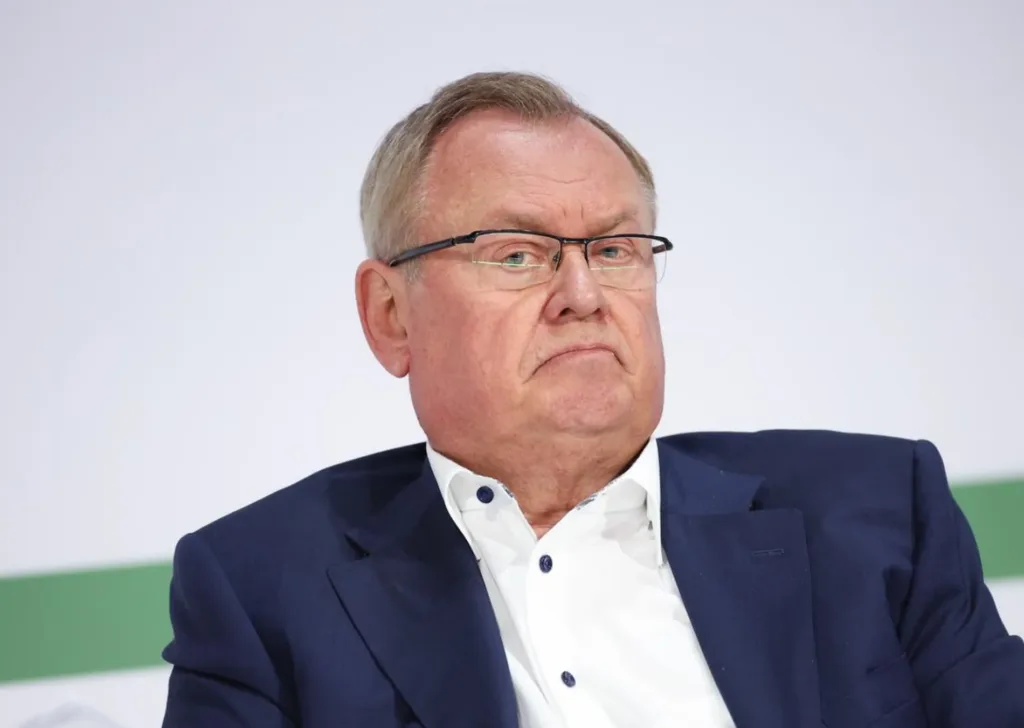
What Does the Draft 2027 Budget Say?
On October 1, 2026, the Russian government submitted the draft 2027 federal budget to the State Duma. The draft 2027 budget shows that problems with providing budget stimulus to the Russian military industry persist. Overall federal expenditure for 2027 is effectively frozen, with only a 0.4% increase over estimated actual 2026 spending.
This target appears entirely unrealistic given the experience of recent years. In 2026, the Russian government already tried to cap expenditure growth at 2.7%, as envisaged in the 2026 federal budget signed into law at the end of 2025. However, actual federal expenditure growth was 14.5% in the first nine months of 2026—the government could not keep its promise to cap spending. Increased military spending in 2026 also contributed to this, as indicated by the unusually high level of advance payments at the beginning of 2026 (advance payments traditionally go mostly to the Ministry of Defense).
This illustrates that the Russian government has trouble keeping expenditure under control. But modest indexation of military expenditure will not solve the problems of the military manufacturing sector described in this report; the sector needs a massive expansion of spending, which is not forthcoming. The draft 2027 budget indicates that the actual increase in planned military spending for 2027 is only in the range of 5–10%, which barely matches actual inflation and will not solve any major issues for the Russian military manufacturers.
On September 28, 2026, Reuters erroneously reported that Russia “plans to raise military spending by 27% in 2027,” creating the impression that, despite current budget difficulties, Russia still has the ability to significantly boost its military spending. “Russia plans to spend 17.1 trillion rubles ($202.58 billion) on defense in 2027, around 27% more than the 13.5 trillion rubles originally budgeted,” Reuters reported.
However, this interpretation of the RUB 17.1 trillion figure (which is itself correct) is wrong. Since 2025, Russia has not reported actual annual military spending; only planned figures have been available. As the experience of 2022–2024 shows, actual full-year military spending notably exceeded planned figures; this is almost certainly also the case for 2025–2026. This means that military spending in 2025–2026 was in reality not flat at about RUB 13.5 trillion as “planned” but continued to increase. Actual military spending for 2026 is likely at least in the RUB 15–16 trillion range, an assumption partially supported by the much higher level of advance payments by the Ministry of Finance in the first quarter of the year. Most budget advance payments go to the Ministry of Defense.
If that is the case, the planned increase in military spending for 2027 is not 27% but in the range of 5–10%, a rather modest increase that barely keeps pace with actual inflation and reflects how much Putin is struggling to provide additional financing to his military and military industries. Russian authorities may have intentionally promoted the “27% military expenditure growth” figure in the media as part of the “cognitive warfare” they use to demoralize Western policymakers and demonstrate that Russia “still has the ability to significantly boost financing of the war”—an ability it does not, in reality, have.
Thus, the actual growth in military expenditure in 2027 is estimated at 5–10% at most.
The publication of the draft 2027 federal budget immediately revealed how much the Russian government is struggling to keep its finances under control. First, the budget deficit figures are some of the highest to date: 3.2% of GDP for 2026 and 2.2% of GDP for 2027 (the highest deficit planned at the early stage of budget approval in recent years; the government has usually adopted the next year’s budget with a deficit of around 1% of GDP, only to admit overruns later).
Second, even with this high level of deficit, the government once again opted for massive tax hikes worth about 0.6% of GDP (nearly the same additional tax burden as the 2026 VAT increase). Most painfully, the new tax hikes will hit the economy where it hurts most: extra profits in the metals industry (one of the most profitable and investment-active sectors of the Russian economy) and private investment income will be taxed, likely further hurting capital investment, currently one of the weakest spots in the Russian economy (fixed investment contracted by 9.9% year-on-year in the first half of 2026, contracting for five consecutive quarters).
Third, the publication of the draft 2027 budget immediately triggered turmoil in the Russian financial market. According to Kommersant, “plans to increase borrowing in 2026–2027 have pushed OFZ yields to 16.8%, a one-and-a-half-year high; investors are concerned about the near-doubling of government bond issuances in the final quarter, given that demand remains weak due to the Bank of Russia’s tight monetary policy.” Markets cannot see where the Ministry of Finance will find the extra liquidity to meet the state’s borrowing needs, which is pushing interest rates higher.
The difficulty of finding sources for increased military spending is illustrated by federal spending on military personnel salaries. While many observers have focused on the size of the one-time bonuses paid for signing a contract with the Russian Ministry of Defense, the indexation of salaries for hundreds of thousands of Russian military personnel has been a far more contentious issue: the government proposes to index military salaries by only 4% from October 1, 2027, and by another 4% in both 2028 and 2029. These figures clearly fall short of current inflation, which officially stood above 7% as of mid-October 2026, and is estimated at over 15% in household surveys conducted for the Russian Central Bank by inFOM.
As Table 10 below shows, the Russian government plans to reduce overall military salary spending somewhat. Although a large part of the Russian military budget remains classified, we believe that the overwhelming majority of the classified expenditures relate to military R&D and production, whereas salary expenditures mostly remain public; the figures provided in Table 10 below reflect the government’s overall intent to reduce military personnel costs in 2027. This illustrates the current overall scarcity of funds for Russian military spending plans.
Under these conditions (plans to hold budget expenditure growth near zero in 2027, record deficits, and a struggle to keep the budget under control through massive, investment-depressing tax hikes and an enormous borrowing spree), there is simply no room for a new massive increase in weapons procurement spending comparable to the fiscal stimulus of 2022–2024. The military industry’s hopes for more generous state funding were dashed with the release of the draft 2027 budget.
There were hopes that direct fiscal stimulus might be replaced by cheap credit following cuts in the Central Bank’s key interest rate. But at the end of October 2026, the Russian Central Bank admitted that it has so far been unable to sufficiently tame inflation to allow for single-digit interest rates—the key interest rate forecast for 2027 was raised to 12.5–13.5% on average (currently 14%, among the 20 highest central bank interest rates in the world), and the Central Bank now predicts that the “neutral” key interest rate (the rate that corresponds to low inflation and does not impede economic activity and investment; estimated to be in the range of 7–8%) will not be reached before 2029. Thus, there are no cheap loans on the horizon for Russian military manufacturers.
Impact of Ukrainian Drone Strikes
One significant factor hurting the performance of Russian military industries appears to be Ukrainian drone and FP-5 “Flamingo” missile strikes against Russian military production facilities. These strikes have notably intensified recently: according to Ukrainian media estimates, at least 48 air strikes were carried out against Russian military-industrial facilities in the first half of 2026 alone, and strikes have continued, reaching as many as 11–13 successful strikes per month in some recent months. Strikes targeted a broad range of military sectors: manufacturers of missiles, electronics, ammunition, chemicals, and ships, as well as heavy machinery manufacturing plants. In June-August 2026 alone, Ukrainian strikes targeted enterprises including:
- the Titan-Barrikady plant in Volgograd, which manufactures launchers for the Yars, Topol-M, and Sarmat strategic missile systems, as well as for the Iskander-M operational-tactical missile system, which also appears to be involved in the production of the Oreshnik missile system;
- the Progress plant in Michurinsk, Tambov region, which produces equipment for missile and aviation control systems;
- the Elastik plant in Ryazan region, which manufactures aerial bombs, artillery ammunition, and components for precision-guided weapons;
- the VNIIR-Progress facility in Cheboksary, Chuvashia, which produces navigation equipment for Iskander-M and Kalibr missiles as well as for drones;
- the Ekran-Opticheskiye Sistemy plant in Novosibirsk, which manufactures components for night-vision devices;
- the Voronezh Semiconductor Device Plant, which produces electronics for Russian missile and air defense systems;
- the Kamensky Complex in Rostov region, which produces solid rocket fuel for the Uragan, Smerch, and Tornado-S multiple launch rocket systems and air-launched weapons;
- and the Progress Rocket and Space Center in Samara, which supports the Russian military satellite constellation.
While it is not possible to estimate the actual damage to Russian military enterprises from Ukrainian drone strikes, it can safely be assumed that it amounts to at least several hundred billion rubles and, at the upper end, trillions of rubles. These estimates can be derived from assessments of damage to civilian businesses and assets of comparable size, such as the Wildberries and Ozon marketplaces (damage up to RUB 1 trillion), or vessels damaged by strikes in the Black and Azov seas (estimated by Vladimir Putin as 1% of GDP, which would be RUB 2 trillion). It is reasonable to assume that the total damage from dozens of Ukrainian strikes on Russian military enterprises is at least within a similar range.
Recall that the revenue of Rostec, Russia’s largest military producer, was RUB 4.5 trillion in 2025, with net profit of only RUB 76 billion, as reported by Rostec CEO Sergey Chemezov; the total military revenue of Russian military manufacturing enterprises is estimated to be in the range of RUB 10+ trillion per year (see Table 1). The damage from Ukrainian strikes is therefore likely to be very significant relative to military industry revenues, and almost certainly exceeds the industry’s total annual profits.
Some Russian regions with a heavy concentration of military production have clearly felt the impact of Ukrainian strikes. For instance, Ukraine has repeatedly hit military production in Bryansk region, which borders northeastern Ukraine: in October 2025, a successful strike hit the Bryansk Chemical Plant (which produces gunpowder, explosives, and rocket fuel components), and in March 2026, the Kremniy EL microelectronics plant, which produces components for missiles used to attack Ukraine. In the first seven months of 2026, industrial output in Bryansk region fell by 12% year-on-year, against 5–15% growth in 2023–2024 and early 2025. It is difficult to separate this from the other negative economic developments described above that may also contribute to the decline, but the damage from Ukrainian strikes arguably contributes to the sharp contraction in output.
Impact of Corruption
Corruption clearly has a major negative impact on the economics of the Russian military industry, although it is very hard to quantify. Arrests of officials, executives of military enterprises, and their contractors occur regularly; here are just some of the most publicized recent examples:
- Vedomosti, “The heads of two firms have been arrested for embezzling over 460 million rubles from the Russian defense industry”, March 2026;
- Kommersant, “Head of a defense enterprise detained in Rostov-on-Don on suspicion of fraud”, March 2026;
- Novaya Gazeta, “CEO of the defense plant that manufactures Sarmat missiles has been detained; he may be implicated in a bribery case”, May 2026;
- Rapsi, “Entrepreneur arrested for fraud involving the procurement of military equipment worth 600 million rubles”, May 2026;
- Chekhov Vid (Moscow Region), “Embezzlement of state defense order funds in the Moscow region”, May 2026;
- Vse Novosti Nizhny Tagil, “Deputy head of Uralvagonzavod arrested in embezzlement case involving state defense order”, May 2026;
- CurrentTime TV, “Arrests of drone developers have begun in Russia: “They take state funds and sell Chinese drones to the military under the guise of Russian-made ones”, August 2026.
Given that Russian military industry profits are low, totaling no more than a few hundred billion rubles (net profit of Rostec, Russia’s biggest arms producer, totaled RUB 76 billion in 2025), it is evident that the embezzlement of state weapons procurement funds significantly diminishes the sector’s profits.
Corruption is also a top-down phenomenon in Russia that cannot be solved at the enterprise management level alone; direct evidence of this is a series of criminal cases against high-level officials of the Russian Ministry of Defense who served under ex-Minister Sergey Shoygu, where direct damage is measured in billions of rubles. Shoygu was removed from the ministry in May 2024; however, the pace of arrests and criminal cases against corrupt officials and executives connected to Russian military industries has not slowed in the two and a half years since and, if anything, seems to be increasing.
Independent Russian anti-corruption investigators have frequently uncovered rampant corruption among the top executives of Russian military corporations, including such figures as Boris Obnosov, CEO of Joint-Stock Company “Tactical Missiles Corporation” (KTRV), or Nikolay Kolesov, CEO of “Russian Helicopters”.
Both are personal protégés and former aides of Rostec’s powerful CEO Sergey Chemezov, and both remain in their posts to this day despite the exposure of their extremely lavish lifestyles, which shows that top military industry leaders like Chemezov have no interest in combating top-level corruption in their sector. Chemezov himself was exposed as owning a luxurious apartment in Moscow, with his stepdaughter owning a luxurious yacht worth $110 million, and his inner circle owning high-end real estate in Spain—further evidence that corruption among the Russian military industry leadership is widespread.
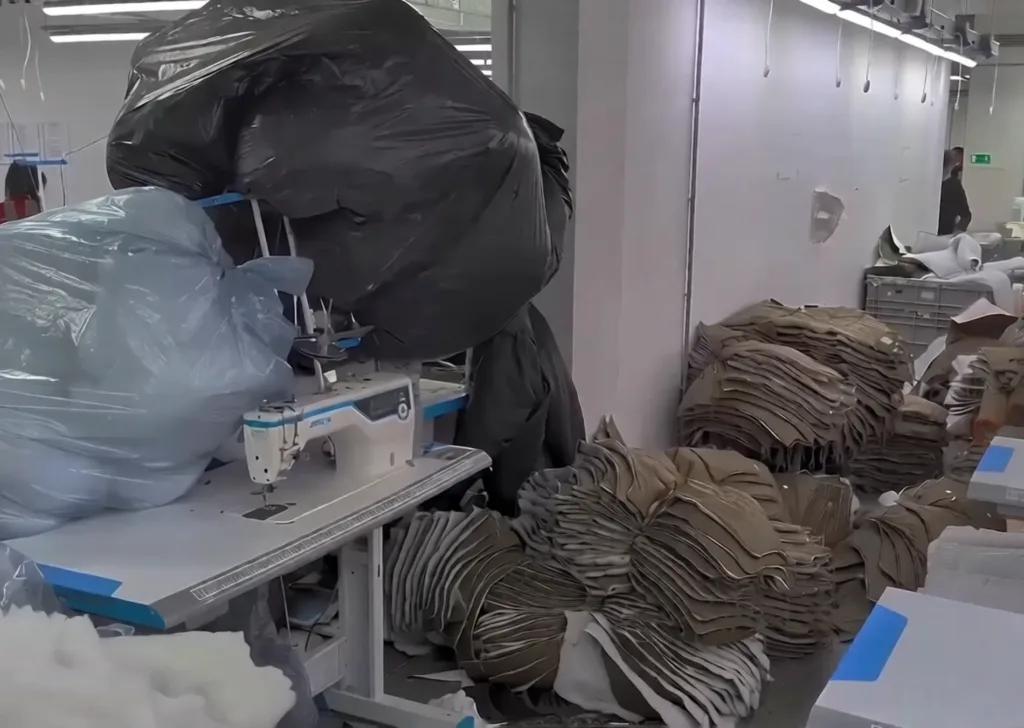
One of the most notable recent cases was the arrest of Dmitry Semizorov, deputy director of the major tank manufacturer Uralvagonzavod (UVZ), in May 2026. UVZ protested the arrest, stating that Semizorov “made a significant contribution to the modernization of armored vehicles, the implementation of new technological processes, and the organization of mobile repair teams to restore damaged equipment in the combat zone,” and that “Semizorov’s absence from the workplace could negatively affect the fulfillment of the state defense order and cooperation with the Ministry of Defense.” However, UVZ’s protests were ignored, and Semizorov remains under arrest.
Notably, the charges against him involve embezzlement not at UVZ but in his previous positions: in 2012–2018, he served as general director of TsNIITochMash (part of Rostec; a developer of small arms and related simulators, individual field equipment, control systems for precision-guided munitions, field artillery systems, etc.), and in 2019–2023, as general director of Uraltransmash (Russia’s primary producer of self-propelled artillery). The arrest of such a high-profile official from the Rostec system, who served for many years in top posts at various systemically important enterprises, shows how entrenched corruption is in the Russian military-industrial complex.
Deep-rooted corruption will most likely continue to undermine the sector’s economic performance, profits, and investment capacity; the sector’s monopolization, opacity, and cronyism will hardly allow the industry to overcome the root corruption problem.
Impact of Western Sanctions
The impact of Western sanctions on the Russian military industries is multidimensional. First, there is a macroeconomic impact, which affects military enterprises quite significantly through rising expenses, the adverse effects of high interest rates and exchange rate movements, limited access to foreign markets, and constraints on the government’s ability to provide further fiscal stimulus to military manufacturers (as a result of budgetary constraints explained above in the “Fiscal stimulus of 2022–2024: impossible to repeat” section).
As for the specific impacts of sanctions, we would emphasize two major issues that significantly impede the development of the Russian military industries, as supported by statistics and other evidence:
- Lack of access to imports of electronics;
- Limitations related to heavy reliance on imported high-precision machine tools, including CNC machines.
Reliance on electronics imports, sanctions, and Russia’s inability to develop its own production base recently prompted the Russian government to abandon its earlier plans to raise the share of domestic electronics in the public administration system to 80% by 2030; the target for 2030 is now set at just 58.7%, an implicit admission of continued dependence on imported technology and components for electronics production.
As the statistical data above show, manufacturing of “computers, electronic and optical products” (which includes military radars, radio electronics, optical devices, etc.) suffered the largest setbacks in output (see Table 5 above) and fixed investment (Tables 6.1–6.2 above), despite being relatively more profitable than other military manufacturing sectors (see Table 7 above). The factors constraining output growth and investment in “computers, electronic and optical products” are therefore less likely to be low profitability or a shortage of investment funds; in this respect, the military electronics and optics sector is doing better than manufacturers of other military items. What, then, is the problem?
Constraints imposed by sanctions clearly play a role here (they are also a major issue for civilian electronics production and import substitution): electronics industry experts directly link the output contraction to sanctions and dependence on imported technology. Another factor is the worsening overall economic situation in Russia and cuts in investment by electronics-consuming industries, which undermine domestic demand for electronic components and diminishes profits of electronics manufacturers, curbing their investment and expansion efforts.
Dependence on imports of machine tools also remains critical. According to a July 2026 poll by the Russian Union of Industrialists and Entrepreneurs, over half of Russian industrial enterprises were unable to find alternatives to Western machine tools; 45% described their need to replace machinery as “urgent,” and another 7% as “critical”. In 2025, Rostec CEO Sergey Chemezov estimated dependence on imports of machine tools at around 70%:
Sergey Chemezov, CEO of Rostec, in an interview with Expert magazine, March 2025:
“[With import substitution,] we are only at the very beginning of the journey. For instance, imports account for up to 70% of the medical equipment market, and the situation is the same for the machine-tool industry.”
Russia has tried various ways to keep importing critical machine tools: clandestine imports from Western countries, the use of intermediary jurisdictions for sanctions circumvention such as Central Asian countries, and imports of machine tools from China. However, restrictions have been tightening lately: Western countries, particularly the European Union, have been increasing pressure on countries supplying Russia with vital machine tools.
The European Union’s 20th package of sanctions against Russia, adopted in April 2026, included a ban on exporting digitally controlled machine tools and radio equipment to Kyrgyzstan. The Council of the EU explained that “thorough analysis of trade data showed a significant surge in re-export of common high-priority items through Kyrgyzstan to Russia.” In 2025, Russian manufacturers acknowledged that China had begun to limit exports of machine tools to Russia, wary of the threat of secondary sanctions:
Ildar Nuriev, owner of Tatpromstan, speaking at the TEMP conference, October 2025:
“China has restricted the supply of high-tech equipment, although this is rarely mentioned publicly. If previously you could obtain machines with a 3–4 micron precision, now you cannot. A special export license is required for this.”
Although it is difficult to quantify the contribution of Western sanctions to trends such as the major slowdown in output and contraction of investment in electronics production, or the shortage of machine tools needed to expand the military manufacturing base, it is clear that they make a notable contribution to the overall slowdown of output and investment in the Russian military industries.
What Next?
As the above analysis shows, by the fall of 2026 Russian military industries had found themselves in a difficult position. Since 2022, they have been heavily reliant on the state’s fiscal stimulus to increase output—which they did. (Note that statistically reported output is measured in rubles rather than in physical units, which makes real productivity trends difficult to assess. Physical output growth may be much smaller: in a study reported by Vedomosti in August 2026, analysts calculated that revenue growth in the Russian industrial sector between 2021 and 2025 was driven primarily by price increases rather than expanded production and began to decline in 2026.)
However, the capacity to keep increasing fiscal stimulus to the military manufacturing sector has been exhausted by Russia’s severe budgetary crisis, as explained above. While the government may still have some room for maneuver and adjustments to keep certain military production programs running, and to keep key troubled enterprises afloat, it does not have the ability to provide the enterprises with another round of massive stimulus comparable to that of 2022–2026.
At the same time:
- Russian military manufacturers largely failed to make good use of the 2022–2026 fiscal stimulus to significantly expand their capital production base. This is evident from many indicators: output is flattening out, the government speaks of a “production plateau,” and the sector’s leadership admits that dependence on imports of machine tools still stands at around 70%.
- Funds spent on investment in 2022–2026 were, to a significant extent, directed toward “substitutive” investment (forced replacement of Western equipment following the departure of foreign manufacturers). In many cases, no real modernization or expansion of the production base took place.
- The problem of capital stock depletion is exacerbated by accelerated depreciation of equipment because of excessively intensive utilization schedules (working in three shifts).
- Current economic difficulties are taking a major toll on military manufacturers: they lack the profits needed to finance capital expenditure programs (as Rostec CEO Sergey Chemezov notably admitted during his meeting with Prime Minister Mishustin on July 15, 2026), the government cannot provide major new stimulus, and credit is too expensive.
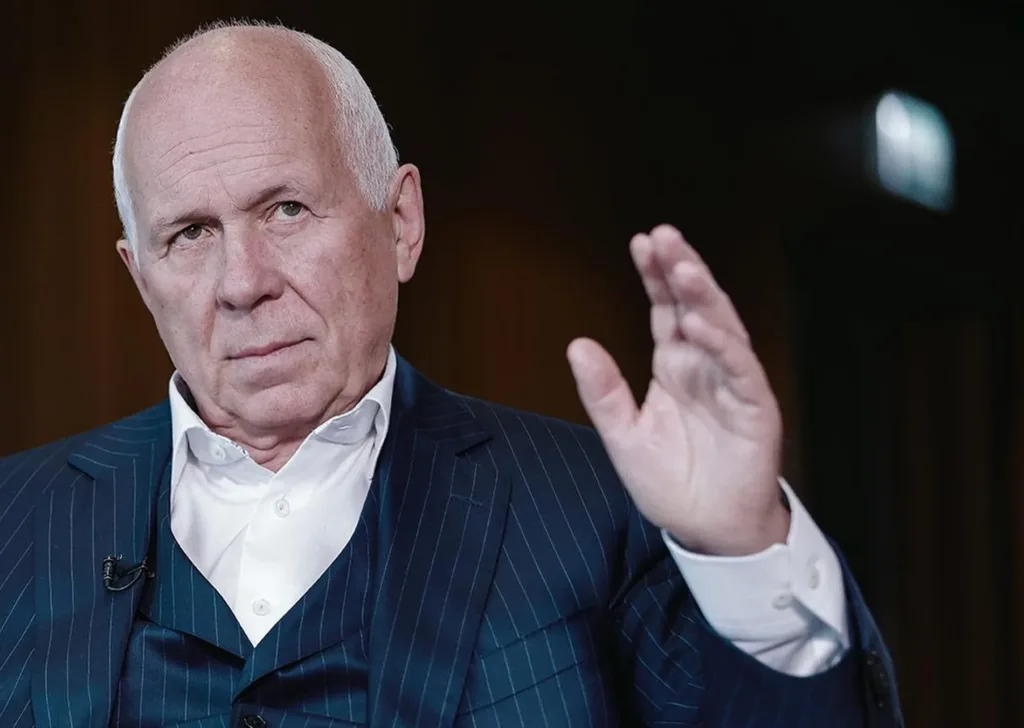
With the Central Bank’s key interest rate currently at 14%, average loan rates for nonfinancial enterprises stood at about 17% in July 2026. For military enterprises, the loan rates actually available are notably higher, reportedly well over 20%, according to sector officials. Such rates are far higher than the sector can afford: its rate of return is many times lower than the current cost of financing.
Moreover, persistently high inflation prompted the Russian Central Bank to pause key interest rate cuts for the first time in one and a half years—and the future remains uncertain, as the Central Bank admits that inflationary factors continue to dominate, and the space for further interest rate cuts has shrunk. There is little hope of cheaper money at least until the end of 2027, or beyond, unless the Central Bank manages to tame inflation dramatically, for which there is little real prospect. (The inflation and macroeconomic outlook is beyond the scope of this report, but our main assumption is that cheap credit will not be available for the Russian military industry for the foreseeable future.)
Besides expensive credit, there is the insufficient availability of long-term loans in the Russian financial system, another direct consequence of Western sanctions, and another factor about which military manufacturers keep complaining:
Sergey Chemezov, CEO of Rostec, in an interview with Expert magazine, March 2025:
“We need long-term, low-cost capital because high-tech products have long production cycles… The investment projects we undertake have long timeframes. This applies to any sector, whether defense or civil… In other words, the only projects guaranteed to get off the ground right now are those with state funding.”
In 2026, Russian military manufacturers have already seen a significant contraction of fixed investment (see Tables 6.1–6.2). Fixed investment is a good leading indicator of future output, particularly in industries with such accelerated depreciation of equipment. The fixed investment crisis in Russian military industries is arguably the key reason why Russian government officials (notably, Minister of Industry and Trade Anton Alikhanov) began to speak publicly about the sector’s coming “production plateau.”
However, if current trends continue, what follows will quite likely be not a “plateau” but an outright contraction of output. Given the scarcity of government funds, the Russian authorities will have to choose which sectors receive continued state financial support and which are abandoned.
The only scenario in which the Russian government would gain major financial relief and the ability to provide military manufacturing with fiscal stimulus on the scale of 2022–2026 is a significant easing of Western sanctions. High oil prices, as the first eight months of 2026 and the consequences of the 2026 war in the Persian Gulf have shown, are unlikely to last very long: they are followed by significant demand destruction in oil-consuming economies and a subsequent fall in global oil demand and prices. Meanwhile, Russia’s wartime economy, isolated from international financial markets, is so short of funds and requires such massive fiscal stimulus (for civilian industries as well) that heavy government spending outstrips the extra revenue from expensive oil (as seen in the first eight months of 2026).
Other negative factors worsening the financial condition of Russian military manufacturers include:
- Ukrainian drone strikes, which most likely inflict financial damage significantly exceeding the sector’s profits;
- Western sanctions, which specifically limit access to critical technology (electronics, machine tools), impairing production.
Against this backdrop, the Russian military manufacturing sector has made remarkably little progress, if any, in improving its economic efficiency and reducing costs. This is explained by a number of factors, including:
- the sector’s outdated, overregulated economic model inherited from the Soviet era;
- corruption, monopolism, lack of transparency and competition;
- limited overlap with civilian production and reduced access to export markets, which deprive the sector of potential sources of revenue diversification and weaken its customer focus.
The Russian government is currently working on measures to encourage cost savings among military enterprises (e.g., allowing them to keep the profits earned from cost-saving measures), but in the absence of the full range of features inherent in a market economy, including functioning private property, shareholder control, and market competition, these efforts are highly unlikely to succeed. In this report, we draw parallels between these efforts and the Soviet-era practice of khozraschet, which granted the management of state-controlled enterprises a limited degree of economic autonomy without dismantling the foundations of a tightly state-controlled, nonmarket, planned economy. As the Soviet experience with khozraschet shows, this approach simply will not work.
This is the environment in which the Russian military sector finds itself at the end of 2026. Although Russia is nearing the fifth anniversary of its full-scale invasion of Ukraine, systemic solutions to its major challenges have not been found and seem unlikely to be found while the war and Russia’s international isolation continue.
Let us take a closer look at what is happening at specific military enterprises, based on the data that remain available.
Part II. Russian Military Enterprises: An Overview
This part provides an overview of basic economic performance indicators for major Russian military-industrial enterprises for which important data remain available. While the Russian government has classified most of the data, some are known. Our analysis is based on the methodology described in the “Methodology” section at the beginning of this report. The following is what we know about the performance of specific enterprises. This part presents condensed data showing the most relevant aggregate indicators of company performance; more detailed sets of the primary data used for this report are available upon request.
Military Aircraft Manufacturing Industry
As the analysis below shows, the Russian military aircraft manufacturing industry faces some of the most serious challenges among Russian military producers. Its enterprises largely fail to generate profits and are, for the most part, loss-making. The industry is heavily indebted, and its debt keeps growing rapidly despite some earlier debt relief; with persistently high interest rates, large debt service payments erode whatever profitability remains.
While suppliers of finished products (aircraft and helicopters) to the Ministry of Defense, such as OAK and “Russian Helicopters,” at least try to keep their finances in some sort of balance, the situation is much worse further up the supply chain. Producers of vital components such as engines (ODK) face not only steep losses but also significant nonpayment from their ultimate customers, the aircraft producers, which creates a very dire financial situation.
This is staggering, because a significant part of the increase in Russian military spending since 2022 has gone into aircraft manufacturing; over a third of Rostec’s revenues currently go to its aircraft manufacturing subsidiaries. It is also worth noting that the military aircraft industry has limited relevance to actual combat operations in Ukraine. The results of heavy spending on aircraft production after all these years are unimpressive, to say the least: lack of profitability, mounting losses, debt, nonpayment, and so on. Another heavy burden on the aircraft industry is its inability to deliver competitive civilian aircraft at scale; this line of business keeps eroding operating cash flows while contributing little to military aircraft manufacturing capability itself.
OAK (PSC “United Aircraft Corporation,” Also Known as UAC) and Its Subsidiaries
OAK manufactures most Russian military aircraft, as well as civilian aircraft such as the MS-21, SJ-100, Tu-214, IL-114, and IL-96. Its key subsidiaries are:
- OAK’s Military Aviation Division, formed through the merger of JSC Sukhoi Company and JSC RSC MiG (both liquidated as independent legal entities in 2022). Manufactures the Su-34, Su-35, and Su-75 fighter jets, the Su-57 multirole aircraft system, and the Yak-130 and Yak-152 training aircraft.
- PAO Tupolev. Manufactures modern missile carriers that form one of the three components of Russia’s “nuclear triad,” including the Tu-22M3 and Tu-160 supersonic strategic bombers and the Tu-95 turboprop.
- Ilyushin Aviation Complex (PAO “IL”). Manufactures the IL-76 heavy military transport aircraft, its extensively modernized version, the IL-76MD-90A, and the IL-78M-90A tanker aircraft based on the latter.
- PJSC Yakovlev (until July 2023, PJSC NPK Irkut) is the parent company of OAK’s civil aviation division but also manufactures military products, including Su-30 fighters used in the war against Ukraine (among other roles, as carriers of aerial bombs fitted with UMPC kits [KABs] and Kh-59MK2 missiles), Yak-130 combat training aircraft, and Yak-152 training aircraft.
- PJSC Taganrog Aviation Scientific and Technical Complex named after G.M. Beriev (TANTK Beriev). Manufactures Be-200 seaplanes and amphibious aircraft and is involved in the integration of airborne early warning and control systems, as well as modernization and testing for A-50 and A-100 airborne early warning and control (AEW&C) aircraft and the Tu-95MSM missile-carrying bomber.
OAK entered the period of the full-scale invasion of Ukraine with heavy losses: in 2021, its IFRS net profitability was −4%. In late 2020 and early 2021, before the full-scale invasion, OAK secured a massive write-off of commercial debt. Before the write-off, its total debt to Russian banks exceeded $8 billion (more than RUB 600 billion), which was reduced by 46%, to just over $4 billion (RUB 327 billion), according to Rostec CEO Sergey Chemezov. Chemezov admitted that negotiations with banks on debt write-off were “difficult,” “banks didn’t want to do this,” and that the write-off deal was achieved only through pressure from Vladimir Putin and with the help of state subsidies.
But by the end of the first half of 2026, total debt had grown rapidly and once again exceeded $7 billion. Given high interest rates, this heavy debt is one of the factors depressing the company’s profitability.
While OAK’s revenue grew in 2021–2025 by more than 60% in ruble terms and by more than 50% in dollar terms (and by another 8% in the first half of 2026), the company was still unable to establish itself as a profitable business. It faced heavy losses throughout 2021–2024 (net profitability of −4.2% in 2021, −6.1% in 2022, −7.3% in 2023, and −2.6% in 2024), before reporting its first net profit in years, about $110 million under IFRS, in 2025 (1.3% net profitability).
However, this modest 2025 profit was achieved only through an undisclosed sale of minor assets worth about $160 million; without these proceeds, the company would have posted a loss in 2025. In the first half of 2026, OAK returned to IFRS-reported losses, which totaled about $250 million (net profitability of −7.1%).
OAK’s overall financial situation is severely weakened by its involvement in civilian aircraft production, which is still in its early stages and far from commercial deliveries, which continue to be postponed. Positive financial results from sales of new civilian aircraft (MS-21, SJ-100, etc.) will not be seen before 2030 at the earliest. They may never materialize, given the unproven operational effectiveness of new Russian civilian aircraft and likely cost overruns (this topic is beyond the scope of this report).
OAK remains overwhelmingly dependent (by over 90%) on state budget support and aircraft procurement. It is not yet supplying civilian aircraft to airlines in large numbers as previously promised; most of OAK’s revenue comes from supplies of military aircraft to the Russian Ministry of Defense and military aircraft repair/modernization. Supplies of civilian aircraft to airlines are also heavily subsidized by the state. Some exports of military aircraft continue, such as Su-34 aircraft to Algeria, but only on a limited scale.
OAK’s corporate structure includes a foreign trade subsidiary, JSC V/O Aviaexport, whose financial statements show near-zero export revenues (down from about $4 million in 2021 to about $1 million in 2025; revenues from the Su-34 sale to Algeria are received through Rosoboronexport). Aviaexport, OAK’s export sales arm, explicitly attributes the drop in export revenue to sanctions imposed after February 24, 2022, which affected the banking sector and international payment systems, thereby preventing the exporter from receiving funds from foreign counterparties.
In January 2026, the Russian government decided to inject more than $6 billion of additional capital into OAK through a new issue of 2.06 trillion shares via private placement. The government also exempted OAK from dividend payments despite the nominal profit achieved in 2025 (as explained above, this was largely a “paper profit” from a noncore asset sale, while the core business continued to generate losses).
OAK is facing growing claims from counterparties, clearly indicating the company’s mounting solvency issues. According to the Russian arbitration case database, out of 1,014 lawsuits filed against the corporation since its inception in 2006, 945 lawsuits totaling about $400 million (representing 93% of the total number of claims and over half of the total monetary value of claims against the corporation) were filed after February 24, 2022.
Major plaintiffs during this period include JSC United Engine Corporation (known as ODK or UEC), also part of the Rostec Group, and its subsidiary, ODK-UMPO, which supplies engines for Su-34 and Su-57 fighter jets. In 2024, they jointly filed six lawsuits against OAK totaling more than $130 million, clearly related to overdue payments for aircraft engines; in at least three cases, the courts partially granted ODK’s claims for compensation. Because the proceedings were closed, the specific amounts awarded cannot be determined.
In mid-2025, OAK planned to cut more than a quarter of its managerial staff in Moscow—about 1,500 employees. Job search websites carry negative reviews from employees at OAK branches, citing low wages, harsh working conditions in the workshops, and management’s refusal to address complaints from staff, including engineers, design engineers, and foremen.
OAK’s main subsidiaries that publish financial reports show persistent losses and growing debt, including in the latest reporting periods: Yakovlev for H1 2026, Ilyushin for H1 2025 (in November 2025, the Russian Central Bank exempted Ilyushin from mandatory publication of financial reports, after which it stopped doing so), and Beriev for 2025.
Tupolev also posted continued losses in 2022–2023, the last period for which it published financial accounts; analysis of arbitration proceedings brought against Tupolev by the oil company Tatneft for nondelivery of Tu-214 aircraft reveals that, as of 2025, Tupolev was still operating at a loss and facing significant difficulties in servicing its debt; according to press reports, representatives of Tupolev stated during the proceedings that the enterprise was unprofitable and faced a risk of bankruptcy should the plaintiff’s claims be granted.
Tupolev’s representatives also stated during the proceedings that 85% of the company’s production capacity is used for military purposes, which carry a contract profit margin of 4% (supporting the analysis in the section “Why such a struggle for survival?” above).
Tatneft’s lawsuit against Tupolev is a remarkable case not only because it revealed the poor financial state of a key manufacturer of the Tu-22M3, Tu-160, and Tu-95 strategic bombers, but also because it ended in victory for Tatneft, which was awarded more than $130 million in damages for nondelivery of the Tu-214 aircraft, an amount that the state-financed aircraft manufacturer is simply unable to pay. The decision has been upheld by higher courts. That amount is comparable to Tupolev’s annual revenue according to its latest available financial reports.
This report omits the details of many lesser court cases against Russian military aircraft manufacturers, but the general conclusion is that these producers are beset by court claims and are struggling to pay their counterparties and deliver civilian products. The number and financial value of court claims against Russian military aircraft manufacturers have greatly increased since the full-scale invasion of Ukraine in 2022.
In general, OAK’s subsidiaries, which entered the post-2022 wartime period in already weak financial condition, were never able to escape their financial difficulties in 2022–2026 despite significant revenue growth. Most military aircraft manufacturers continue to operate at a loss; short periods of slim profitability can largely be explained by state financial aid or the sale of noncore assets; debt is growing and, at current interest rates, remains expensive, further diminishing hopes for profitability. Export markets deliver insignificant revenue, whereas domestic civilian aircraft sales have not even begun on a commercial scale, with expected certification dates pushed further into 2027, further worsening the financial situation of OAK and its subsidiaries.
JSC “Russian Helicopters” and Its Subsidiaries
“Russian Helicopters” publishes IFRS financial reports, which show that, in the first six months of 2026, its net profit shrank to zero (RUB 0.01 billion), after two relatively profitable years in 2024–2025. Even so, net profitability in 2022–2025 was quite low: 1.8%, 2.6%, 4.3%, and 1.6% (about $60 million, $70 million, $140 million, and $60 million), respectively. This happened despite the ruble revenue of “Russian Helicopters” almost doubling in 2021–2026; rising expenses eroded any chance of improving profitability.
“Russian Helicopters” suffers notably from the nonpayment problem affecting all Russian military manufacturers: revenue growth was accompanied by an explosive increase in accounts payable, which grew almost threefold in 2022–2025.
“Russian Helicopters” did, however, manage to reduce its debt significantly over the past couple of years: total debt peaked at more than $2 billion at the end of 2023 but was reduced to essentially prewar levels, just over $1 billion, by mid-2026. However, due to a sharp decline in profits and EBITDA, the company breached financial covenants, which gives creditors the right to demand early repayment of the debt (against a backdrop of weak operating results). While such a demand is unlikely because the creditor banks are controlled by the Russian government, the situation is also bad for the banks given the Central Bank’s tightening regulatory requirements, and it will have to be resolved somehow. In any case, shrinking profitability of “Russian Helicopters” will complicate relations with creditors further down the road.
“Russian Helicopters” is embroiled in multiple lawsuits that expose the severity of nonpayment problems within the Russian military-industrial complex. Most of its major helicopter-producing subsidiaries, including the Kazan, Kumertau, and Arsenyev plants and Rostvertol, have faced multiple court claims from suppliers, largely over unpaid components.
One of the most notable was a much-publicized case between the Kazan helicopter plant and St. Petersburg-based ODK-Klimov, which sued the Kazan plant over TV3-117VM engines for Mi-8 helicopters that were delivered but not paid for on time. The total amount of claims from ODK-Klimov under that contract exceeded $20 million. The Kazan plant ultimately paid about half of that sum, but only the amount due for the engines themselves, excluding penalties; ODK-Klimov insists that penalties must also be paid, because it was forced to borrow at high rates to keep production running while the nonpayment continued.
Notably, ODK-Klimov and Kazan helicopter plant are both subsidiaries of Rostec, but the corporation has failed to help its divisions settle their nonpayment disputes internally, which is why they are forced to go to court. A similar example involving “Russian Helicopters” is the court claims filed by subsidiaries of JSC Concern Radio-Electronic Technologies, or KRET (another part of Rostec) against Rostvertol for unpaid electronic equipment used in helicopter production. The claims, worth more than $15 million, were filed in 2025, and subsequent court proceedings have been classified.
ODK (JSC “United Engine Corporation”) and Its Subsidiaries
ODK specializes in manufacturing and repairing aircraft engines—primarily for military purposes (since Russian civilian aircraft engine production is still in its early and experimental stages), and published IFRS financial reports throughout 2022–2026. These reports show that the corporation has suffered heavy losses over the past few years.
ODK was relatively profitable in the early stages of the full-scale invasion of Ukraine: its net profitability in 2022 and 2023 was 12.4% and 9.8%, respectively. In 2024, however, it shrank to just 0.01%, followed by heavy losses in 2025 and the first half of 2026 (net profitability plunged to −14.8% and −16.9%, respectively). Factors contributing to the mounting losses include growing expenditures (a broader problem in the Russian economy caused by Western sanctions) and expensive credit.
Contrary to the military sector’s public claims that the Central Bank’s high interest rate is to blame for enterprises’ troubles, the main factor contributing to ODK’s mounting losses was the rapid growth in operating expenses, which increased by more than 40% in 2022–2026, outpacing the roughly 30% increase in revenues. Interest expenses, which more than tripled over the same period, also reduced profitability, but they are much smaller in scale (about 15% of total operating expenses) and are not the main factor here.
One interesting feature of ODK’s business is that it is by definition not a final supplier to the Russian Ministry of Defense but an intermediate supplier in the middle of the value chain: its main products, engines, are intermediate goods, and its main customers are other military enterprises that assemble aircraft and helicopters.
This is why ODK suffers far more than many other vertically integrated corporations in the Russian military sector from the major problem plaguing military manufacturing: nonpayment. In 2022–2026, ODK’s total revenue grew by about 30%, whereas accounts receivable grew much faster over the same period, by more than 50% as of mid-2026 compared with early 2022. At the peak, at the end of 2024, accounts receivable were 85% higher than in January 2022; the situation has eased somewhat since then.
It is fair to say that most of the revenue growth in 2022–2026 ended up as new unpaid receivables rather than as actual cash inflow. As noted above in the sections on OAK and “Russian Helicopters,” ODK is one of the main parties suffering from payment problems caused by aircraft and helicopter manufacturers, and it is pursuing extensive litigation against them.
This shows how badly the nonpayment problem is hurting the performance of Russian military manufacturers. It also shows the severe disadvantage faced by manufacturers of intermediate goods, such as ODK, which do not have the privilege of supplying final products to the Russian Ministry of Defense.
Among ODK’s subsidiaries, one of the worst cases is ODK’s key factory, ODK-UMPO, the Ufa engine-building plant (which manufactures engines for the Su-34, Su-35, and Su-57 military aircraft). Its deteriorating financial performance largely drives the downward trajectory of ODK’s consolidated financial indicators.
ODK-UMPO’s debt rose by 60% in 2021–2026 and now exceeds $1 billion, against much more modest revenue growth of 33% over the same period; developing new engines requires significant upfront investment, while borrowing is expensive. At the same time, the enterprise has shown a complete inability to control costs: operating costs in 2025 were 87% higher than in 2021, far outpacing revenue growth. In the first half of 2026, operating costs fell by about 15% year-on-year, but in annualized terms they are still about 60% higher than in 2021, while revenue in 2026 is only about a third higher than in 2021.
Unsurprisingly, ODK-UMPO’s net profitability has been shrinking rapidly: from a relatively high (by industry standards) 18.1% in 2021, to 5.3%, 10.5%, and 6.4% in 2022, 2023, and 2024, respectively, and then to negative figures: −11.8% in 2025 and −6.7% in the first six months of 2026. In 2025–2026, ODK-UMPO reported heavy losses; its overall solvency has been called into question: by the end of August 2026, three companies had filed bankruptcy petitions against ODK-UMPO (one of the claimants later withdrew its claim). Deteriorating finances and repeated bankruptcy filings by creditors prompted ODK-UMPO to classify its financial reporting in mid-2026 and to seek the Russian Central Bank’s permission to be exempted from the requirement to publish financial information.
Manufacturers of Aircraft Missiles and Ammunition, Aerial Bombs
In this subsector, the dominant player is KTRV (JSC “Tactical Missiles Corporation”), the manufacturer of missiles, including those actively used to attack Ukraine (Kalibr, Kh-101, Kh-38, Kh-59, Kh-69), guided bombs, torpedoes, etc. Financially, KTRV is doing much better than many other Russian industrial enterprises, being notably more profitable. Recently, however, its revenues appear to have plateaued, in line with the Russian government’s broader difficulties in allocating more money for weapons procurement, and the corporation faces many other challenges, explained below.
JSC “Tactical Missiles Corporation,” Known Under the Russian Abbreviation KTRV
KTRV is 100% government-owned and does not publish its financial reports; only limited press releases providing information about its financial indicators are available. These indicate massive growth in KTRV’s revenues since the beginning of the full-scale invasion of Ukraine in 2022:
- In 2021, KTRV’s total revenue was reported at RUB 300 billion (about $4 billion), of which $1.4 billion (over a third) came from exports;
- In 2024 (the latest publicly reported full year), KTRV’s revenue exceeded RUB 1 trillion (about $11 billion), the overwhelming majority of it from the Russian state and only 3–4% ($370 million) from arms exports, indicating a severe contraction of export revenues;
- Since 2024, KTRV’s revenue growth has apparently flattened: in May 2026, KTRV CEO Boris Obnosov admitted during his speech at the Congress of the Union of Machine-Builders that the corporation’s revenues had stabilized at around RUB 1 trillion.
Before the full-scale invasion of Ukraine in 2022, KTRV was quite profitable (over 10% net profitability), as were some of its key subsidiaries. Although most of KTRV’s subsidiaries are not public and do not disclose their financial statements, limited available data suggest that NPO Mashinostroyeniya, for instance, the manufacturer of P-800 Oniks and Zircon missiles, had about 10% net profitability before the 2022 full-scale invasion of Ukraine.
Some of the KTRV subsidiaries that still publish financial accounts are doing relatively well. For instance, the Arzamas Research and Production Enterprise Temp-Avia showed about 10% net profitability in 2022–2025 while its revenue increased 4.2-fold—albeit against a backdrop of mounting debt (a 19-fold increase from end-2021 to end-2025, from around zero to about 40% of annual revenue) and accounts payable (a nearly sevenfold increase over the same period).
Temp-Avia manufactures navigation and automatic control systems for unmanned aerial vehicles, inertial control systems, inertial measurement units, gyrostabilizers, primary information sensors, air horizon sensors, and integrated backup flight and navigation instrumentation systems, producing components for Kh-101 missiles, UMPB D-30SN precision guided glide bombs, UMPK munition guidance kits, Izdelie-30 cruise missiles, and Su-57 fighter jets.
Another major KTRV subsidiary that publishes its financial accounts is the Smolensk Aviation Plant (SmAZ), manufacturer of Kh-59 missiles, as well as components for Kh-101 missiles, and some other aerial equipment. While SmAZ’s revenues increased nearly eightfold between 2021 and 2025 (from RUB 6 billion to RUB 50 billion), its net profitability, after rising from 3.9% in 2021 to 12.3% in 2023, began to decline, falling to just 3.2% in 2025. While SmAZ has almost no debt, its accounts payable exploded 39-fold between 2021 and 2025 (from RUB 1.5 billion in 2021 to RUB 57 billion in 2025); a significant part of that consists of advance payments received from the Ministry of Defense, likely reflecting delays in missile deliveries.
Signs of pressure on KTRV’s profits have recently emerged. The corporation’s leadership complained about cost pressures and “the need to organize systematic work to reduce costs,” according to Boris Obnosov’s remarks at the Congress of the Union of Machine-Builders in May 2026 (see reference above). In 2024, Kommersant reported that KTRV’s profits plunged from RUB 27 billion ($360 million) in 2021 to just RUB 457 million ($7 million) in 2022; later profit data are not available. With revenues flattening out, profits are clearly under pressure; another signal of this was the decree Putin signed at the end of 2024 that fully exempted KTRV from paying dividends to the federal budget for 2024–2028.
At the Congress of the Union of Machine-Builders in May 2026, KTRV’s CEO Boris Obnosov also raised several important concerns that reveal the actual economic and financial difficulties the corporation faces:
- The corporation is clearly concerned that state financing of military hardware procurement has flattened out and is not increasing further. KTRV has a large share of fixed costs and a massive capital stock accumulated in previous years, and it needs continually increasing revenues to justify them;
- KTRV’s profits are being squeezed by the rising cost of procured components. Obnosov said that prices for procured components were rising by as much as 20–30% annually, whereas KTRV, according to him, “is only allowed to increase prices [of products sold to the state] by 4–5% maximum”;
- Obnosov estimates KTRV’s own value added in the finished products it delivers at no more than 10–15%, which means that rising component prices weigh heavily on KTRV’s profitability;
- He also complained at length about significant labor shortages and lack of modern equipment (quoted above in the section “Military industry problems in their own words”).
The flattening of KTRV’s revenues at around RUB 1 trillion per year since 2025 is consistent with the rapid winding down of the massive fiscal stimulus of 2022–2024 (as explained above in the “Fiscal stimulus of 2022–2024: impossible to repeat” section). No wonder KTRV CEO Obnosov publicly complained about the coming “military production plateau”: flat revenues leave the company facing notable profit margin compression.
KTRV is also one of the Russian military manufacturing corporations that independent investigators have caught red-handed using large-scale, centralized corruption schemes: in 2018, the media published investigations showing that Olga Zorikova, the daughter of KTRV’s CEO Boris Obnosov, owns a large stake in TRV-Engineering company, through which much of KTRV’s procurement was conducted. TRV-Engineering, as investigators found out, collected a 12 percent broker’s fee for every contract with a KTRV-connected factory. Russia’s top leadership did not react to this information, and Mr. Obnosov and his family carried on as usual, which suggests that similar practices persist to this day, further diminishing KTRV’s profits.
In 2024, Vladimir Maslensky, director of one of KTRV’s factories, JSC Zvezda-Strela in Taganrog, which produces missile components, was sentenced by a Rostov court to four years in prison (the sentence was later slightly reduced) for embezzling more than $5 million while executing government contracts for the manufacture of a tactical missile component; the director had used the stolen money to build private hotels and mansions in central Sochi.
According to court materials, the director and his colleagues were systematically “entering false data on the cost of the product into the procurement calculations and costing materials, in order to subsequently embezzle funds when concluding government contracts related to the production of a component of a tactical missile”—which appears to be a typical form of corruption in the Russian military industry.
KTRV’s Smolensk Aviation Plant (SmAZ), which manufactures Kh-59M2/Kh-59M2A guided aircraft missiles and Kh-101, Kh-59M2/Kh-59M2A, and Kh-58UShK8 air-launched cruise missiles, was attacked by Ukrainian drones several times in 2025–2026. While the exact extent of the damage remains unknown, it may also contribute notably to the likely compression of profit margins.
Thus, although KTRV appears more profitable and financially healthier than some other Russian military manufacturers, it has recently run into more difficulties: flattening revenue growth amid rising expenses and high fixed costs, and, as a result, compressed profit margins. Although KTRV looks better positioned to weather these problems than some other military-industrial sectors, with lower debt and some export revenues still available, the corporation has nonetheless been affected by common sectoral challenges. The key challenge is that KTRV is de facto a large-scale missile assembly shop, under severe pressure from the rising prices charged by component suppliers.
Manufacturers of Drones
Russian military drones are manufactured mostly not by large military-industrial corporations but by relatively small producers, many of them established after the 2022 full-scale invasion of Ukraine. According to data from the Federal Corporation for the Development of Small and Medium-Sized Entrepreneurship (SME Corporation), by early 2026, the total number of small and medium-sized companies manufacturing unmanned aircraft systems (UAS) as their main business activity increased to 793 from 352 in 2023, a nearly 2.3-fold increase; the total number of small and medium-sized companies involved in UAS manufacturing along with other activities exceeded 3,500.
Most Russian drone manufacturers operate as limited liability companies, often privately owned, and disclose little financial information, although some sporadic data are available. Some of the enterprises involved in drone manufacturing demonstrate relatively healthy operating results. For instance, LLC Albatross, which assembles Geran-2/Shahed-136 kamikaze drones in the Alabuga Special Economic Zone, increased its revenue more than twelvefold between 2022 and 2024 (the latest year for which data are available), from $1.1 million to $10.3 million, with healthy net profitability (+35%). Similar results are reported for Izhevsk-based LLC Supercam, part of the Unmanned Systems Group of Companies, which manufactures Supercam reconnaissance drones: revenue of $11.4 million in 2025 (net profitability +21%), up from $3 million in 2022.
St. Petersburg-based LLC Aerodin, which manufactures jamming-resistant Leader drones with the secure “Violin” communication channel that allows navigation without GPS signals, increased its revenue to $4.4 million in 2024 (net profitability +24%) from $300,000 in 2022, becoming Russia’s fastest-growing UAS business in recent years. Similarly, Zala Aero Group, part of Kalashnikov Concern, manufacturer of Kub and Lancet kamikaze drones, increased its revenue more than 67-fold in 2025, to about $35 million, with around 50% profitability.
However, drone manufacturing has not escaped major challenges caused by the ailing Russian economy, rising costs, and chronic budget constraints. While the state is trying to sustain the level of financing of military-purpose drone production, subsidies for manufacturing civilian drones fell fourfold in 2025 compared with 2024; federal budget financing for the national project “Unmanned Aircraft Systems” was drastically cut from $0.5 billion in 2024 (the project’s first year) to $0.33–0.34 billion in 2026–2027. Cuts to state financing of civilian drone procurement programs are leaving purchased equipment idle on a large scale, because customers do not have the money for flights, training specialists, and operator certification.
The military drone market continues to expand for now. According to estimates, the Russian Ministry of Defense procured 1 million drones in 2023, 3.5 million in 2025, and plans to procure over 7 million FPV drones in 2026. However, the collapse of the civilian drone market, where state procurement still dominates, intensifies already fierce competition and creates problems for some drone manufacturers. For instance, JSC Kronshtadt (renamed Aeromax in April 2026), manufacturer of the Orion UAVs, incurred a net loss of RUB 2.6 billion in 2024 and RUB 4.5 billion in 2025 due to the low margins of defense contracts and lower-than-planned demand for its flagship product, the Orion heavy drone. Kronshtadt/Aeromax’s civilian drones have failed to succeed in the market, and future demand is questionable.
The shrinking civilian drone market, which the government can no longer subsidize because of federal budget constraints, will continue to affect those drone manufacturers that counted on civilian UAS sales to supplement military contract revenues. And while military UAS spending remains significant for now, it is subject to considerable uncertainty: the Russian Ministry of Defense lacks a long-term procurement system, competition is intense, and state budget funds remain limited.
Under current circumstances, it can be assumed that while Russia has the funds and ability to manufacture sufficient numbers of drones in the medium term, and while UAS producers are doing much better financially than most other military manufacturers, Russia’s economic difficulties and budget constraints are taking a toll on this sector as well.
Manufacturers of Weapons, Ammunition and Combat Vehicles for Ground Forces
JSC Uralvagonzavod
JSC Uralvagonzavod (part of Rostec), also known under the Russian abbreviation UVZ, manufactures main battle tanks (T-72, T-80, T-90), BMP-3 and BMD-4 light armored vehicles and armored recovery vehicles, TOS-1A Solntsepyok multiple rocket launchers, etc. Since 2022, it has significantly increased its physical output (details can be found, for instance, in the recent Center for Strategic and International Studies report “Rebuilding to Reconquer: Can Russia’s Defense Firms Deliver?” analyzing profiles of several Russian military enterprises, including UVZ).
Since 2021, UVZ’s financial reports have been classified (the latest published financial information covers 2020); data on its financial performance are among the scarcest in the military manufacturing sector. What is known is that, before the 2022 full-scale invasion of Ukraine, UVZ last showed 2.4–2.8% net profitability (2019–2020), having just returned to profitability after previous years of financial losses.
In 2017, UVZ settled a major debt dispute with Alfa-Bank, which had aggressively sued UVZ for repayment, and entered the period of the 2022 full-scale invasion of Ukraine with its debt under control ($0.9 billion by the beginning of 2021, about half of annual consolidated revenue). Since then, the company’s financial data have remained mostly classified. At the end of 2020, the rating agency Expert RA withdrew UVZ’s credit rating without affirmation due to the expiration of the rating’s validity period and lack of further information.
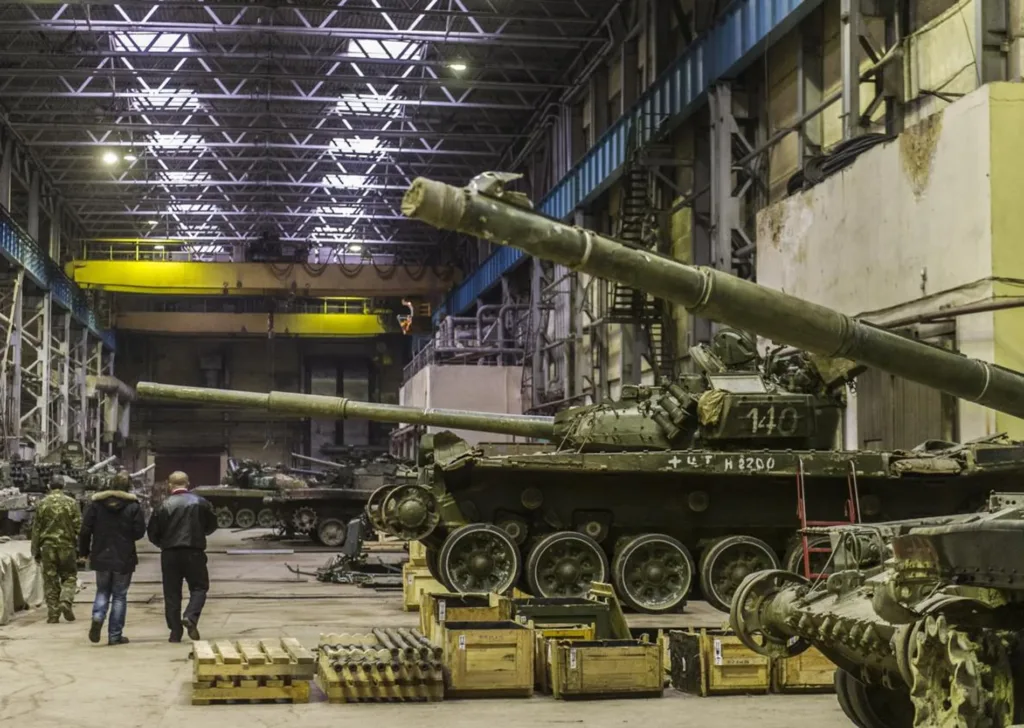
According to our estimates based on known data, UVZ’s annual revenues are currently likely in the range of RUB 300 billion (about $3.5 billion), compared with RUB 140 billion (about $1.9 billion) in 2020, but the company hardly makes any meaningful profit; otherwise, it would be visible in Rostec’s consolidated financial results (as shown above in the section “Rostec: awash in cash, but no profits,” Rostec’s profitability is currently close to zero, and its banking segment is the largest contributor to whatever profits it still reports). UVZ’s subsidiaries—of which CTZ-Uraltrak is the most notable—remain in financial distress.
Much detail about UVZ’s financial difficulties can, however, be gleaned from its multiple ongoing legal disputes, which suggest that the company has major solvency issues. One major example is an ongoing dispute with MMK (Magnitogorsk Iron and Steel Works), a large Russian steelmaker that has repeatedly sued UVZ in recent years for unpaid metal supplies. The two companies periodically reach settlements, but the dispute keeps resurfacing—for instance, in late 2022, UVZ and MMK reached a settlement on a number of MMK claims against UVZ, but by the end of 2025, a new set of MMK claims against UVZ totaling about $20 million had accumulated, which was partially resolved through a settlement in April 2026.
This has not prevented more suppliers from filing court claims against UVZ, however: some of the latest cases involve claims filed in mid-2026 by JSC “Concern “Sozvezdie” (another part of Rostec) and “Urals Aluminum Company” together worth more than $2 million.
Urals regional media report that UVZ systematically runs up unpaid bills, settles with large businesses if the matter goes far enough in court, but tries to ignore smaller suppliers that lack the influence to recover payments from a political heavyweight such as UVZ: “Relatively small companies from other Russian regions have a hard time receiving their earnings under contracts with railcar manufacturers [UVZ]… Contractors have been forced to spend years pursuing payments in court, reaching not only cassation courts but also the Supreme Court. Furthermore, companies are suffering significant losses due to bank guarantees improperly reclaimed by Uralvagonzavod.”
UVZ also faces a severe crisis in its civilian manufacturing segment, whose main product is railway cars. Railway car production in Russia is sharply down because of the ailing economy: it fell by 30% year-on-year in 2025, and in the first eight months of 2026 it fell by another 27% for freight cars and 14% for passenger cars.
UVZ’s railway car production has fallen from around 14,000 cars per year before the 2022 full-scale invasion of Ukraine to just about 8,000 now. Further cuts in railway car production can be expected because of the financial difficulties of Russian Railways, which has been forced to slash its investment program, and other major railroad operators. This further increases UVZ’s reliance on state military product procurement. The media have recently reported on UVZ’s cuts to civilian manufacturing staff and its growing debt; UVZ officials have partially refuted some of these reports, but its civilian manufacturing segment nonetheless clearly remains under pressure.
One of UVZ’s notable subsidiaries is Chelyabinsk Tractor Plant, also known as CTZ-Uraltrak, which manufactures engines for T-72 and T-90 tanks, T-14 BMPT Terminator armored fighting vehicles, self-propelled guns, and for all modifications of the Msta-S and Koalitsiya self-propelled howitzers. While CTZ-Uraltrak does not publish its financial accounts, it is mired in ongoing multibillion-ruble legal disputes with suppliers over growing unpaid bills.
In recent years and months alone, it has been sued by major utilities and energy providers such as Uralenergosbyt (largest power customer service provider in Chelyabinsk region), Novatek-Chelyabinsk (natural gas supplier), USTEK-Chelyabinsk (heat provider), Rosseti-Ural (power grid services), with total claims running into billions of rubles.
A metals supplier, Kamensk-Uralsky Metallurgical Works, filed a bankruptcy petition against CTZ-Uraltrak in late 2024, but the claims were later settled and withdrawn. “The management of CTZ-Uraltrak has taken a passive position and evades steps to ensure due payments for electricity since the beginning of 2025. This poses risks to the stable operation of both the electricity provider and the industrial enterprise itself,” stated power provider Uralenergosbyt in its claims.
Before the full-scale invasion of Ukraine in 2022, CTZ-Uraltrak’s financial reports showed continuous financial losses; in 2022, when production of military engines was ramped up, Kommersant reported that CTZ-Uraltrak’s civilian-oriented capacity had been significantly underutilized before 2022 (and has likely remained so because of weak domestic demand), which suggests that military revenues are insufficient to cover fixed costs.
CTZ-Uraltrak clearly faces challenges similar to those of other component suppliers, such as ODK, described above: companies that are not direct suppliers of finished products to the Russian Ministry of Defense find it much harder to maintain a stable revenue stream. UVZ has not shown that it can significantly help its vital subsidiary through its financial troubles; it is clear, though, that the financial sustainability of engine production remains key to maintaining stable production rates for battle tanks, armored vehicles, and self-propelled artillery in the future.
Almaz-Antey
Almaz-Antey is one of the largest Russian military manufacturers, developing and producing anti-aircraft and cruise missile systems. It is directly owned by the state and not integrated with other military production companies. Almaz-Antey is also one of the most opaque military manufacturers, having de facto stopped publishing its financial accounts some time before 2022. Ahead of the 2022 full-scale invasion of Ukraine, Almaz-Antey’s consolidated annual revenue was more than RUB 600 billion (about $9 billion); according to various estimates, its current annual revenue is in excess of RUB 1 trillion (more than $12 billion).
Before 2022, no less than $1–2 billion per year came from exports; this figure has most likely fallen in recent years with the overall contraction of Russian arms exports since the full-scale invasion of Ukraine, but Almaz-Antey must still be earning notable export revenues to this day, particularly from supplying and servicing air defense systems for countries such as India and Algeria, which have chosen to buy Russian S-300/S-400 systems in recent years.
In recent years, Almaz-Antey has not shown as many indirect signs of financial problems as some other Russian military manufacturers; for instance, data on massive state subsidies or capital injections, or on nonpayment disputes and litigation, are not available to the same extent as for other military production companies. Some of its key subsidiaries—for instance, MKB “Fakel,” which produces missiles for the S-300 and S-400 air defense systems—showed relatively healthy net profitability by Russian military industry standards before the 2022 invasion of Ukraine, in the range of 8–25%.
However, it is known that Almaz-Antey has historically been heavily indebted. During the massive pre-invasion write-off of military manufacturers’ debt mentioned above (see the section on OAK), Almaz-Antey was named by then-Deputy Prime Minister Yury Borisov, alongside OAK, OSK, UVZ and “High-Precision Systems” (see below), as one of the five most heavily indebted Russian military manufacturers, which were the largest beneficiaries of the large-scale 2020–2021 military industry debt write-off described earlier in this report. In recent years, Almaz-Antey is known to have expanded its cooperation with VTB, financing its investment programs through VTB loans; although details about credit relations between VTB and Almaz-Antey are not disclosed, it is also known that VTB’s portfolio of problem loans has been rapidly increasing. Up to 15% of VTB’s total corporate loans in the first quarter of 2026 were restructured (effectively, payment schedules were extended) because borrowers had difficulty servicing their loans on time; among the problem sectors, VTB named machine-building, where the leading borrowers are clearly military manufacturing enterprises.
The Russian Central Bank also names machine-building (including military manufacturers) as one of the sectors most troubled by “risky” loan restructuring (which, under the Central Bank’s methodology, approaches the criteria for nonperforming loans).
Some of Almaz-Antey’s subsidiaries that do disclose financial data show weak profitability: for instance, JSC MZIK (Kalinin Machine-Building Plant in Yekaterinburg, which manufactures anti-aircraft missile systems, including S-300 and BUK-M1) has shown 2.0%, 2.9% and 4.8% net profitability in 2023, 2024 and 2025, respectively; net profitability of NPO Strela, a subsidiary of Almaz-Antey involved in development and production of radar equipment, was around zero in 2024–2025: 0.2% in 2024 and 1.2% in 2025. Despite its relatively low profitability, JSC MZIK was required to pay out 50% of its limited 2025 profit (about $20 million in dividends from about $40 million in profit) to shareholders, mostly the parent company, Almaz-Antey (which controls over 65% of the shares), instead of spending the money on capital investment, reflecting Almaz-Antey’s desperate need for cash.
Another Almaz-Antey subsidiary disclosing its financial data is JSC Dolgoprudnenskoye Scientific Production Plant (DNPP), a designer and mass manufacturer of surface-to-air missiles located in Dolgoprudny, Moscow region. Currently, it manufactures surface-to-air missiles for land-based air defense systems (Buk) and Shtil surface-to-air missiles. It also develops and produces devices for the automatic launching and flight control of the missiles. DNPP also manufactures APU-60-1MD (P-62-1MD) aircraft launchers for R-60 missiles fired by Geran drones.
DNPP’s revenue increased threefold in 2022–2025 (in 2023, it momentarily increased fivefold relative to 2022, but later dropped), but net profitability over these years remained low, averaging 3.8%. The 2023 boost of revenue and profitability (41.5% net profitability in 2023) was followed by heavy losses in 2024.
The company’s debt also kept growing. By end-2024, it had increased nearly threefold relative to 2022, from RUB 11 billion to RUB 27 billion, but it was reduced to less than RUB 12 billion by end-2025 through some form of debt write-off. In the first half of 2026, however, debt resumed growth, rising by over 5% from the end-2025 level (and by about 15% from the end-2022 level). Moreover, while DNPP’s debt was written off through an unspecified mechanism in 2025, the period 2022–2025 saw explosive growth in accounts payable (nonpayments to counterparties)—which increased 3.5-fold, from RUB 20 billion by end-2022 to more than RUB 71 billion (1.7 times annual revenue) by June 2026.
Another indication of a cash shortage at Almaz-Antey is its subsidiaries’ widespread efforts to sell noncore assets. For instance, in the spring of 2026, Khimki-based MKB “Fakel” (manufacturer of S-300 and S-400 air defense systems) announced the sale of noncore real estate in Moscow region worth $25 million; previously, Almaz-Antey sold all of its noncore real estate in St. Petersburg.
Almaz-Antey has also been forced to scrap many of its civilian projects. For instance, in 2023, it announced plans to build the BAZ-S36A11 civilian truck and new electric vehicles (E-Neva electric crossover) at the former Toyota auto plant in St. Petersburg. Under a project estimated to be worth more than $40 million, Almaz-Antey planned to manufacture 55,000–60,000 electric vehicles annually at the St. Petersburg site between 2026 and 2027. But the project was recently scrapped for lack of funds; as Kommersant‘s sources report, Almaz-Antey “currently lacks both the funds and the expertise required to carry out such a project.” Almaz-Antey was also forced to declare its startup VKO Simvol, a developer of hardware and software solutions, bankrupt; the bankruptcy proceedings are ongoing.
In general, while Almaz-Antey appears to be doing better financially than many other enterprises in the Russian military manufacturing industry, and still enjoys notable revenues from exports of anti-aircraft missile systems, its subsidiaries show low profitability, and there are signs of heavy debt and evidence of cash shortages, including an active program of noncore asset sales and the scrapping of civilian investment projects.
Kalashnikov
JSC “Kalashnikov Concern” (hereafter referred to simply as Kalashnikov) is Russia’s largest manufacturer of small arms, with a market share of more than 90%. It also develops UAVs and produces body armor, ammunition, missile and artillery weapons, and special equipment. Kalashnikov’s finances are also classified, but it is known that before the 2022 full-scale invasion of Ukraine it had net profitability of only 1.0% on revenue of more than $200 million.
Interestingly, although Kalashnikov’s financial accounts are classified, some vital financial data are available from rating agencies’ publications on its credit ratings. The very existence of such publications, as well as their content, indicates that Kalashnikov’s operations depend heavily on borrowing and that the company is significantly leveraged, while showing low profitability despite notable export revenues (Russian-manufactured small arms are in high demand across the world, and Kalashnikov is a popular and established brand).
As recently as May 2026, the rating agency AKRA published an important update on the financial situation of Kalashnikov, stating that, while the company does not publish financial disclosures, its FFO (funds from operations before interest and taxes) profitability was 16% in 2024 and 14% in 2025—which, judging by data from other companies that do publish financial disclosures, equates to near-zero net profit after interest payments (for heavily leveraged companies, 15–20% operating profitability usually shrinks to near-zero net profit once interest payments are taken into account). Kalashnikov’s debt is also high, according to AKRA: the ratio of total debt to FFO before net interest payments stood at 3.0x for 2025.
In the first half of 2025, Kalashnikov also received a public credit rating from the National Rating Agency (which later ceased to publish ratings for Kalashnikov). Alongside the company’s strengths (market dominance, state support, and sizable export revenues), the agency’s press release stressed such key weaknesses as “low level of permanent capital, significant financial leverage, and negative free cash flow for the period of 2023–2024”.
These data show that Kalashnikov is in no better financial position than most other Russian military manufacturing enterprises and is burdened by low profitability and high debt, despite an approximately twofold increase in revenues, and significant revenues from small arms exports.
“High-Precision Systems”
Holding company NPO “High-Precision Systems” (Romanized: NPO “Vysokotochnye Kompleksy”), hereafter referred to as HPS, specializes in the development and production of high-precision weaponry, including missile, artillery, and small-arms systems such as the Iskander-M, the Pantsir-S anti-aircraft system, and the Verba system, “Bakhcha-U” combat modules for the BMD-4M airborne fighting vehicle, and combat vehicles for the Khrizantema-S and Kornet anti-tank systems. The holding company was established in 2009 and does not publish consolidated financial accounts, but some of its key subsidiaries do, which allows us to draw conclusions about the financial situation in the holding company as a whole.
Like some of the other largest Russian military manufacturers, HPS has historically been heavily indebted; it was included in the massive pre-invasion write-off of military manufacturers’ debt (alongside Almaz-Antey, OAK, OSK, and UVZ), as noted by then-Deputy Prime Minister Yury Borisov.
As the financial reports of some HPS subsidiaries show, their debt has skyrocketed in recent years. For instance, Kurganmashzavod’s debt (the company manufactures BMP-2 and BMP-3 infantry fighting vehicles and BMD-4 airborne fighting vehicles) has increased more than sixfold in just four years, from RUB 11 billion by end-2021 to RUB 67 billion by end-2025. Although revenues increased fourfold over the same period (from RUB 25 billion to more than RUB 100 billion), rising expenditures prevented the factory from achieving significant profitability: net profitability was 2.0% in 2021, 3.6% in 2022, 2.0% in 2023, 3.1% in 2024, and 3.4% in 2025.
Before the full-scale invasion of Ukraine in 2022, Kurganmashzavod nearly went bankrupt. The Russian Ministry of Defense periodically sues the enterprise over delivery delays.
Similarly, the V.A. Degtyarev Plant (a manufacturer of machine guns, aircraft guns, anti-aircraft guns, anti-tank guns, and grenade launchers) nearly doubled its revenue between 2021 and 2025, from RUB 23 billion to RUB 41 billion, but showed weak net profitability: 3.9% in 2023, 3.3% in 2024, and 3.0% in 2025. In 2021, net profitability was 10.1% (2022 data were not disclosed). Over the same period, debt grew fourfold, from RUB 11 billion by end-2021 to RUB 43.5 billion by end-2025.
Another HPS subsidiary, Chelyabinsk-based SKB “Turbina,” recently faced a RUB 200 million (about $2.5 million) lawsuit from the Russian Ministry of Industry and Trade, reportedly for nondelivery of subsidized products (the lawsuit seeks to recover a budget subsidy received earlier, plus penalties). Although details are unknown, a claim for full repayment of the subsidy most likely reflects the enterprise’s complete failure to develop a product.
SKB “Turbina” produces gas-turbine power units that provide electricity to the onboard equipment (sighting systems, communications, and control systems) of T-72 and T-90 battle tanks without the need to start the main engine. SKB “Turbina” is also the designer of APK-40TM, an auxiliary gas-turbine power unit designed to provide electrical power to the launchers and support vehicles of missile systems, most notably the Iskander-M and its export variant, the Iskander-E (although these gas-turbine units are produced not by SKB “Turbina” itself but by another Chelyabinsk-based enterprise, JSC NPO “Electromashina,” a subsidiary of UVZ).
That the lawsuit against SKB “Turbina” comes from the Russian Ministry of Industry and Trade rather than the Ministry of Defense likely means that the undelivered product is civilian rather than military; however, the claim exceeds 10% of the pre-2022 annual revenue of SKB “Turbina,” and if the court grants it, it will have a significant financial impact on the enterprise.
Other HPS subsidiaries, such as the Machine-Building Design Bureau in Kolomna, or KBM (manufacturer of 9M723 Iskander-M ballistic missiles and Kh-47M2 Kinzhal aeroballistic missiles), and the Instrument-Making Design Bureau in Tula, or KBP (manufacturer of Pantsir missiles), do not disclose their financial results.
In general, the HPS subsidiaries that do disclose their financial statements show the same pattern seen at most other Russian military enterprises: significant revenue growth since 2022, but very low profitability and rapidly increasing debt.
JSC Technodinamika
Technodinamika is a holding company within Rostec, consisting of more than 140 subsidiaries. It manufactures artillery systems (including both tube and rocket artillery), ammunition, multi-position launchers for long-range cruise missiles, military-grade propellants and explosives, armor plating, rifles, small arms, etc. It also provides repairs and service-life extensions for equipment used on Tu-95MS and Tu-160 strategic bombers and missile-carrying aircraft.
Most of Technodinamika’s subsidiaries do not disclose their financial information, but there are notable exceptions. One that does disclose its financial accounts is JSC “Imperial Tula Arms Plant,” which specializes in the production of high-precision guided weapons, small arms, and close-combat weaponry.
Its product range includes “Konkurs-M” and “Kornet” anti-tank missile systems, compact assault rifles, sniper rifles (including the VSS “Vintorez” rifle), Kalashnikov assault rifles (AKS-74U), and parts for “Krasnopol-M2” guided artillery projectiles (assembled casings, nose sections, stabilizer units, and autopilot modules). Available financial data show that the debt of “Imperial Tula Arms Plant” skyrocketed more than fourfold in 2021–2025: from RUB 4.1 billion by end-2021 to RUB 17.8 billion by end-2025.
Profitability remains low: although total revenue for recent years was omitted from the financial accounts, net profitability in 2024–2025 remained well below 10%.
In October 2025, moreover, the Twentieth Arbitration Court of Appeal in Tula issued a detailed decision on a minority shareholder claim against “Imperial Tula Arms Plant,” which revealed the dire realities of the plant’s economics:
- While the share of revenues from military products increased from 6.1% in 2020 to 71.7% in 2023, the plant’s net profit margin declined from 14.3% to 4.0% between 2020 and 2023;
- Debt is growing rapidly and is expected to keep growing, which, given high borrowing rates, places a heavy burden on the plant’s expenditures;
- Profitability on state military procurement orders is limited to 5%, which is insufficient to cover cost increases and interest expenses.
These figures were presented to justify a state-sponsored new share issue worth about RUB 16.3 billion (about $180 million), which diluted the stakes of minority shareholders (which is why they sued); in doing so, they confirmed the familiar flaws in the economics of the Russian military industry described above: low profitability caused by regulated prices and spiraling expenditures, a high cost of capital, insufficient cash flow to finance capital expenditure (requiring more expensive borrowing), the absence of normal shareholder ownership, etc. (for more detail, see Mashnews, “State defense orders have driven the profitability of the Tula Arms Plant down to a minimum. Increasing the company’s capital through contributions from shareholders has been deemed an economically sound move under the current circumstances,” October 6, 2025).
Another Technodinamika subsidiary partially disclosing its financial data is Tulatochmash, which specializes in simulator and training range equipment, close-combat weapons, and components for the Pantsir-S1 anti-aircraft missile/gun system. The enterprise operates under the management of the Tula-based holding company “TOR,” which is controlled by Technodinamika. While the company has low debt and slightly better net profitability (though still below 10%), its accounts payable (nonpayment to counterparties) more than doubled in 2022–2023; since 2024, these data have been omitted from its financial accounts.
Another major Technodinamika asset, Yekaterinburg-based Uraltransmash (which manufactures self-propelled artillery systems, including the Koalitsiya-SV, Msta-S, Akatsiya, Giatsint, and Malka, as well as the Tyulpan self-propelled mortar and hulls, covers, and frames for the Pantsir-S1 anti-aircraft missile system), does not disclose its financial statements, but available information suggests poor financial condition. Uraltransmash was previously a subsidiary of Uralvagonzavod, but was transferred to Technodinamika in 2023 as part of an effort to consolidate artillery manufacturing.
Before the full-scale invasion of Ukraine in 2022, Uraltransmash was nearly bankrupt, with heavy debts and repeated freezing of bank accounts. No financial information has been published since then, but Uraltransmash continues to face recurring nonpayment lawsuits from utilities (most notably, from Uralsevergaz, the natural gas supplier), and even from Sberbank, which sued Uraltransmash and its contract guarantors (Uralvagonzavod and NPK Techmash) in June 2026 for RUB 7.5 billion over late delivery of city trams for St. Petersburg. Uraltransmash is making major efforts to enter the civilian market, but these attempts keep running into disputes; as Expert magazine explained in mid-July 2026, for instance, Uraltransmash charges the highest prices for city trams (with an annual price increase of about 50% in 2025) and, being uncompetitive, is not among Russia’s largest tram suppliers.
In the end, the available information on the economic performance of Technodinamika’s enterprises paints a picture common to most other Russian military enterprises: low profitability despite high revenues; significant growth in debt, nonpayment to counterparties (accounts payable), or both; and a lack of success in entering civilian markets.
Manufacturers of Electronic Equipment and Devices
In the Russian military electronics sector, the situation is mixed. On the one hand, military production continues to dominate the sector’s performance: for instance, combined revenues of Rostec’s radio-electronic cluster (combining Ruselectronics Holding, or RosEl; JSC Concern Radio-Electronic Technologies, or KRET; Shvabe Holding Company; and other Rostec electronics manufacturers) grew by about 60% in ruble terms in 2021–2025, and Rostec holds a solid lead in the TAdviser analytical center’s ranking of the 500 largest Russian IT and electronics businesses. On the other hand, as Table 11 shows, the revenues of Rostec’s radio-electronic cluster peaked in dollar terms in 2023 at just under $6 billion, and annual growth in ruble terms shrank from above 30% previously to just 7% in 2024 and 2.5% in 2025.
This matches the Rosstat data presented earlier in this report showing a notable slowdown in output in the Russian electronics and optics industry (Table 5) and a sharp decline in fixed investment in the sector (Table 6.1).
Rostec does not disclose much detail about the composition of its electronics cluster revenues, or about individual companies. But pre-invasion data show that revenues are heavily dominated by military procurement: even before the 2022 invasion of Ukraine, the share of civilian product revenues for Rostec’s radio-electronic cluster was no more than 30%.
The profitability of radio-electronic manufacturers appears to be slightly higher than in the rest of military manufacturing, as Rosstat data also indicate (see Table 7). At the level of specific enterprises, however, the picture is mixed. Before the full-scale invasion of Ukraine in 2022, Rostec’s radio-electronic cluster reported about 5% net profitability, with some key players, such as KRET (JSC Concern Radio-Electronic Technologies, part of Rostec), reporting margins as high as about 28%.
Since the 2022 invasion, however, KRET has shown a greater appetite for debt and has been involved in notable lawsuits against other military enterprises over nonpayment. In 2025, two KRET subsidiaries, Ryazan Instrument-Making Plant and NII Ekran, sued Rostvertol (part of “Russian Helicopters”) for about $18 million (proceedings were classified); in 2026, Tambov-based “Electropribor” plant sued the Kirov Plant “Mayak” (part of Kalashnikov, a manufacturer of components for the Pantsir-S1 anti-aircraft missile system), claiming about $4 million in unpaid bills.
Electronics producers clearly suffer from the mounting nonpayment problems in Russian military manufacturing: they mostly make intermediate products and depend heavily on payment discipline, which is worsening across the sector.
Concern Avtomatika (part of RosEl, Rostec’s electronics production subsidiary), which manufactures secure communications equipment and counter-UAV systems (as well as MK-111 components, which are part of the S-111 onboard communications systems for Su-57 fighter jets) showed heavy operating losses (–6–8% in 2020–2021) in the last published financial reports before the 2022 full-scale invasion of Ukraine; the company showed a net profit of less than 1% in 2021 only thanks to extra “income from participation in other organizations.” The Stavropol-based radio plant Signal (part of Rostec’s KRET holding), a key producer of electronic jamming systems, showed about 10% net profitability in 2024.
Some of the enterprises that still publish their financial reports are not doing particularly well. For instance, the Ural Optical-Mechanical Plant (part of Shvabe, a Rostec subsidiary) specializes in bomb guidance systems, laser distance measurement systems, and optical-laser systems for MiG-29, Su-27, Su-30, Su-35, and Tu-160 military aircraft; optical-electronic targeting systems for Ka-52 helicopters; and surveillance and search systems for Mi helicopters. Its financial accounts show that it was barely profitable during 2021–2026 (with 1.6–1.7% net profitability in 2023–2025, slipping below 1% in the first half of 2026). They also show a high debt burden (0.6–1.0x of annual revenue) and a 2.5-fold increase in accounts payable (nonpayments to counterparties) between 2021 and mid-2026.
The Tambov “Electropribor” plant (part of KRET, one of Rostec’s electronics manufacturing divisions) also publishes financial reports, which show relatively good net profitability (16.3% in 2025 and 13.6% in the first half of 2026), though it has been steadily declining (from a 2022 peak of 23.3%) against a backdrop of rapidly growing debt (from zero in 2021–2022 to RUB 4 billion by mid-2026) and accounts payable (from RUB 1.5 billion in 2021 to RUB 25.6 billion by mid-2026, a 17-fold increase in four and a half years). Tambov “Electropribor” plant manufactures instrumentation and navigation equipment for aviation and space technology, automatic flight control systems, aircraft ground support systems, printed circuit boards, strap-down inertial navigation systems (SINS) based on laser gyroscopes for Russian aviation.
It also hosts a recently established drone production facility and manufactures components for the 9M727 cruise missile for the Iskander-K tactical missile system (GIB-123-4 gyroscopic-inertial units for the AB-60IS 9B705 onboard control systems), Kh-59M2/Kh-59M2A guided aircraft missiles (US-K-001-03 matching devices), and 95Ya6 anti-aircraft guided missiles for the Pantsir air defense system (No. 95Ya6.01.02.000 steering actuators).
JSC Yaroslavl Radio Plant (part of Roscosmos), a manufacturer and supplier of SB-1AM television transmitters for Kh-59M2/M2A missiles and components for the Orion UAV, posted an average annual net loss of about 20% of revenue in 2022–2025, after demonstrating positive net profitability (5.6%) in 2021.
One of the most notable cases in electronics is Element Group of Companies, a joint venture between Sberbank (48.8%) and Rostec (41.7%), one of the largest Russian developers and manufacturers of electronics with about $0.5 billion in annual revenue. Element is not purely a military enterprise (it also manufactures many civilian products), but it is heavily involved in Rostec’s supply chain, and Element’s key subsidiary is JSC Mikron, one of Russia’s largest manufacturers and exporters of microelectronics, a major supplier to the Russian military manufacturing industry.
JSC Mikron is one of Russia’s largest manufacturers and exporters of microelectronics. It operates the only facility in Russia for serial production using a 90 nm process.
Mikron’s products include electronic components used in 9M723 “Iskander-M” ballistic missiles (1533TM2 D-type flip-flops, digital integrated circuits based on transistor-transistor logic with Schottky diodes, SAP5 and 533LE1 microchips); electronic components for Kh-101 missiles (169AA1 and 533LL1OSM microchips, 572PA2 12-bit multiplying digital-to-analog converters, and 533AP6OSM eight-channel bidirectional transceivers); components for the 9M727 cruise missile, part of the Iskander-K tactical missile system (556RT2.2112 programmable logic arrays, 133LN3A.2227 buffer inverters for the BT692-405 circuit boards—part of the “Zarya-61M” onboard digital computer; 512PS11.2343 converters and 550UP1.2237 output amplifiers for a circuit board used in the air pressure measurement system (SIVD) unit; 533LA9.1410 4-input logic gates and 530LN2.1506 inverters for the KLIV.467562.0029 circuit board, which is part of the GIB-123-4 inertial navigation system).
JSC Mikron does not disclose its financial data; the latest available financial accounts are for 2020 and 2021, when the company showed net profitability of −50% (2020) and 4.5% (2021).
Element publishes IFRS financial reports, which show an interesting picture:
A sharp revenue decline in 2025–2026. In 2024, Element’s revenues were more than double their 2021 level, but they then began to shrink, by 13% year-on-year in 2025 and another 2% in the first half of 2026. Total revenue for 2026 is projected to be at least 20% below the 2024 peak, with a larger decline possible.
Most notably, a decline in revenues from sales of basic electronic components (“electronic component base,” according to official Russian terminology). After peaking in 2024 at about RUB 36 billion (81% of Element’s total revenue at the time), these revenues plunged by nearly 30% year-on-year in 2025, and by another 10% in the first half of 2026 (to just 65–70% of Element’s total revenue, as opposed to over 80% in 2024).
Shift from relatively healthy profitability in 2022–2024 to mounting losses in 2025–2026. With the increase in military-related and civilian import substitution-related revenues since 2022, Element’s net profitability jumped from 2.1% in 2021 to 11.3% in 2022, 14.8% in 2023, and 18.8% in 2024. But the company then began posting mounting net losses:—5.9% in 2025 and—17.6% in the first half of 2026.
Notable contraction of fixed investment as a result. After peaking at $130–140 million in 2023–2024, fixed investment (“acquisition of fixed assets and intangible assets”) plunged to just $107 million in 2025, and further to $27 million in the first half of 2026 (nearly 50% year-on-year contraction).
Mounting debt and accounts payable. By mid-2026, total debt increased 2.1-fold compared with end-2021 (from RUB 9.8 billion to RUB 20.5 billion), and accounts payable rose by a quarter from end-2021.
As electronic products market analysts explain, Element fell victim to the overall contraction in Russian domestic demand for electronics, driven by the slump in consumer industries and the resulting cuts in investment budgets; competition with Chinese producers also played a role. While Element’s financial results cannot be split between civilian and military-related electronics sales, it is clear that the investment crisis in Russian military industries (see Table 6.1) has also hurt military-related demand for electronics. This also contributed to plunging sales of JSC Mikron, Russia’s key manufacturer of microelectronics—as explained above, the decline in Element’s sales of basic electronic components was the sharpest, which reflects JSC Mikron’s troubles.

The deterioration of Element’s finances has already led to heated court disputes with the Russian Ministry of Industry and Trade over delays in disbursing allocated state subsidies and delays in serial production of microchips, as well as significant wage arrears at Element’s microelectronic design and production subsidiaries—in 2026, wage arrears lasting several months and workforce cuts were reported at NIIMA Progress, a microelectronics research institute.
In general, while the overall profitability of the military electronics segment seems better than that of some other segments, based on Rosstat data (see Table 7) and available company data, the picture is nonetheless mixed, with certain major enterprises showing signs of severe financial distress. The key reasons appear to be declining domestic demand for electronics amid Russia’s overall industrial slump, shrinking state subsidies due to federal budget constraints, competition with Chinese producers, and Western sanctions depriving the electronics segment of critical components. Corruption also has a notable impact on Russian military-related electronics manufacturing: in October 2026, the top management of the Stavropol-based radio plant Signal (part of Rostec’s KRET holding), a key producer of electronic jamming systems, was arrested for embezzlement of RUB 150m.
Part III. Conclusions: “Houthis on Steroids”
While the Russian military manufacturing industry has more than doubled its output since the beginning of Russia’s full-scale invasion of Ukraine in 2022, it is struggling economically. The major expansion drive of 2022–2025 is all but exhausted; top officials from the military manufacturing sector publicly complain about multiplying challenges, including a lack of profitability and of funds to invest in upgrading and expanding production capacity, complaints that are borne out by a wide range of statistical, financial, and other data.
The massive fiscal stimulus of 2022–2025 helped expand the production base (although even Russian pro-government experts point out that much of the 2022–2025 investment financed equipment replacement rather than new capacity), but that base is now operating at maximum capacity, and further expansion is highly problematic. Accumulated capital stock is under pressure: intensive operation in three shifts accelerates the depletion of fixed assets and requires higher rates of equipment replacement, which does not seem possible under current conditions.
Further sources of investment financing, comparable to the 2022–2025 levels, are largely absent. The state budget is under pressure, expenditure growth is capped, and spending cannot continue to increase at the same pace as in 2022–2024. The military industry’s own profitability is very low and shrinking because of, on the one hand, persistently high inflation, high interest rates, monopolism, and corruption, all of which drive up costs, and, on the other hand, strict price regulation that caps revenues. Hopes that Central Bank rate cuts would give military manufacturers access to cheap credit have been dashed by recent signals that tight monetary policy will extend into 2028–2029.
The overregulated and monopolized Russian military manufacturing industry completely lacks a viable economic model that would give it the tools to mobilize internal resources and improve productivity in order to generate the profits needed to finance additional capital investment. Recent discussion of these matters in the industry and the Russian government has focused on ideas similar to the late-1980s Soviet practice of khozraschet—allowing state-owned, regulated enterprises to keep some of the profits earned through cost-saving measures. As explained above, these ideas are fundamentally flawed: they did not work in the 1980s, and they will not work now.
Demonopolization and deregulation of the Russian military industries are not even on the agenda—which means that the outdated, overregulated economic model will persist and continue to drag the sector’s economics down.
Attempts to develop competitive civilian manufacturing have failed miserably. Take Rostec, Russia’s main arms-producing conglomerate: its civilian product sales remained flat at $12–14 billion in 2022–2025, with the share of civilian products in total Rostec revenue falling from more than 45% in 2021 to less than 25% in 2025. Most civilian products made by Russian military manufacturers find markets only with the help of direct state subsidies, subsidized credit, draconian mandatory procurement rules for customers, and other state support measures. Given the experience of 2022–2026 and the current situation, there is no realistic prospect that the Russian military industry will be able to significantly expand revenue and profits from civilian product sales.
At the same time, fixed investment in military-related industries has begun to decline (see Tables 6.1 and 6.2): the sector evidently lacks the money even to maintain its current production base, let alone expand it. This resulted in a major slowdown in output growth in 2026; top government officials have already begun talking about the military industry reaching a “production plateau,” which has drawn public criticism from senior military industry managers.
This process (a contraction in fixed investment followed by output leveling off, and possibly contracting) is likely to continue and accelerate in the absence of solutions to the massive fixed investment challenge facing Russian military industries.
These problems are exacerbated by several factors. First, the Russian military industry entered 2022 already in relatively poor shape, with low profitability, high debt, an outdated stock of capital equipment, and serious problems of competitiveness and efficiency. The massive fiscal stimulus since 2022 made these problems less noticeable, but they have not gone away; they became visible again soon after ballooning costs eroded the benefit of a massive increase in state military procurement and corresponding revenue growth.
Second, Russia seems to have badly misallocated heavy state spending and investment in its military sectors after 2022: significant amounts of money, up to a third, were spent on the aviation cluster (OAK, ODK, “Russian Helicopters”), which ended up with heavy losses, producers in financial distress, and no viable civilian products yet delivered. Massive investment in the military aircraft sector over the last few years hardly seems to have delivered worthwhile returns.
Third, Russia clearly suffers from a lack of modern machine tools critically needed to maintain and expand fixed capital stock: import dependence here stands at around 70% (see the “Impact of Western sanctions” section above), and no easy solutions are available. China is not providing sufficient help to upgrade the Russian military industry’s stock of machine tools. In this situation, further degradation of the capital equipment stock seems inevitable. Western sanctions, as explained above, play a key role here.
Fourth, regular Ukrainian strikes against Russian military enterprises create additional challenges. While Russian military manufacturers have largely been able to keep increasing output in 2026 despite intensified Ukrainian strikes, the financial damage inflicted can be estimated as comparable to, or even greater than, the sector’s overall profits, further complicating the search for funds to finance much-needed capital investment. Fifth, there is endemic corruption: the recently intensified wave of arrests and criminal cases against top Russian military industry officials shows that it is a very painful problem for the sector, on a scale also comparable to, or even greater than, the industry’s total annual profits.
Sixth, because of the monopolized, “vertical” structure of the Russian military industry, reinforced by corporate restructuring under Putin since 2000 (before which there was somewhat greater competition among military manufacturers), manufacturers of intermediate components face greater problems than producers of finished goods supplied directly to the Ministry of Defense. The situation is far worse at enterprises producing intermediate goods up the value chain, where nonpayment is rampant and component manufacturers are suing assemblers of finished products en masse over unpaid bills.
Given all these factors, the Russian military industry is significantly underfunded, and the widespread notion that Russian weapons are “cheap” is wrong: in reality, they are much more expensive to produce; it is simply that capped regulated prices deprive the Russian military sector of the money required to produce them. The flip side of this strict regulatory policy is the set of profitability and investment problems described above.
The “cheap weapons” narrative is very popular in Russian propaganda as a useful argument in “cognitive warfare” against Western societies and policymakers, aimed at convincing them that Russia has “strategic advantages” in its protracted standoff with the democratic West. Top Russian officials love to repeat the “cheaper weapons” narrative, but it is nonetheless wrong, as explained above.
Sergey Lavrov, Minister of Foreign Affairs of Russia:
“Our weapons are the best. They are easier to handle. They have proved their efficiency compared with similar weapons and systems manufactured in Western countries. They are cheaper, in a good sense.”
There are, however, certain bright spots in this gloomy landscape for Putin. Some military manufacturers have been doing better than others, for instance, manufacturers of drones and missiles. The drone production sector is nothing short of thriving by Russian military industry standards, enjoying 20–40% net profitability and rapid output expansion with relatively limited investment. Missile producers—particularly KTRV—are also doing relatively better, although not without problems.
Given the approach to warfare Russia has adopted throughout 2026, this offers a clue to the kind of war Russia will be capable of waging in the years to come. What we see in the Russian military manufacturing sector is very consistent with the developments observed on the battlefield in Ukraine:
- For about a year now (as of the fall of 2026), Russia has failed to achieve any meaningful gains on the front line, has even ceded some territory to Ukraine, and lacks the capacity to launch a large-scale offensive along a broad front similar to the one launched in February 2022;
- At the same time, Russia regularly strikes Ukraine with large numbers of missiles and drones, gaining little military advantage but continuing to terrorize the Ukrainian population and destroy Ukrainian infrastructure.
Of course, other factors also contribute to Russia’s inability to launch another major offensive along the front lines: personnel shortages, the effectiveness of Ukrainian defenses, and so on. But the stagnating military production sector adds to these constraints: if it were still thriving, Russia could at least have amassed substantial stocks of military hardware for another big offensive. Given the depressed state of its military industries, it simply cannot.
Russia has recently begun to build up stocks of newly produced battle tanks, armored vehicles, and artillery at military bases unconnected to combat operations in Ukraine, and some Western commentators have suggested that Russia is already stockpiling weapons for a potential new, larger-scale conflict, likely with NATO member states. However, by all objective measures, the scale of this buildup is limited and will remain heavily constrained, given the current state of the Russian military manufacturing sector described in this report.
Given the picture outlined above, it will be very difficult for Russia to sustain a production base for a protracted, large-scale military confrontation with large armies; Russia simply lacks a solid foundation in military hardware manufacturing for that. Its military industries face mounting difficulties, a flattening output curve, and no viable investment and expansion model in sight. Even if the war in Ukraine ends soon, it will take Russia many years to rearm on a massive scale for another potential offensive war, if its overstretched military industry can ever accomplish that task.
It should also be borne in mind that current levels of military spending, which generate no returns for the economy and no meaningful multiplier effect (that is, no further increase in overall economic activity amplified by the original military expenditure), are a massive burden on the Russian economy as a whole. This will inevitably lead to mounting calls to cut military industry spending after the active stage of combat in Ukraine ends, further imperiling the financial sustainability of the military industries and their investment (this issue is discussed above in the section “Fiscal stimulus of 2022–2024: impossible to repeat”).
Russia will have to find additional resources to revive its civilian economy after current hostilities in Ukraine end, and it will have no spare funds to boost military production. The military manufacturing sector is very concerned about this (see the quote above from KTRV CEO Boris Obnosov saying that the looming production plateau “scares me a little”).
By contrast, Russia will remain quite capable of sustaining the kind of warfare it is mainly practicing now: heavy bombardment of its adversaries with missiles and drones. As explained above, manufacturers of missiles and drones are financially and economically more sustainable than other military enterprises; Russia will likely be able to maintain and expand production in these areas in the years to come. Some recent reports on physical output growth by Russian military industries suggest that, while Russia can produce significant numbers of artillery shells, drones, or missiles, its capability to manufacture large numbers of more sophisticated products such as combat vehicles and aircraft remains constrained.
All this means that Russia’s military has evolved from a major, heavily armed force capable of large-scale offensives along broad fronts (or so Russia believed; the February 2022 full-scale invasion of Ukraine exposed the limits of that self-image) into a military that relies mostly on air attacks with missiles and drones: a “Houthis on steroids” of sorts.
This conclusion also calls for some rethinking of the potential Russian threat to European countries beyond Ukraine, including EU and NATO member states: while Russia was long considered a power capable of a massive conventional invasion, it is clearly shifting toward hybrid warfare, including sabotage, drone warfare, information warfare, testing the limits of a potential NATO response, etc. While the scenarios for possible future confrontation between Russia and Europe are beyond the scope of this report, the analysis of the current state of affairs in the Russian military manufacturing industry indicates that this sector is currently in no position to provide Russia with a sufficient supply of weapons required for a large-scale invasion of Europe.
This is consistent with the challenges Putin faces on another domestic front: demographics. As we stressed in our recent report on Russian demographics, the shortage of manpower seriously constrains Putin’s ability to launch major military offensive operations, and the Russian economy is currently not in a position to withstand another round of mass military mobilization. As of the fall of 2026, mass mobilization had still not been launched, despite many predictions; Russia was also unable to conduct massive offensives in Ukraine and even lost some territory (during the Ukrainian Lyman offensive of 2026), to which personnel shortages clearly contributed. In short, time has largely borne out our assessment of Putin’s resource shortfalls, and the same may prove true of military production capabilities.
That said, risks remain, and Russia’s capabilities in certain narrower areas, such as missile and drone attacks, appear much stronger than the overall state of its weapons production and supply. This means that Russia retains a sustained, long-term ability to terrorize European countries with strikes, provocations, or simply the threat of them (which can be quite effective as a tool of political pressure), which makes Russia resemble “Houthis on steroids,” as formulated above.
An interesting question is why China, Russia’s main international ally, has not done more to help Russia boost its military production capabilities. True, China has supplied much of the technology and many of the dual-use goods needed for military production and has even helped enhance Russia’s drone manufacturing. But overall military-industrial cooperation with China also has major shortcomings:
- Imports of Chinese technology and components are by no means cheap; on the contrary, they are very expensive, which is reflected in enormous expenditure growth for the Russian military manufacturers, eroding all profits;
- China has not provided enough help with the supply of much-needed high-precision machine tools, a critical bottleneck for expansion of Russia’s military production base;
- Nor has China done anything to help address the Russian military manufacturing industry’s key challenge, investment. Not only has there been no inflow of Chinese direct investment into Russia since 2022, for both civilian and military sectors, but China has even reduced its investment exposure to Russia over that period, according to the Bank of Finland Institute for Emerging Economies; China has allowed neither the Russian government nor corporate players to enter its onshore domestic debt market through the issuance of yuan-denominated bonds (“panda bonds”) no Russian debt placements have taken place in the Chinese onshore market, depriving the Russian state and corporations of access to cheap Chinese credit.
The question of why China has not provided meaningful aid to boost Russia’s military industry in recent years (beyond supplying pricey components and technology) is beyond the scope of this report, but nothing in the current course of events suggests that this will change any time soon. Moreover, the closed, secretive, and state-dominated nature of corporate governance in the Russian military industry essentially rules out raising foreign capital, Chinese included, to revive ailing investment.
Make no mistake: the Russian military industry is still a serious player, and one of the top weapons producers in the world; Russia spends over $100 billion per year on weapons and ammunition procurement and will be able to sustain a similar level of spending for some time.
However, the lack of a viable economic model for its military manufacturing sector erodes the value of that spending over time, and economic and budget constraints do not support predictions that Russia will be able to significantly boost the amount of money it spends on military production in the future.
By many measures, Russia’s military manufacturing sector has clearly passed its peak and is, in many ways, running on fumes. Putin and the Russian government have not yet found a way to revitalize it; moreover, they have lately begun to admit as much, speaking of “reaching the plateau” of military production. The gradual exhaustion of the Russian military industry is a clear, and successful, result of Western sanctions, which should be kept in place and strengthened further. The degradation of Russia’s military production sector will have major strategic implications for the country’s future ability to sustain its aggressive foreign policy, although its potential remains and the decline will likely not be rapid. We will continue to monitor this situation and expand our analysis of the Russian military industry’s performance.